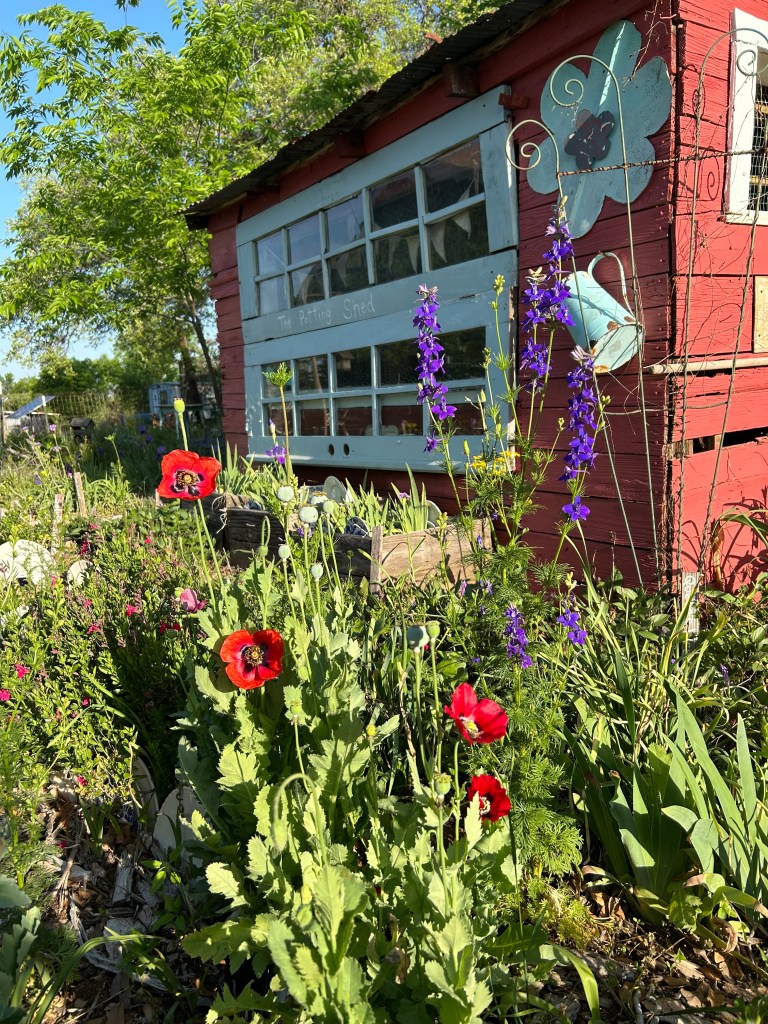
First, I’d like to say that a Spring without poppies is like a chocolate milkshake without the chocolate. Or even worse, decaf coffee. It just isn’t right. Spring is a time of renewal and healing. The red poppy is known as the “flower of remembrance”. Spring and red poppies go together like birds of a feather. Peas and carrots. I simply can’t imagine Springtime without my cherished red poppies.
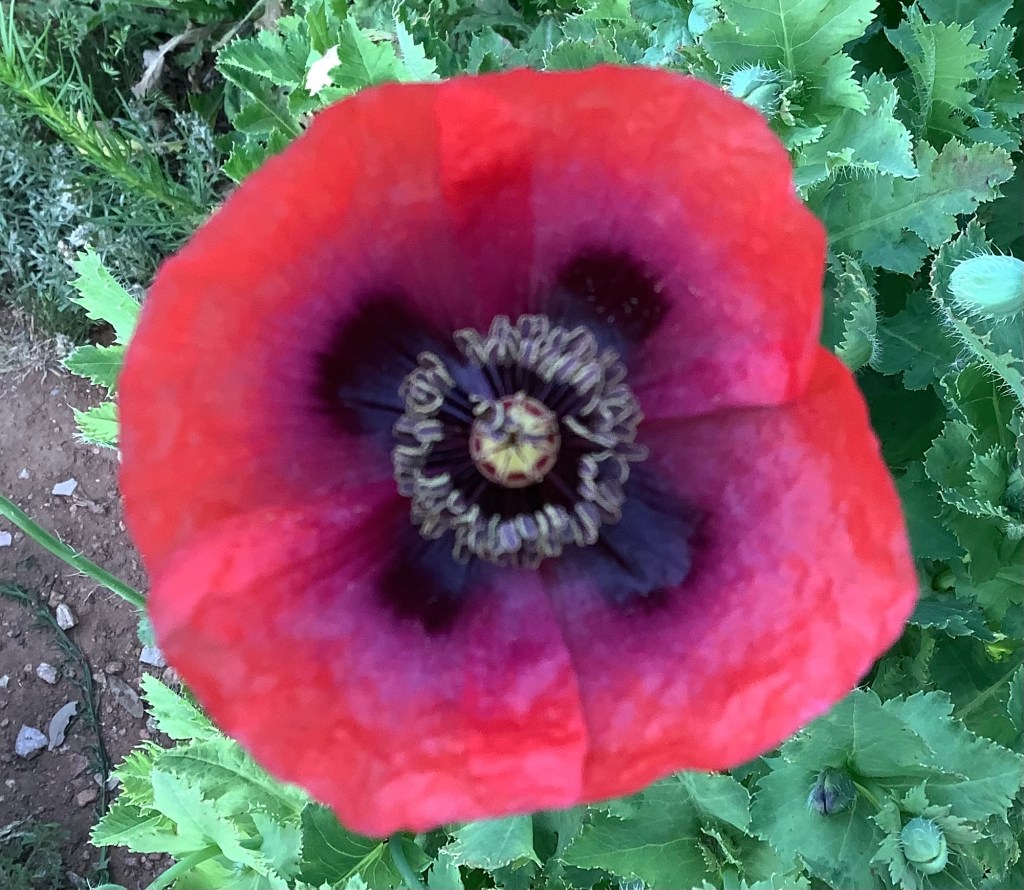
Red Poppies have grown in my garden since I first started my own gardens. My Dad didn’t grow poppies in Montana, so my love affair with poppies came about through gardening books about cottage style gardens (which, by the way, is like eye candy). I obtained my first packet of seeds from a former violin student’s parent in Dallas. She was German and had a very wild and free-range cottage garden. The cottage gardens were the envy of my heart. I loved the wild yarrow, eye-popping shades of poppies and larkspur and herbs all growing alongside her antique roses. I felt like I had stepped into a fairytale culture, somewhere *not* obsessed with the neat and tidy, extremely boring green lawn of our modern society. I was given my first start of red poppies and I’ve cherished them ever since.
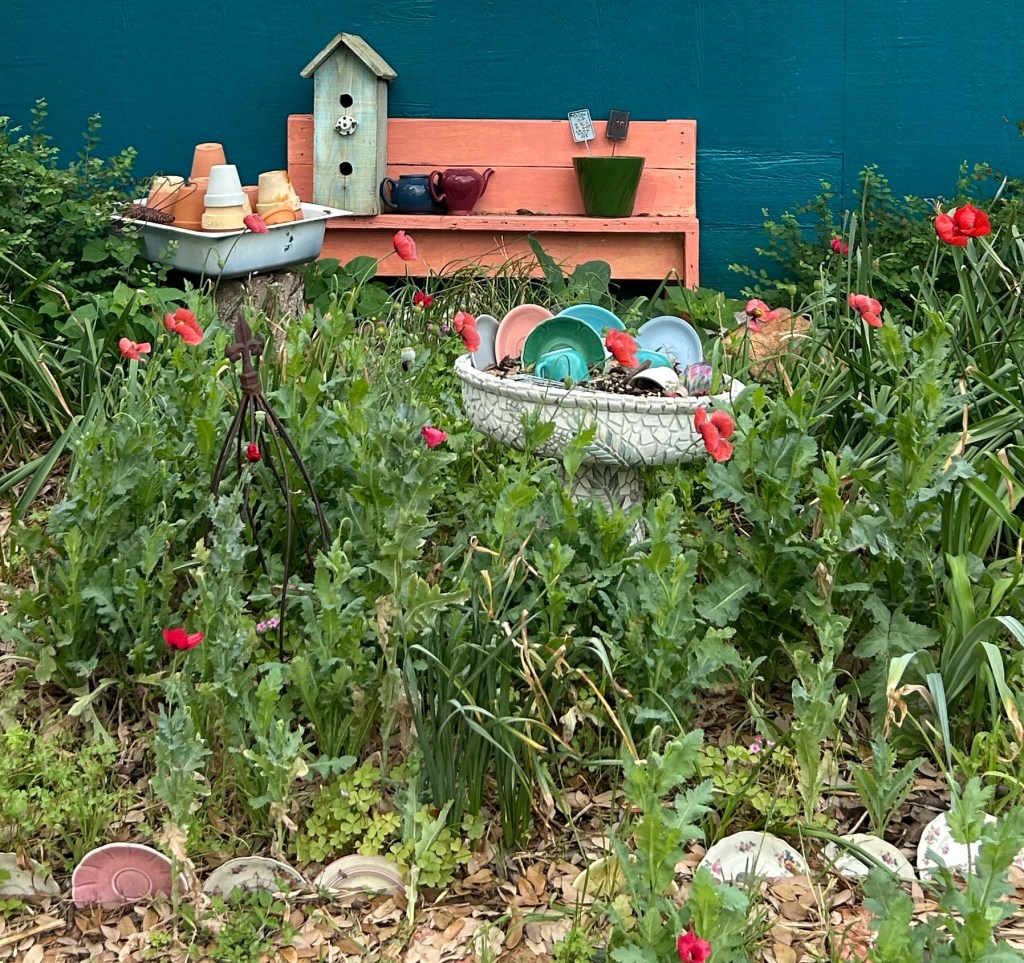
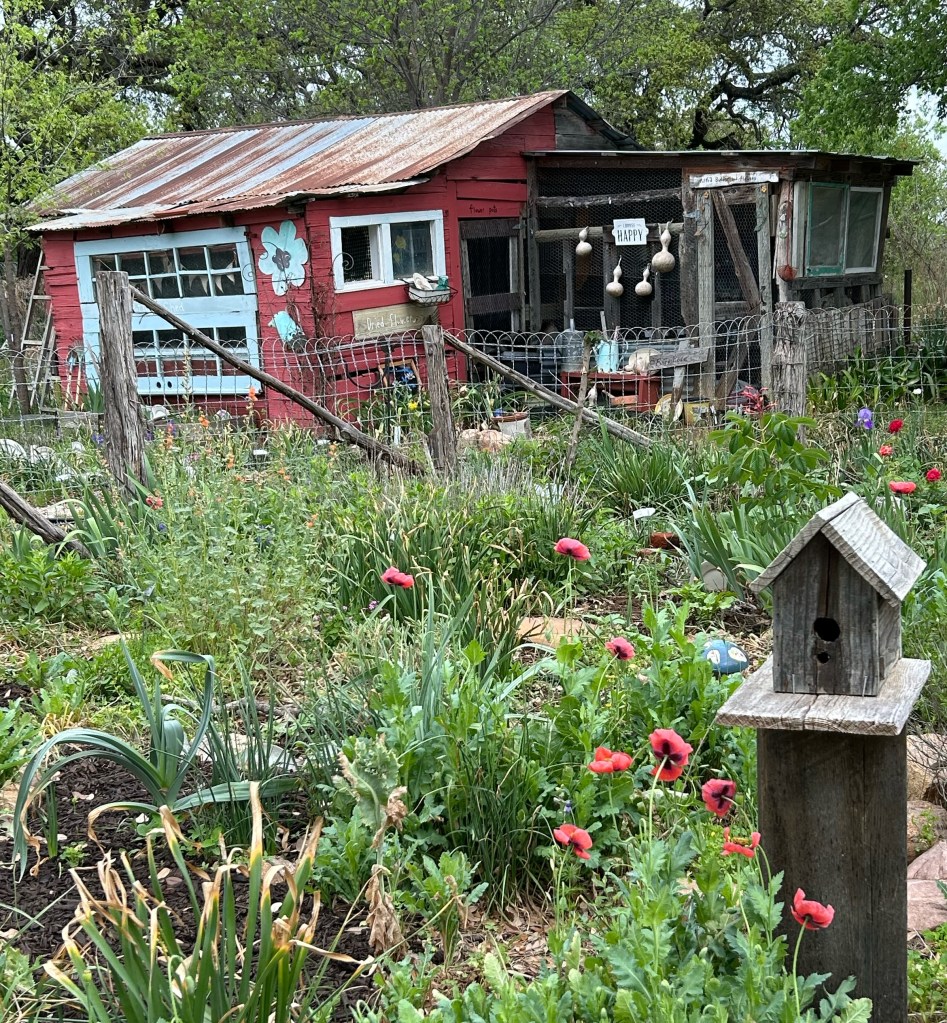
One thing to know about poppies, is that poppies like to ramble. There is no stopping the scattering of seeds once the poppy heads open up. Last year, my goal was to move the poppies into the wildflower area. I wanted to allow the front gardens to showcase the Spring bulbs. I worked hard at gently cutting the poppy heads, collecting and saving the seeds to scatter during Fall. For all you mathematically brilliant readers out there, guess how many poppies actually came up with all those great intentions?
None.
Not one single poppy.
That’s right. Not one intentionally sown seed of a poppy came up in my wildflower zone. Instead, my poppies just kept growing and blooming in their favorite spots in my front flower beds. It is almost as if poppy seeds know where they grow best…
This year, poppies have been very slow to emerge, as were all the wildflowers. It’s been a season of little to no rain. Without the rain in the Fall and Winter, our wildflowers can’t develop for the Spring bloom. Poppies naturally reseed in late Springtime, but I’ve heard Fall is best. I don’t plow up the field or rake my wildflowers in. I figure if nature doesn’t do it, I’m not going to do it either. I try to make sure invasive weeds are out of the wildflower zone so the little seedlings won’t get choked out. I also water the little seedlings in. Lack of water might actually have been the issue with my wildflower zone.
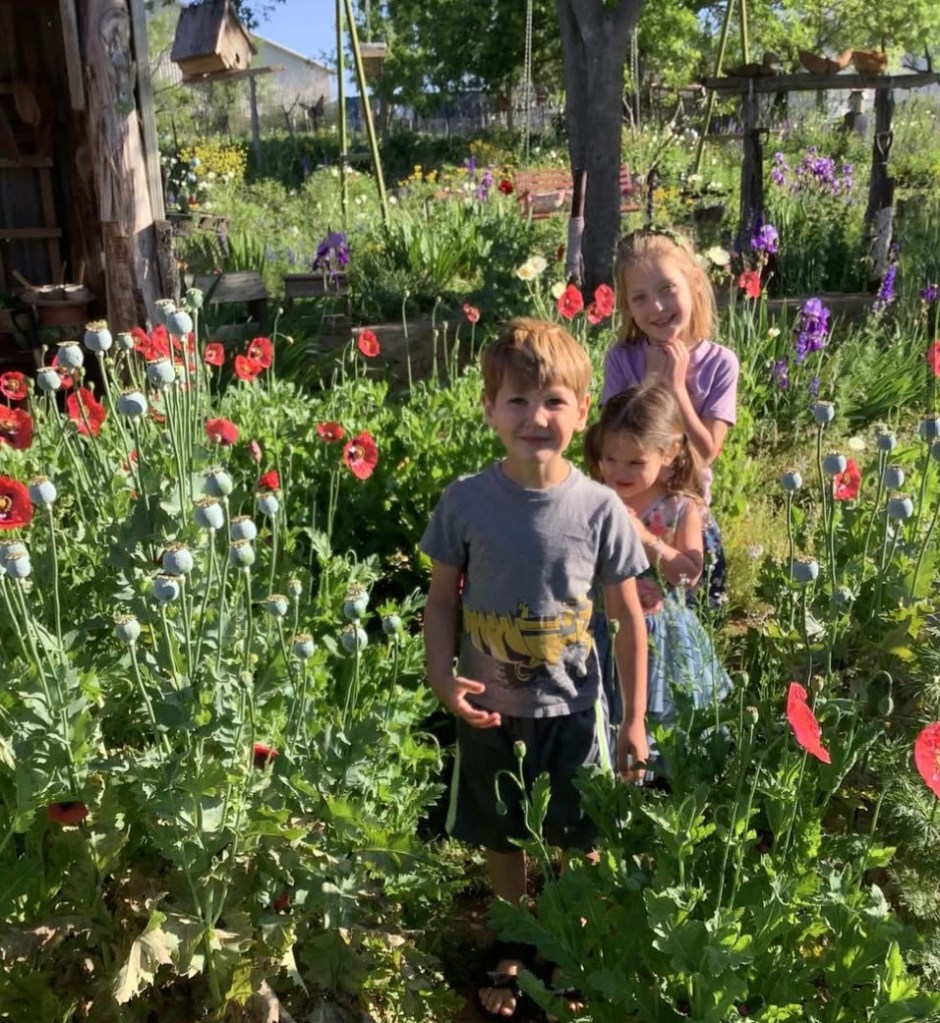
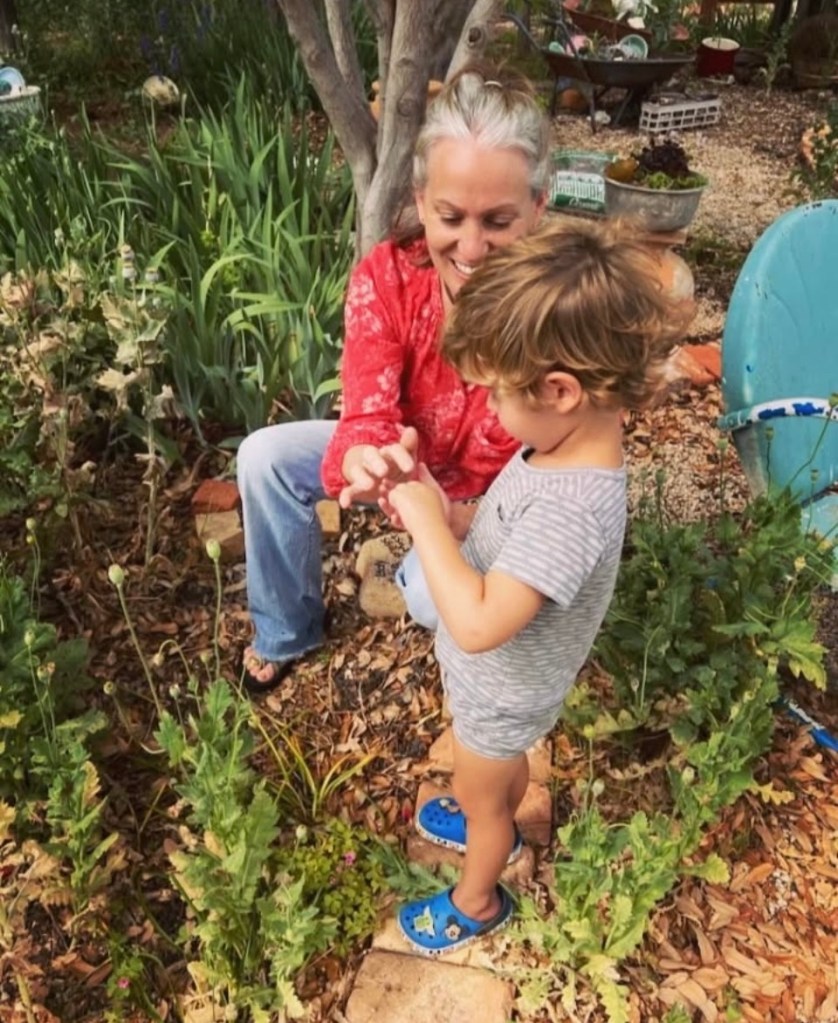
One of my favorite Springtime activities is to show children the magical little process of poppy seed collecting. It is so thrilling for children to watch hundreds of seeds come out of a single poppyhead.
This year, I plan on spreading wildflower love throughout my little town. I’m currently reading A Natural History of Empty Lots (riveting, I know). I have always enjoyed the idea of sowing seeds in empty places, much like in the beautiful children’s book Miss Rumphius. I’m excited for days to come so I can naturally decorate the empty lots around town.
Happy Gardening, my friends!


Leave a Reply