Tag: flowers

  • The Glorious Unnamed Crinum

    A Crinum by any other name still looks like, well… any other unnamed Crinum. I have done many deep dives into the world of naming Crinum. After I come up for air, I still have nothing in my intellectual bag of Crinum name knowledge. There are those out there who could tell me *exactly* which Crinum varieties I grow, but again… that would take more deep dives in which I’m not truly interested in. I just prefer to grow pretty flowers and write. 🙂

    So how is it that I have flowers that I don’t know their names? Rest assured, I do call them by name. Just not Botanically specific names. Here is the short list of Crinum that enjoy residing at the Agape Haus Music Studio.

    *Hunting Cabin Crinum.

    *Ellen Bosenquat (gift)

    *James C Hardy (gift)

    *Eugenia’s Crinum

    *Old iron fence Crinum

    *Petite Crinum

    *12 Apostles Crinum (Fletcher Farm)

    *Bradley Crinum

    *Fletcher Farm Homestead Crinum

    *Christmas Crinum

    *Pink Spider Crinum

    *Pale Pink Crinum

    *Alba Pure White Crinum

    *Swiss Alps Fiddle Contest Crinum

    *Miss Margaret’s Crinum

    *Milk and Wine Crinum (most common in old homesteads)

    *Hollie’s A & M Crinum (baby bulbs)

    Most of the Crinum I grow have been salvaged from old Homestead tear-downs. Before the 2018 flood, I had all the beautiful Crinum well marked and organized. Now it is an Crinum Easter Egg hunt. After the gardens were relocated to my studio, the bulbs got mixed up. I’ve been sorting out the various Crinum for the past few years, but it’s taken a while for the bulbs to even bloom again in their new home. If the Crinum bulb is relocated, take great care not to let the bulbs dry out. Keep roots most at all cost or you will lose the following year’s flower display. This is the reason why I always dig flower bulbs the day before shipping, soak them 24 hours and then wrap in moist newspaper. It takes more time and energy than pre-packaged bulbs, but I’m in it for the flower not the finances. (Just ask my fairly frugal, reality-check husband)

    So, back to the many unknown names of Crinum…

    Crinum foliage looks almost exactly the same for most plants. When digging an old site that is or will be torn down, the flowers are typically not in bloom. I can recognize foliage of various bulbs, so I dig. Then I wait. And wait. And wait. And finally, a bloom! In order to name the Crinum, random thoughts swirl through my head at no neurologically-sound order…

    How many flowers are supported on one stem?

    What time of year is the bloom?

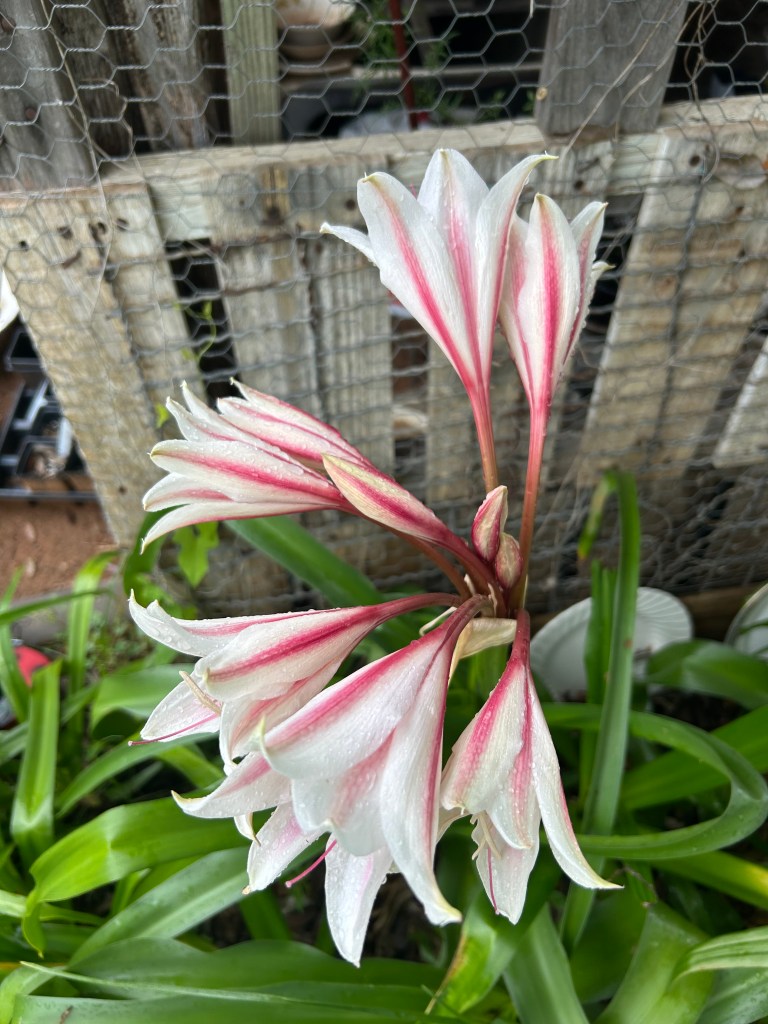
    How deep pink are the cute candy cane stripes?

    Have I seen this Crinum before?

    Is this variety shown in any of my favorite flower bulb books?

    How late will it be before I get to deep dive on Google image for a good idea of the name?


    I love the quest for a Crinum name. I love the vivacious flower display. I love the beauty and uniqueness of each bloom. I just really love these old gals.
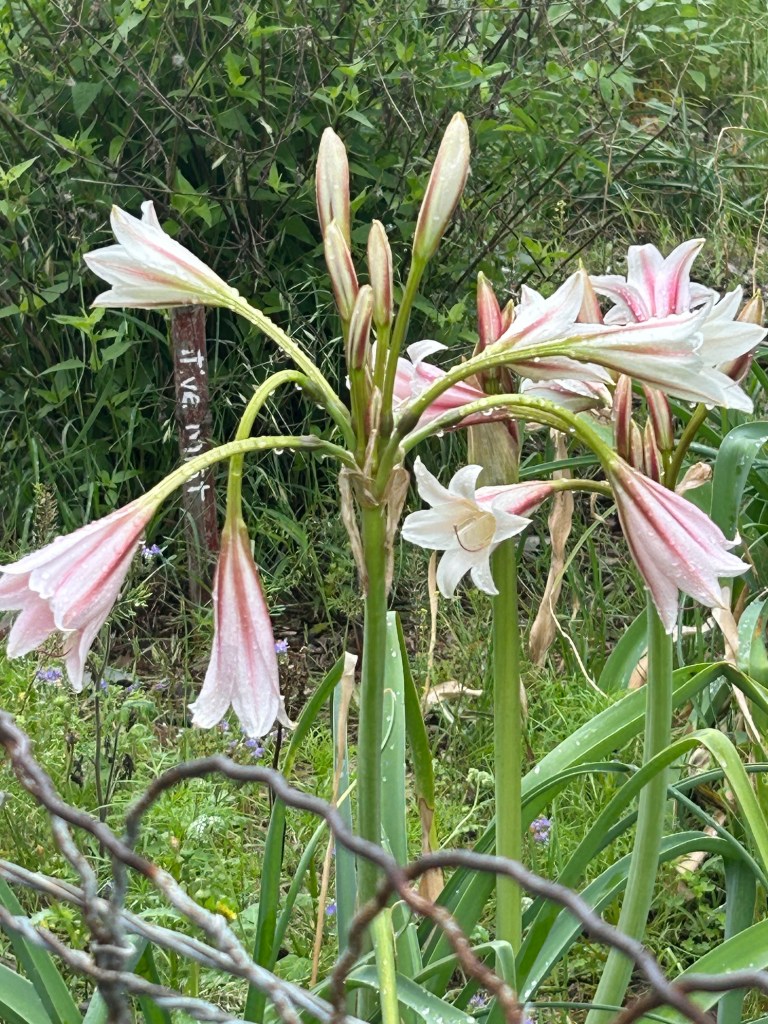
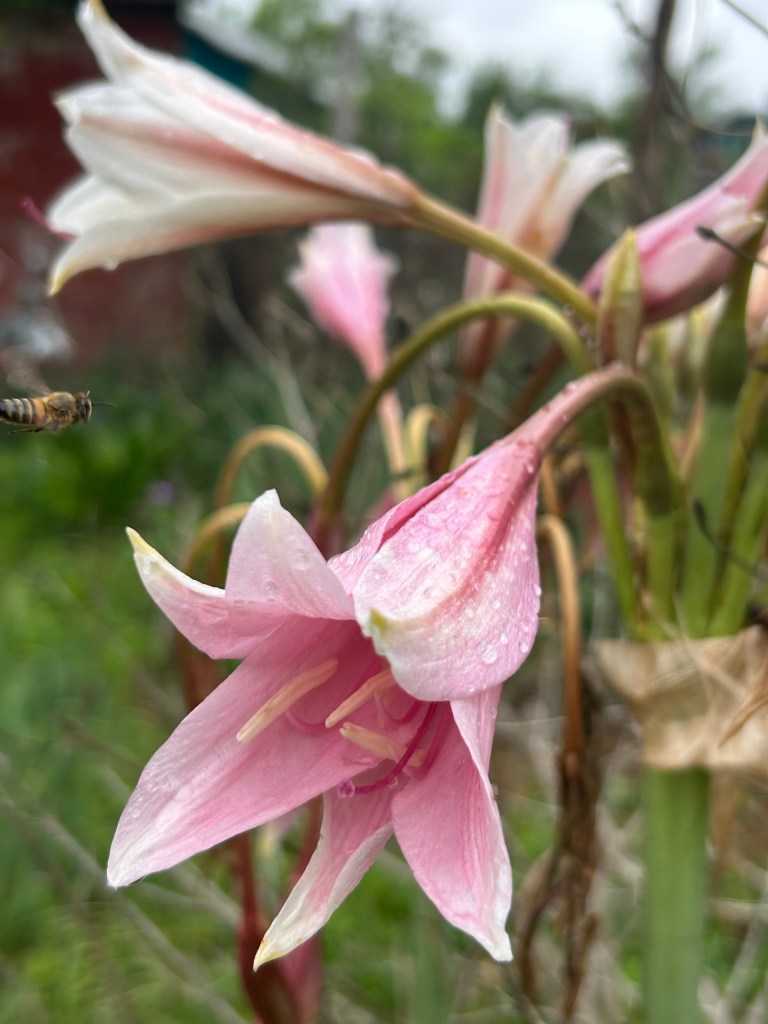
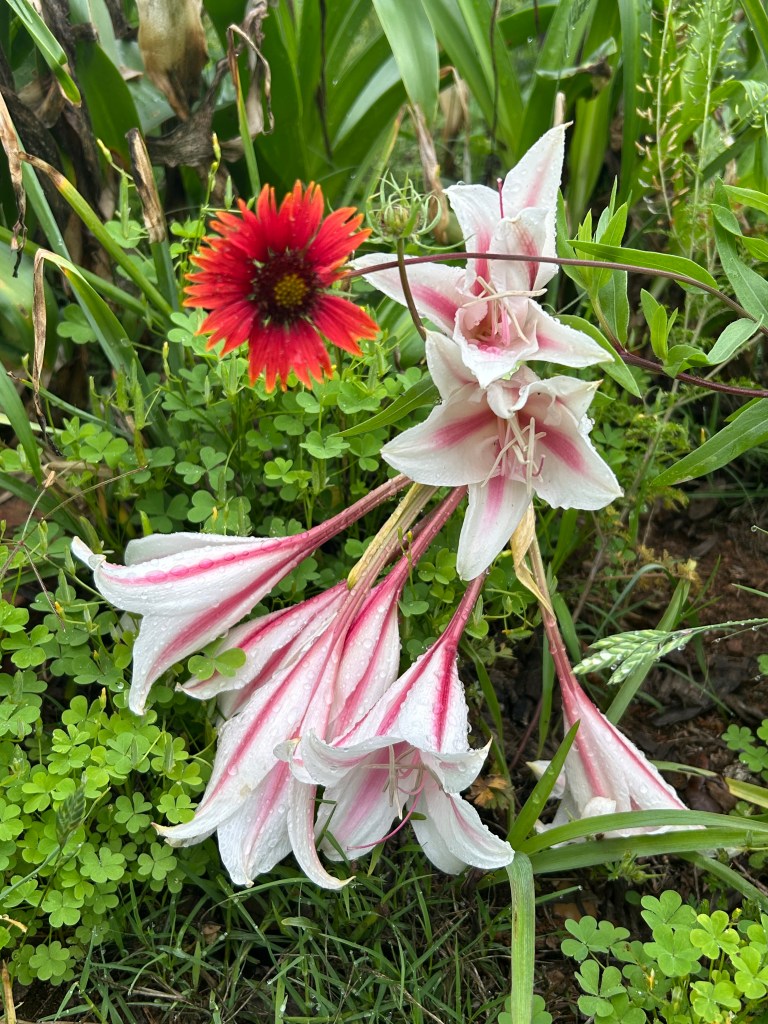
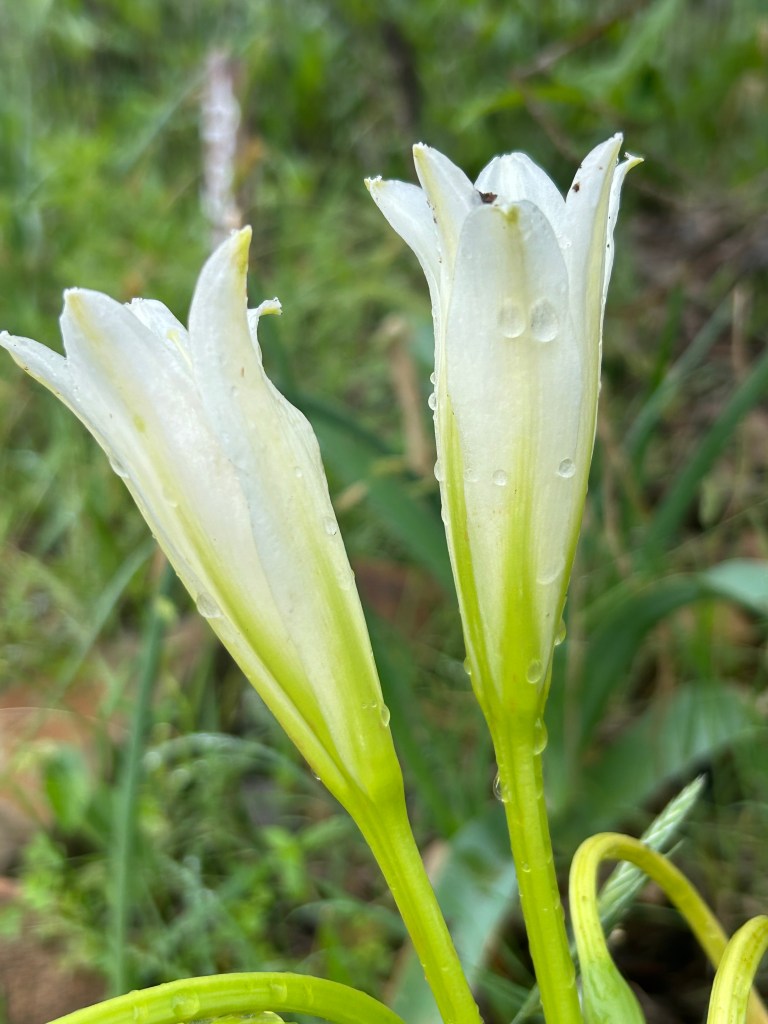
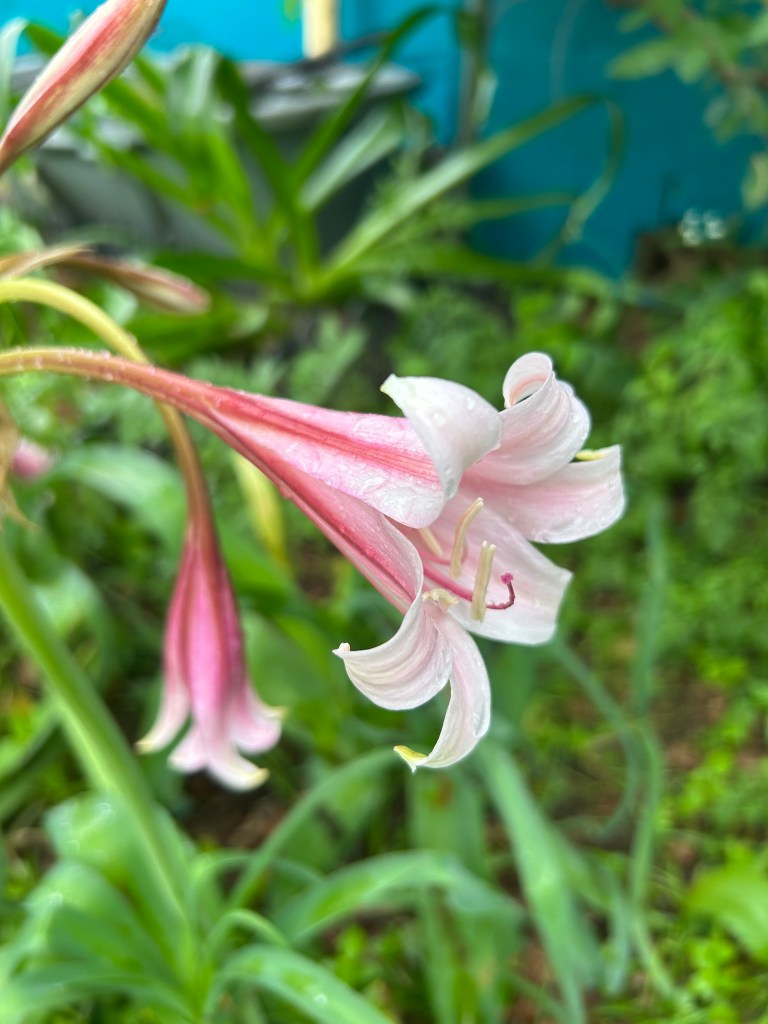
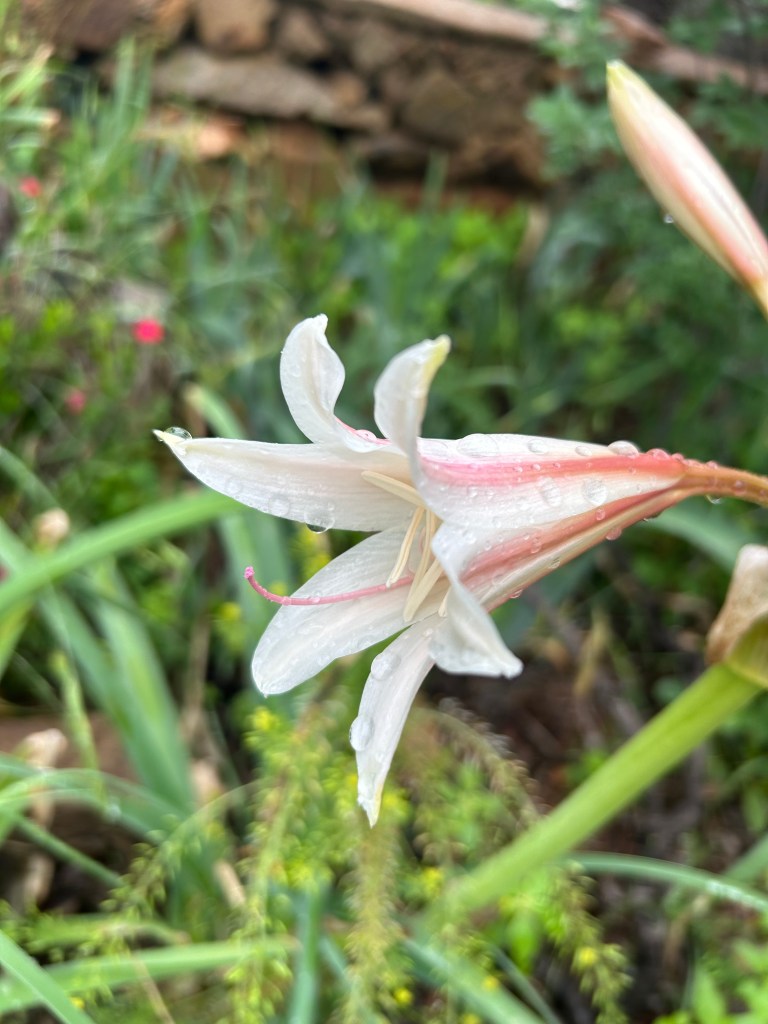
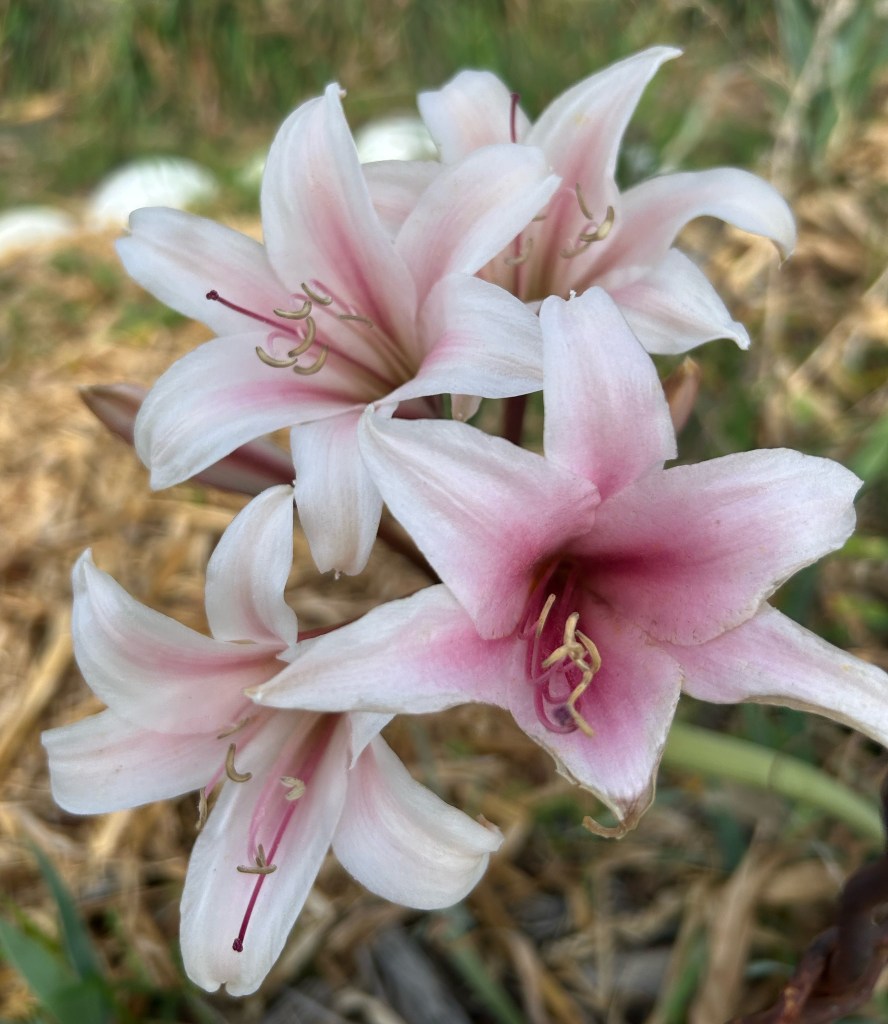
    Enjoy a very small glimpse of Crinum in the photos below. Each of these Crinum bloomed on a single day in April. What’s not to absolutely cherish?
    Email me if you’d like to know more about Heirloom bulbs or Crinum.
    Happy Gardening, my friends!

    Each photo is an unknown Crinum that has been salvaged from homesteads that have been torn down. The foliage looks the same, the blooms are different. Perhaps the only difference between flowers is the number of blooms, or maybe the shade of the candy cane stripe. Or perhaps the Crinum is a petite flowering beauty or maybe just plain white. There are botanical experts that can distinguish between the smallest of differences, which I find fascinating.

    Crinum are a staple in the Heirloom garden.

    Nowadays, one has to pay upwards of $50-$75 per bulb, and it’s a hard pass to even find one at a local stop. I’d ship more Crinum out if they weren’t so massive and heavy.

  • Sharing Beauty in the Small Spaces

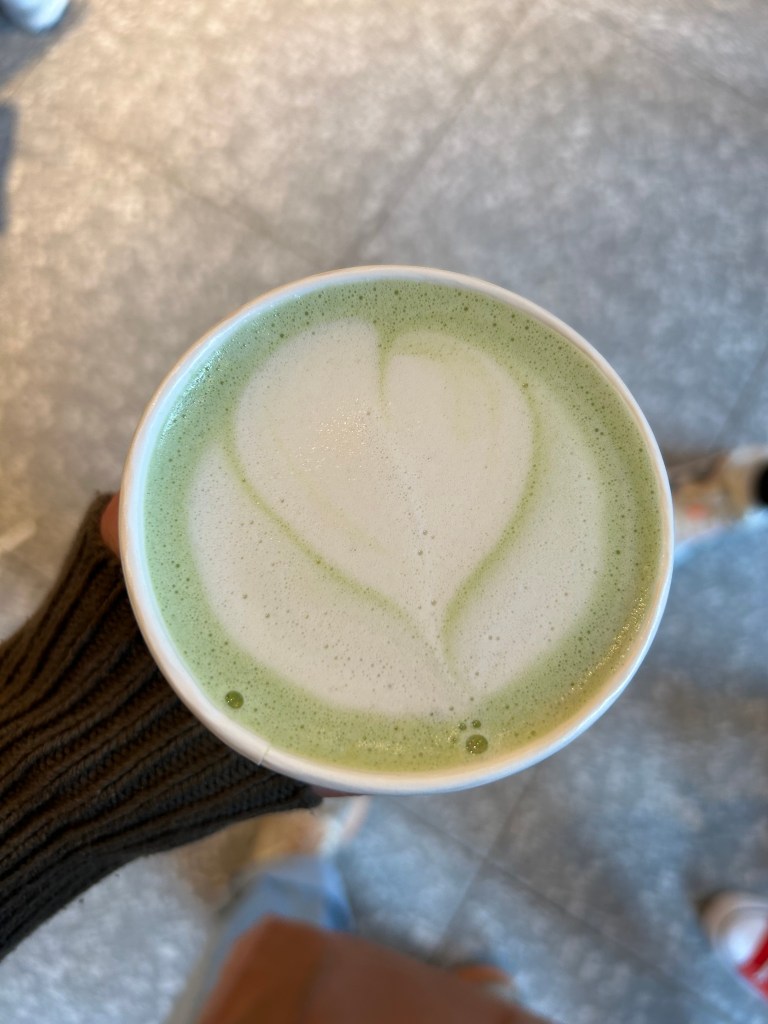
    I love seeing beauty. All types of beauty. Whether it is a lovely storefront in a metropolitan city, or a whimsical heart created in the foam of my cappuccino. I love seeing the small spaces where people don’t “have to” create beauty, they simply do.

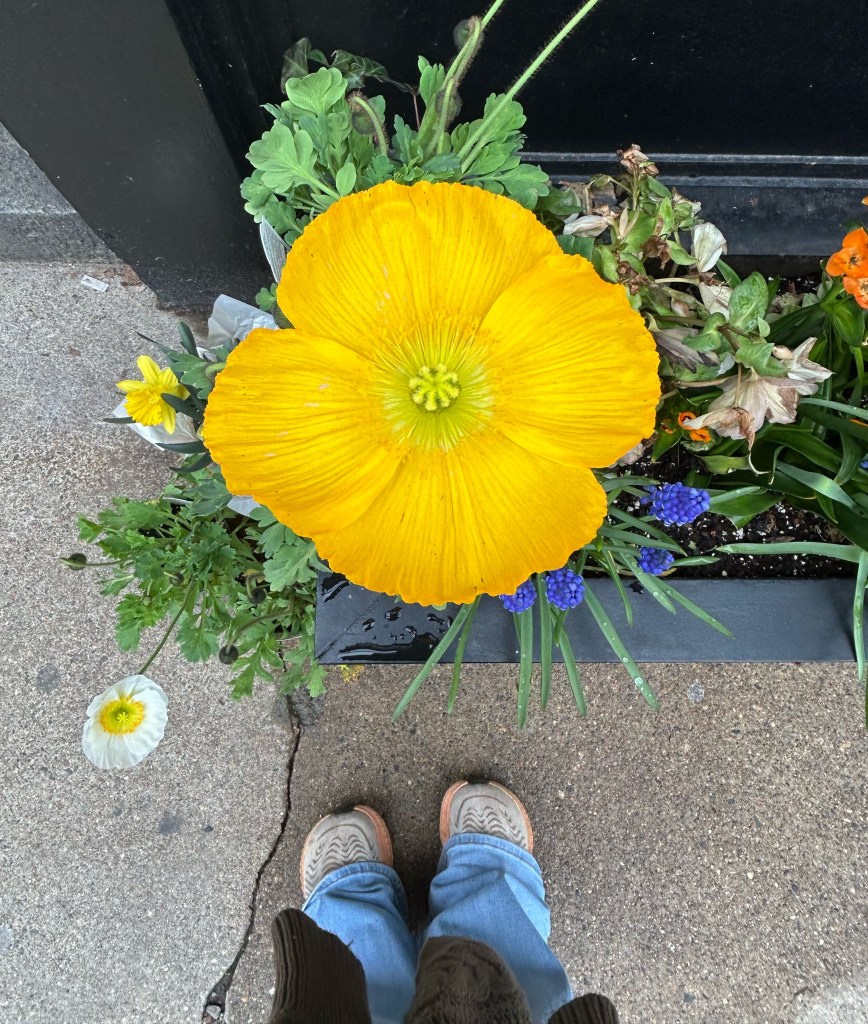
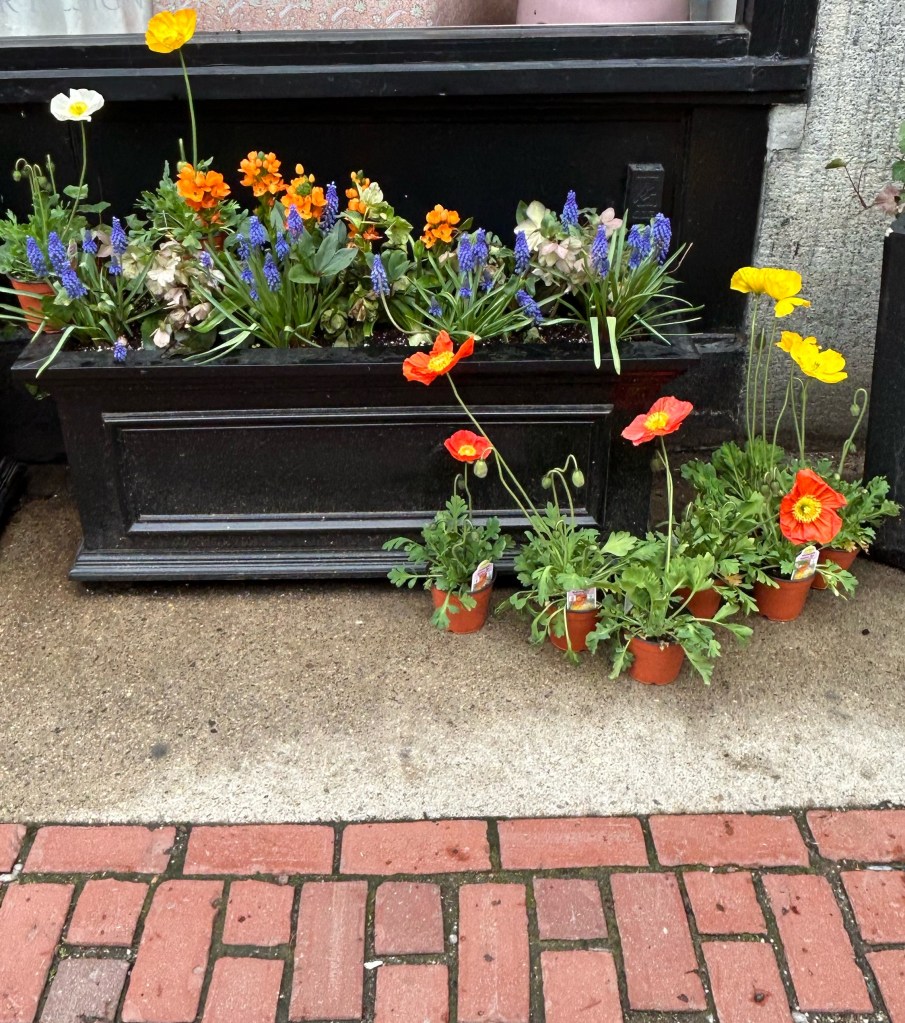
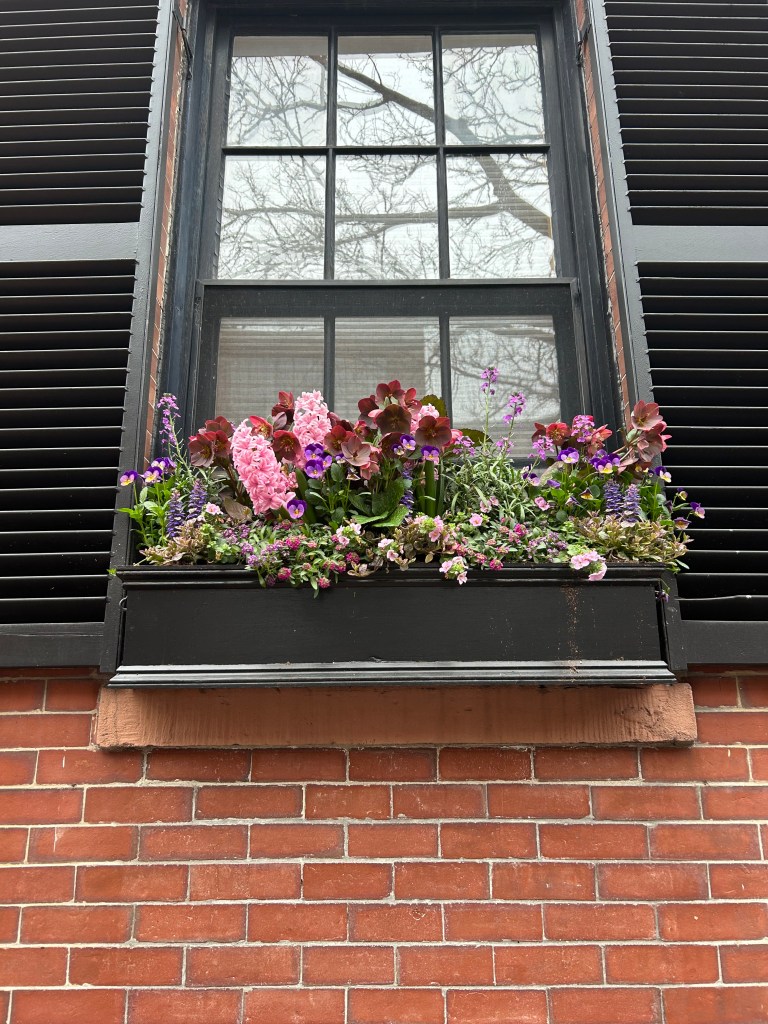
    I just got back from a very quick trip to Boston to visit my daughters. It was rainy and cold, but the window boxes were bright and sunny. I am always impressed with a creative window box. I’ve tried window boxes in the past, and it has been a skill that I don’t seem to have. I am now reinvigorated and completely inspired. I hope to create some lovely boxes in the Fall. I love how beauty is contagious.

    Beauty can be found in the ordinary. The simplest of gestures can create a beautiful piece of art. Small spaces become profoundly important to the soul. Tiny acts of kindness might seem trivial, but imagine a world where everything we did was simply to share beauty with others? There’d be no more trash in the sidewalk gutter for someone else to pick up, no more slum lords preying on the innocent or the penniless, no more pesticides harming the natural world and no more self-seeking greed. What a world it would be!

    I’ve always been drawn to little spaces, tiny bulbs or pieces of broken china or sea glass. Remnants of beauty that once was and that could be again. I think we all crave beauty, but in such a loud world it’s hard to locate our small spaces to share. Sharing beauty takes an intentional focus towards others. Moment by moment, we step aside ourselves to make the world better through the small spaces. Let’s face it, most of us will never be multi-millionaire philanthropists, but we all have the chance at creating beauty in small spaces.

    Happy gardening, my friends! Find your small spaces and share your beauty:)

  • The Glorious Red Poppy

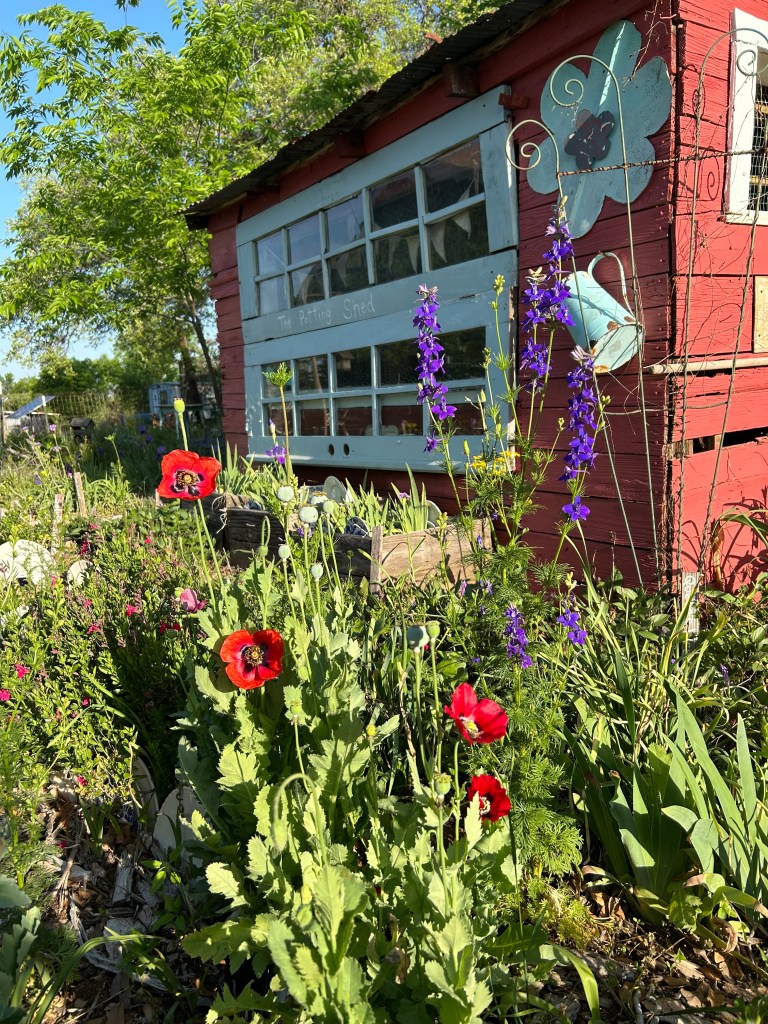
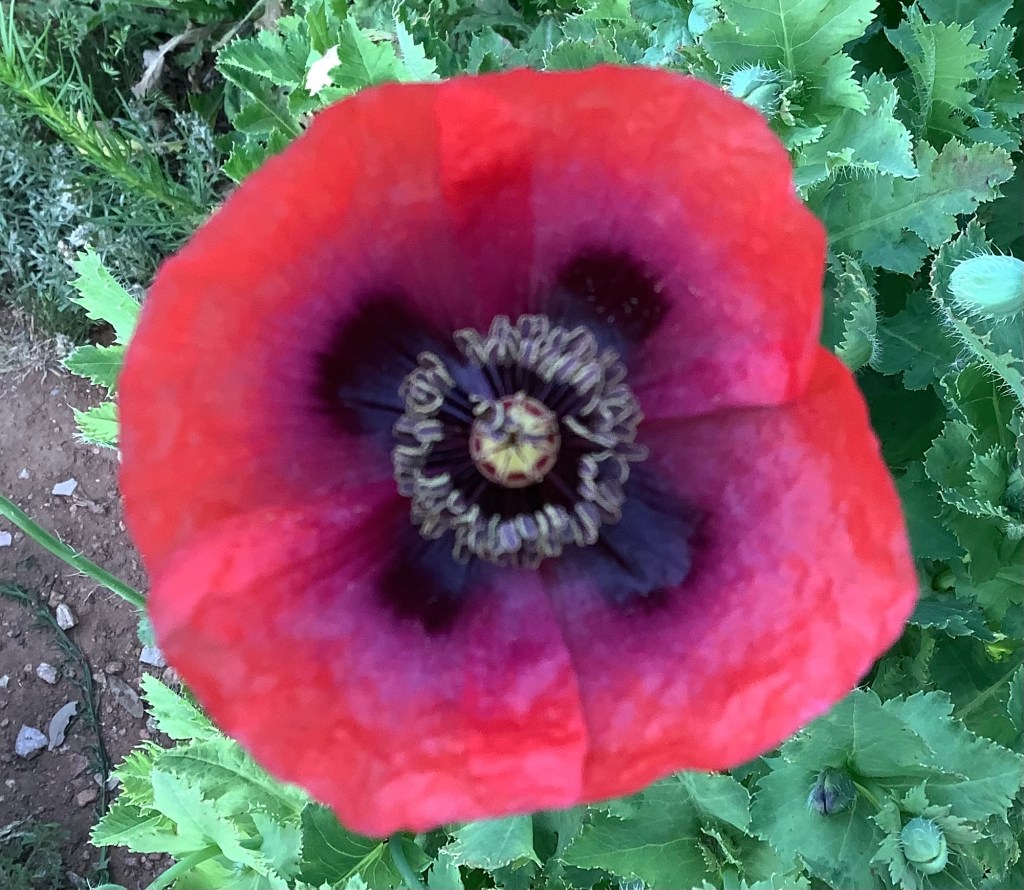
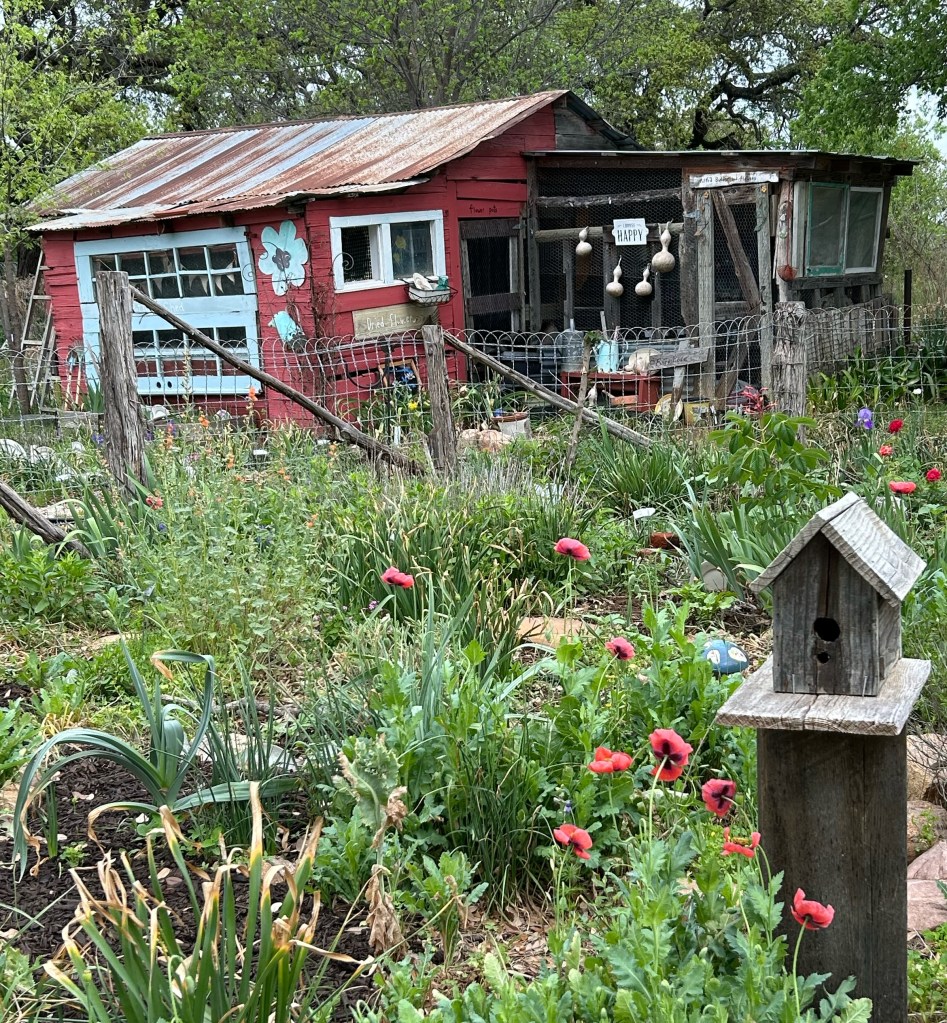
    First, I’d like to say that a Spring without poppies is like a chocolate milkshake without the chocolate. Or even worse, decaf coffee. It just isn’t right. Spring is a time of renewal and healing. The red poppy is known as the “flower of remembrance”. Spring and red poppies go together like birds of a feather. Peas and carrots. I simply can’t imagine Springtime without my cherished red poppies.

    Red Poppies have grown in my garden since I first started my own gardens. My Dad didn’t grow poppies in Montana, so my love affair with poppies came about through gardening books about cottage style gardens (which, by the way, is like eye candy). I obtained my first packet of seeds from a former violin student’s parent in Dallas. She was German and had a very wild and free-range cottage garden. The cottage gardens were the envy of my heart. I loved the wild yarrow, eye-popping shades of poppies and larkspur and herbs all growing alongside her antique roses. I felt like I had stepped into a fairytale culture, somewhere *not* obsessed with the neat and tidy, extremely boring green lawn of our modern society. I was given my first start of red poppies and I’ve cherished them ever since.

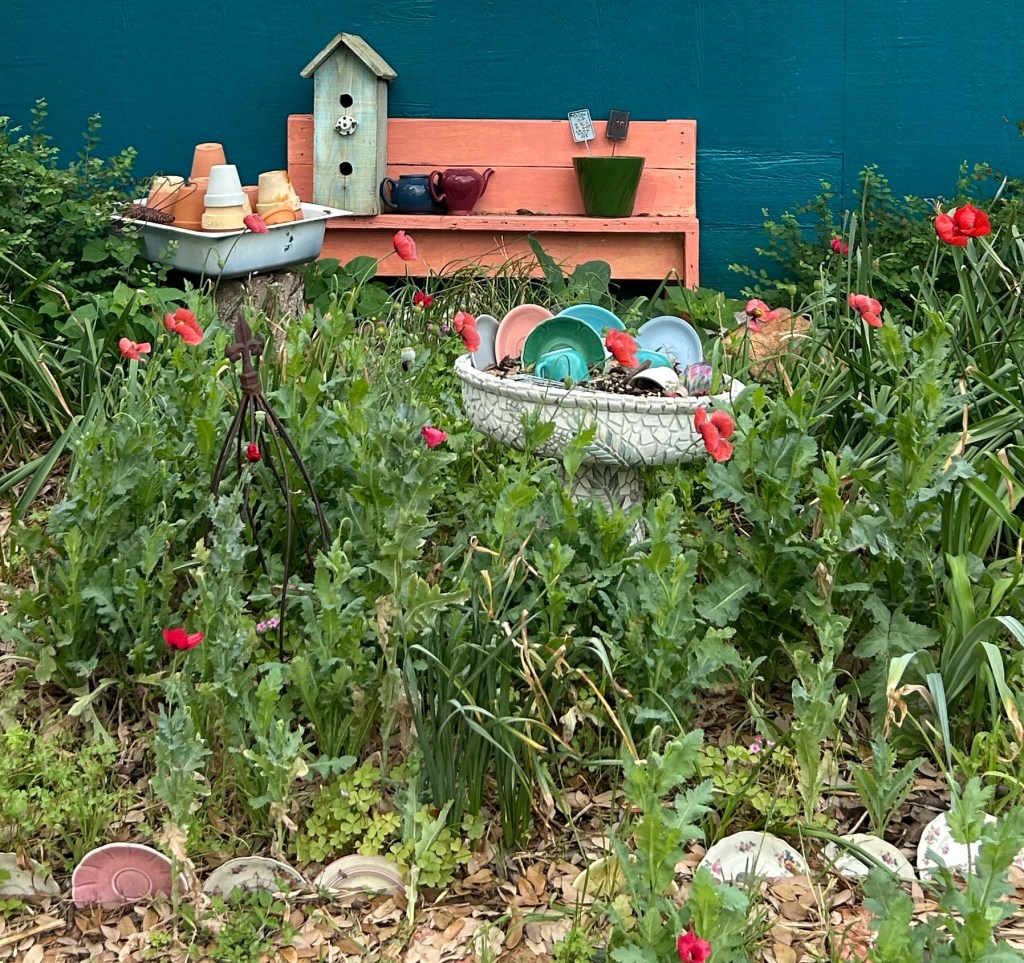
    One thing to know about poppies, is that poppies like to ramble. There is no stopping the scattering of seeds once the poppy heads open up. Last year, my goal was to move the poppies into the wildflower area. I wanted to allow the front gardens to showcase the Spring bulbs. I worked hard at gently cutting the poppy heads, collecting and saving the seeds to scatter during Fall. For all you mathematically brilliant readers out there, guess how many poppies actually came up with all those great intentions?

    None.

    Not one single poppy.


    That’s right. Not one intentionally sown seed of a poppy came up in my wildflower zone. Instead, my poppies just kept growing and blooming in their favorite spots in my front flower beds. It is almost as if poppy seeds know where they grow best…

    Screenshot

    This year, poppies have been very slow to emerge, as were all the wildflowers. It’s been a season of little to no rain. Without the rain in the Fall and Winter, our wildflowers can’t develop for the Spring bloom. Poppies naturally reseed in late Springtime, but I’ve heard Fall is best. I don’t plow up the field or rake my wildflowers in. I figure if nature doesn’t do it, I’m not going to do it either. I try to make sure invasive weeds are out of the wildflower zone so the little seedlings won’t get choked out. I also water the little seedlings in. Lack of water might actually have been the issue with my wildflower zone.
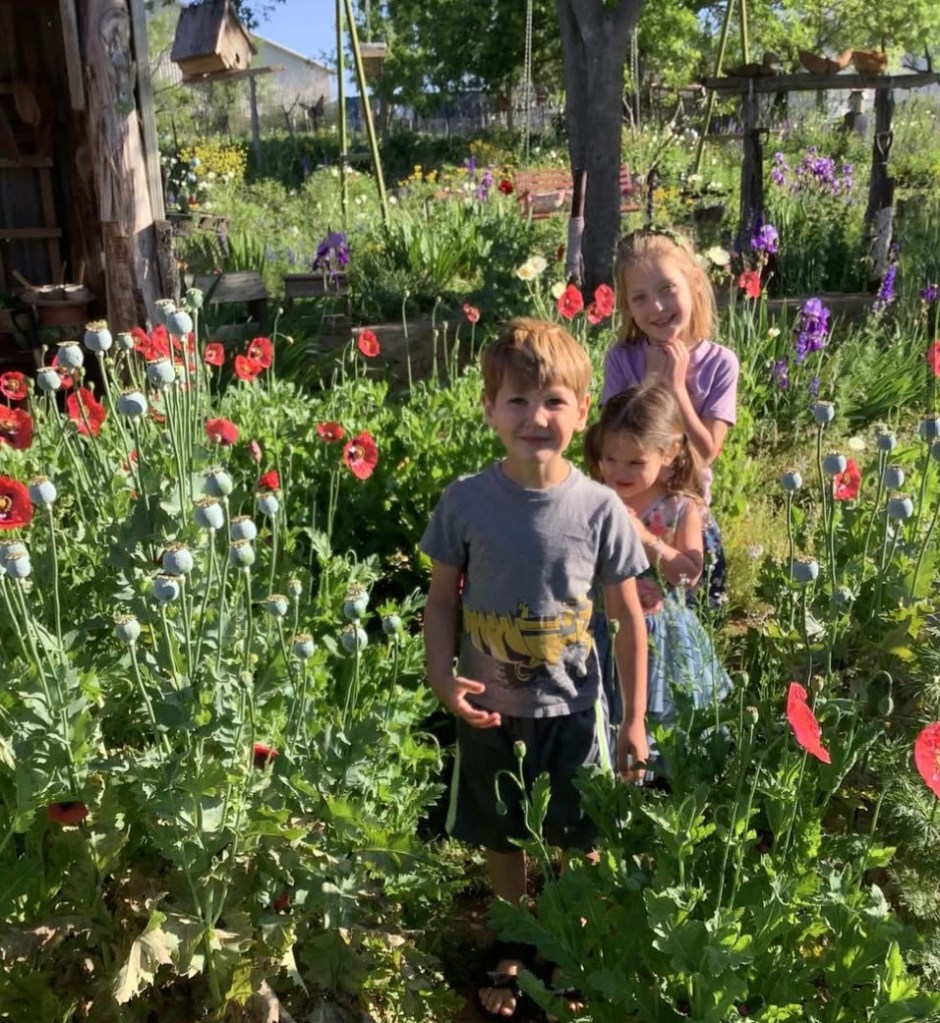
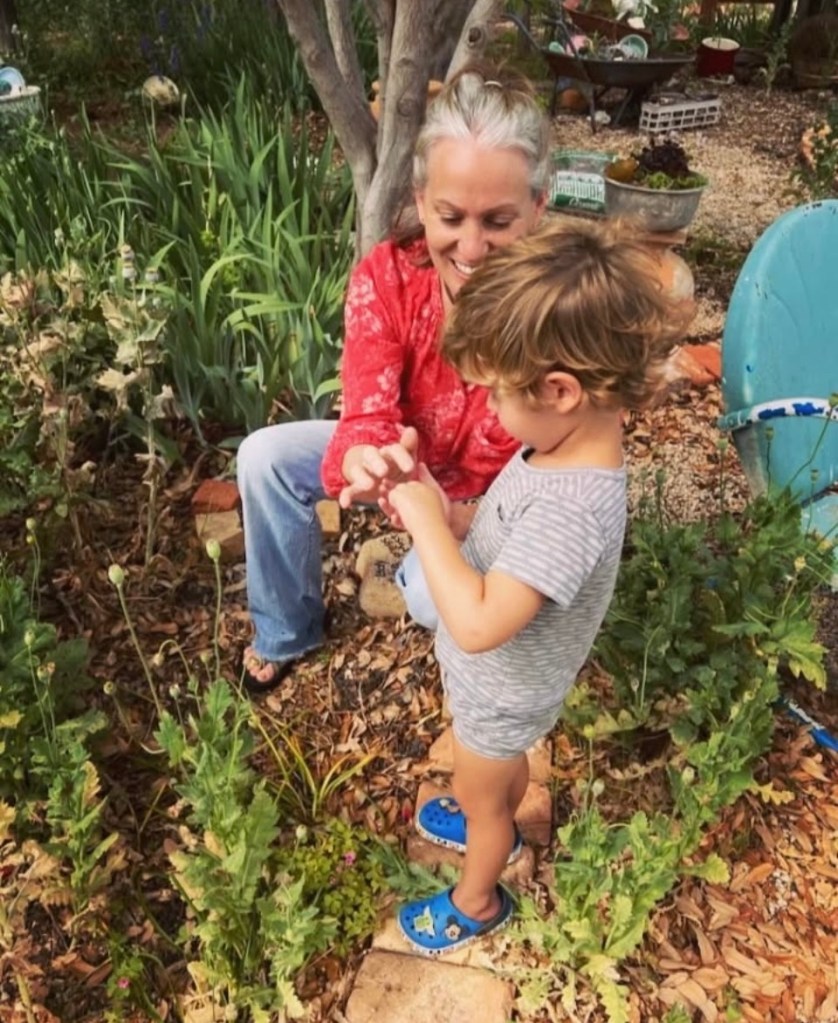
    One of my favorite Springtime activities is to show children the magical little process of poppy seed collecting. It is so thrilling for children to watch hundreds of seeds come out of a single poppyhead.

    Screenshot

    This year, I plan on spreading wildflower love throughout my little town. I’m currently reading A Natural History of Empty Lots (riveting, I know). I have always enjoyed the idea of sowing seeds in empty places, much like in the beautiful children’s book Miss Rumphius. I’m excited for days to come so I can naturally decorate the empty lots around town.

    Happy Gardening, my friends!

  • Shining White in the Dark

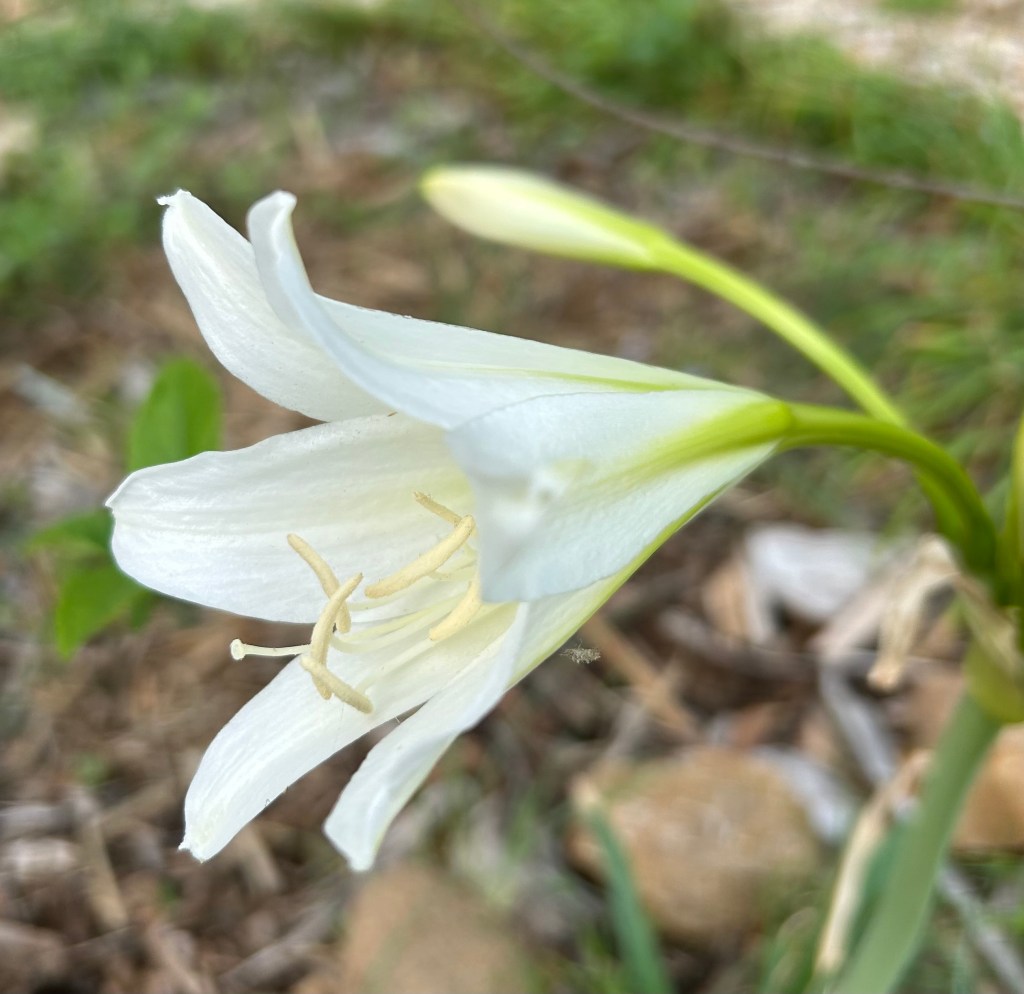
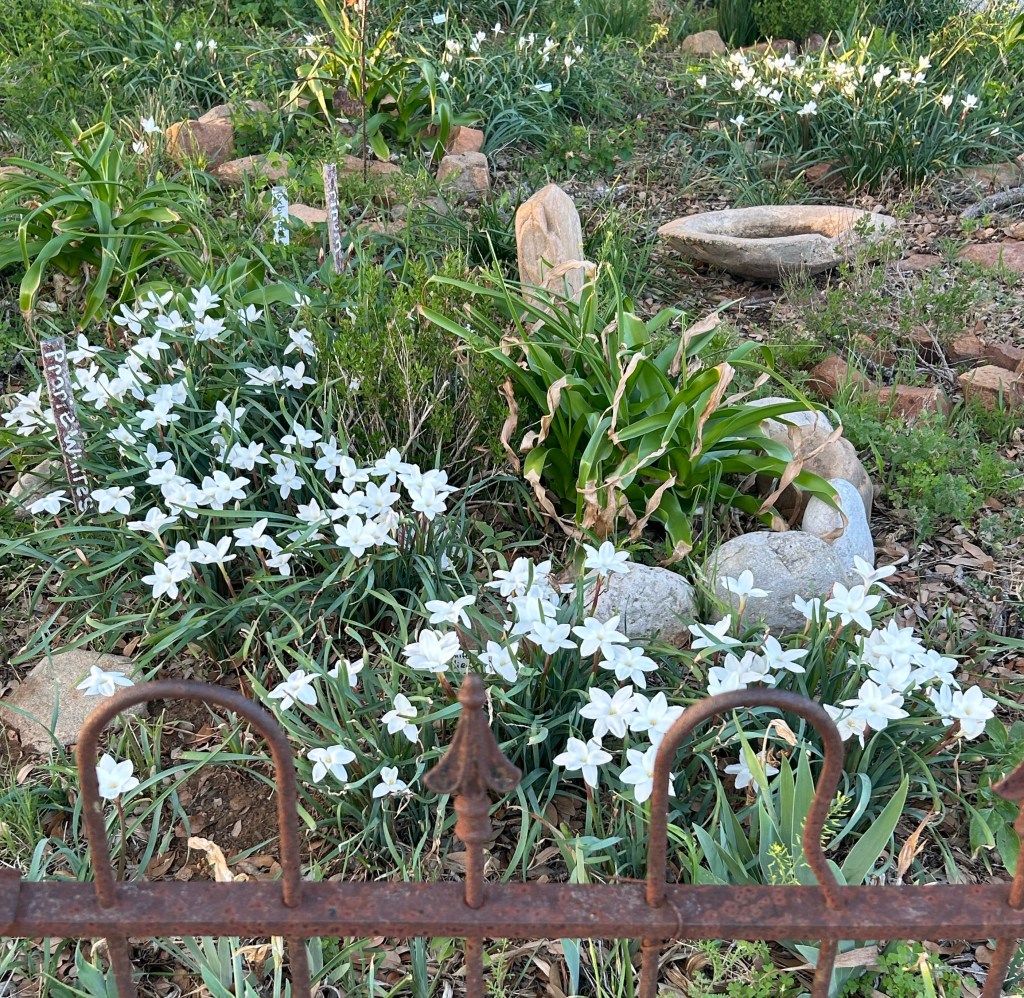
    The glorious Hill Country Prairie Rain Lily, Cooperia pendunculata, is finally in bloom! Oh, the sweet aroma of this native treasure after a nice Spring rain!
    Prairie Whites are so lovely that both the Zephyranthes and Cooperia categories of rain lilies claim her as their own. I am not a professional botanist nor do I play one on Web MD, so I simply call her “Prairie White Rain Lily”. This particular bulb has been with me for almost 20 years, and she has never ceased to amaze me. Unlike many flower bulbs, Prairie Whites, are repeat bloomers. Each time it rains after a period of dry, the bulbs bloom. Rain lilies are delightful surprises for your garden. The Lord’s mercies found new every morning.

    My favorite attribute of the Prairie White is that she blooms at night. She delights herself in the dark and closes her petals in the hot, direct sun. She remains pure and untarnished, blooming for many days. Prairie Whites also laugh at drought conditions. I’ve never seen a bulb (besides the Oxblood Lily) grow so vigorously in times of drought. It is almost as if she has no fear of her surroundings. Darkness and drought can’t touch her beauty. She is rooted deep and her source of strength is not affected by outward conditions.

    Personally, I greatly admire this flower bulb.
    I want those attributes shining through in my own life. Unlike the Prairie White Rain Lily, I am deeply affected by my surroundings. I stress out when others stress. I get anxious and nervous when others get anxious. I get overwhelmed by the news and the endless bombardment of information. I am called an “empath”, and I have to work extremely hard to not be affected by the world around me. I struggle to bloom in the darkness. Honestly, what could be better than the ability to stay pure in darkness?
    I suppose the sweet aroma of goodness and faith that gently affects people, without even saying a word.

    Prairie Whites don’t scream at the top of their lungs, bragging loudly of their attributes. Nor do these sweet lily bulbs demand the attention of garden viewers. Heck, most people don’t even know they are around until you smell their sweetness.

    Quiet beauty that is clothed in pure white, shining through the darkness.

    In a world of hot pink, flamboyant fake flowers, isn’t it nice to gaze upon a meek and gentle, pure white flower that simply reminds us to bloom in the dark?

    Bloom, my friends. Bloom. Don’t let the darkness overwhelm you.

  • A Gift of Wood’s Rose

    My Spring Break started the same as any other week. Violin lessons and gardening. The weather was absolutely beautiful. We are still recovering from the ridiculous late freeze that bit all the garden’s new spring growth. The ever-present challenge of Texas gardening is likened to a new intense level of Jimanji, with temperatures reaching upwards of 90 degrees soon after the freeze. Luckily, Luciano, my former student and garden helper extraordinaire, was in town for his Spring Break. The gardens were in need of Luciano’s gentle ways (I can be more like a rabid squirrel).

    ”Would you like some roses? I have a few that I started from seed.”

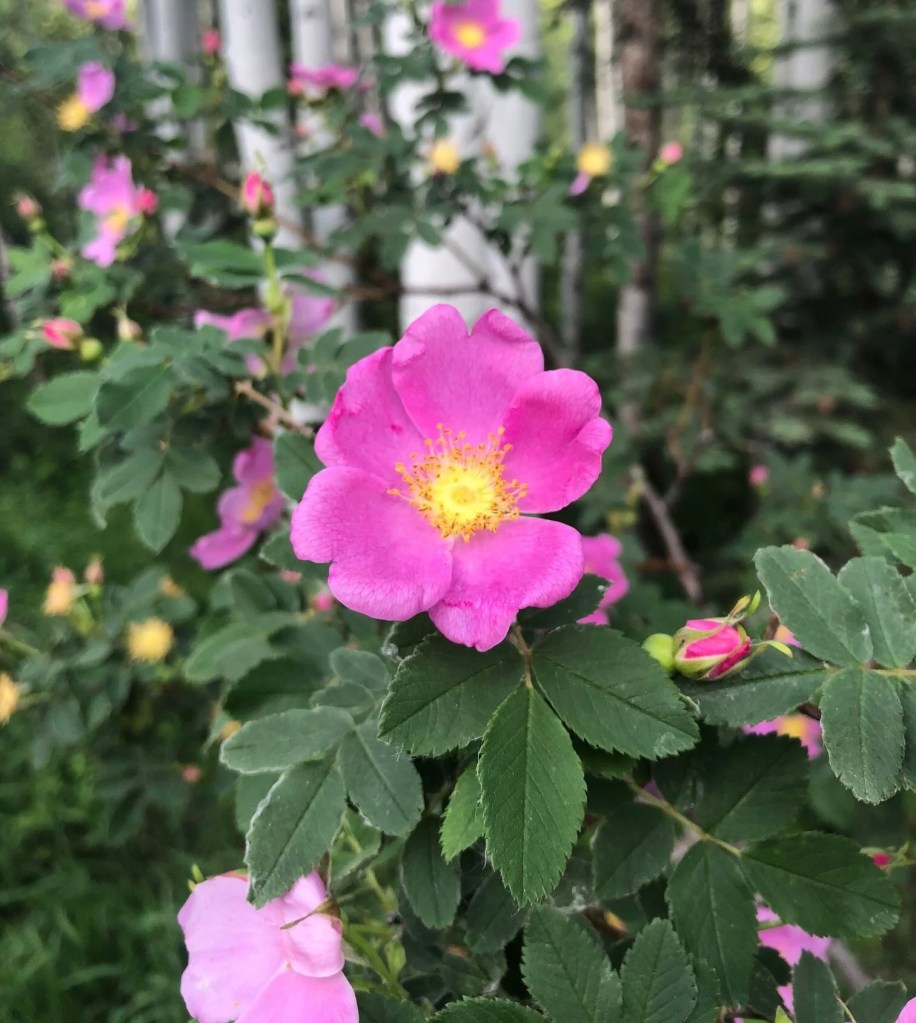
    Would I?! Music to my ears! (My rose garden is still recovering from the gophers). I did not realize that I was actually being gifted with over 10 beautiful little baby roses!!! Everything Luciano touches grows. Apparently, in between his horticultural collegiate studies, he found time to grow roses from a few rose hips. The rose hips were off of an old, established Wood’s Rose. I was not familiar with this rose, but from everything I’ve read, they look perfectly suited for our area. Luciano is amazing.
    I have secret plans that he will take over the Agape Haus gardens when I retire, but that’s for another day.

    I have a lot to do this week in the garden. In addition to planting the remaining Wood’s Roses, I will be pulling weeds and trying not to hurt my hands in the process. In my continuous effort to be intentional and NOT behave like a squirrel, I am *trying* to take small areas to tackle the weeds. After I pull the unwanted weeds, I am applying a nice, thick layer of organic mulch. In larger areas, I’m going to use the good ‘ol moist cardboard method. It was an unusually poor wildflower season due to the lack of rain. Few flowers with a lot of seeding grasses. I did manage to get my wildflower habitat started, with little to no flowers, but at least it is outlined with old Live Oak limbs and looks hip. I’ve never had the luxury of just kicking back in small areas before and focus….I typically am running around looking for my shovel.
    Baby steps, Dr. Venkman. Baby steps.
    As I tell my family, “See the Growth” both literally and figuratively. 🙂

    Happy Gardening, my friends!
    Shout-out to Anna, a fellow Crinum lover. She requested some Crinum babies for herself and a friend. I love this.

  • The Unglamorous Dig

    There is not a lot of glamour in a spontaneous dig such as this. Actually, there is no glamour. It’s gross and dirty. Like my Mother, I worry about random snakes and spiders. When I unknowingly spot tear-downs, I am typically on my way somewhere important…dressed up for a concert, rehearsal or a wedding. Obviously without a shovel.

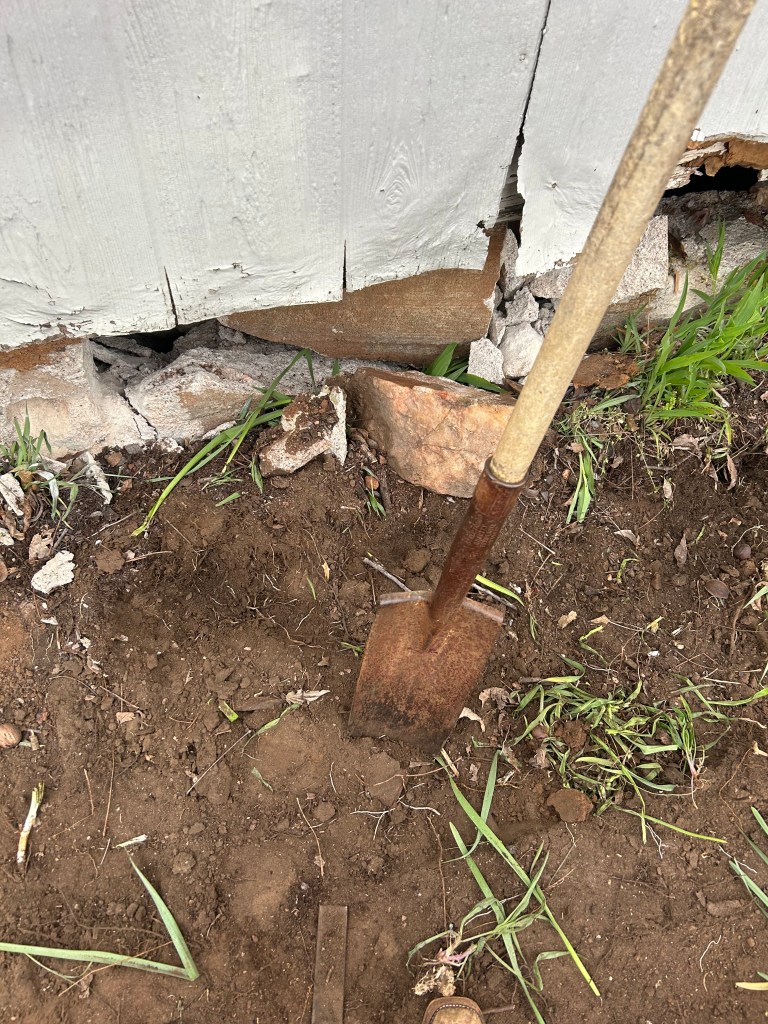
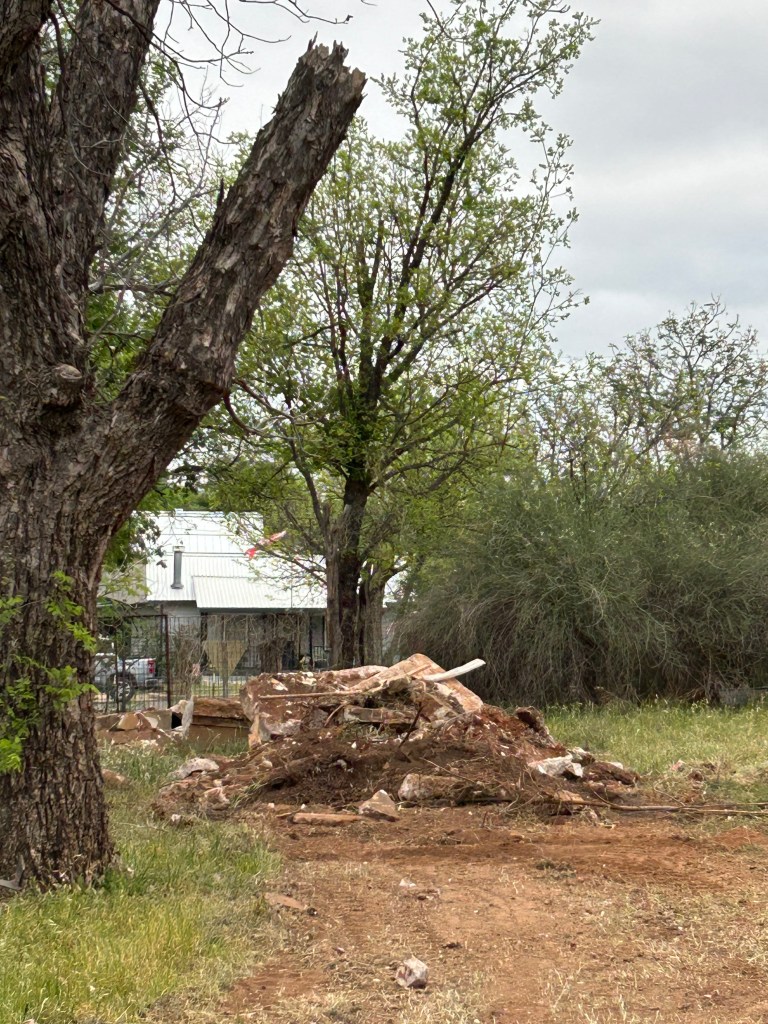
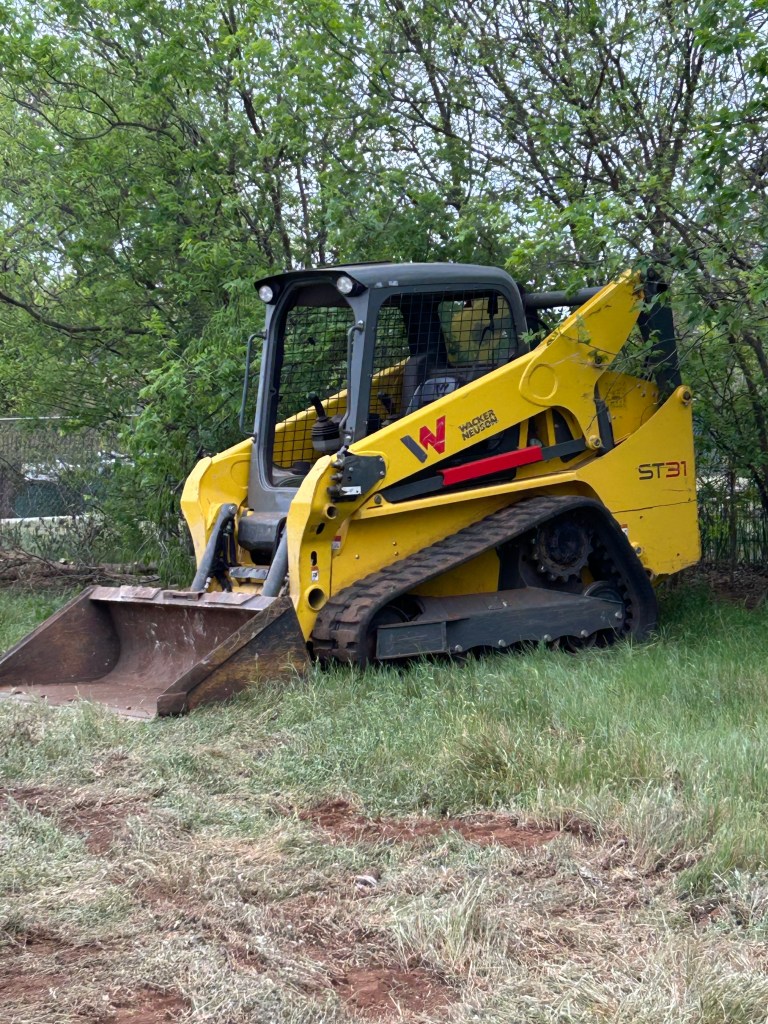
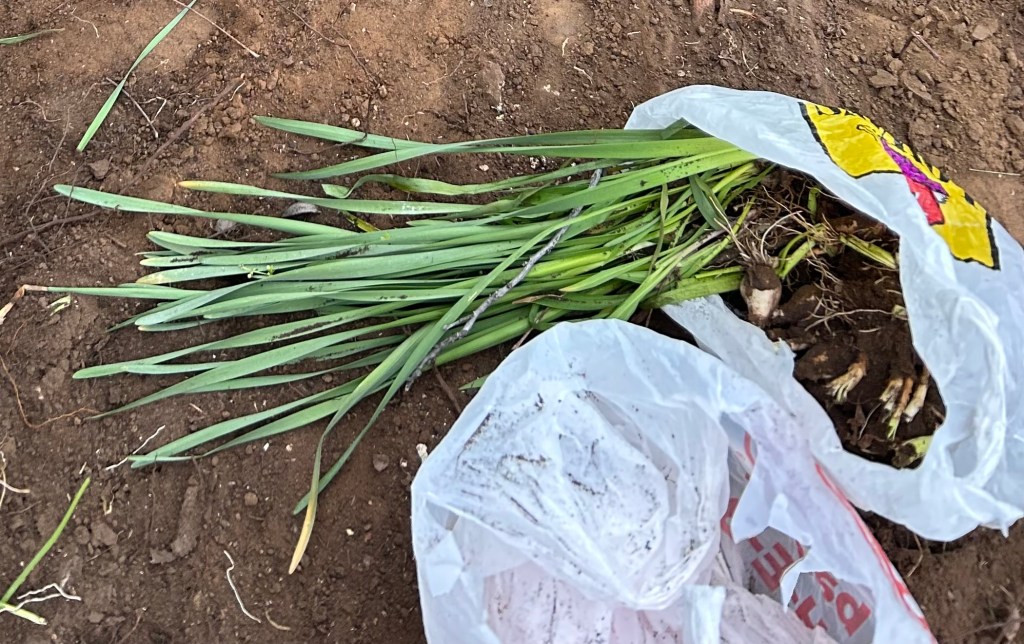
    This week, on my way to a Palm Sunday rehearsal, I noticed the bulldozer. The beautiful daffodil bed had already been flattened. After rehearsal (around 10 pm), I pulled up the loose bulbs out of the rubble. I was tired, but simply couldn’t imagine letting the bulbs dry up and die on the ground. I went by the old house the very next morning with a shovel, gloves and a few bags. I loaded up three bags full of very old daffodil bulbs, got them watered and placed them in a barn to rest.

    House tear-downs always make me sad. No matter how delapitated a house is, there is something inside my heart that wants to save it. I want things to stay exactly the way they always were. I want old picket fences, my Grandparents’ way of life and pass-along plants. I suppose I inherited my Dad’s love of old architecture and all the nostalgia that goes along with it.

    The old daffodil house had been run down for a long time. I was fortunate enough to meet the original owner’s son many moons ago. I was given permission to salvage some of the daffodils, as the house itself had an unknown future. I was happy to oblige and later shared daffodils with friends.

    There was nothing monumental in this dig. The world wasn’t changed and cancer wasn’t cured. I didn’t even reinvent the wheel. I didn’t hop fences or rip my jeans on barbed-wire. There were no rattlesnakes, no exciting details or I didn’t even dig up cool, rare flower bulbs. This was just an average dig to save some very old (and common) daffodil bulbs.
    I chronicle digs (no matter how glam) with pictures. I like to have evidence that once upon a time, a gardener lived at an old house and loved her flowers. After all, we are all just caretakers of our gardens and stewards of the Lord’s creation.

    Happy Gardening, my friends.

  • Let the Crinum Season Begin!

    Ah….Just look at that gorgeous flower! The Queen of the Southern garden! She rests most of the year, and shines in full glory when it’s her season to bloom. Her bulbs are big and her blooms are stunning. There is not a single flower in my garden that can out-perform a Crinum.

    To be honest, I wasn’t expecting any of my Crinum to bloom in early March. The weather in Texas is still quite undecided. Within a single week, gardeners can experience a nice spring afternoon, a hot summer sweat-fest or a crisp 33 degree winter day. Somehow, flower bulbs know when it’s their turn to bloom. I find this impressive because I typically can’t even find appropriate clothes to wear for each new Texas day. Texas weather is a mystery, just like my husband’s golf game. Crinum are a lot more secure in their glory and worry-not about the weather or their short game.

    There are countless varieties of Crinum. I have found that only Crinum experts can really decipher the slight differences between each variety. I am not an expert at anything except annoying my husband (world champion) and losing my studio key (I climb through the window at least once a week). I am the first to admit that I have no clue what the proper names of the Crinum in my garden. Most of my Crinum came from old homestead tear-downs, or they have been given as gifts. Over the years, I have researched and read up on Crinum, but I still feel a sense of insecurity with the subtle differences. Instead, I have my Crinum marked with descriptors such as “Early Bloom Milk & Wine” or “Pale Petite Milk & Wine”. Most of the Crinum I grow are varieties of Milk & Wine, I also enjoy Ellen Bosenquat, Alba and many other unique unknowns.

    If you desire to create a Crinum garden from scratch, it is advisable to find some Crinum seed pods and start the germination process. Since mature Crinum bulbs can be upwards to $75.00, finding fellow gardeners to share seed pods is quite helpful to the ‘ol pocketbook. One of those “fellow gardeners” is the creative writer of this little blog. I have more little Crinum bulbs than I know what to do with. I’m happy to send you a few Crinum bulbs to start your garden out. I have about 300 young Crinum that were started from an old Milk & Wine variety 3 years ago. They will grow into blooming size in a few years, with love and care. Crinum are like children…long-term investments, but each new season is wonderful.

    Happy Gardening, my friends! Feel free to reach out if you’d like some Crinum. 🙂

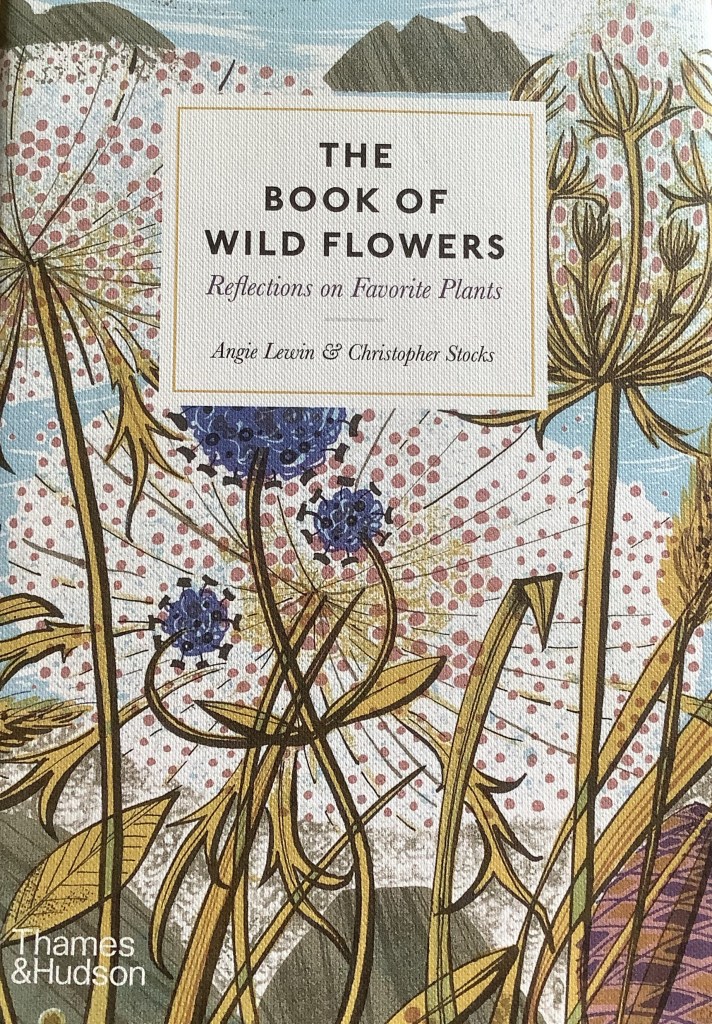
  • Sometimes It’s Best To Just Buy The Book

    After 10 months of pure regret, I finally found it. I had the chance to buy the beautiful book in a delightful little bookstore in Cornwall, England, but no. I had to sit in my regret for 10 long months, pining after the book I should’ve bought. Searching endlessly for a book that had “beautiful flowers and drawings of wildflowers in Cornwall” (the only information I remembered about a book with an unknown title or author).
    I had *almost* given up the search until Amazon swooped in and saved the day. In my quest to save a penny while on vacation, I ended up buying not just one, but two gorgeous books…plus shipping and handling. I should’ve just bought the book while in England.

    I’m not materialistic. I like my simple treasures that I collect…heirloom bulbs and heirloom china, unique floral books and violin music books. I like old pottery bowls and flower pots too, but my husband thinks I have enough (which is quite true). After I lost my original flower book collection, I have enjoyed slowly adding back. My perspective on “things” changed. I must have meaning behind each item I purchase. Nothing frivolous can enter my home. In fact, each time I purchase something, the question of “Is this a necessity or just a frivolous find” enters my mind. Unfortunately, my love of thrift store shopping doesn’t have any kind of discernment. It’s all fun and fabulously frivolous. There is a hidden price tag for everything, whether monetary or a disapproving glance from my minimalist husband.

    So I didn’t buy the book in the quaint, little bookstore in England, which was a completely dumb choice.

    A book like this is more than a simple purchase. This book represents time spent along the beach with my Mother and daughter. This book represents chatting with a group of older Cornish women about their gardens and ponds, while sipping hot tea. This book represents the beautiful walks we took throughout Penryn and the countless little bulbs that grew right out of ancient rock walls. This book holds my trip to Cornwall close to my heart. I can now revisit this beautiful part of the world in in a moments notice. My soul is filled.


    Next time you have a chance to buy that special book that delights your soul, just do it.

    Just buy the book.

    You will never regret the moments spent reading a good book. Then go outside and dig. Digging is also good for your soul 🙂

    Happy Gardening, my friends!

  • My New Favorite Thing

    I’m completely obsessed. I finally found some plant markers that are cute, economical AND gopher-proof. (I’d like to see those little rats try to eat these markers). After marking 200 native plants and heirloom bulbs, I realized I greatly low-balled the Amazon order. I really need 20,000 plant markers. In less than a week, I’ve become a plant marking fool. My newest garden obsession is to mark EVERY SINGLE PLANT in the garden.

    Garden obsessions are not new to me. Oh no, quite the contrary. I’m like a Forest Gump when he is first shown a “ping pong” ball. I get completely locked in. I go after my newest and latest gardening obsession like a starved dog that attacks a bone. I’m all in. If I have spotted an old teardown with a bulldozer near by, I will dig the bulbs in the pouring rain until every last bulb has been saved. If I decide to move rock to line pathways, then I move literally every single rock on my entire property. Later, if I decide I don’t like rocks on the pathway, I obsessively move all the rocks back to who knows where (just off the pathway) in record time, I might add. Unfortunately, garden obsessions are not synonymous with common sense. I’m hoping the new plant markers will bring a level of garden mainstay.

    Garden obsessions can be very helpful, especially since gardens are seasonal. If we behave like garden-slugs, and don’t complete our gardening “to-do” list, sweet seasonal rewards are missed. If wait too long to get our potatoes in the ground, then we reap no potatoes. If we wait too long to sow wildflower seeds, then we reap no Spring color. If we wait to plant a Live Oak Tree, then our grand-children will have no shade to play under. Garden obsessions get the garden chores completed in the season you are currently in. There is no “Tomorrowland” in gardening. Seasons wait for no one. The train has left the station, and you are either taking a beautiful ride or you are left behind in the dust.

    And that, my friends, is why it is nice to have a little healthy garden obsession. I prefer to ride the ride. I want to eat fresh potatoes and have wildflowers bloom in my butterfly habitat. I want beautiful pathways with plants and bulbs outlined in pretty rock circles. I want all my plant babies labeled and cared for. And I want the gophers to go somewhere deep down in the center of the earth, with fire and brimstone. Too much?

    Happy Gardening, my friends. It is time to get locked in.. Spring is coming! What is YOUR newest garden obsession? Send me a message and I will send you a little package of my favorite bulb..the Oxblood Lily 🙂

  • Gopher Baskets 101 (and how to not break your pitchfork in the process)

    Yesterday was the day I decided to try out my gopher baskets. I was excited to plant some Antique Roses, and had not planned on moving any existing plants. Gardening-Fate, otherwise known as ADHD, had other plans. While relocating the large rock on the pathways to other locations, which I do at least once a season for no reason, I soon discovered that my Pink Spider Lilies were looking a bit droopy. Definitely not normal for this time of year. I gave them a drink and sure enough….a d&@!m gopher hole.

    Gophers feast on the roots of cherished plants and bulbs. Gophers are telepathic and know exactly which plants are your favorite. Apparently, your favorite plants taste the best. Unfortunately, you won’t know that gophers are feasting until it’s too late. One day, the plant or rose bush looks great. The next day it’s wilted, falling over and you can lift the bush right out the ground with your pinky finger.

    I grabbed the 5 gallon baskets first. After all, I bought four boxes worth. Let me just put this out there… The 5 gallon basket was really a .5 gallon basket. And I have small hands.

    So I went back inside, lost my gloves for the third time, and grabbed the 10 or 15 gallon baskets. Those would do. I started to dig. It was a sludge pit from all the water I tried to drown the sweet gophers with. In less than 5 minutes, my pitchfork snapped. My bulb-digging pride was a bit hurt. I only break shovels on large Crinum.
    I told a few people of my first gopher basket experience, and their response was all the same…

    “Would you like to borrow one of my shovels?”

    “You’re missing the point. I broke my shovel on SPIDER lilies”

    They didn’t get it, and just stared at me blankly.

    With shovel #2 and gopher basket #2, I finally got the lily bulbs out of the sludge. I filled the basket partially full with soil and aged leaf mold compost. I put the bulbs on top, careful not to disturb the roots. I dug a new large hole under a deciduous tree and planted the entire basket. I still need to mulch around the basket to hide the wire mesh, but for now everything is good to go. I think the lilies will be happy in their new location and I am satisfied knowing these lovelies won’t be chewed on any longer.

    My “take aways”….

    *First, I’m not a professional gardener. If I was a professional, I would’ve planted these bulbs (and all the other plants) in gopher baskets long ago.

    *Second, don’t water the plants you are moving until they are cozy, nestled in their new basket of protection. Mud is too heavy to stuff into a basket. And shovels are too expensive to constantly replace.

    *Third, don’t order 5 gallon baskets. The small baskets are for child’s play. Get the larger baskets.

    *last, Gardening is a humbling experience. It’s ok to admit defeat and try something new. Remember, the only one who knows everything is the gopher, so keep on keeping on.

    Happy Gardening, my friends!