Tag: plants

  • Passionate about the Passion Vine

    The word “passion” describes a love that is wild, deeply desired and completely unabashed. Passion loves deeply, regardless of the obstacles. Passion loves nonsensically, whether right or wrong. Passion is driven by feelings and emotions, not common sense. I, my friends, am passionate about growing the Passion Vine (Passiflora).
    Yes, I am well aware of the obstacles I have growing a Passion Vine. First of all, if one looks up the growing attributes of the Passion Vine, the word “vigorous” is used again and again. Vigorous can’t even begin to touch the growing habits of this vine. In fact, this vine will quietly consume your house and garden, and completely destroy your neighbor’s septic system! A slight over exaggeration, but you get my drift. Passion Vine is passionate about growing, and I’m passionate about letting it grow. So why would anyone in their right mind choose to grow such a vigorous plant?!

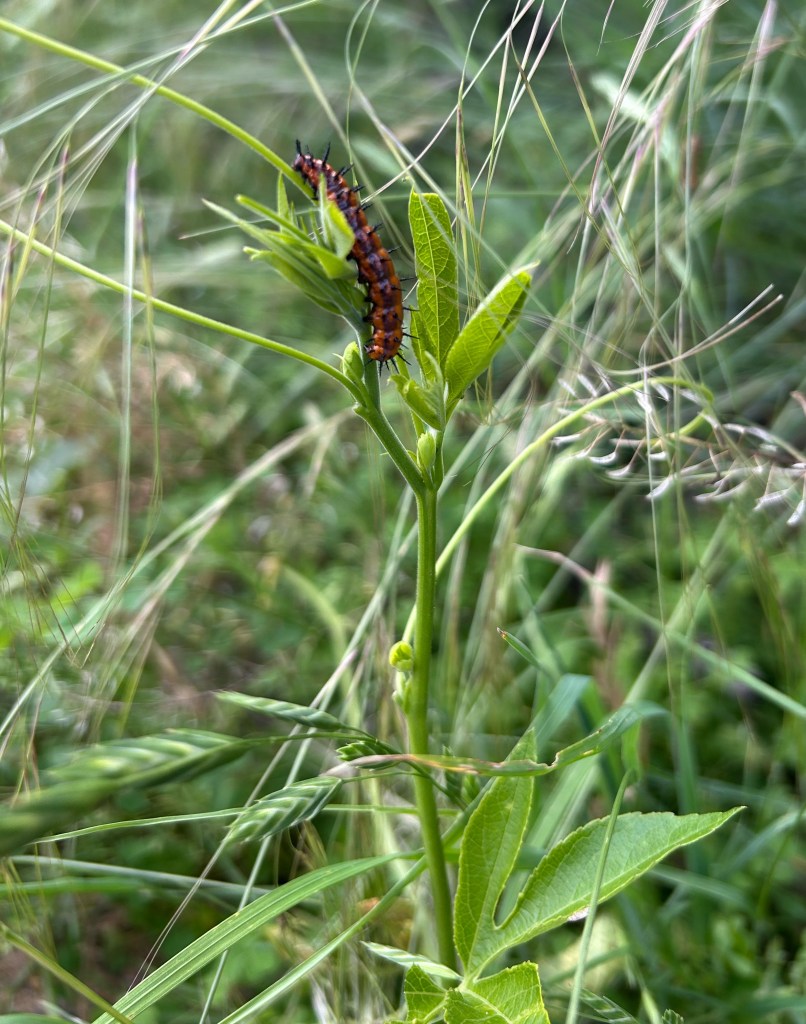
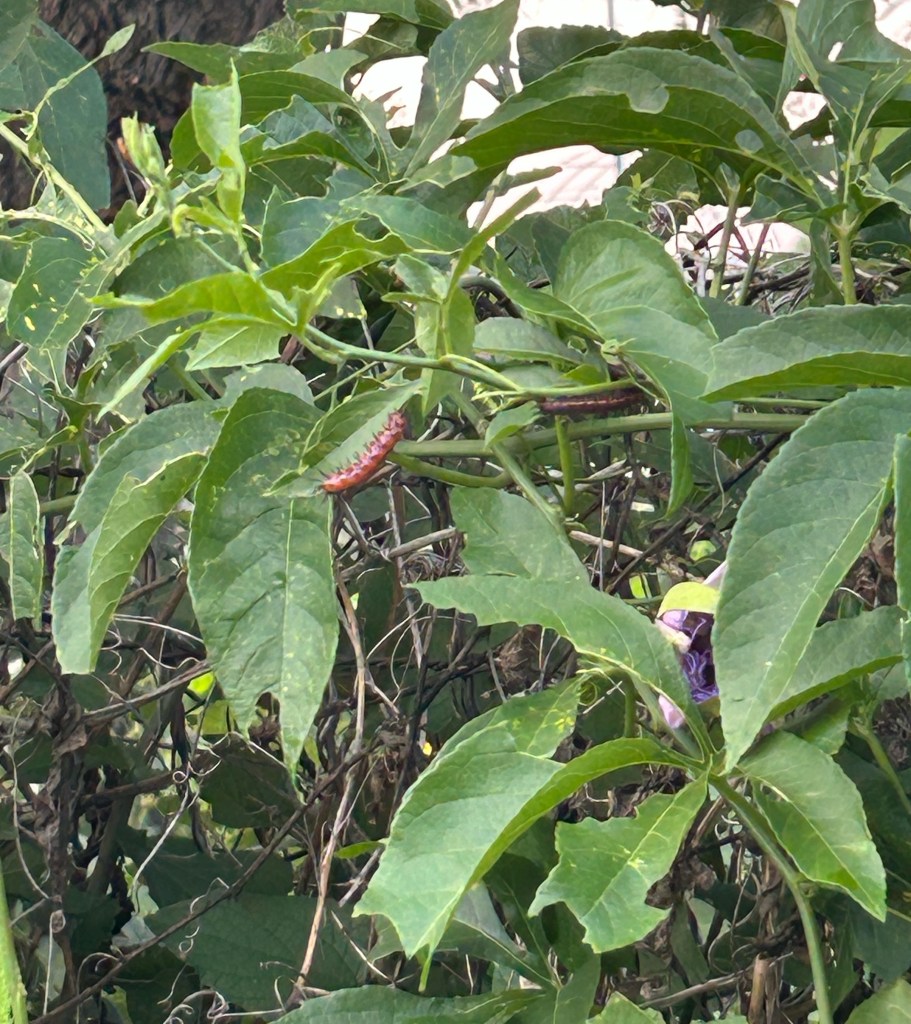
    Just take one look at the sweet, little baby butterflies and the answer is simple…

    Gardeners don’t live in their right mind. 🙂

    I planted my first Passion Vine when my children were babies. My husband-extraordinaire built a rustic cedar fence in our front yard for the Passion Vine to grow upon. I had high hopes of creating a little butterfly habitat, right in the middle of Dallas. In a few short years, the vine had exploded, eaten the fence and butterflies were everywhere. The vine was a highlight among the neighborhood kids, who visited often to watch the life cycle of butterflies. After that magical experience, our family never went without a Passion Vine, or a half-created cedar fence.

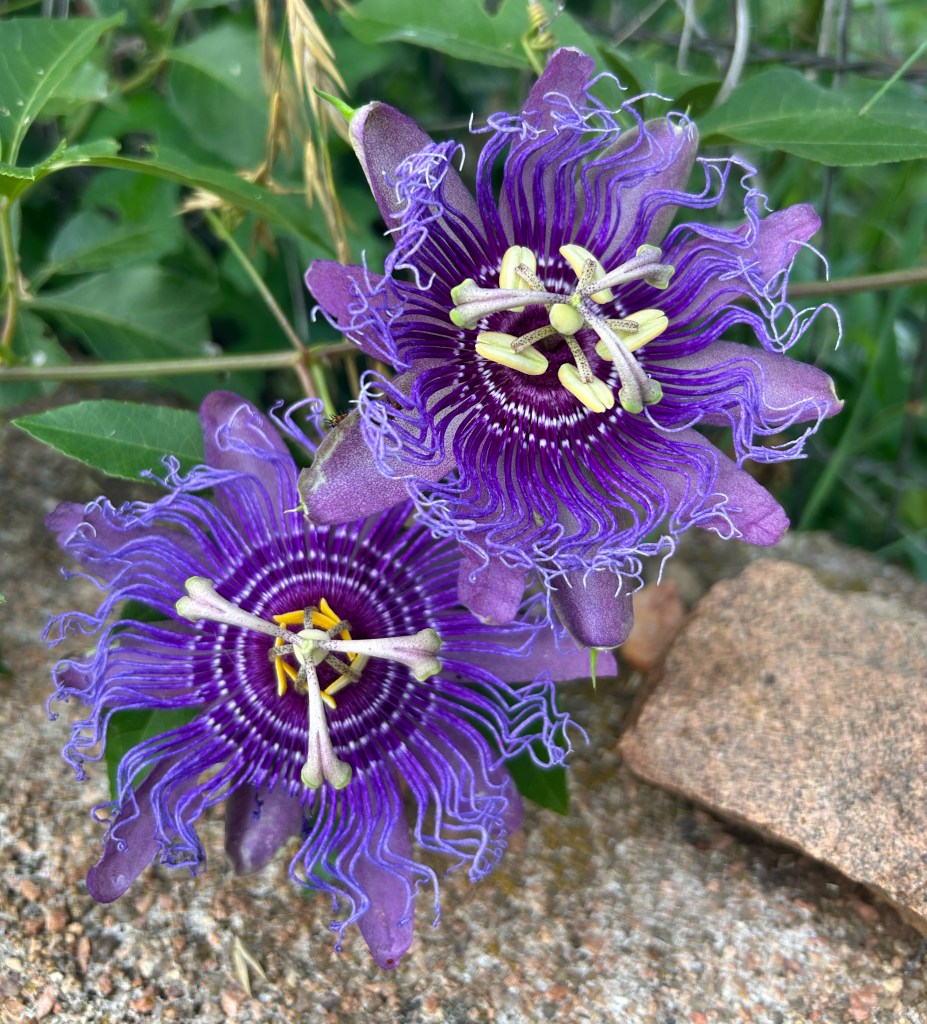
    There are over 500 varieties of Passion Vine, though I can barely keep up with one. I received my cutting from my Mother-in-Law. The native vine grew wild on their farm. Like all good natives, come feast or famine, they grow. And boy, does this vine grow! The deep purple flowers are enough to stop fellow gardeners in their tracks, but the real draw are the butterflies. Passion Vine is the host plant for many butterflies, including the Gulf Fritillary and Zebra Longwing. The vine is constantly being chewed down by babies, which is probably why it is so vigorous. I planted my Passion Vine 10 years ago, when I first bought the studio. I wanted to separate my property from the ratty, old drug house next door. The following year, I bought the ratty old drug house, tore down the ratty fence and the ratty house, and tried to move the vine.

    I failed.

    Oh, don’t get me wrong. I had no problem with the “tearing down a house and fence” thing, I just couldn’t relocate the vine. The Passion Vine liked her spot came back with a vengeance. Somehow, unbeknownst to me, I found the ability to rip apart an old house in between violin lessons, but couldn’t seem to move a plant from it’s original location. As in the famous movie line of Last of the Mohicans… “It stay as it lay.” So I left the vine and planted an entire garden around it. The area is now my beautiful butterfly sanctuary, all centered around a gorgeous vine that wouldn’t say no. To give my sweet little boundary-less vine some boundaries, I simply pull up the little offshoots. Voila! The Passion Vine is not too much to deal with, if you are passionate. The juice is well worth the squeeze.

    If you decide to take on the challenge of growing Passiflora, get ready….your passionate side will be ignited. Soon you too will be buying up property, tearing down houses and planting more gardens! Make sure to plant full circle butterfly pollinators. The butterflies seem to prefer Blue Mist and Cow Pen Daisy as their pollinator favorites. Butterflies will be floating happily throughout your garden. What can be better than that?

    Passion is as passion does. Grow wild. Live unabashed and without abandon. Walk among the wild things and plant native flowers for your area. Al of us, in our own little patch of earth, can make a huge impact.

    Happy Gardening, my friends!

  • The Glorious Red Poppy

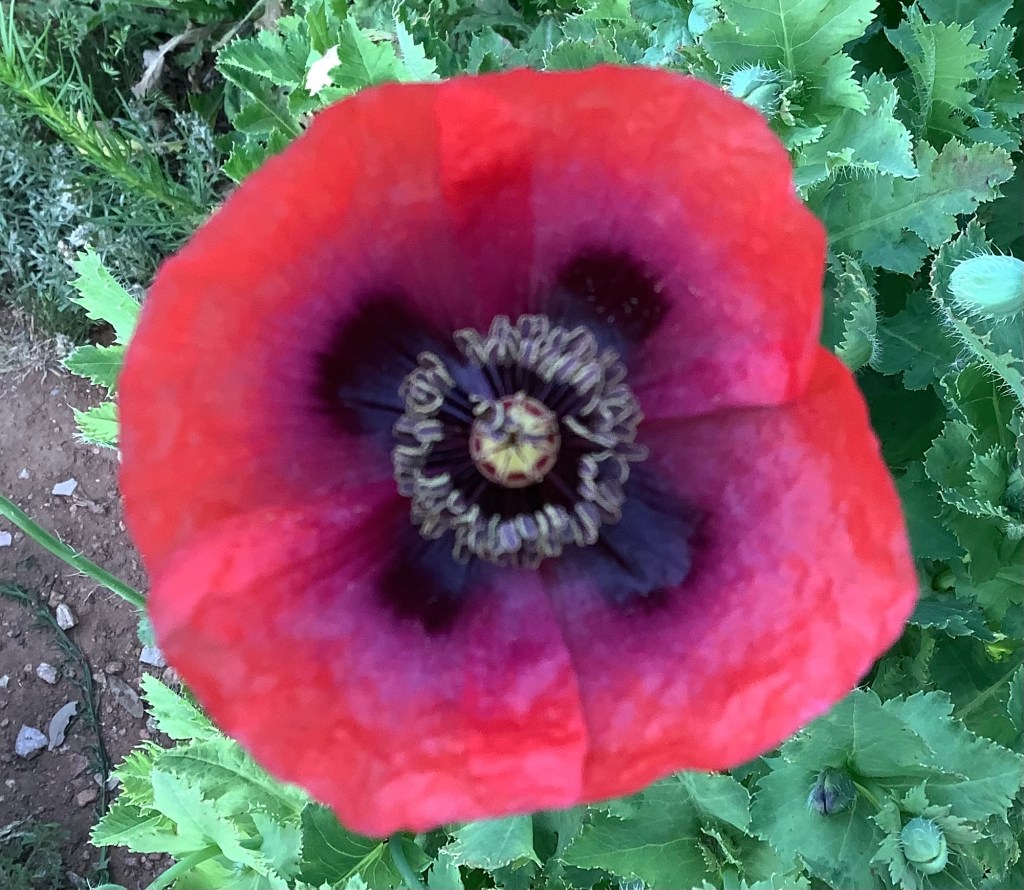
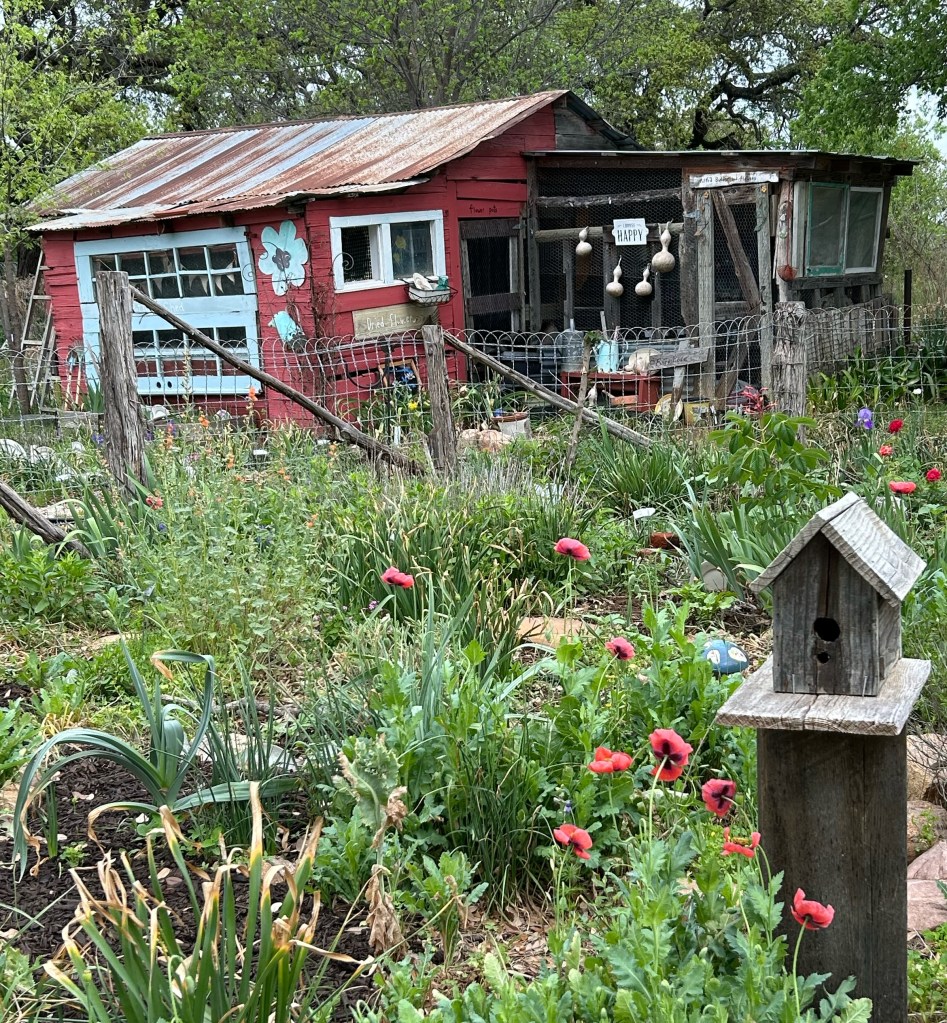
    First, I’d like to say that a Spring without poppies is like a chocolate milkshake without the chocolate. Or even worse, decaf coffee. It just isn’t right. Spring is a time of renewal and healing. The red poppy is known as the “flower of remembrance”. Spring and red poppies go together like birds of a feather. Peas and carrots. I simply can’t imagine Springtime without my cherished red poppies.

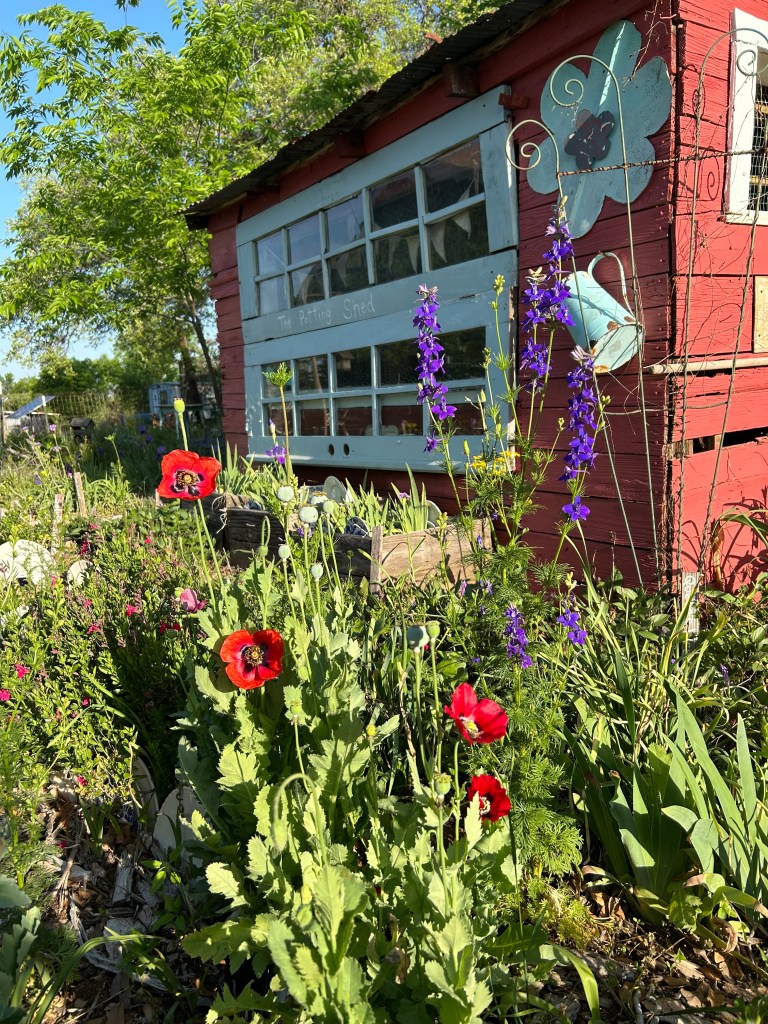
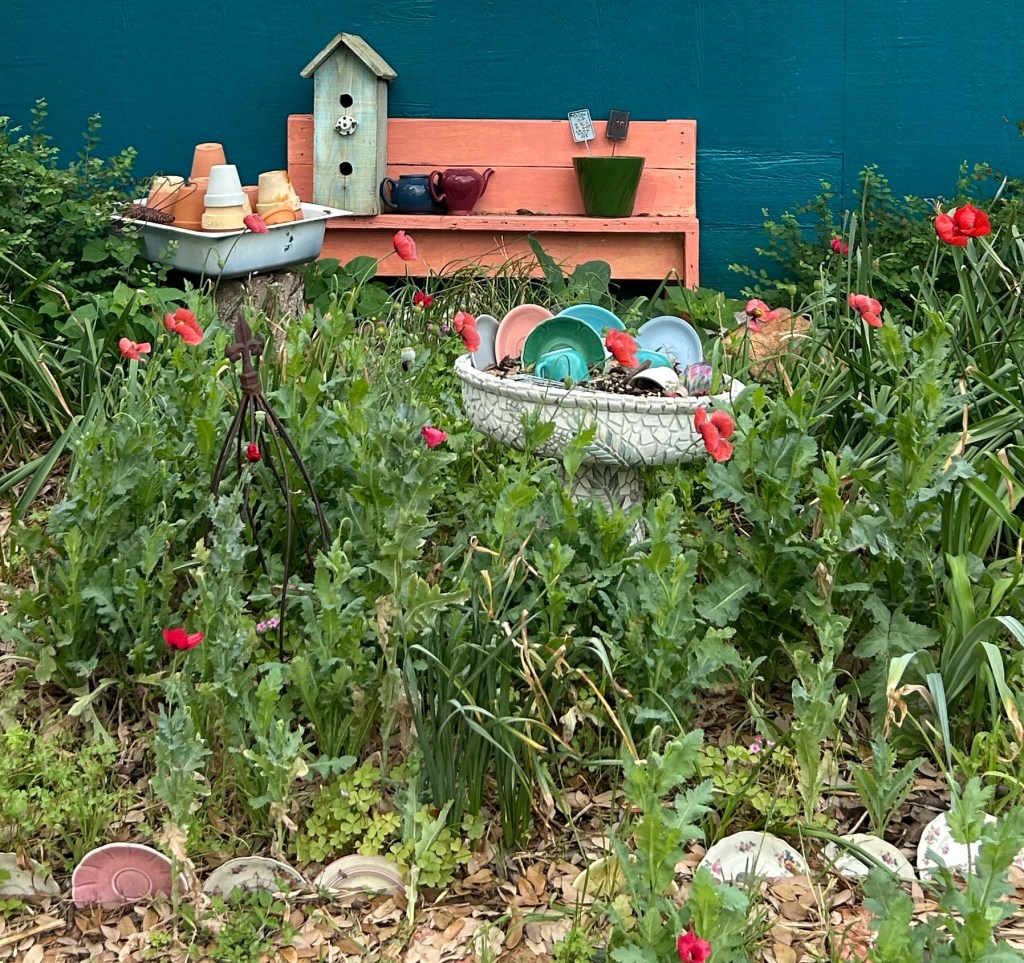
    Red Poppies have grown in my garden since I first started my own gardens. My Dad didn’t grow poppies in Montana, so my love affair with poppies came about through gardening books about cottage style gardens (which, by the way, is like eye candy). I obtained my first packet of seeds from a former violin student’s parent in Dallas. She was German and had a very wild and free-range cottage garden. The cottage gardens were the envy of my heart. I loved the wild yarrow, eye-popping shades of poppies and larkspur and herbs all growing alongside her antique roses. I felt like I had stepped into a fairytale culture, somewhere *not* obsessed with the neat and tidy, extremely boring green lawn of our modern society. I was given my first start of red poppies and I’ve cherished them ever since.

    One thing to know about poppies, is that poppies like to ramble. There is no stopping the scattering of seeds once the poppy heads open up. Last year, my goal was to move the poppies into the wildflower area. I wanted to allow the front gardens to showcase the Spring bulbs. I worked hard at gently cutting the poppy heads, collecting and saving the seeds to scatter during Fall. For all you mathematically brilliant readers out there, guess how many poppies actually came up with all those great intentions?

    None.

    Not one single poppy.


    That’s right. Not one intentionally sown seed of a poppy came up in my wildflower zone. Instead, my poppies just kept growing and blooming in their favorite spots in my front flower beds. It is almost as if poppy seeds know where they grow best…

    Screenshot

    This year, poppies have been very slow to emerge, as were all the wildflowers. It’s been a season of little to no rain. Without the rain in the Fall and Winter, our wildflowers can’t develop for the Spring bloom. Poppies naturally reseed in late Springtime, but I’ve heard Fall is best. I don’t plow up the field or rake my wildflowers in. I figure if nature doesn’t do it, I’m not going to do it either. I try to make sure invasive weeds are out of the wildflower zone so the little seedlings won’t get choked out. I also water the little seedlings in. Lack of water might actually have been the issue with my wildflower zone.
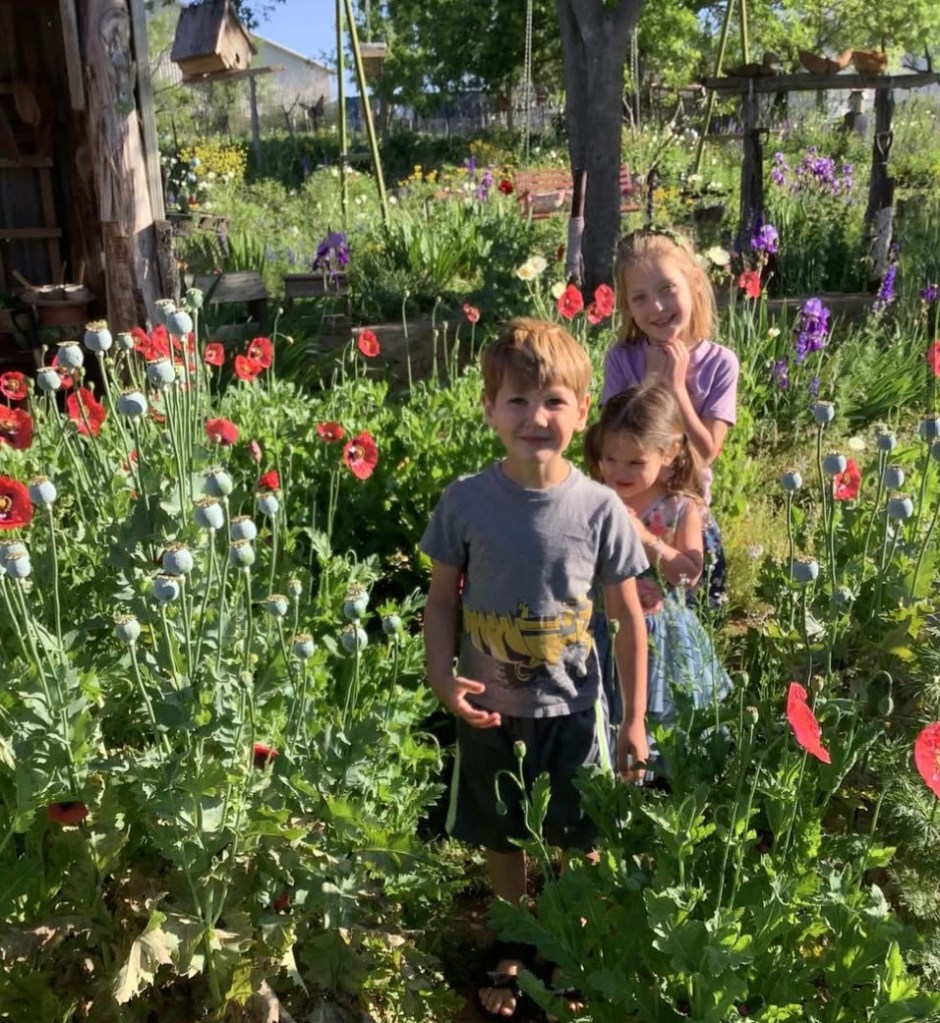
    One of my favorite Springtime activities is to show children the magical little process of poppy seed collecting. It is so thrilling for children to watch hundreds of seeds come out of a single poppyhead.

    Screenshot

    This year, I plan on spreading wildflower love throughout my little town. I’m currently reading A Natural History of Empty Lots (riveting, I know). I have always enjoyed the idea of sowing seeds in empty places, much like in the beautiful children’s book Miss Rumphius. I’m excited for days to come so I can naturally decorate the empty lots around town.

    Happy Gardening, my friends!

  • Shining White in the Dark

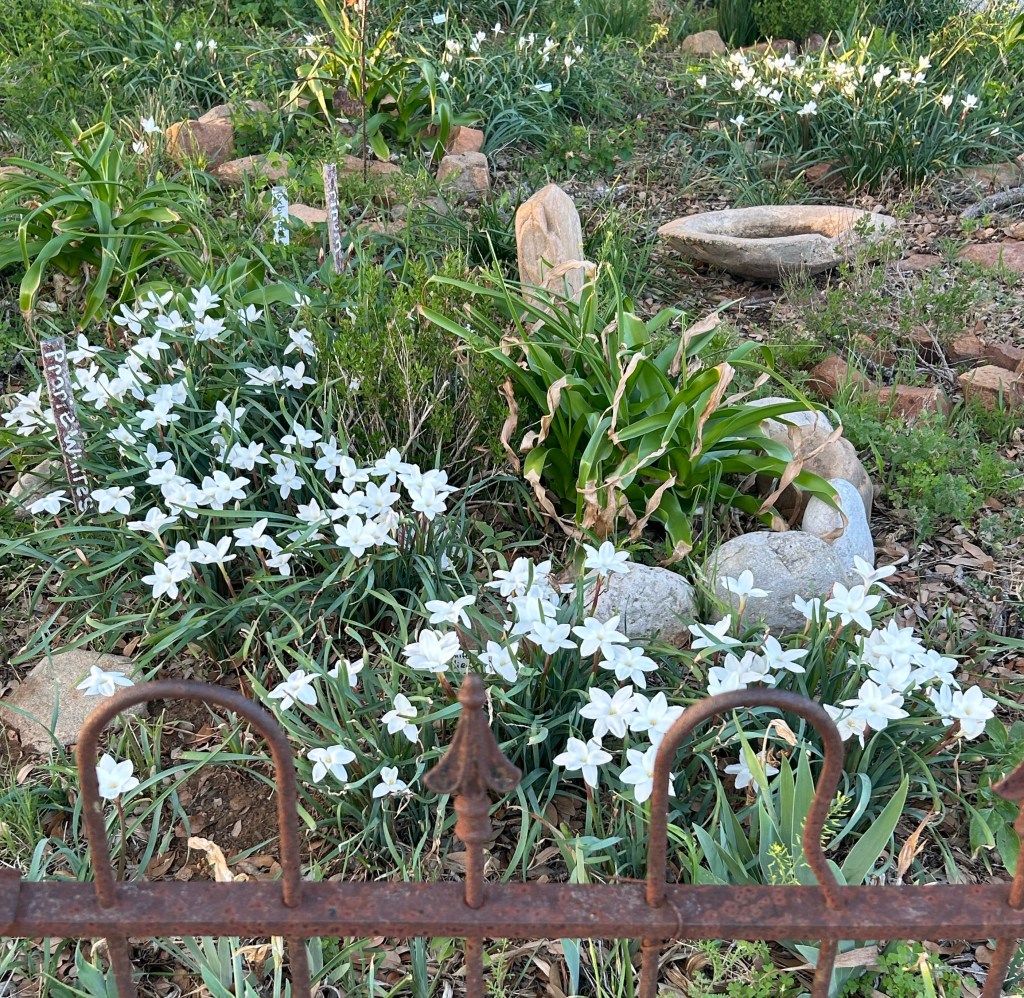
    The glorious Hill Country Prairie Rain Lily, Cooperia pendunculata, is finally in bloom! Oh, the sweet aroma of this native treasure after a nice Spring rain!
    Prairie Whites are so lovely that both the Zephyranthes and Cooperia categories of rain lilies claim her as their own. I am not a professional botanist nor do I play one on Web MD, so I simply call her “Prairie White Rain Lily”. This particular bulb has been with me for almost 20 years, and she has never ceased to amaze me. Unlike many flower bulbs, Prairie Whites, are repeat bloomers. Each time it rains after a period of dry, the bulbs bloom. Rain lilies are delightful surprises for your garden. The Lord’s mercies found new every morning.

    My favorite attribute of the Prairie White is that she blooms at night. She delights herself in the dark and closes her petals in the hot, direct sun. She remains pure and untarnished, blooming for many days. Prairie Whites also laugh at drought conditions. I’ve never seen a bulb (besides the Oxblood Lily) grow so vigorously in times of drought. It is almost as if she has no fear of her surroundings. Darkness and drought can’t touch her beauty. She is rooted deep and her source of strength is not affected by outward conditions.

    Personally, I greatly admire this flower bulb.
    I want those attributes shining through in my own life. Unlike the Prairie White Rain Lily, I am deeply affected by my surroundings. I stress out when others stress. I get anxious and nervous when others get anxious. I get overwhelmed by the news and the endless bombardment of information. I am called an “empath”, and I have to work extremely hard to not be affected by the world around me. I struggle to bloom in the darkness. Honestly, what could be better than the ability to stay pure in darkness?
    I suppose the sweet aroma of goodness and faith that gently affects people, without even saying a word.

    Prairie Whites don’t scream at the top of their lungs, bragging loudly of their attributes. Nor do these sweet lily bulbs demand the attention of garden viewers. Heck, most people don’t even know they are around until you smell their sweetness.

    Quiet beauty that is clothed in pure white, shining through the darkness.

    In a world of hot pink, flamboyant fake flowers, isn’t it nice to gaze upon a meek and gentle, pure white flower that simply reminds us to bloom in the dark?

    Bloom, my friends. Bloom. Don’t let the darkness overwhelm you.

  • A Gift of Wood’s Rose

    My Spring Break started the same as any other week. Violin lessons and gardening. The weather was absolutely beautiful. We are still recovering from the ridiculous late freeze that bit all the garden’s new spring growth. The ever-present challenge of Texas gardening is likened to a new intense level of Jimanji, with temperatures reaching upwards of 90 degrees soon after the freeze. Luckily, Luciano, my former student and garden helper extraordinaire, was in town for his Spring Break. The gardens were in need of Luciano’s gentle ways (I can be more like a rabid squirrel).

    ”Would you like some roses? I have a few that I started from seed.”

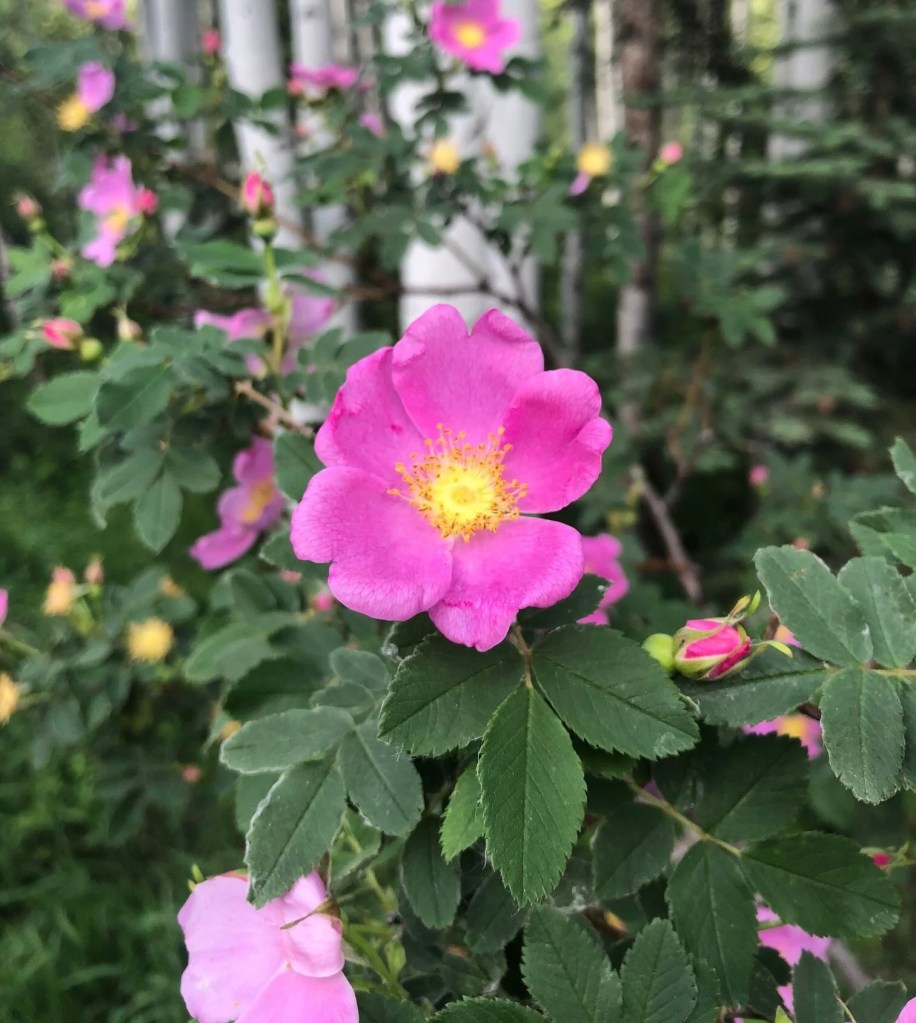
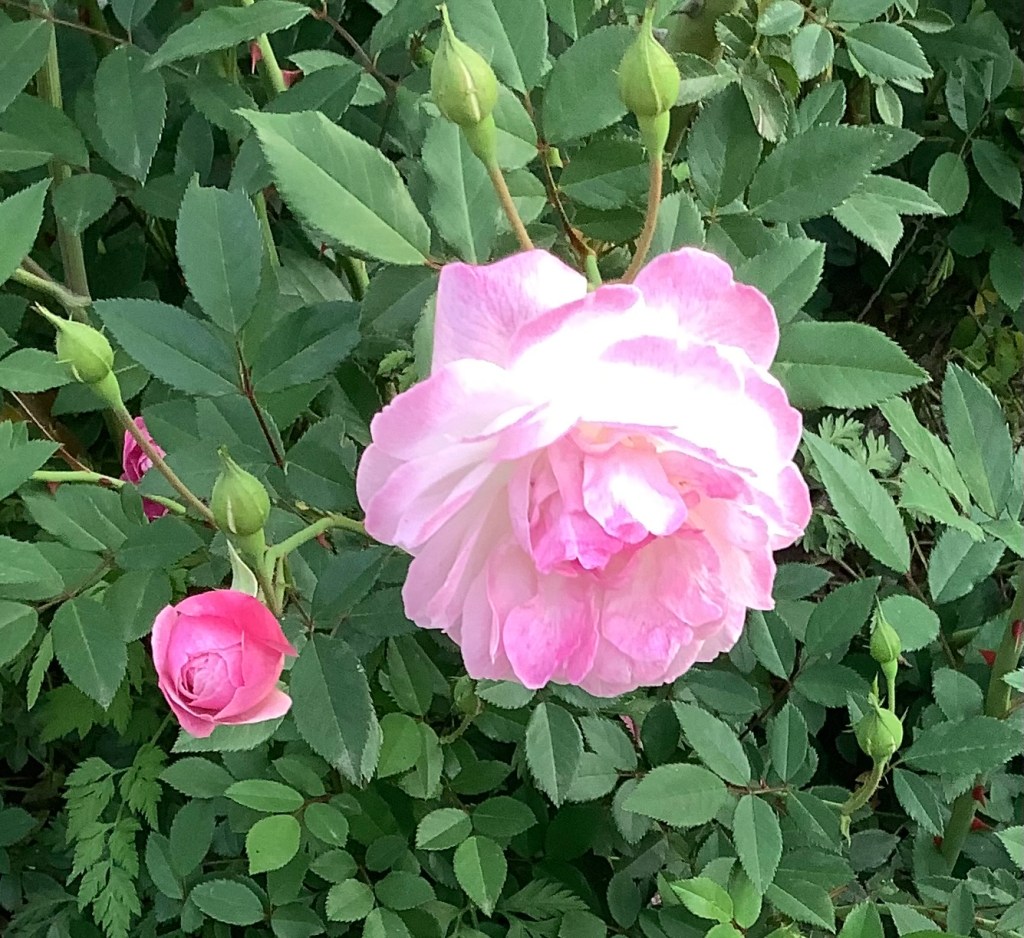
    Would I?! Music to my ears! (My rose garden is still recovering from the gophers). I did not realize that I was actually being gifted with over 10 beautiful little baby roses!!! Everything Luciano touches grows. Apparently, in between his horticultural collegiate studies, he found time to grow roses from a few rose hips. The rose hips were off of an old, established Wood’s Rose. I was not familiar with this rose, but from everything I’ve read, they look perfectly suited for our area. Luciano is amazing.
    I have secret plans that he will take over the Agape Haus gardens when I retire, but that’s for another day.

    I have a lot to do this week in the garden. In addition to planting the remaining Wood’s Roses, I will be pulling weeds and trying not to hurt my hands in the process. In my continuous effort to be intentional and NOT behave like a squirrel, I am *trying* to take small areas to tackle the weeds. After I pull the unwanted weeds, I am applying a nice, thick layer of organic mulch. In larger areas, I’m going to use the good ‘ol moist cardboard method. It was an unusually poor wildflower season due to the lack of rain. Few flowers with a lot of seeding grasses. I did manage to get my wildflower habitat started, with little to no flowers, but at least it is outlined with old Live Oak limbs and looks hip. I’ve never had the luxury of just kicking back in small areas before and focus….I typically am running around looking for my shovel.
    Baby steps, Dr. Venkman. Baby steps.
    As I tell my family, “See the Growth” both literally and figuratively. 🙂

    Happy Gardening, my friends!
    Shout-out to Anna, a fellow Crinum lover. She requested some Crinum babies for herself and a friend. I love this.

  • Let the Crinum Season Begin!

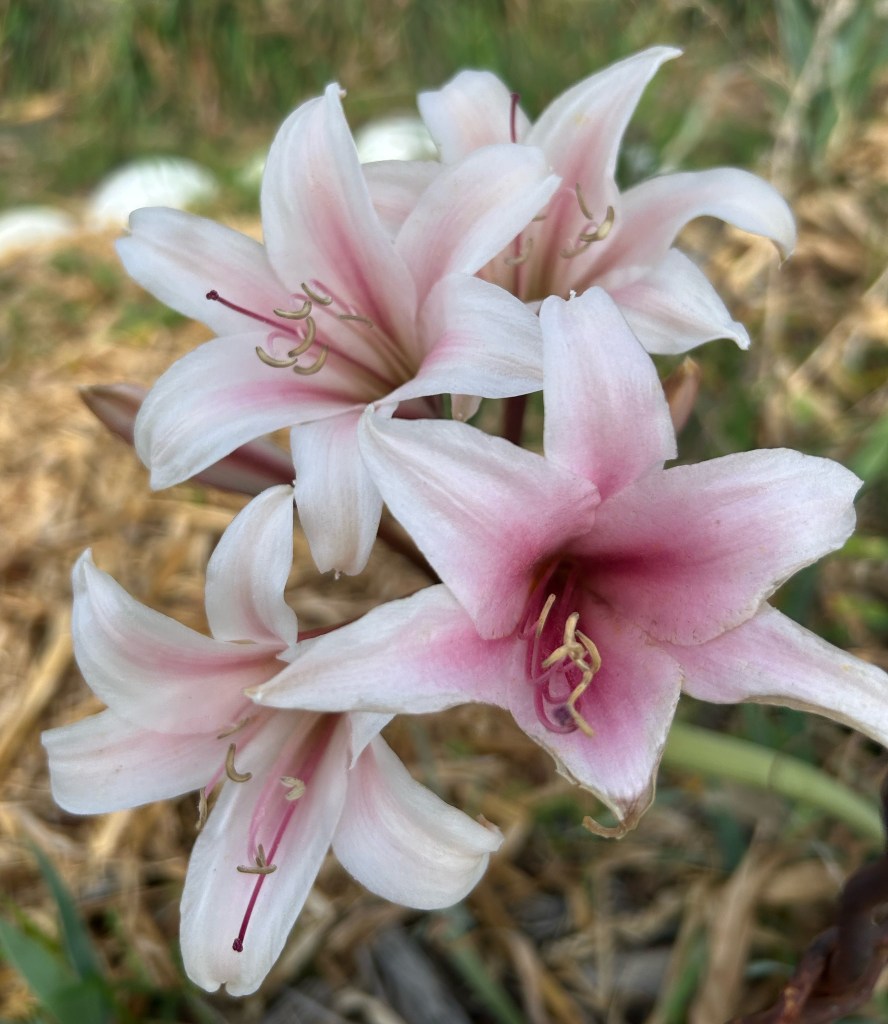
    Ah….Just look at that gorgeous flower! The Queen of the Southern garden! She rests most of the year, and shines in full glory when it’s her season to bloom. Her bulbs are big and her blooms are stunning. There is not a single flower in my garden that can out-perform a Crinum.

    To be honest, I wasn’t expecting any of my Crinum to bloom in early March. The weather in Texas is still quite undecided. Within a single week, gardeners can experience a nice spring afternoon, a hot summer sweat-fest or a crisp 33 degree winter day. Somehow, flower bulbs know when it’s their turn to bloom. I find this impressive because I typically can’t even find appropriate clothes to wear for each new Texas day. Texas weather is a mystery, just like my husband’s golf game. Crinum are a lot more secure in their glory and worry-not about the weather or their short game.

    There are countless varieties of Crinum. I have found that only Crinum experts can really decipher the slight differences between each variety. I am not an expert at anything except annoying my husband (world champion) and losing my studio key (I climb through the window at least once a week). I am the first to admit that I have no clue what the proper names of the Crinum in my garden. Most of my Crinum came from old homestead tear-downs, or they have been given as gifts. Over the years, I have researched and read up on Crinum, but I still feel a sense of insecurity with the subtle differences. Instead, I have my Crinum marked with descriptors such as “Early Bloom Milk & Wine” or “Pale Petite Milk & Wine”. Most of the Crinum I grow are varieties of Milk & Wine, I also enjoy Ellen Bosenquat, Alba and many other unique unknowns.

    If you desire to create a Crinum garden from scratch, it is advisable to find some Crinum seed pods and start the germination process. Since mature Crinum bulbs can be upwards to $75.00, finding fellow gardeners to share seed pods is quite helpful to the ‘ol pocketbook. One of those “fellow gardeners” is the creative writer of this little blog. I have more little Crinum bulbs than I know what to do with. I’m happy to send you a few Crinum bulbs to start your garden out. I have about 300 young Crinum that were started from an old Milk & Wine variety 3 years ago. They will grow into blooming size in a few years, with love and care. Crinum are like children…long-term investments, but each new season is wonderful.

    Happy Gardening, my friends! Feel free to reach out if you’d like some Crinum. 🙂

  • Gopher Baskets 101 (and how to not break your pitchfork in the process)

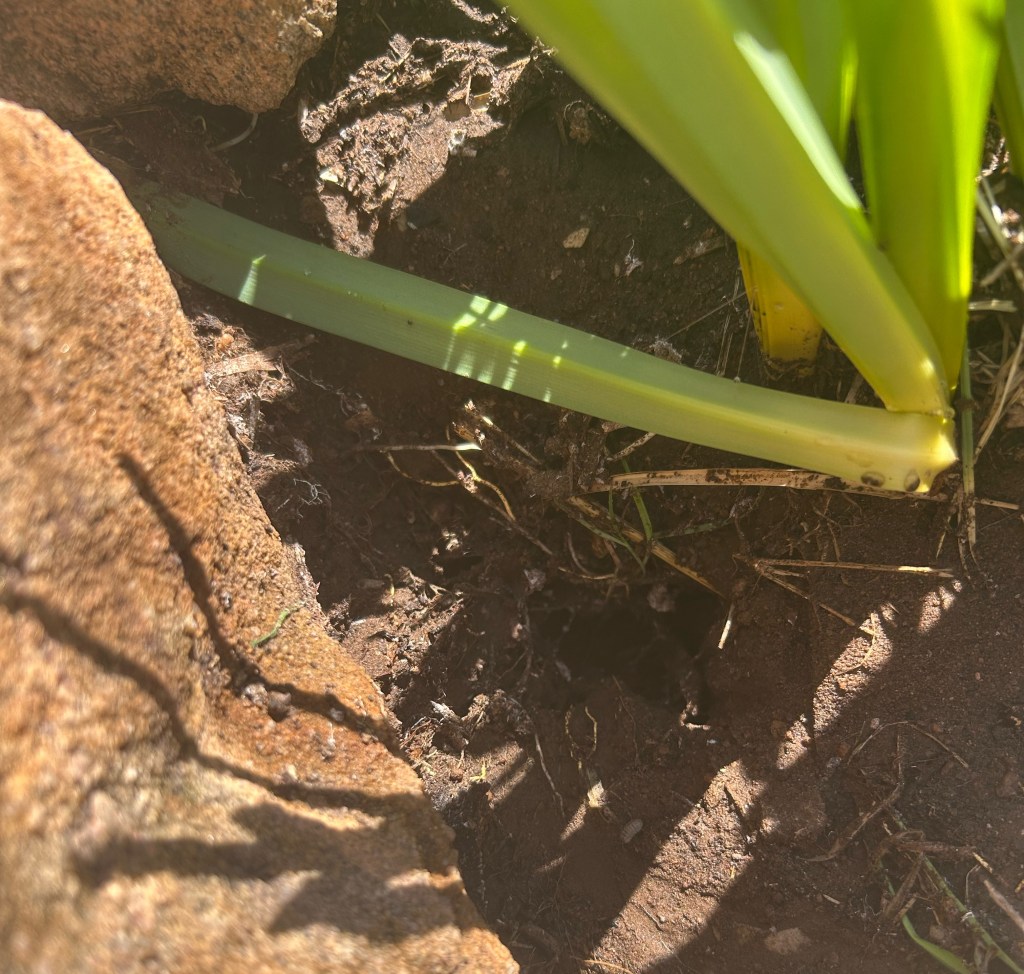
    Yesterday was the day I decided to try out my gopher baskets. I was excited to plant some Antique Roses, and had not planned on moving any existing plants. Gardening-Fate, otherwise known as ADHD, had other plans. While relocating the large rock on the pathways to other locations, which I do at least once a season for no reason, I soon discovered that my Pink Spider Lilies were looking a bit droopy. Definitely not normal for this time of year. I gave them a drink and sure enough….a d&@!m gopher hole.

    Gophers feast on the roots of cherished plants and bulbs. Gophers are telepathic and know exactly which plants are your favorite. Apparently, your favorite plants taste the best. Unfortunately, you won’t know that gophers are feasting until it’s too late. One day, the plant or rose bush looks great. The next day it’s wilted, falling over and you can lift the bush right out the ground with your pinky finger.

    I grabbed the 5 gallon baskets first. After all, I bought four boxes worth. Let me just put this out there… The 5 gallon basket was really a .5 gallon basket. And I have small hands.

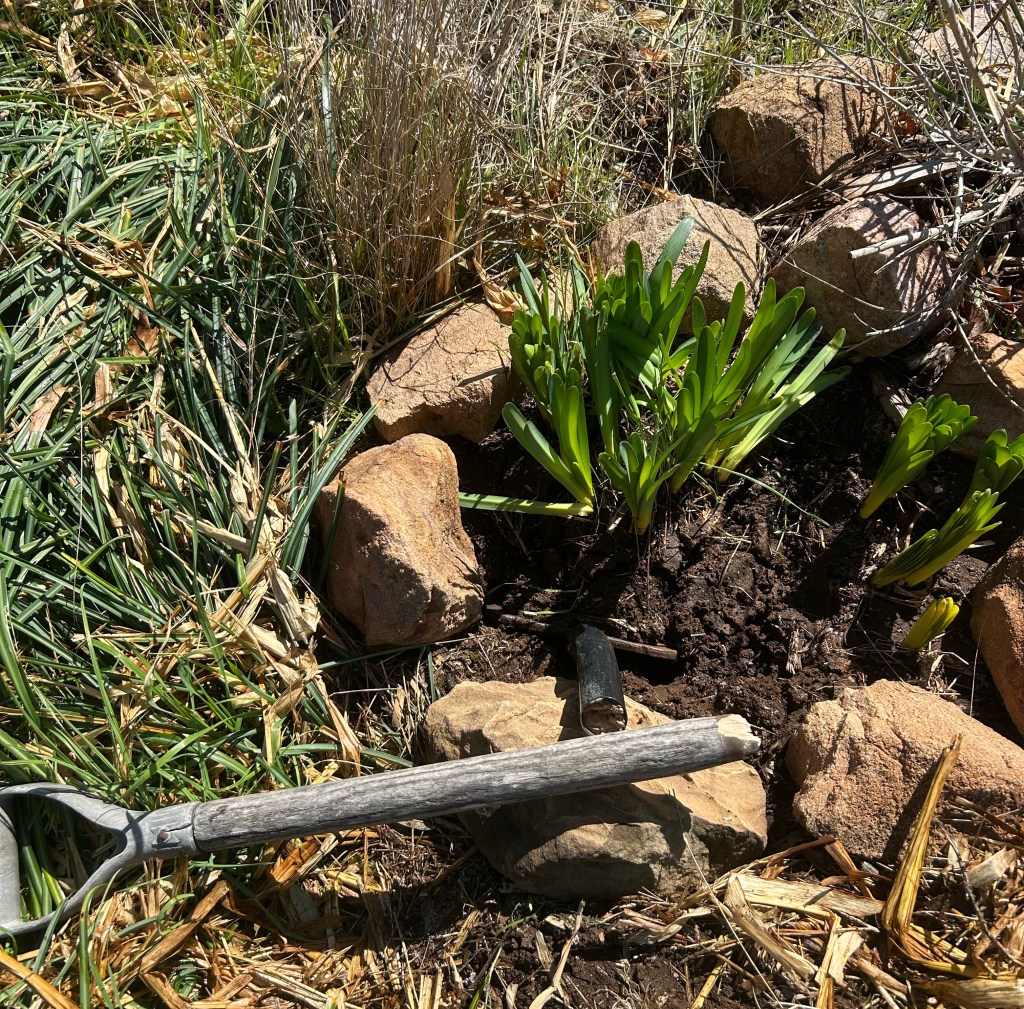
    So I went back inside, lost my gloves for the third time, and grabbed the 10 or 15 gallon baskets. Those would do. I started to dig. It was a sludge pit from all the water I tried to drown the sweet gophers with. In less than 5 minutes, my pitchfork snapped. My bulb-digging pride was a bit hurt. I only break shovels on large Crinum.
    I told a few people of my first gopher basket experience, and their response was all the same…

    “Would you like to borrow one of my shovels?”

    “You’re missing the point. I broke my shovel on SPIDER lilies”

    They didn’t get it, and just stared at me blankly.

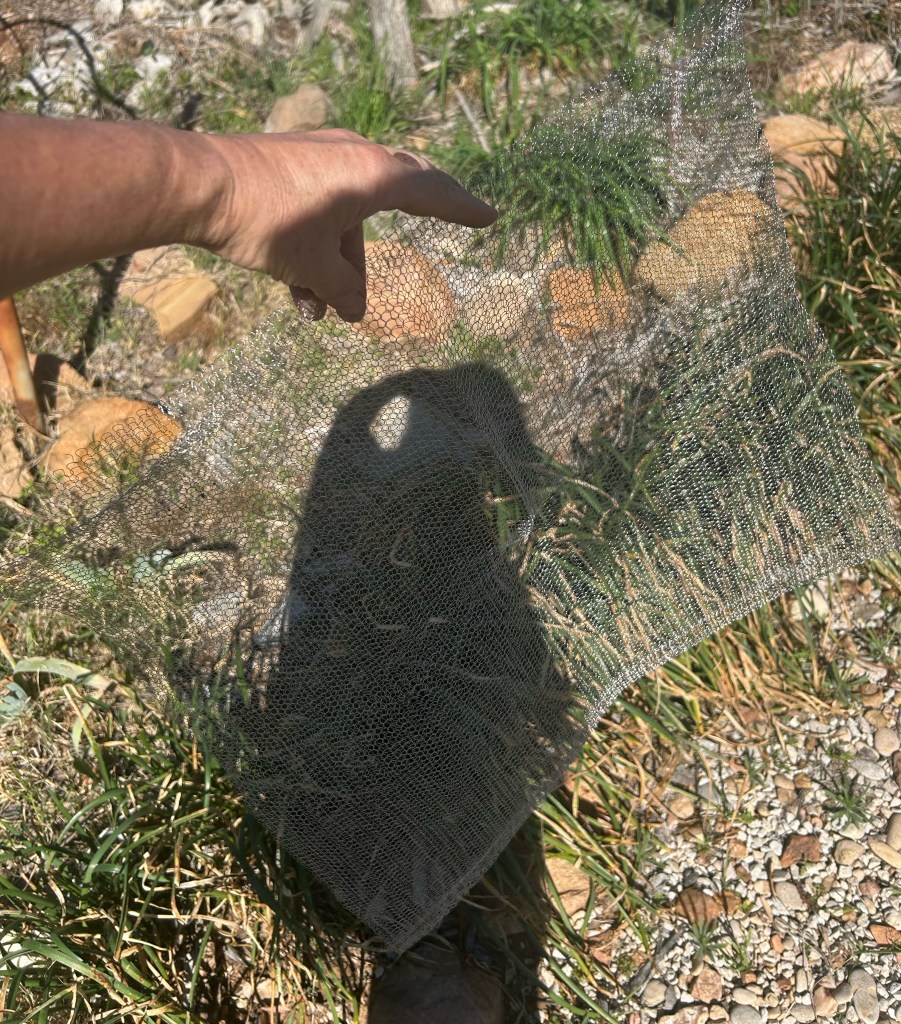
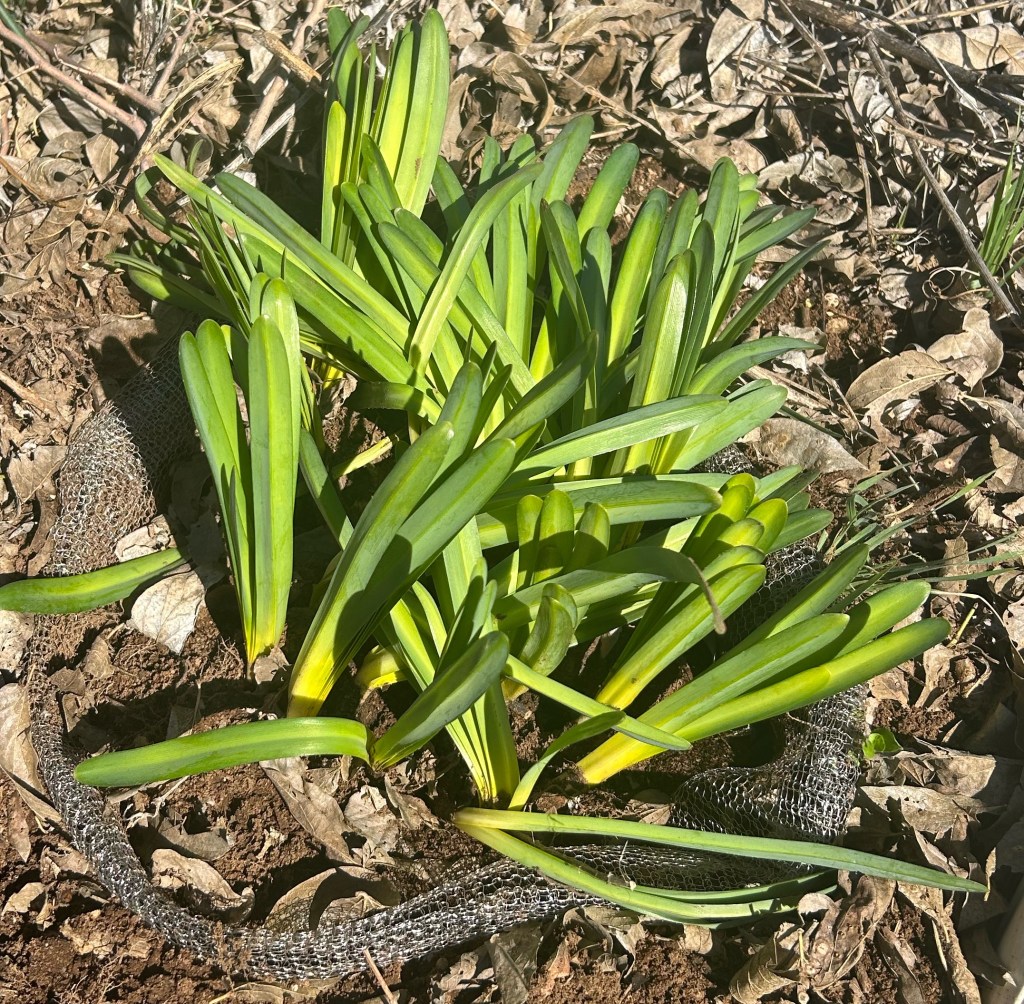
    With shovel #2 and gopher basket #2, I finally got the lily bulbs out of the sludge. I filled the basket partially full with soil and aged leaf mold compost. I put the bulbs on top, careful not to disturb the roots. I dug a new large hole under a deciduous tree and planted the entire basket. I still need to mulch around the basket to hide the wire mesh, but for now everything is good to go. I think the lilies will be happy in their new location and I am satisfied knowing these lovelies won’t be chewed on any longer.

    My “take aways”….

    *First, I’m not a professional gardener. If I was a professional, I would’ve planted these bulbs (and all the other plants) in gopher baskets long ago.

    *Second, don’t water the plants you are moving until they are cozy, nestled in their new basket of protection. Mud is too heavy to stuff into a basket. And shovels are too expensive to constantly replace.

    *Third, don’t order 5 gallon baskets. The small baskets are for child’s play. Get the larger baskets.

    *last, Gardening is a humbling experience. It’s ok to admit defeat and try something new. Remember, the only one who knows everything is the gopher, so keep on keeping on.

    Happy Gardening, my friends!

  • Gopher Baskets for the Roses

    A fairly unknown fact is that I once had a rose garden that was featured in a 3 page article in the Dallas Morning News Garden Section. True story! I absolutely adore Antique Roses. My Dallas garden was home to over 43 beloved Antique Rose Bushes, intermingled with fabulous Heirloom Bulbs. It was my joy. My little neighborhood watched the garden transformation through all three of my pregnancies. My husband was often questioned by neighbors if I really should be jumping on a shovel at 9 months pregnant in the heat of August. Those were good rose-growing times! Fresh flower bouquets of big and fluffy cabbage-style rose blooms. Children learning about the different varieties of Antique Roses, and my husband losing all control over his front yard grass.

    I now live in the Texas Hill Country (enough said). Over the last decade, I have tried to grow over 40 bushes in the gopher-infested land. All I did was create a gopher buffet. It’s not *if* they will eat my roses, but when. The gophers have wiped out every single rose bush I have planted…except one. Not great odds are in my favor. I’ve tried everything, and I mean everything. I even have a useless barn cat.

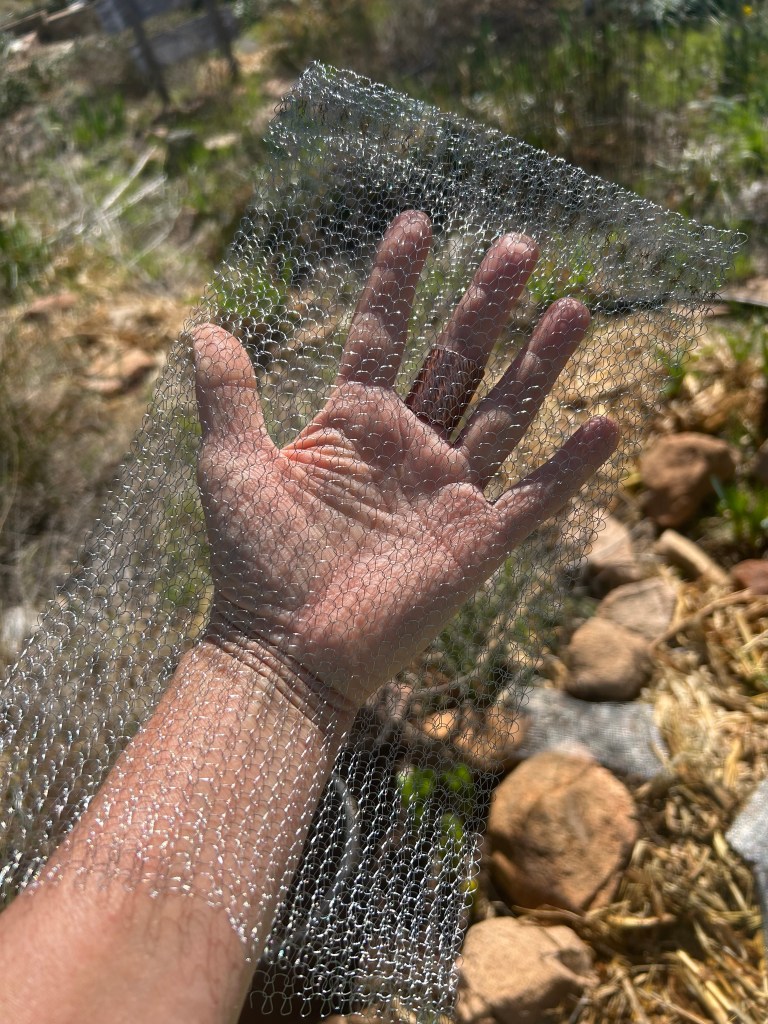
    This last week, I have stepped up my gopher-game. With a little click on Amazon, I ordered a nice supply of wire mesh gopher baskets. I had no idea gopher baskets were even a thing. Why didn’t someone tell me I didn’t have to make my own out of cut chicken wire?!! I’m quickly learning that Amazon is like Christmas every morning. The baskets arrived yesterday and I’m SO EXCITED! I have 5 bushes, saved in the nick of time, currently resting and regrowing roots in terracotta pots.
    Before Spring hits, I plan to basket up all the roses and the nice, young specimen plants I’ve recently planted. I will have to re-dig and re-plant.
    Typical.

    I also plan to basket up many of my bulbs. Gophers enjoy eating the roots of Spider Lilies, but will leave the Oxbloods alone. (Oxbloods are supposed to be toxic).

    With the water well and the gopher baskets, it will be SO enjoyable to watch the gardens finally take root. I often tell folks that gardening is like learning music, it is a journey not a race. But it’s also nice to see a completed garden project. A job well done is quite satisfying.

    I wonder if I will ever experience the thrill of a finished project? Take a look at my gardens and you will quickly find out the answer! 🙂

    Happy Gardening, my friends!

  • A Southern-Style Blanket of Ice (even ice storms are bigger in Texas)

    When I looked out the window, I would’ve thought I was back in Montana. Everything was a blanket of white. The neighborhood kids had their sleds and parents stood by in their warm fluffy coats. I even noticed my husband within the gang of sledders. I stayed inside, happily sipping on hot cocoa, nestled under a cozy blanket with my pup.
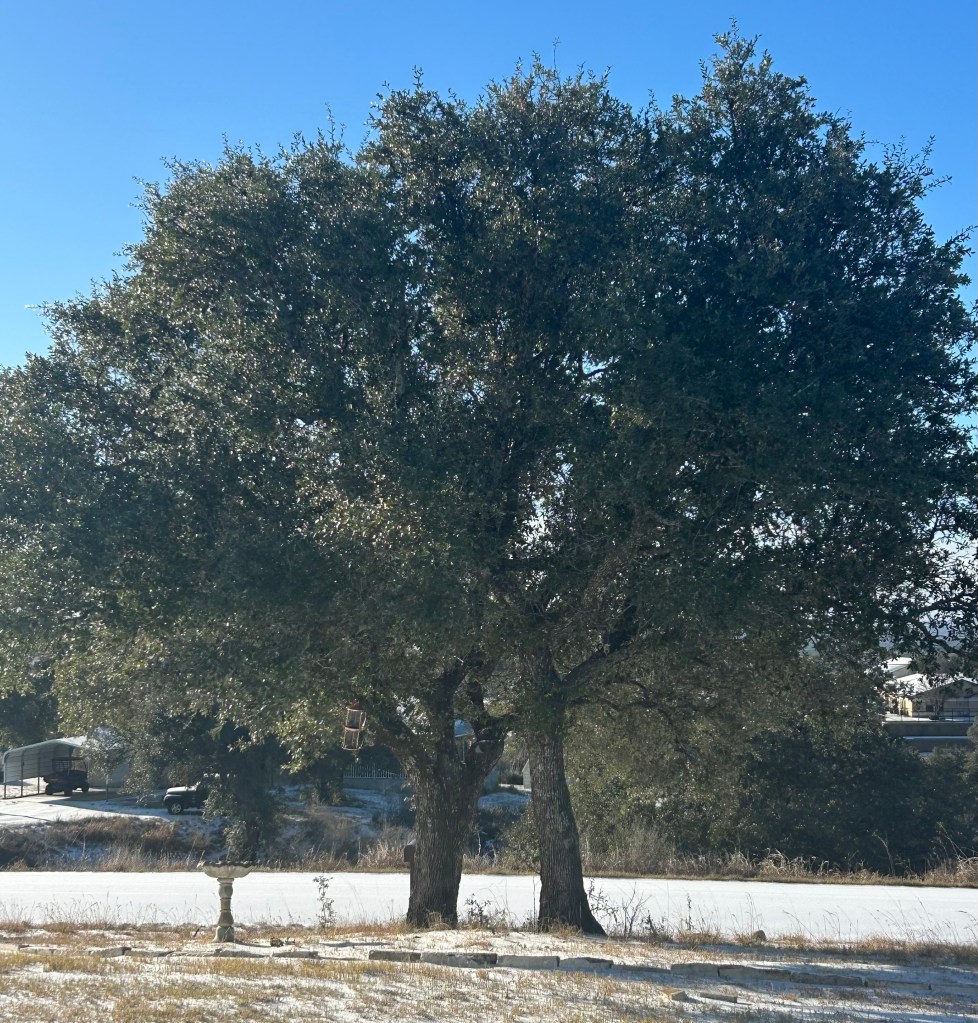
    Texas winters have a few deep freezes, which are commonly described as “chill-to-the-bone” Arctic blasts. I don’t quite understand how frigid these storms really do feel. I could snow ski in shorts in Montana, and yet unable to walk outside for fear of frost bite in a Texas freeze. But alas, here we are….another Texas freeze in the books. Most of Texas was covered in ice, and we were all stuck inside for days. Schools were cancelled, shops were closed, fires in fireplaces roared and it felt like Christmas all over again.

    For years, I debated about whether or not to cover my plants and bulbs. I grow Heirloom Bulbs after all, and they are tough old gals! Quite honestly, it’s a lot of work to cover everything, and I’m lazy. Over the last few years, I’ve changed my tune. I realized that even though most bulbs will not be killed in a freeze, the foliage is hit hard. Foliage is the energy for the next year’s flower, and I’ve decided I am through with waiting an entire year for my beloved blooms…so I got to work. I spent about three hours covering bulbs and favorite perennials with flower pots.

    When I ran out of pots, I piled straw on top of the bulbs to completely cover the foliage, creating a natural trough for the local deer. That wasn’t one of my finer moments in the garden. In fact, the first day back after the freeze, I arrived at the studio to find a fattened young buck hanging out in my Crinum bed. He looked at me as if I had just interrupted something. Eventually, the deer realized that this was MY house and garden, and left the same way he came in…effortlessly hoping my fence. The young buck left some nice piles of poo-pellets in my pathway as a flex to show me who is really in control. Next Spring, he will definitely have the last laugh as I am pulling up all the weeds he left in my pathway.

    I’ve spent the last few days taking the pots off the plants and giving the plants fresh air. Everyone in the garden did well, except the store bought chives. I left one plant uncovered as a test run of hardiness, which was the only chive that looked remotely happy after the freeze. Plants are weird…..

    This weekend, my goal is to remove all the straw and toss it in the natural butterfly and bird wildflower habitat I am trying to create. Maybe the deer will get the clear understanding that they are not welcome back in the gardens for dinner.

    I hope your gardens fared well throughout the freeze. I’m definitely ordering freeze cloth for the next go around. 🙂

    Happy Gardening, my friends!

  • The Texas Pomegranate

    Some of you know, but most of you don’t, the disgusting soil I have to work with at the studio. Even the word “soil” to describe the studio grounds is being grossly negligent as a writer. Perhaps I should describe my land in politically correct terms…the land is “soil-deprived”, or an “enriched-deficient” plot of horror. Most gardeners would run and hide from the catastrophic elements that are continually at war against gardening. Whether it be moles and gophers, rock and rubble, thermal hot spots in drought conditions or just a plain thorny sticker crop. I simply can’t catch a break. Except in the rare moments when I get to look upon a job well done. Inspiration overrides all seasons of exhaustion and frustration, and I simply get to hold the fruit of my labor. And oh, how sweet it is!

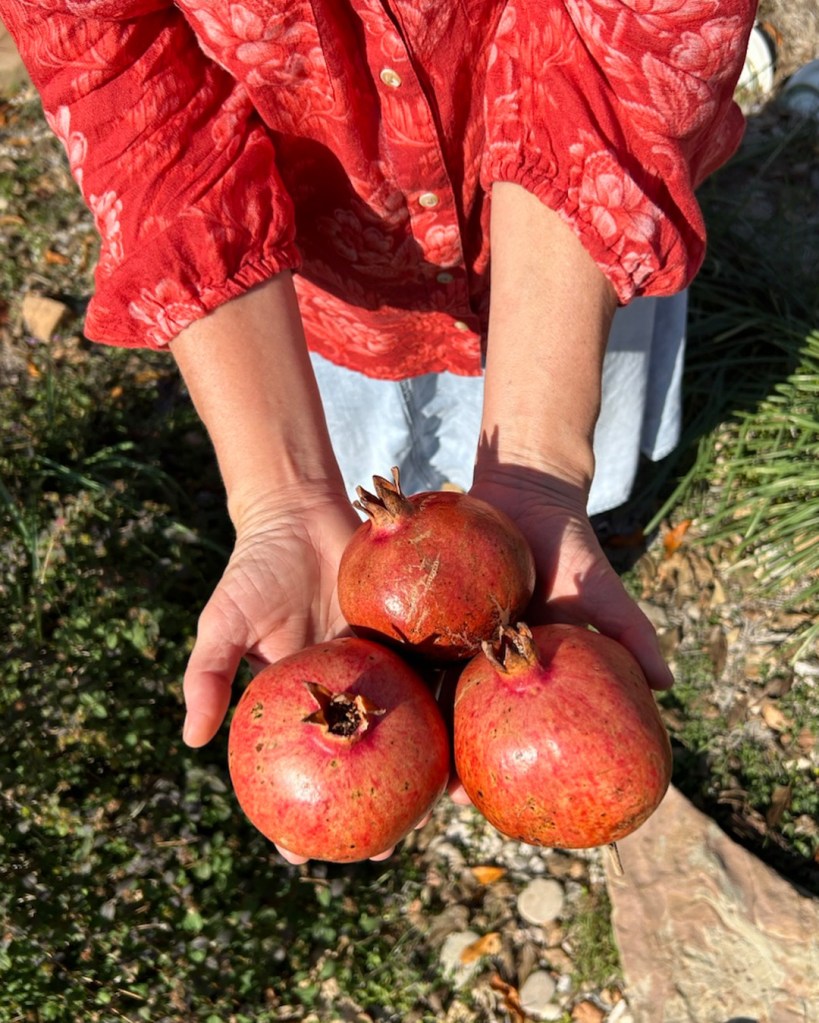
    The Texas Pomegranate is truly something to behold. I call it the Texas Pomegranate because I honestly don’t know what variety this beautiful tree is. I received the tree as a gift when I first bought the music studio. Apple John, a dear friend and mandolin extraordinaire, has an Apple Orchard deep in the Texas Hill Country. John also cultivates Pomegranate Trees. This tree was one of the first plants that found a home at the studio. The Pomegranate became a landmark in the garden, planting all shrubs, flowers and Heirloom Bulbs around it. When cherished plants died in times of drought, the pomegranate grew only stronger.

    ”Is that all you got?!”

    The Texas Pomegranate is also unscathed by destructive critters that lurk underground. For a few years, I had a beautiful antique rose that nestled herself up to the pomegranate tree. Then one day her roots were completely chewed up. Once again, the Pomegranate grew only stronger. It honestly doesn’t make sense how the palate of a gopher can be so refined as to distinguish between the roots of a salvia or rose!

    I’m not a gardening expert on much, but I do take notice the drought-hardy plants that thrive in lousy soil. The Texas Pomegranate is one of those jewels. For great native plants, I shop at Greensleeves Nursery in Pflugerville, Friendly Natives in Fredericksburg, Backbone Nursery in Marble Falls, or The Natural Gardener and Barton Springs Nursery, both in Austin. I love each of these shops for different reasons. The mainstay is to shop a local plant nursery that focuses on native plants for your area. DO NOT SHOP BIG BOX STORES FOR YOUR TEXAS POMEGRANATE TREE OR ANYTHING FOR THAT MATTER. (Notice all caps? I’m a bit passionate about supporting small garden shops!)

    Happy Gardening, my friends!

  • Redemption for Matilda’s Garden

    So many thoughts…
    My mind is full but my words are empty.

    I can only see the sweet face of Matilda, the young 10 year old child of the recent attacks on Jews in Australia. I decided to write this little blog in Matilda’s honor. A garden of redemption for this beautiful child. Perhaps it will ignite a fire for redemption in your garden.

    Redemption happens when we become aware, keenly aware, of an environment that has become hostile to anything that is good and pure. The world tells us that “good and pure” is objective, but killing an innocent child is not. There is no explanation for that horrific, disgusting act of brutality. What kind of god (notice the lower case g) would call the action of that? Not the Lord of Heaven. It’s time to redeem. It is time to stand up against what is wrong and protect what is good.

    I have spent many years redeeming my little “garden of Eden” at the studio. I have spent endless hours pulling out trash, rock, rubbish, thorns and stickers out of the earth. My “weed bouquet” in the picture above is a daily thing! Why? To protect the native plants. To bring beauty and hope to a lost world. To pull out the aggressive plants that choke out the flowers. I, the gardener, have chosen to redeem the land and not to take a blind eye to the weed aggressors. It is hard work. Every single day. I can’t just choose to “not see” the weeds, nor am I going to defend the weed and its’ growth.
    The gardener knows the heart of the plant by its fruit. Overtaking cherished flowers is simply not good fruit, no matter how you try to explain it away. Weeds are bullies and invaders of a peaceful garden. I work to redeem the land at all cost. I stand up for my flowers, in pursuit of an oasis where all the bees, butterflies, bulb, flowers and children can live in harmony.

    For too long, our world has called what is bad, good. And what is good, bad. The most aggressive of the weeds that I pull look lovely to behold….until they are full of stickers and thorns. They pretend to play nice until they overcome everything in their sight. Many volunteer weeds and native plants are perfectly fine. I love a garden of variety. I simply intentionally protect the lovely, the pure, the good fruit and the innocent.

    The recent acts of antisemitism reminds me of the small growth of weeds that take over a lovely space. It’s toxic and needs to be uprooted.
    There is never a reason for violence against children like Matilda.
    There is never a reason for antisemitism.