Tag: flowers

  • A Crinum Named Ellen

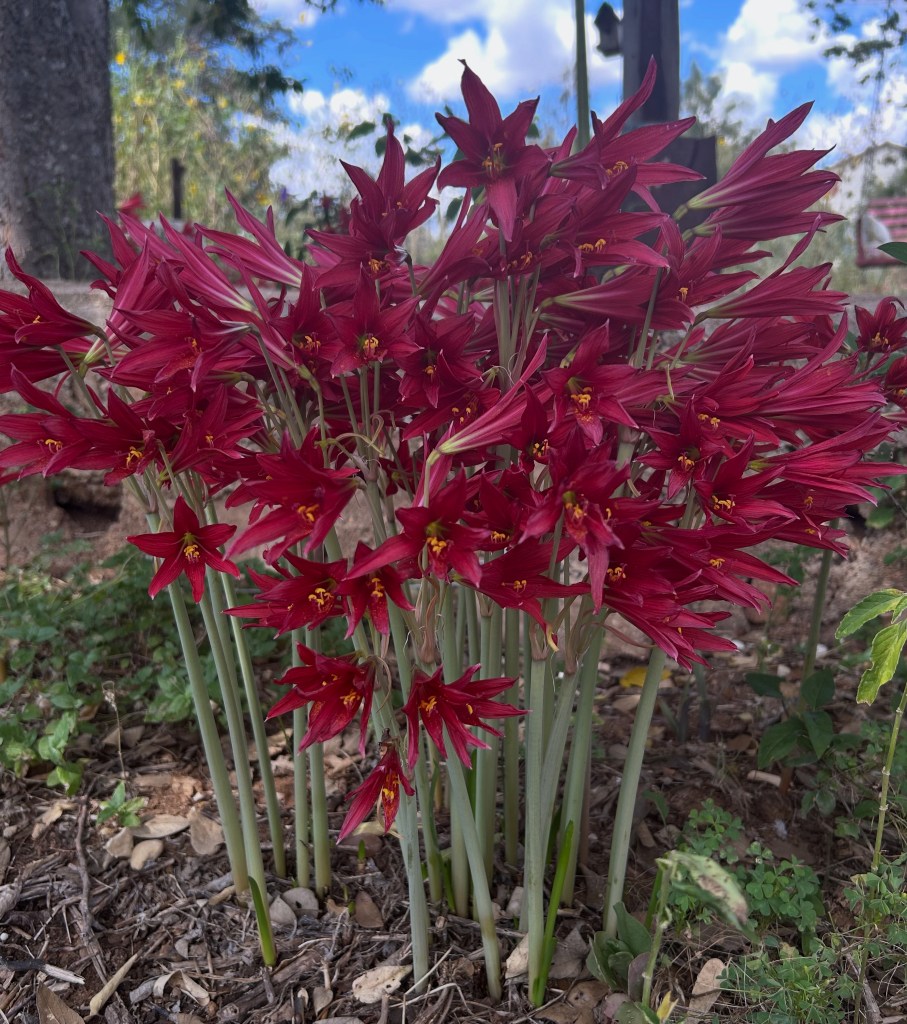
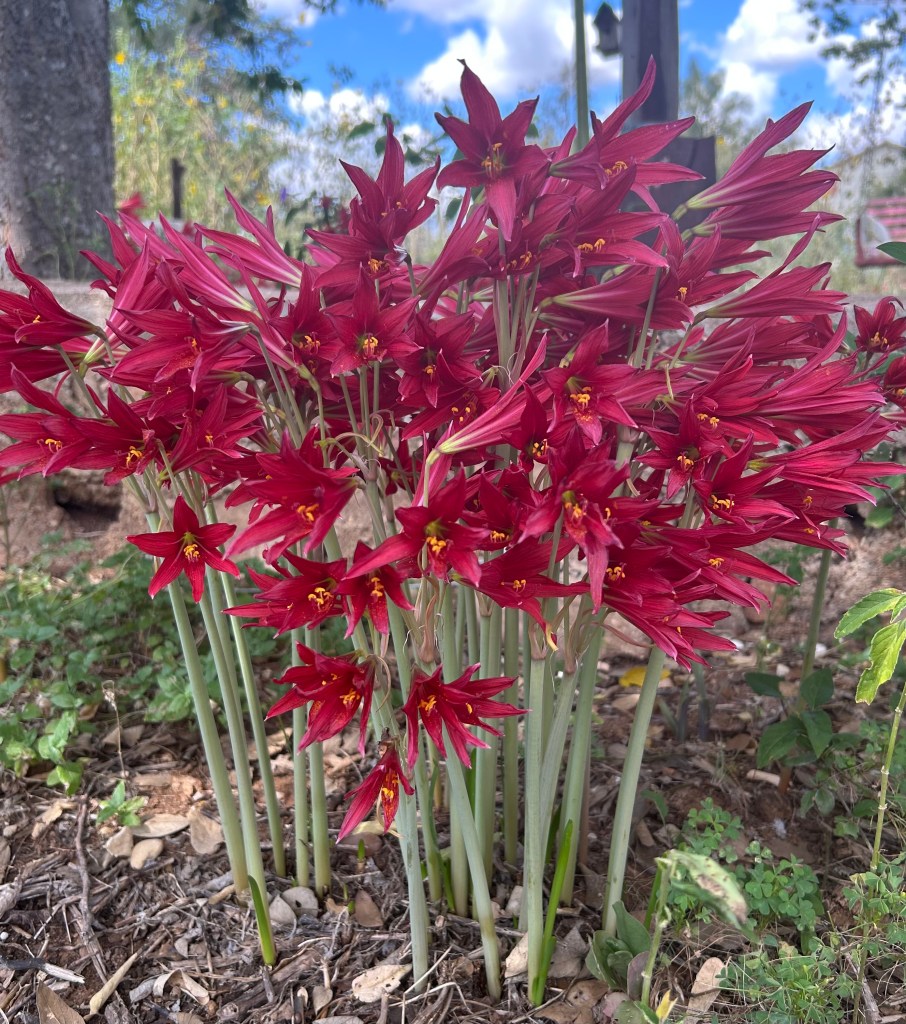
    Ah, Miss Ellen Bosenquat. What a lovely name for an even lovelier flower bulb. When all the other summer flowers are laying limp on the garden floor, Ellen rises up after a little rain and stately declares “All eyes on me!” Ellen steals the show every time. She is a bright, striking shade of dark pink and is definitely a Crinum worthy of catching. This month I’ve decided to showcase each wonderful Crinum. Ellen screamed pink the loudest, so she is featured first.

    Ellen Bosenquat Crinum, as with all Crinum, are extremely low maintenance, and easy flower bulbs to grow. These old-time flowers will flourish in your summer garden long beyond your years in the garden. My favorite fun fact about Heirloom Bulbs is that they will outgrow your children’s Grandchildren. In fact, I lay awake at night wondering what I’m going to do with all these beloved bulbs. Heirloom Bulbs just keep growing, growing and growing…..multiplying like rabbits, while I keep growing older, achier and tired! Bulb gardening with large bulbs like Ellen Bosenquat is like having a cute little petting zoo with elephants. If I’m not careful, Crinum will soon eat the studio for an afternoon snack.

    Ellen is a hearty bloomer and is currently showing her stuff in Southern gardens everywhere. I enjoy planting my Crinum in places near Paperwhites, which are dormant in the summer. I also whimsical wildflowers to grow near the larger bulbs for a nice texture, as well as Frog Fruit, and other native ground covers to spread out around the bulbs. Another wonderful attribute of Crinum is the shade they supply to the ground where spring bulbs can be co-planted, just remember where you plant your bulbs so they won’t get lost in a sea of Crinum.

    It’s June. A beautiful time of year for Ellen. May your gardens scream pink as loud as Ellen does. There are plans in the works for a monthly “pop-up” shop at the Agape Haus Studio and Garden. Heirloom Bulbs, natives, wildflower seeds, vintage china and flower pots will all be available. The first “pop up” sale will be over Labor Day Weekend. Limited large blooming Crinum will also be sold….including Ellen. Details to come. 🙂
    Happy Gardening, my friends!


  • Crinum…The Queen of the South

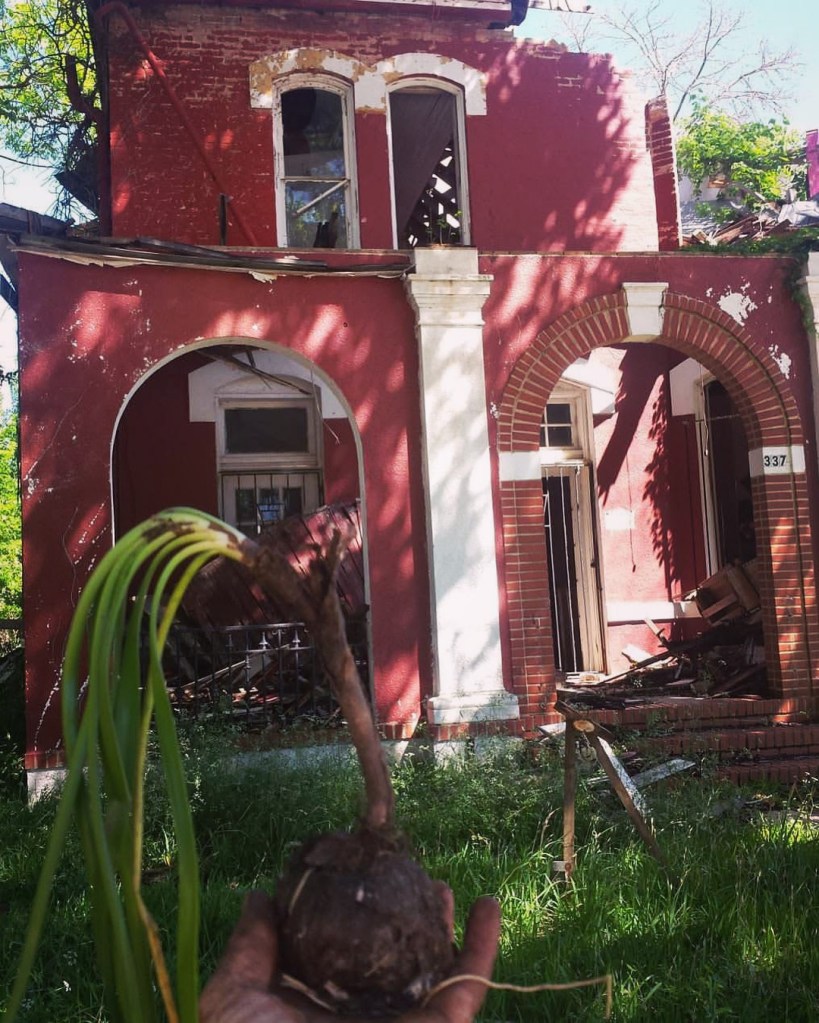
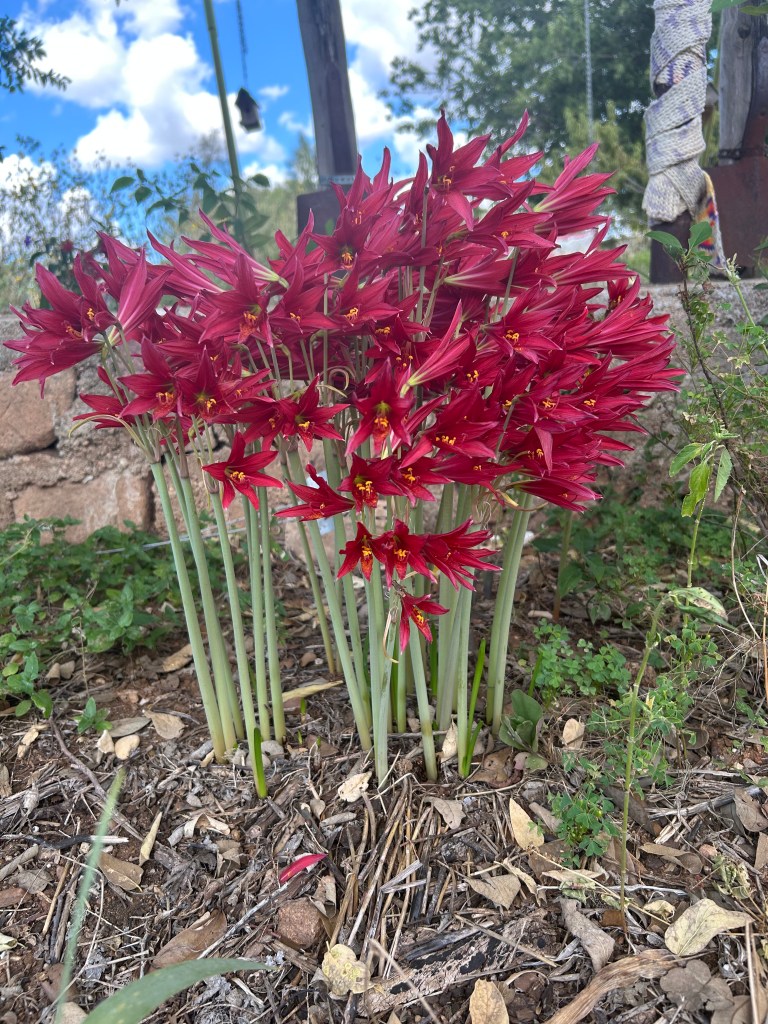
    Few flower bulbs stop a person in their tracks quite like a Crinum. These flowers are bold, passionate, unique, showy and intoxicating. I find myself unable to even write due to the sheer amount of time I’ve spent in the garden Crinum-gazing (and weeding!). There are simply no words to convey the true beauty of an Crinum, so I’ve decided to use this little blog as a picturesque look at the Southern garden in early summer. Crinum bloom joyfully throughout the summer after a nice rainfall. Some Crinum even produce hearty seed pods to collect and share with fellow gardeners and friends. There are hundreds upon hundreds of different varieties of Crinum. I mainly grow old “found” Crinum, rescued or salvaged from teardowns, so the pictures I’ve chosen to showcase are all collected or gifted to me by fellow gardeners. Enjoy your photo-walk through my garden with the Queen of the South…Heirloom Crinum.

    Happy Gardening, my friends!

    for more information on Crinum, please email me at heirloombulbgirl@gmail.com 🙂

  • Restoration Complete

    This is the year of restoration.
    This is the year that the gardens won. The wildflowers beat the odds, through drought and early heat, and still flowered on. The beauty of the meadow has finally appeared, and the wildflower seeds that were collected and sowed last year have begun to flourish. After 10 long years of grueling sticker-thorn and weed pulling, the land has be *finally* been restored. By no means is my job tending this incredible little “Garden of Eden” over. Now I get to step off the hustle-bus and simply enjoy the garden’s beauty within itself.

    No more hauling rock.

    No more digging out garbage.

    No more pulling out a bucket of daily thorns.

    No more chopping down invasive trees.

    No more tearing down a drug-house eye soar.

    No more digging endless stone out of the earth.

    No more hauling countless Heirloom Bulbs from the flooded house.

    No more tears over lost beloved plants during times of drought.

    Restoration complete.

    Don’t get me wrong, there’s a lot of compost to be continually hauled, straw to lay out, veggies to tend, poppy heads to dry, tomatoes to pick, Heirloom Bulbs to dig, plants to muddle around with and weeds to tend to…but the beauty of restoration after 10 long years is complete. (I detailed more of the restoration process in a blog titled The Fallow Ground, in case anyone is interested in the process of land restoration)

    *breathe*

    *exhale*

    God is good.

    HAPPY Gardening, my friends!

  • The Heirloom Garden

    When I started gardening, I never intended to become an “heirloom gardener”. It just somehow happened. I became drawn to the history. The story behind the flower. My early years were spent in Rabi and Mrs. Horowitz’s rose garden. The rose arbor in the tiny backyard was magical, and each rose had a special story attached to it. I was hooked. I’m not sure whether it was the inherent beauty of timeless flowers, the uniqueness of each flower story, or the simple fact that my mind could wander and question endlessly about the past. Feeling “rooted” to past traditions is important and vital, especially in our quick, throw-away society. Heirloom gardens preserve the past for the future of tomorrow’s gardeners.

    Heirloom, by definition, is “something of special value handed down from one generation to another.” In plant talk, an heirloom is “a variety of plant that has originated under cultivation and has survived for several generations usually due to efforts of private individuals.” Mike Bollinger, executive director for Seed Savers Exchange (a non-profit focusing on stewardship and education around heirlooms) had a great explanation for what Heirlooms truly were in Cooks Magazine. “Heirlooms tell stories from the past that may have been lost if it were not for their existence.” Heirloom plants are in “contrast to modern cultivators used in large-scale agriculture”. You might say that heirloom farmers are dedicated in maintaining a lifestyle their Grandparents or even Great-Grandparents had. I find the idea of growing a flower bulb that was deeply loved by someone who lived at the turn of the 20th century utterly fascinating. There is simply no substitute. So how does one go about creating an heirloom garden? For me, it’s all about preserving the gardener’s story.

    Here are a few very practical ways to start an heirloom garden…

    *Join an old-fashioned garden society or garden club. You will learn a lot of gardening wisdom from older generations of gardeners. You will also be able to drink tea and listen to some fantastic stories. A lot of garden clubs host plant or seed swaps. This is a wonderful way to hear about “Mema’s Yellow Iris” or “Aunt Thelma’s Daffodil”.

    *Visit the older part of your town and become friends with the folks with beautiful gardens. Gardeners love to talk about their flowers. Don’t be afraid to compliment a stranger with beautiful Daylilies or gorgeous old roses….he might just spontaneously dig a special flower up just for you.

    *Invest in some flower bulbs or antique roses from notable sources who invest their time in preserving heirloom plants. A few of my favorites are Old House Gardens, Southern Bulb Company, Seed Saver Exchange and the Antique Rose Emporium. Great folks with amazing selections of charming old-fashioned flowers.


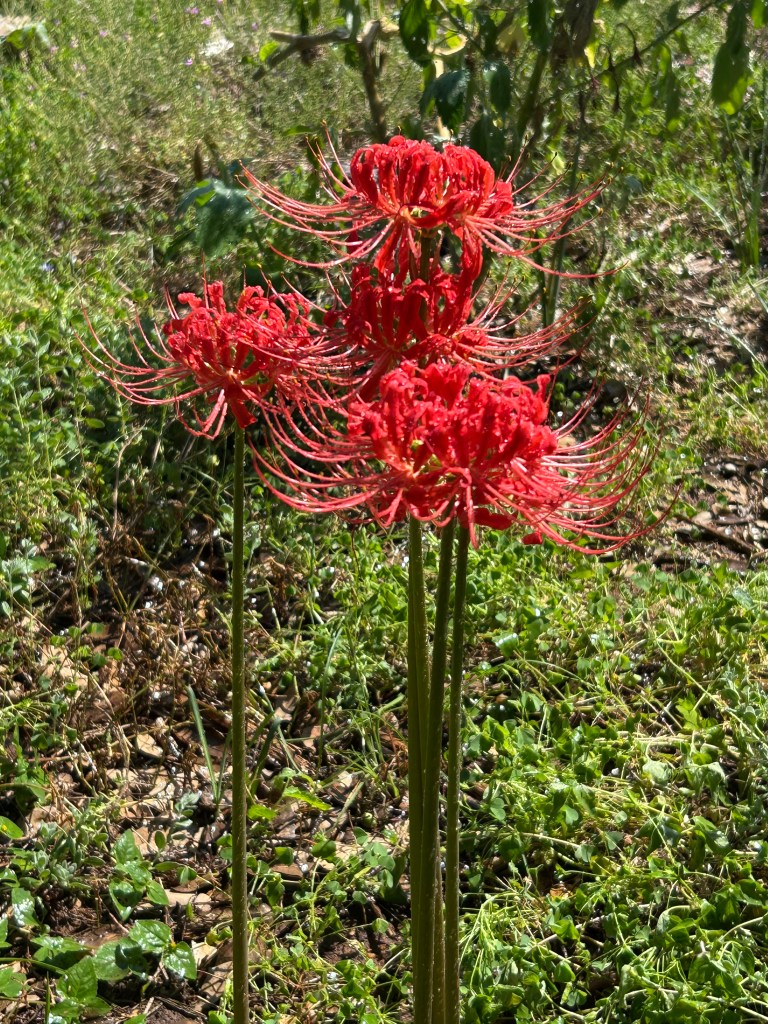
    Heirloom gardens aren’t flashy, nor do they keep up with the last trends in garden culture. Heirlooms feature the past and quiet ways of a lifestyle long gone. Unrushed and simple. Moment to moment savored by the stillness of the garden. I walk through my gardens each day, with gentle remembrances all around….my husband’s Grandmother’s Iris, Danish bulbs passed along, gardening friends’ Snowflakes, Byzantine Gladiolus, Daffodils and Iris, my in-laws’ original “William Allen land grant Iris”, my Franklin Iris that traveled from England in the mid 1800s that settled on a Texas ranch that shared the land with Native Americans, and tear-downs saved like the beloved Oxblood Lilies, Spider Lilies and Crinum of Miss Margaret and Eugenia. The cherished list of heirloom flowers in my beloved gardens with a story attached goes on and on. I only wish I had a cutting of Rabi and Mrs. Horowitz’s rose garden, but their memory is rooted in every Antique Rose I have.

    There are two types of flowers…quick color that lasts a season and heirlooms that will out-live your Grandchildren’s Grandchildren. I pick the latter.

    Every.

    Single.

    Time.

    Happy Heirloom Gardening, my friends!

  • Old Churches, Cool Fences and Snowdrops with Snakes! Oh My!

    One of my all-time favorite places to dig is in the small, rural town where my in-laws live. I am always amazed at the unbelievable amount of flower bulbs that grow in this area of Texas. Even throughout remote alleys, filled with cluttered debris, Oxblood Lilies and Narcissus grow wild. The sandy loam is perfect, the trees are grand and my salivating glands go in hyper drive while driving around looking for demolished houses with unwanted bulbs. Typically, it’s an adult scavenger hunt…

    ”Excuse me…do you happen to know who owns this property?”

    ”My nephew’s Father’s brother, who is in prison, owns the house. But he don’t care about them flowers.”

    ”Oh yes. I remember Miss Margaret quite well. I saw her every day when I walked by. She sure did love her flowers. I miss seeing her smiling face after the fire.”

    ”Eugenia lived in that old house until she was 90. It was her parents who planted the original gardens.”

    ”The lady who lived there passed away years ago, and the house is scheduled for demo. She loved those Snowdrops. You should take some. No one will mind.”

    So I did. Gratefully.

    There is something about saving the flowers from these old homesteads that preserves the memory of the gardener. In some way, it feels like preserving their legacy. I do hope that one day, the flowers that I have pulled from these old homesteads will continue to live on in other gardens.

    This past weekend, my husband joined me on a rare “spousal” scavenger hunt. I had spotted some very old Victorian wrought iron fencing that had been ripped up and discarded into a brush pile. (I know! I couldn’t believe it either!) We went through four people to finally locate the owner of the empty lot. We finally found “Bobby” at a convenience store. We asked him about the fencing and he looked at us like we were crazy.

    “The stuff in the trash?” Yes.

    Then, my husband being the superstar that he is, asked if I could also dig some flower bulbs near the brush pile. (Again, crazy)

    ”Sure. Take them all.”

    Somehow we wrangled the 17 foot iron fencing panels into the trailer. I started walking around the brush to start digging and a snake slithered near my flip flop. After all these years, I still don’t dress appropriately for digging. You’d think I would learn. I offered my Mother-in-Law some of the fencing, which she said an unfortunate “Yes!” 🙂

    It was a very good weekend. The old church still remains. Someday, I might drive by, the same way I have for the past 30 years, and find that it has fallen down. I certainly hope that the community will step in and restore it to its former glory. Until then, I will continue to just keep digging, and tell the
    stories of old gardeners who once loved their old gardens.

    Happy Gardening, my friends.


  • The Christmas Crinum

    I’ve had my eye on this lovely little lady for the past few weeks, obnoxiously posting photos and video of this slow growing gal getting ready to bloom. It’s not surprising that Crinum bloom on their own time after a good, hearty rain. What *is* surprising is the timing of her extravagant entrance….Christmas Day, 3 weeks after a freeze. I’ve never heard of such a thing! In fact, I don’t even know what variety of Heirloom Crinum this is, I just know she’s old and apparently a Christmas lover, much like myself!
    I have searched the internet in a quest to find her proper name besides Christmas Crinum. I have even “reverse Google-searched” with her photo (didn’t even know that was a thing) but all I could come up with was Jubilee. I like the name, but she doesn’t quite match the description or photos. Swamp Lily also came up, but that’s too ugly of a name for her. If any of you Crinum lovers out there have a hunch of her true identity, please let me know. There’s a Crinum collector in Florida who I hope to connect with over the Holidays. Maybe he will know. For now, her name shall remain my Christmas Crinum.

    I have heartedly enjoyed watching the bloom cycle of the Christmas Crinum. It feels like the entire month has been consumed with thoughts about what she’d look like and when she’d actually bloom. I went outside more times than I care to admit, just to see if any progress had been made. I counted the actual bloom stems, pulled them gently apart to see if they made it to 12 blooms per stem (12 Apostles) but 10 seems to be the number she will sport. Another little fun fact about the Christmas Crinum is that she’s blooming in the ugliest part of the whole garden. I have upwards of a thousand Crinum (all at different stages of growth) at the Agape Haus Studio and Garden, but nothing is blooming. But yet, in the poorest rocky soil, in the grossest part of a neglected patch near the garage, the Christmas Crinum blooms. So lowly a place for such a beautiful reminder of endurance and hope during the first Christmas without my Dad.

    This beautiful Christmas Crinum has reminded me about the Christ Child, and the moment the Lord reached down to all humanity, providing the gift of Salvation in a lowly manger. A manger that held redemption in human form, which became the greatest and most beautiful gift of all.

    “For God so loved the world that He gave His only begotten Son. That whoever believes in Him shall not perish but have eternal life.” John 3:16

    Happy Gardening, my friends! Merry Christmas!

  • The Three-Shovel Crinum

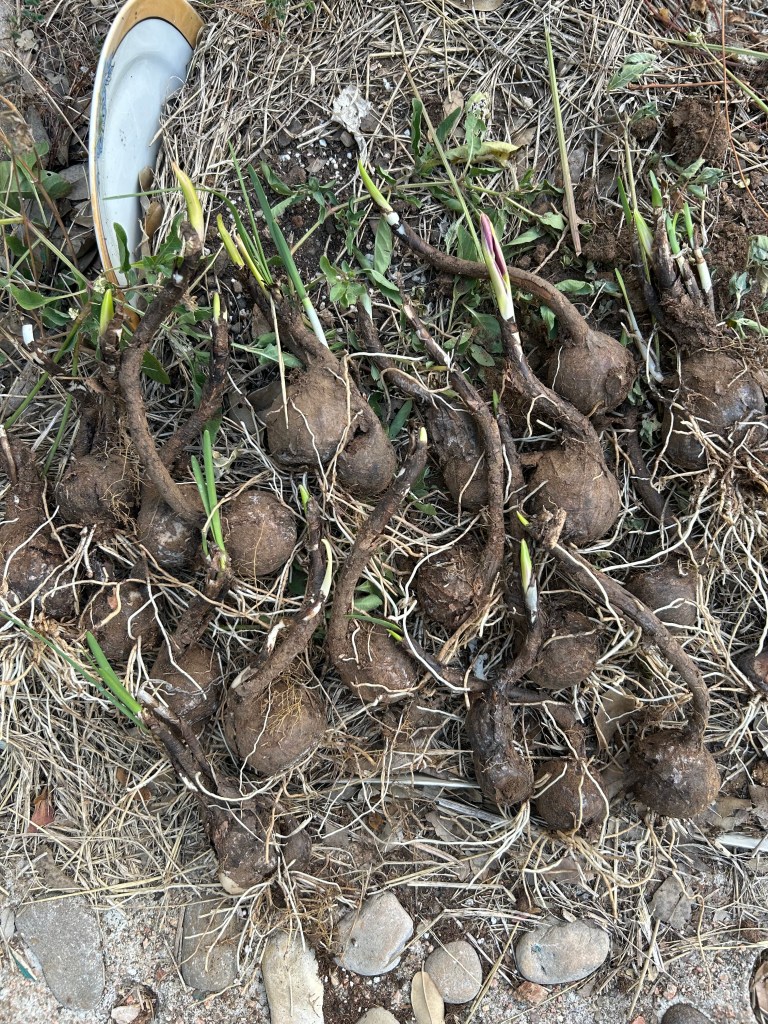
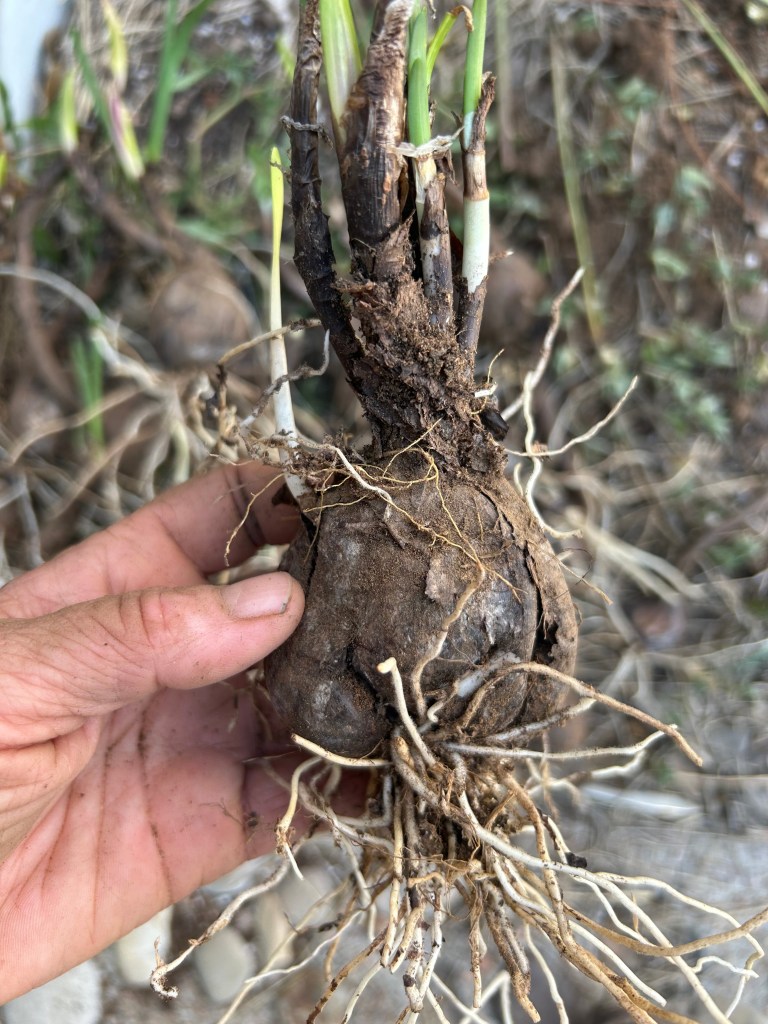
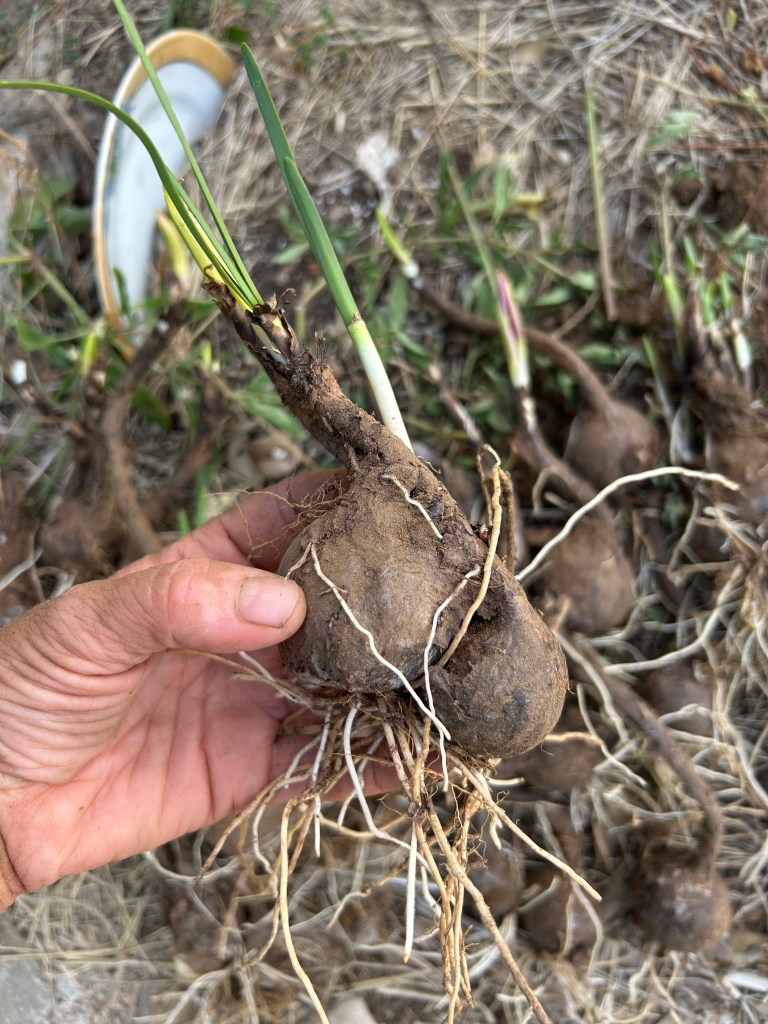
    I’ve dug Crinum many times over the years, and there is always a dead shovel involved. This particular dig involved Heirloom Bulbs that had been on my In-Law’s farm since the original German homesteaders in the mid 1800’s. The bulbs are hardy, healthy and stout. The flower bulbs growing in an open field were the only remnants of the early homestead. My Mother-in-Law researched the history of the farm and has a wonderful file full of backstories of Milam County. I love the history of old garden treasures….if only the bulbs could speak! Ah, the stories they would tell!
    A few weeks ago I was asked to help move the old patch of Crinum over Thanksgiving, and of course my answer was an over-enthusiastic “YES!” I knew full well that the Crinum bulbs would be hauled off to my studio, which meant that my husband had to be on board. He typically likes to keep our car dirt-free, but unfortunately he married a female Pig-Pen. Surprisingly, he loaded two very large tubs into the back of our car.

    ”You can take home whatever you can squish into these tubs”

    That’s going to be a lot of squishing….

    Saturday morning, in the 30 degree weather, 4 Fletcher men and myself began to dig. Within 5 minutes, the first shovel was already broken digging up the Cemetery Iris.
    “One shovel down!” I couldn’t believe we were already breaking shovels, and hadn’t even started on the big boys. I worked on getting the first Crinum to “pop”, which is a sound commonly heard when digging Crinum. The “pop” is the release of the bulb from around the clump, signifying that it is safe to start pulling, yanking, heaving or what have you. Most shovels break before the “pop”. Pulling the bulb too early will result in a nice backache, while the bulb rests comfortably beneath the warm ground. Digging too hastily will result in a lack of root system, which most of us have done. It’s never fun to work really hard on digging up a bulb, only to pull it out without roots.

    By the end of the morning, Thanksgiving guests were arriving while we were still covered in dirt but the job was completed….3 broken shovels, a mountain of Cemetery White Iris, Heirloom Daylilies, Oxalis, and massive Crinum bulbs all stuffed into 2 large tubs. The Iris tub was filled 2 feet higher than the tub itself. The Crinum bulbs stood upright, as to not hurt the foliage, and all 50 or so big boy bulbs fit nice and snug. I also pulled out some Ellen Bosenquat Crinum that my Mother-in-Law’s garden friend gave her. It was a great Thanksgiving day!

    If you would like a Cemetery White Iris dating back to the 1800’s, please email me. I have plenty to share. The old Crinum should settle in, and offshoots will be available next year. I’m also going to do a “Win the Crinum” contest, but haven’t decided what type of contest it will be. Stay tuned for more details to come. 🙂

    Happy Gardening, my friends!

  • Gardening Super Truth

    There’s truth, and then there’s super truth. I prefer gardening super truths. Take, for instance, the super truth of the invasive Bermuda Grass, which contain root systems that grow straight down to hell. Or perhaps the super truth of trying to plant a peony in the full, blazing-hot summer heat during a Texas drought. Not gonna happen….Super truth. No arguing around the truth….it is what it is. It’s kinda like getting attacked by the “flower bulb bug” in your early 20’s and never recovering. There has never been a truer statement uttered out of my mouth, except for maybe “I do” spoken at the church 30 years ago. These super truths are ever present in my garden, but squishing in more flower bulbs into an already packed space is definitely a habitual ritual that borderlines a mental illness. Seeing garden space when there is none, and then thinking to yourself “If I only had a _________ and more_________, then the gardens would finally look perfect!” There’s no arguing with the ridiculous notice that “just one bulb” is needed to fulfill the space, because tomorrow another beautiful bulb will come along that I just *have to* have.

    This morning, after posting this funny meme about bulbs, I received a lovely email from a gardening friend who had been recently diagnosed with stage 4 cancer. Last year, her family surprised her with 450 bulbs from the “Bulb to Bloom” bulb sale to help create a legacy garden. My friend knows that Heirloom Bulbs are in it for the long haul, and that in itself is another gardening super truth. Long after the gardener says goodbye to their gardens, Heirloom Bulbs remain beautiful reminders of what was “once upon a time”. My friend has poured herself into the garden, squishing in as many bulbs as the garden can handle. The idea of “No garden can have enough flower bulbs” resonated with her as she continues to plant and spread inspiration to everyone around her. The truth is that she has created quite an incredible garden story for others to enjoy. Life isn’t easy, but it’s nice to keep our mind focused on the beauty of tomorrow instead of the hardships of today. Her bulb gardens exemplify hope in action. I even have some of her Heirloom Bulbs that I purchased at the bulb sale. If I was smarter, I would’ve put 2+2 together and realized that she was the same flower friend through email, but I’m not that smart (super truth) so I missed my chance to meet her in person. I plan to go to the bulb sale again next year just so I can meet such a beautiful gardening soul….and buy more flower bulbs. There’s always room for just one more bulb.

    If you have never been to the Smith County Master Gardeners Bulb to Bloom sale, it is definitely worth the drive to Tyler, Texas. The sale is typically in October. My family and I went 20 years ago for the very first time, when old gardeners still raced each other and literally RAN to get the bulbs. Something out of a gardening Twilight Zone. Definitely a blog for another day! They now have an on-line sale the week prior so no one’s pride gets hurt. There *might* even have a few items left after I buy every bulb in sight. Ha! 🙂 The sale is for a worthy cause and a great way to splurge for your garden’s sake. Remember to splurge….it’s the only way.

    Happy Gardening, my friends!

  • Hollie’s Crinum Baby Bulbs

    A few months ago, I collected a bunch of Crinum seed pods at my daughter Hollie’s graduation from Texas A&M. When I say “a bunch”, what I really mean is that my cup runneth over and flooded the potting shed. I honestly didn’t know just how many I had until it was time to start the growing process. This weekend, I finally got most of them planted. I’ve had a few gardeners reach out lately regarding the blog post with free Crinum seed pods, and wanted to give you a quick update.

    As you might know, growing bulbs from seed is not for the faint of heart. Remember the fruits of the Spirit you learned about in Sunday School way back when? “Patience”, “Hope” and “Longsuffering”? Yep….Those fruits are put to the test when starting those little seedpods. Here is a small glimpse into the process of growing Crinum from seed pod (the average gardener’s way)….

    First, you must pick the right amount of soil, light and water. Then wait.
    And wait.
    And wait.
    And then wait some more.

    Finally, after you accidentally forget about the seed pods, they decide to sprout. You get mad at yourself because some of the cute little pods dried up and died. You do a quick scientific analysis of the problem. Probably too much water, but actually not enough water. Along with too much sunlight and not enough sunlight at the same time. You feel much better knowing that you still maintain the “average gardener” status, and didn’t sink down into the level of “killing-everything-in-sight gardener” (that status is reserved for your houseplants, which are on a day by day life expectancy).
    You quickly give the surviving seedpods a blast of water and then go about your week until you accidentally forget about them again.

    Please tell me I’m not the only absent-minded gardener.

    Anyhow, this dead-almost-dead drudgery carried on throughout the summer. Luckily, Heirloom Bulbs (even as seedpod babies) are way smarter than I am. Heirloom Bulbs are survivors, so about 400 plus little Crinum babies survived my ineptness. I am happy to report that I have planted about 25% of the bulbs in pots. Then I got impatient and planted the rest in an empty veggie garden raised bed. I still have about 25-50 little bulbs left if anyone out there wants some. The good news for you is that I’ve already mentally muscled through the hard part of seedpod planting, so all you need to do is stick them in the soil. 🙂

    The greenery will freeze in the Winter and bulbs in the pots will freeze too. Keep your infants inside and keep them growing. The bulbs grow quickly and in a few years, they might even get to be of blooming size. Remember, Heirloom Bulbs will survive your Grandchildren’s Grandchildren. These bulbs are in it for the long haul. To me, it is glorious to have these old gals take root and share their blooms year after year. Email heirloombulbgirl@gmail.com if you’d like your own little Crinum.

    Happy Gardening, my friends!

  • The Fallow Ground

    Fallow ground….A long period of just nothingness in hopes of restoration.
    Apparently, it is a good farming technique that allows the land to rest and recuperate after numerous hard farming seasons. Waiting on fallow ground to recover can actually take years. Those are hard seasons to wait upon.
    I don’t like those seasons. I honestly don’t like to wait. I wanted my Tasha Tudor gardens planted “now” (or yesterday). But, in my studio’s case, the fallow ground was all I had to work with.
    I grumbled, complained and begrudgingly stuck salvaged flower bulbs anywhere I could, completely avoiding eye contact with the land of nothingness. But things changed after the flood. ALL the gardens at the flooded house had to be relocated. I had to look eye to eye with that piece of fallow ground and begin restoration.


    Restoration of the fallow land was indeed a lofty goal. Quite frankly, I wasn’t sure if I was up to the calling. The long “wait” was just too long. The Lord was actually trying to do good things in the fallow ground, but my heart was too hardened to take notice. I needed more time in the “wait”. Maybe I’m just stubborn and didn’t have eyes to see what He was doing. Maybe I was used to grumbling over the imperfections, or maybe the Lord just wanted me to look upon stillness for a bit to watch the restoration unfold. Whatever the case, I was stuck with a whole lot of nothing. Literally…..a house lot of nothing but stickers, rocks and thorns.

    To the gardener, fallow ground gives the field a chance to rest. Over planting and plowing, (or in my case, chicken and duck grazing) causes stress to the earthly balance of nature’s ecosystem. The delicate world of microorganisms is destroyed and the soil becomes depleted. Letting the earth simply rest allows restoration and balance to simply step in, and work the soil back to heath naturally. The “wait” is the hardest part.

    Here are a few steps I took to begin the restoration of the fallow land.

    Step one….I had to be ok with the fact that my garden was not Pintrist-perfect. This sounds so silly, but my mental game was the largest hurdle I had to cross (just ask my husband). I struggled when I walked into the back part of the studio grounds and saw nothingness. “I remember when my other gardens had rich soil full of earthworms, but *this* land is_______” I had a lot of choice words that I could fill in the blank. The conditions of the land played a negative mental trip on me. I didn’t like the ground I had to work with, so I simply gave up on that part of the studio. I had to step back and rethink my vision. So, step one is simple…a much needed attitude adjustment in the mind of the gardener.

    Step two….let the wild things grow. After stepping back from my negative attitude, I began to see the fallow ground in a different light. Little native flowers were appearing out of nowhere. My favorite flower to come on the scene was Stork’s Bill, a beautiful purple flower to emerge in early Spring. The seeds are fascinating to children and truly do look like a stork’s bill. I even had adorable little, native rain lilies appear like they owned the place. Why had I never seen them before? I slowly encouraged the good natives to grow as I pulled up the stickers and thorns that had choked out the flowers and overrun the land. What is it with thorny things that love delapitated conditions?!

    Step three…pull out the stones and rocks that weighed the potential gardens down. Nothing grows in stone. Even people avoid stony personalities. After digging in the fallow ground, I found piles of underground stone that had been dumped onto the land. Apparantly my studio grounds had once been a dumping ground for unwanted rubble. How apropos. I dug the little pieces of rock and created a pathway throughout the property. The more I dug, the more little native flowers appeared. The larger rocks were used to create garden beds. True fallow land is complete rest, but I felt the nudge to “just do something” in the long wait.

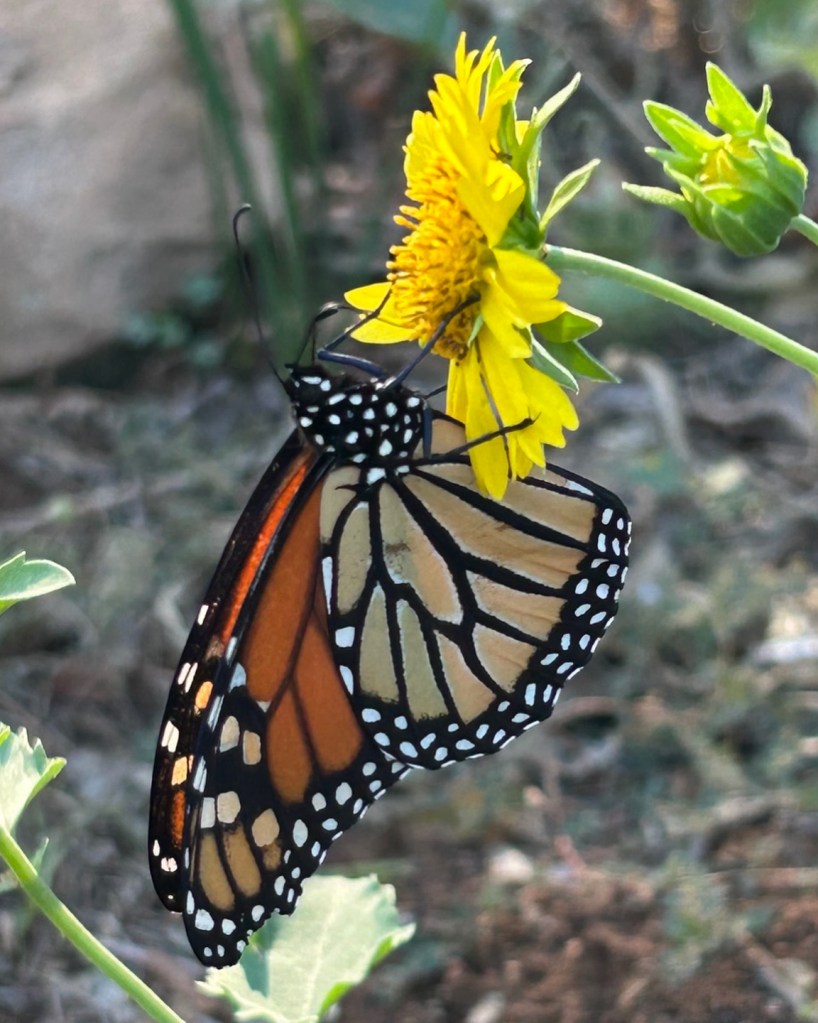
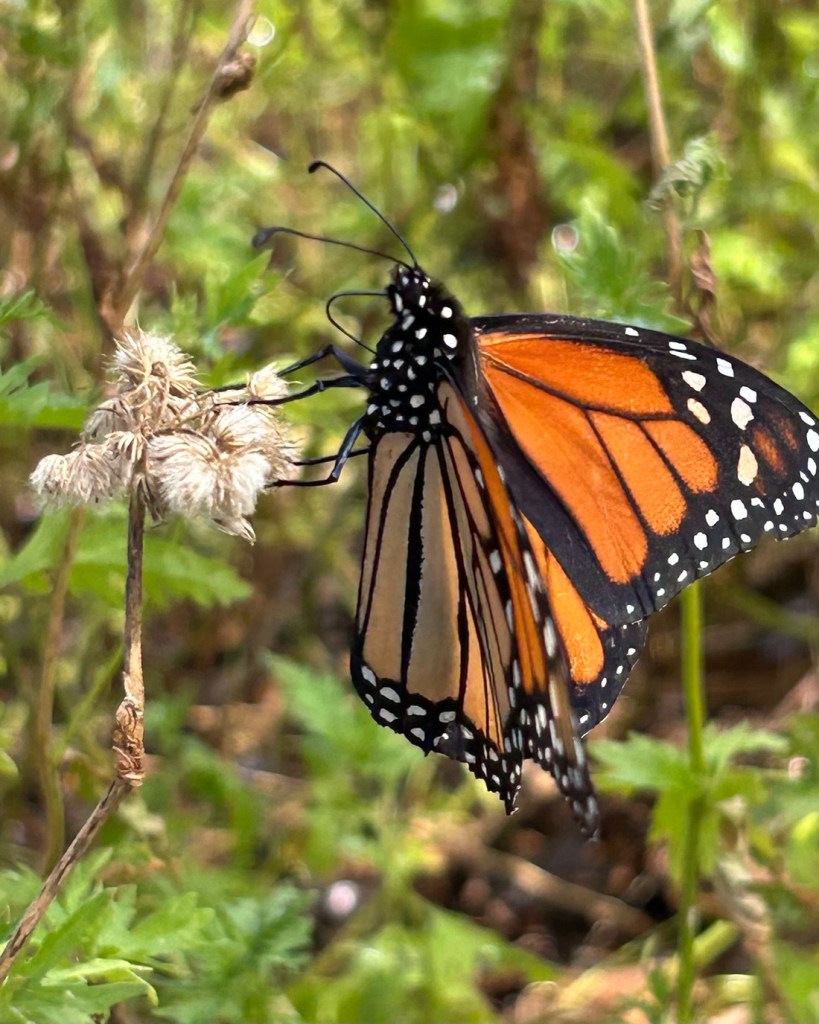
    Step four….just keep digging. The road to restoration was long, and for many days, I was tired. I was tired of filling up my bucket of stickers after violin lessons. Tired of my hands hurting. Tired of digging and finding only rock. Tired of looking at nothingness. Just tired. But the Lord stepped in, as He always does, and quietly whispered “Just keep digging”. I’ve realized that the restoration of the fallow ground wasn’t just a destination, but a journey. Every day, I watch the redemptive process in the land I once called fallow. Every day I wake up excited to see new flowers. Every day I hope to find more worms in the earth and butterflies in the air. Every day is a journey.

    ”Break up your fallow ground and do not sow among thorns.” Jeremiah 4:3

    The beauty of the Lord’s doing wasn’t intended for hardened hearts or thorny ground. I had to wait, during the process of restoration, to remove thorns and rocks that only choked out the good things to come.
    Happy Gardening, my friends. Even in the fallow ground, the Lord is ever present, doing a great and mighty work in the land.