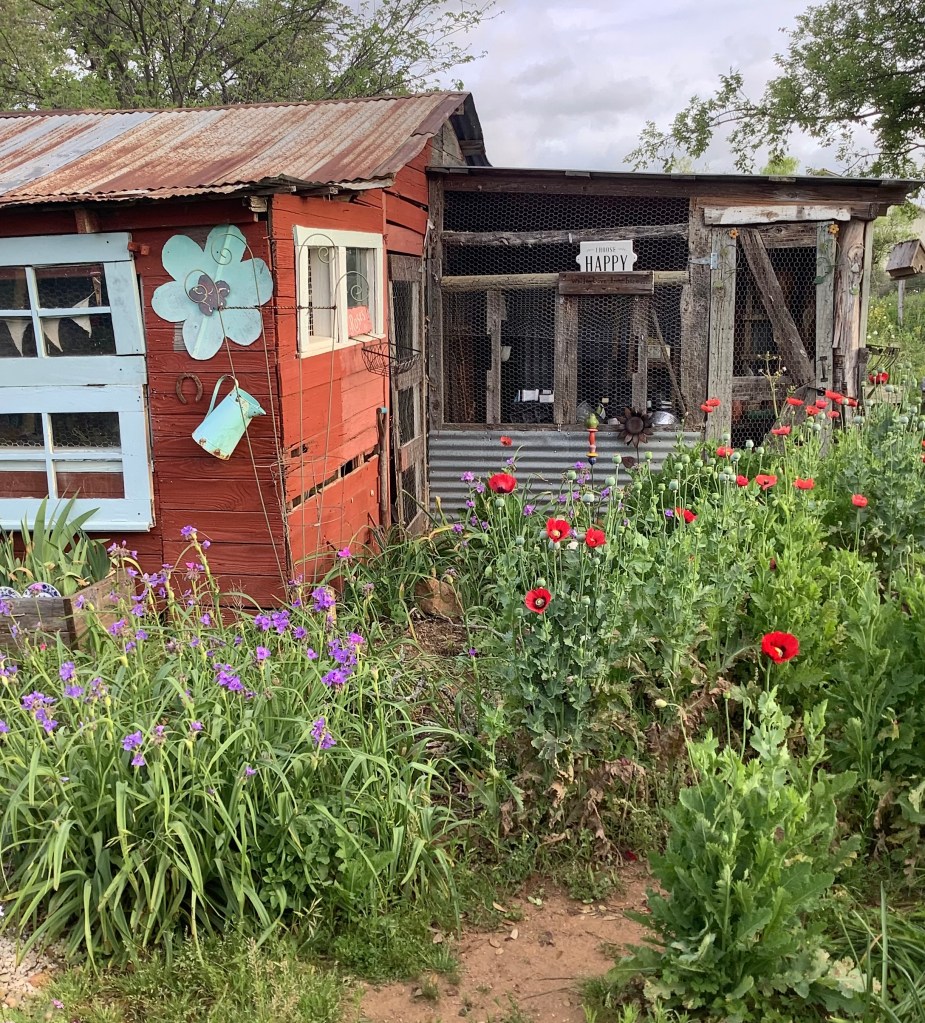
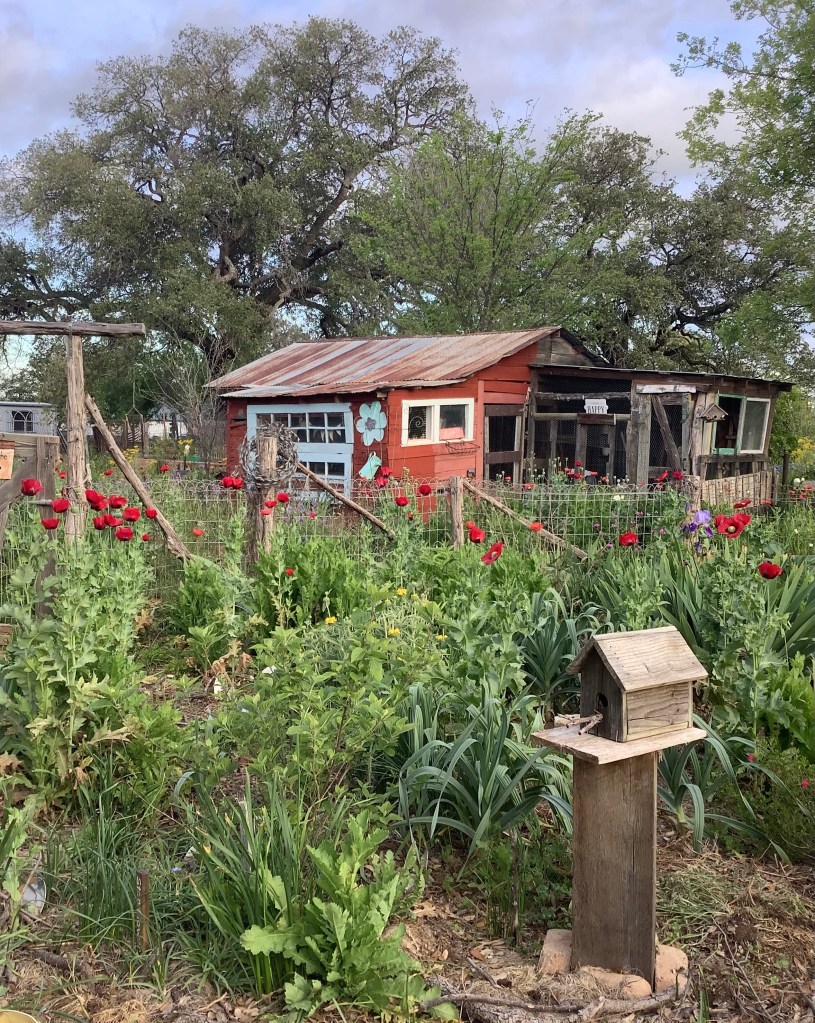
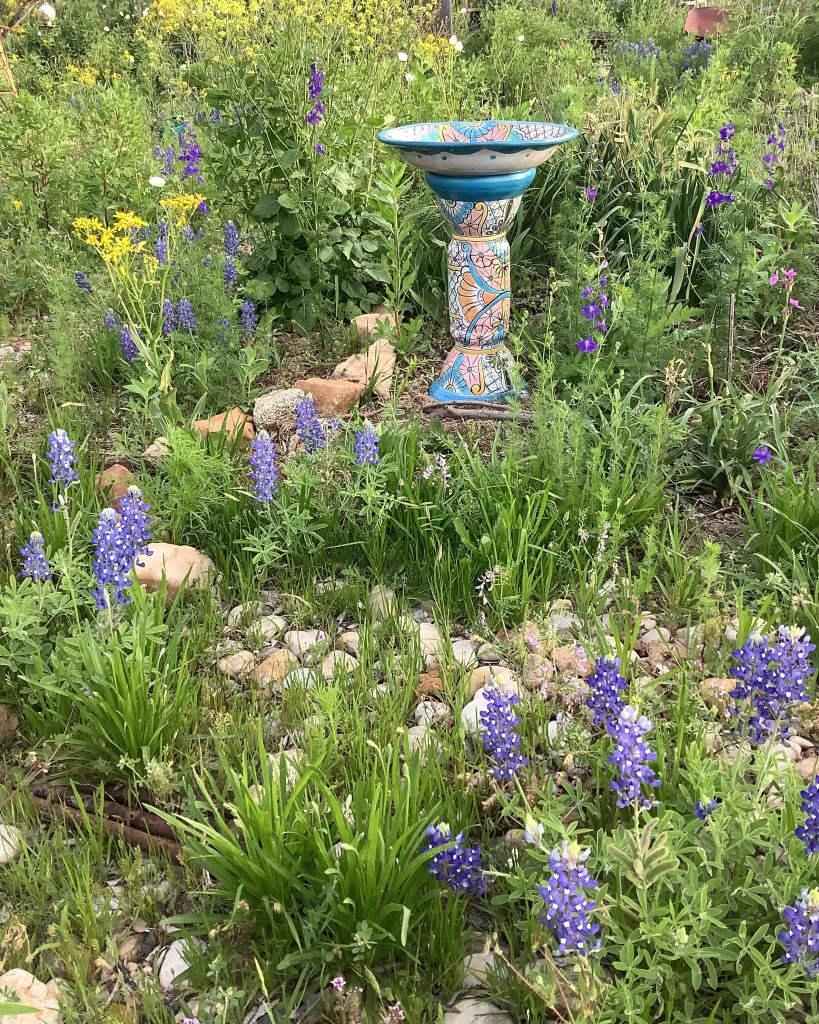
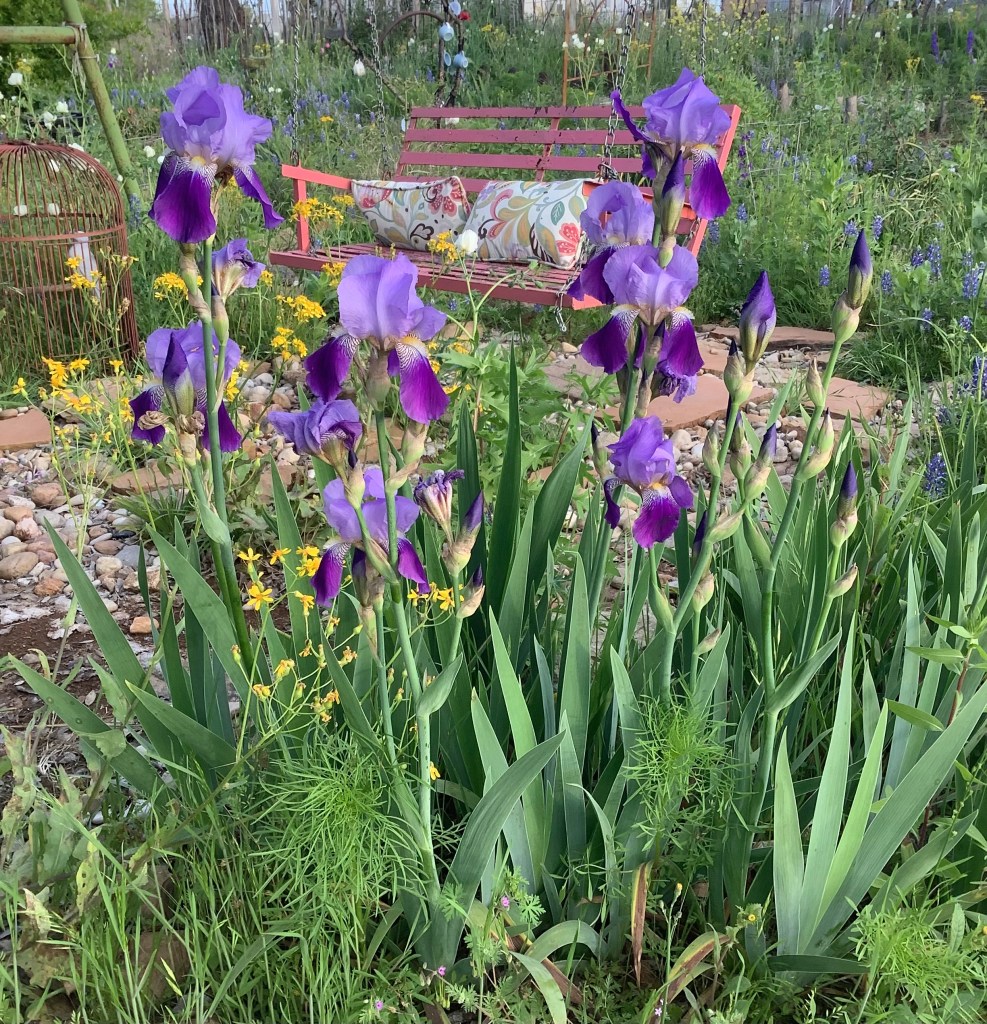
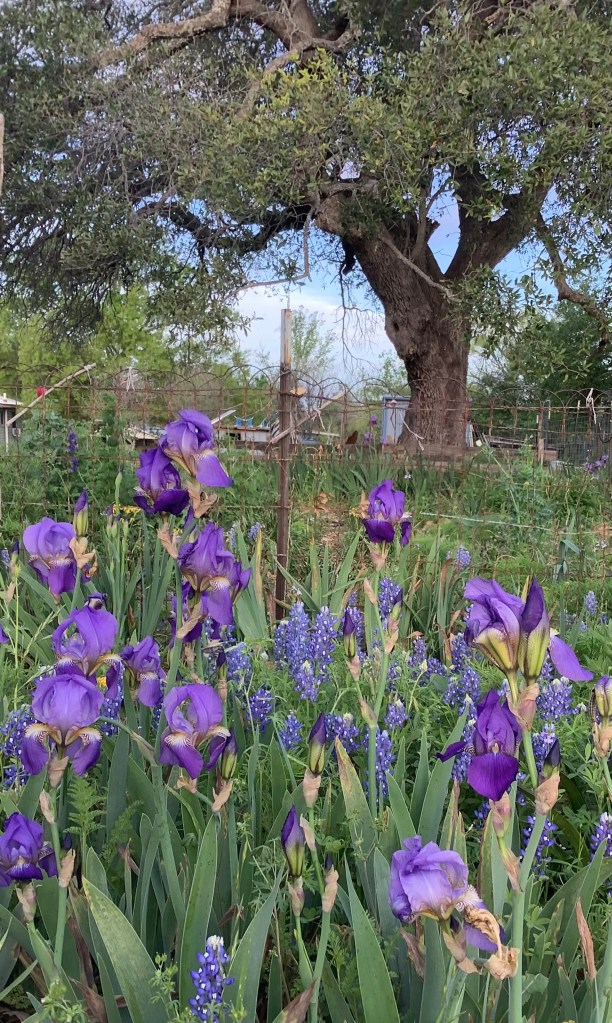
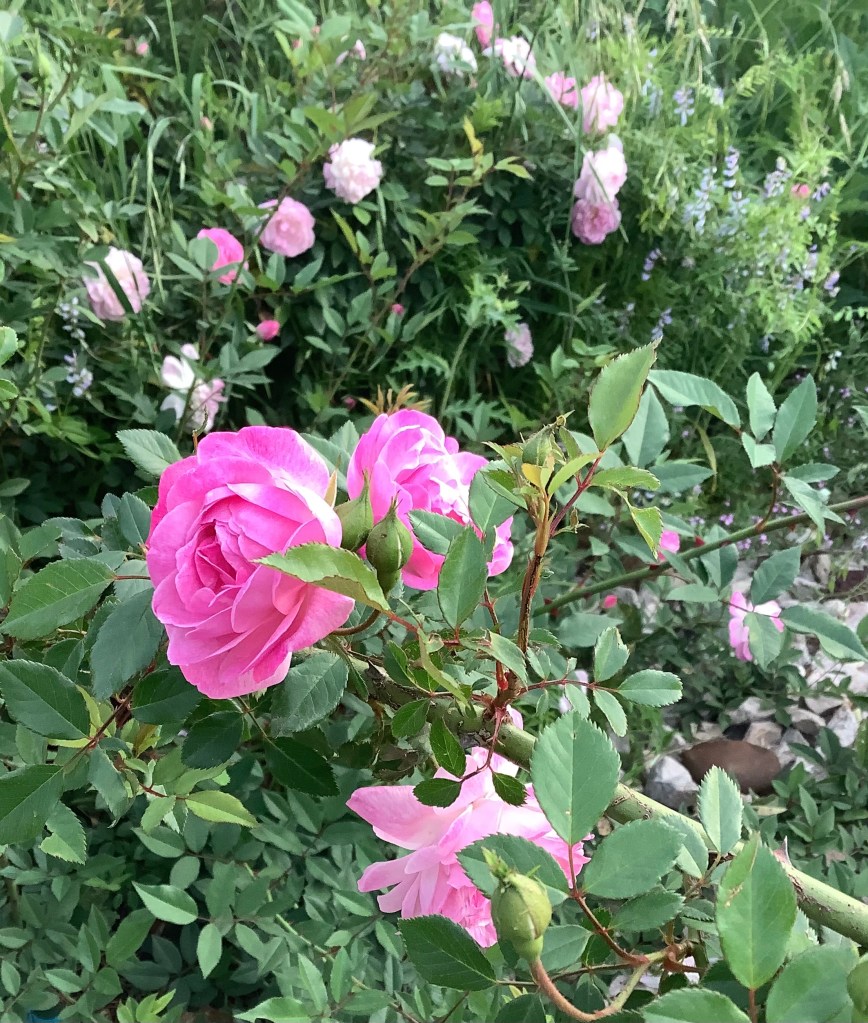
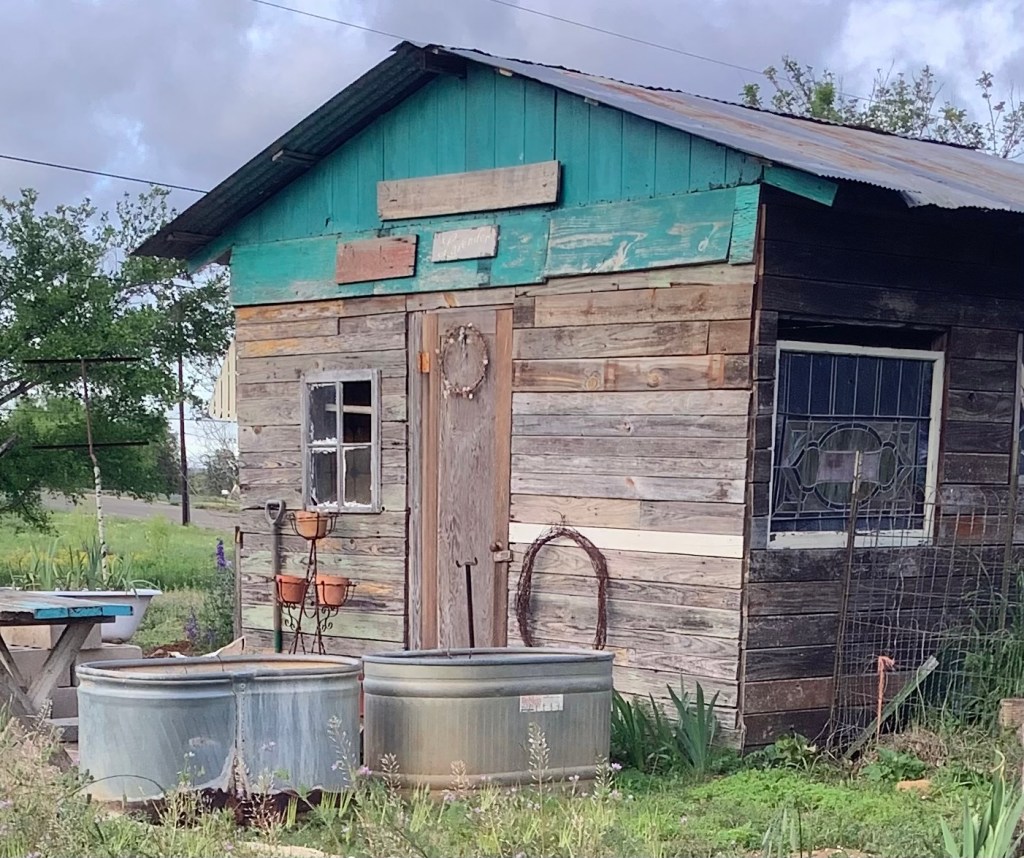
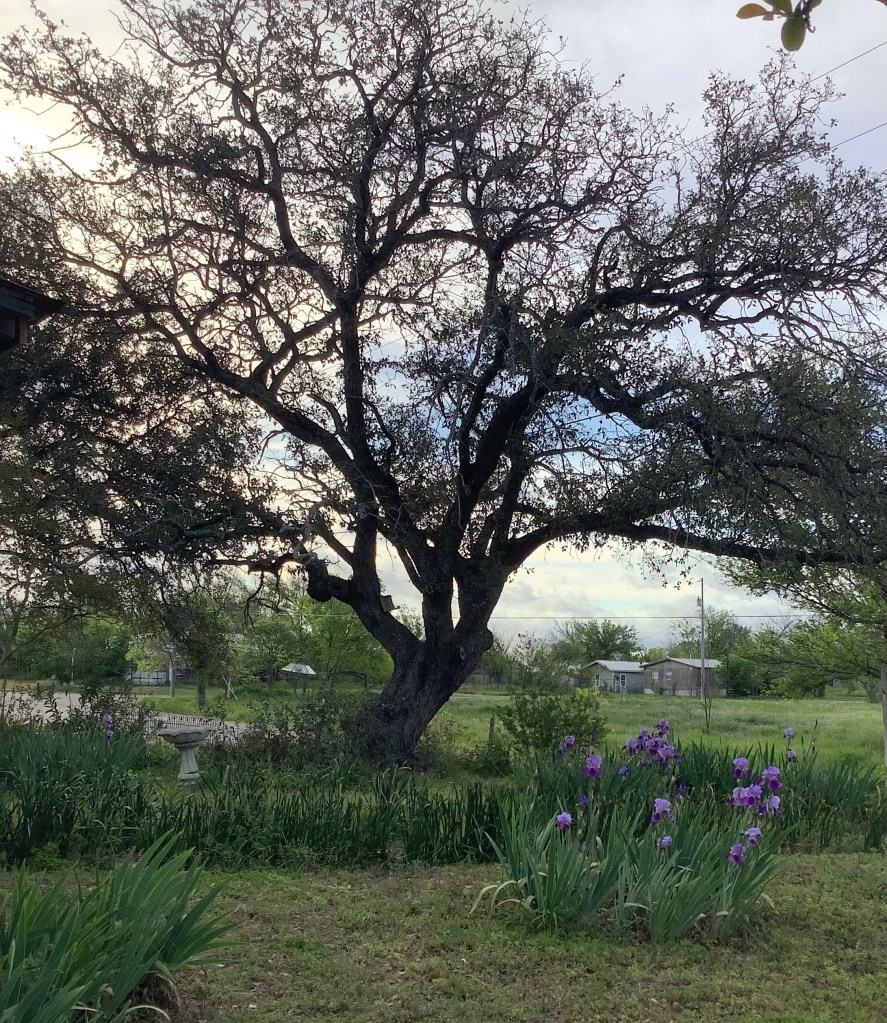
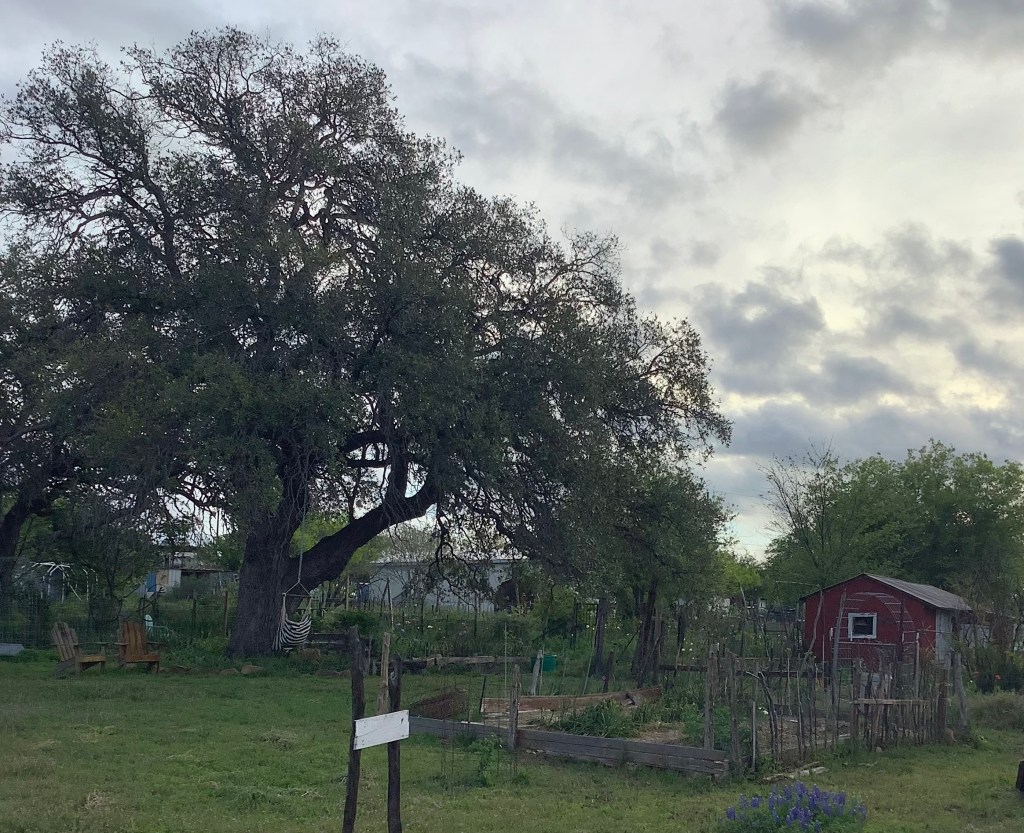
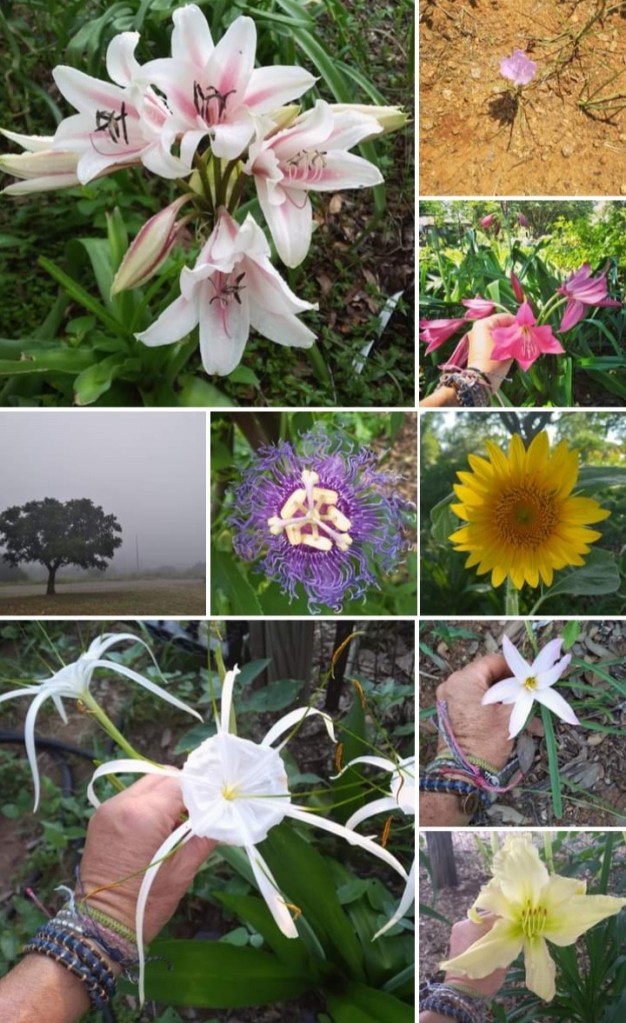
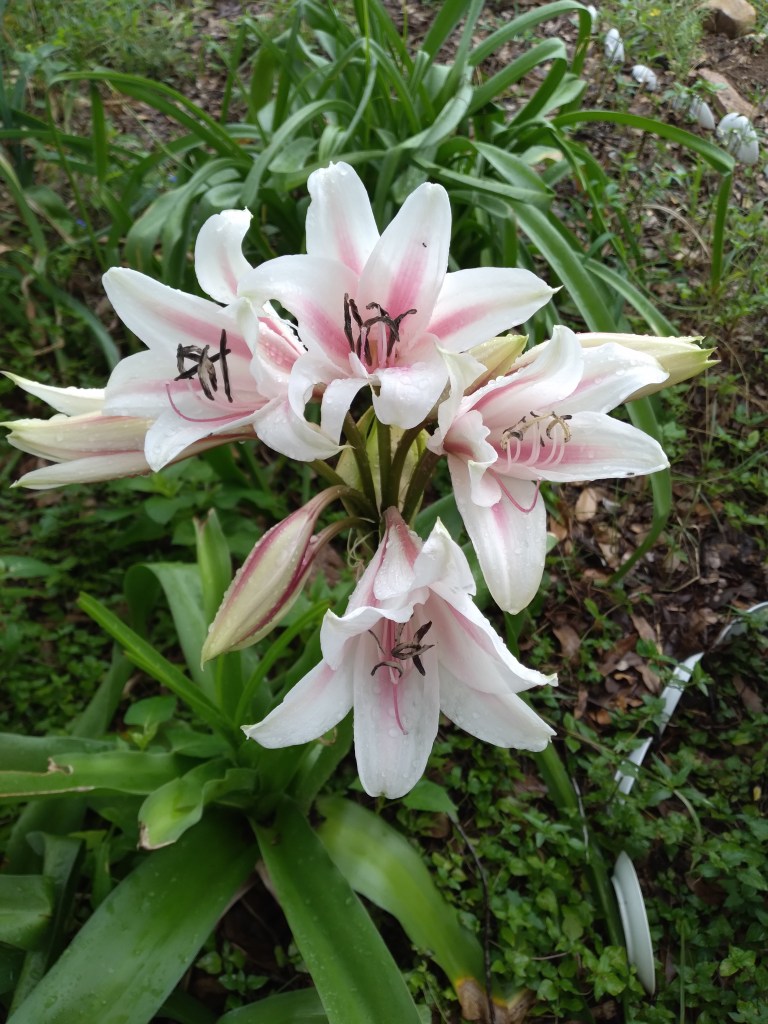
A place of renewal. The gardens at Agape Haus Studio and Gardem, LLC, are a labor of love. This adventure started with a delapitated old farmhouse, a drug house, ratty chain link fences, weeds and stickers, terrible rocky soil and garbage throughout the grounds. In between a full time music studio, an entire drug house was torn down, weeds were pulled, rocks were removed, gardens were planted and thousands of rescued Heirloom Bulbs were planted. The potting shed was made out of the reclaimed wood from the old farmhouse, 150 year old stained glass windows salvaged from a church and the tin was used from the old drug house. The Lord’s hand has been ever present in this project. Many days, my hands are so sore from utter exhaustion, but the Lord gently knudges, with a still, small voice…. “Just Keep Digging.” So I do. Please enjoy a simple picturesque walk-through the beauty of complete land and soul redemption. These gardens are old-fashioned, wild cottage gardens…100% organic. I am always happy to share, so come for a visit. Happy Gardening, my friends! Love, Keenan at Heirloombulbgirl
A few years ago, I saw the cutest plant stand while on vacation in Colorado. I thought the idea of “plants by donation” was totally charming. I had an old picnic table and an old farm door, and with the help of some teenagers, put together my first plant stand. It was blown over within a week. Wind and storms in Texas can get brutal! I nursed the poor little plant stand for a few months until it completely fell apart….then I was on to another project. It has been about five years since the original “plants by donation” idea was pressed upon my heart. Now the idea is back in full force, thanks to my husband.
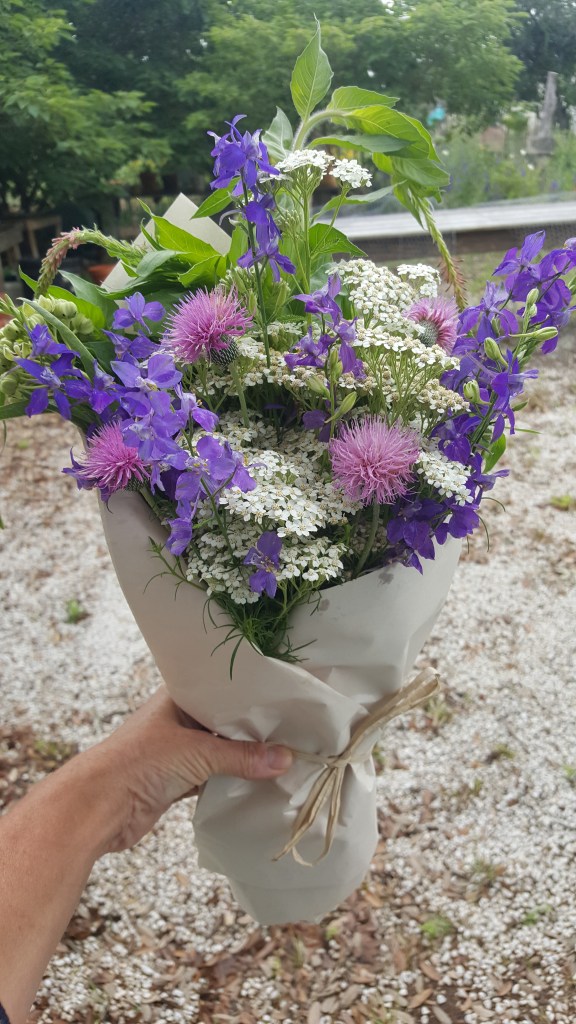
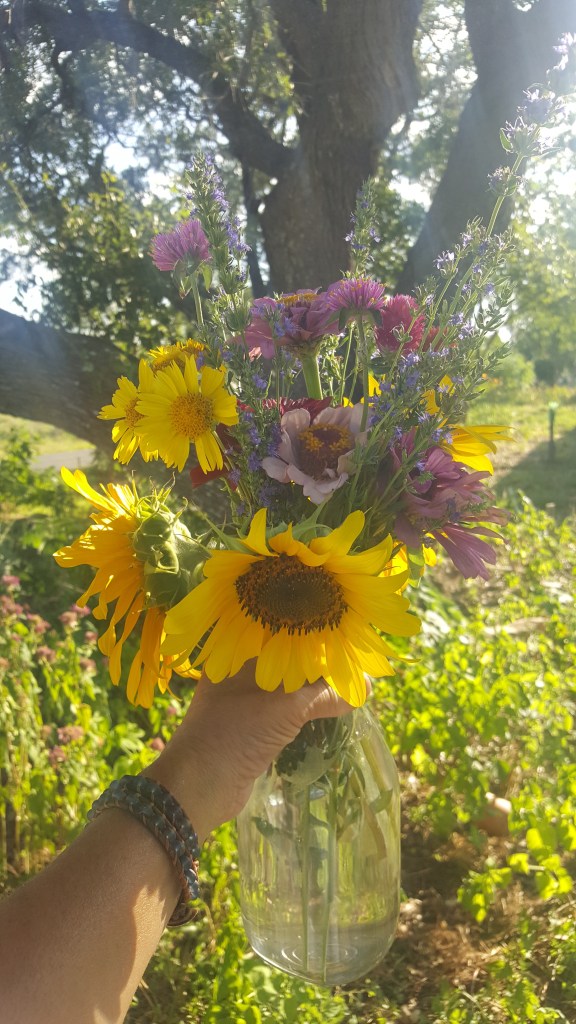
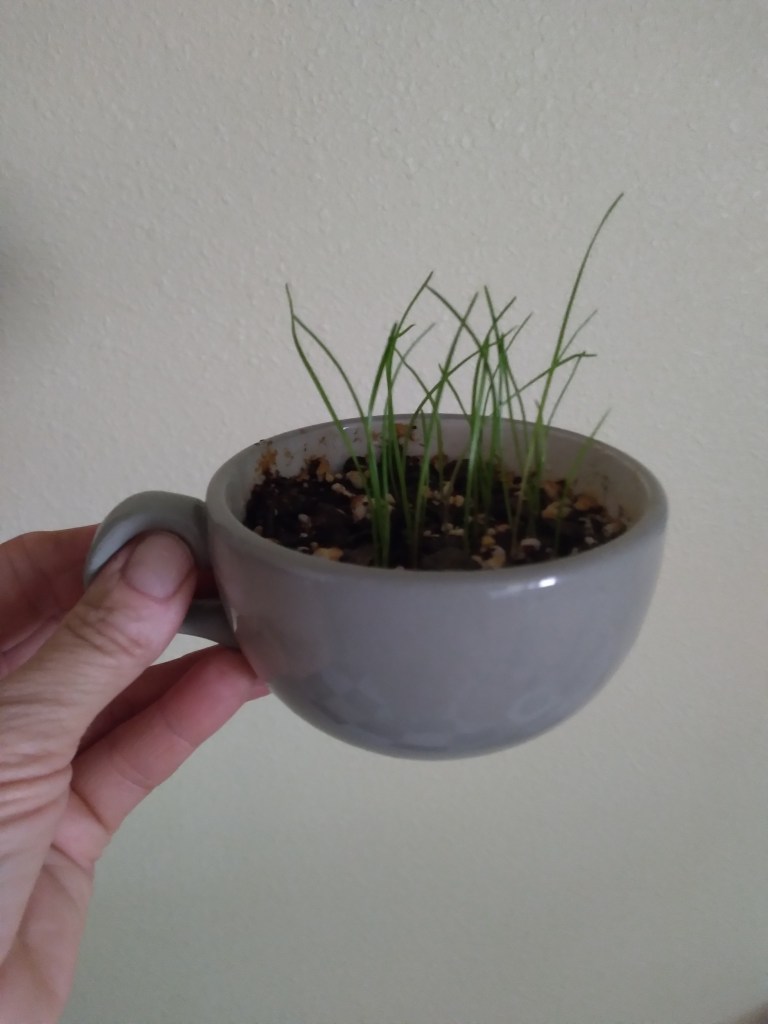
My husband and I rebuilt and moved one of the compost piles in front of the studio driveway. I’d actually love to close off the driveway completely, and let it be a shaded picnic area under the large old Live Oaks, but that’s for another day. Anyhow, the ugly compost heap got a nice new face lift with some very old 12 foot long carriage house doors that serve as the backdrop for the compost. I put a potting table on one side of the compost, just because it looks so cool. I stacked a lot of the old terracotta pots on top of the table, and Voila! just like that, I saw my future *unbreakable* plant stand! My children and husband had built a cutting garden last year at the studio. I’m thrilled to get some bouquets available for unsuspecting music students. I’ve also been moving Paperwhites to the cut flower garden, so the entire bed won’t be so lonely when all the flowers die back. This week I plan to seed all the Zinnias and other cut flowers. I will also offer heirloom flower bulbs in adorable vintage china teacups and vintage bowls.
Our small little town does not have a garden shop. Gardeners have to drive for 45 minutes to get to the nearest organic garden shop. Our grocery store carries seasonal veggies and annuals, but nothing really interesting for the garden. There is a non-profit in the works called Keep Llano Beautiful. The plant stand should serve this noble endeavor well. I’m hoping gardeners from all over will add their extra plant babies as well. Take a bulb, leave a bulb. Pass-Along plants for everyone!
I’m going to get to work on potting up some Heirloom Iris, Oxblood Lilies, Spiderwort, Texas Naives and other hard to find plants. Hopefully, “if the Lord is willing and the creek doesn’t rise”, the little plant stand will be open by the end of April. I will keep you posted. Happy Gardening, my friends! Love, Keenan at Heirloombulbgirl
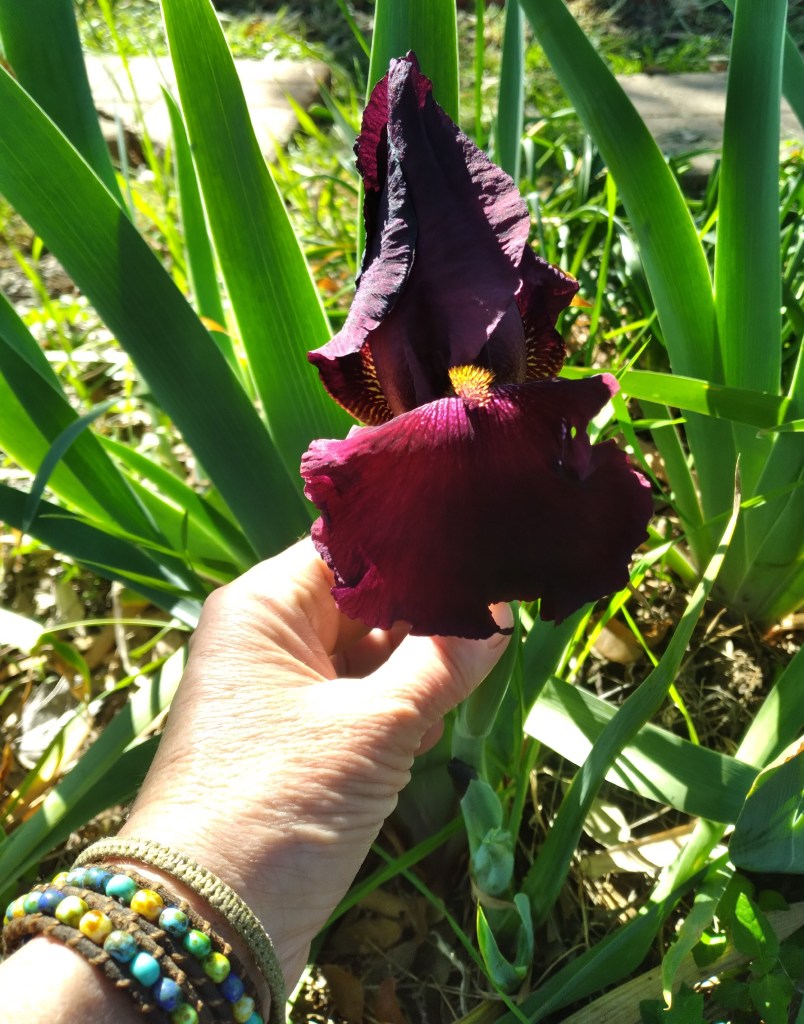
Few words are needed to describe the sheer enthusiasm Iris brings to the garden. Iris stands tall, announcing loudly to all the world (or at least the rest of the block) that Spring has sprung. Iris come in every color of the rainbow, except gray. Naturally, I am particularly fond of pale or muted shades of Heirloom varieties. My husband’s Grandmother had a beautiful two-toned pale yellows Iris that blooms later in the Spring. I absolutely adore those lovely Iris.
Iris are extremely tough old gals, surviving natural disasters and neglectful gardeners. I once dug up some Iris, got distracted, and after a few seasons of harsh weather, the Iris bloomed the following year….still in the dug-up clump where I left it. Oops. I’m glad my flowers outlive my stupidity. Maybe that’s why Iris are also known as Cemetery Iris or “Flags” (as the non-Iris collecting commoners call them). True Cemetary Iris are typically white or purple, and can still be found growing in cemeteries throughout the South. All Iris seem to have stories to tell, and many have traveled far and wide to land humbly in my gardens.
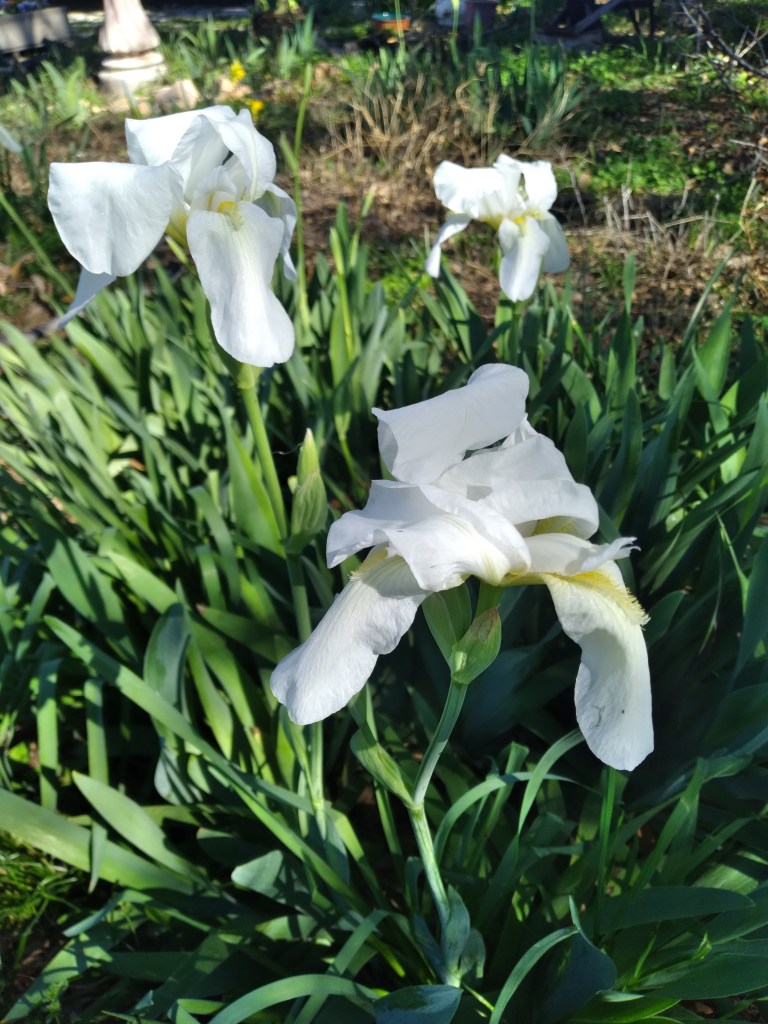
Many of my white Iris are from my In-Law’s farm in East Texas. The Iris are remnants of the German homesteaders that originally lived on the land in the early 1900’s. The only evidence of the old German house is the Iris border in the middle of a horse pasture. Once I discovered the house location, I went on a digging frenzy, locating countless pieces of cool old pieces of china to make mosaics. The beautiful Iris receive no care or attention, except from passing horses or cows. The Iris have bloomed faithfully for over 150 years. White Iris are extremely common, but the stories behind the Iris are unique and dear to my heart….making each plain white Iris a special addition to the garden. I think that every garden should tell a story.
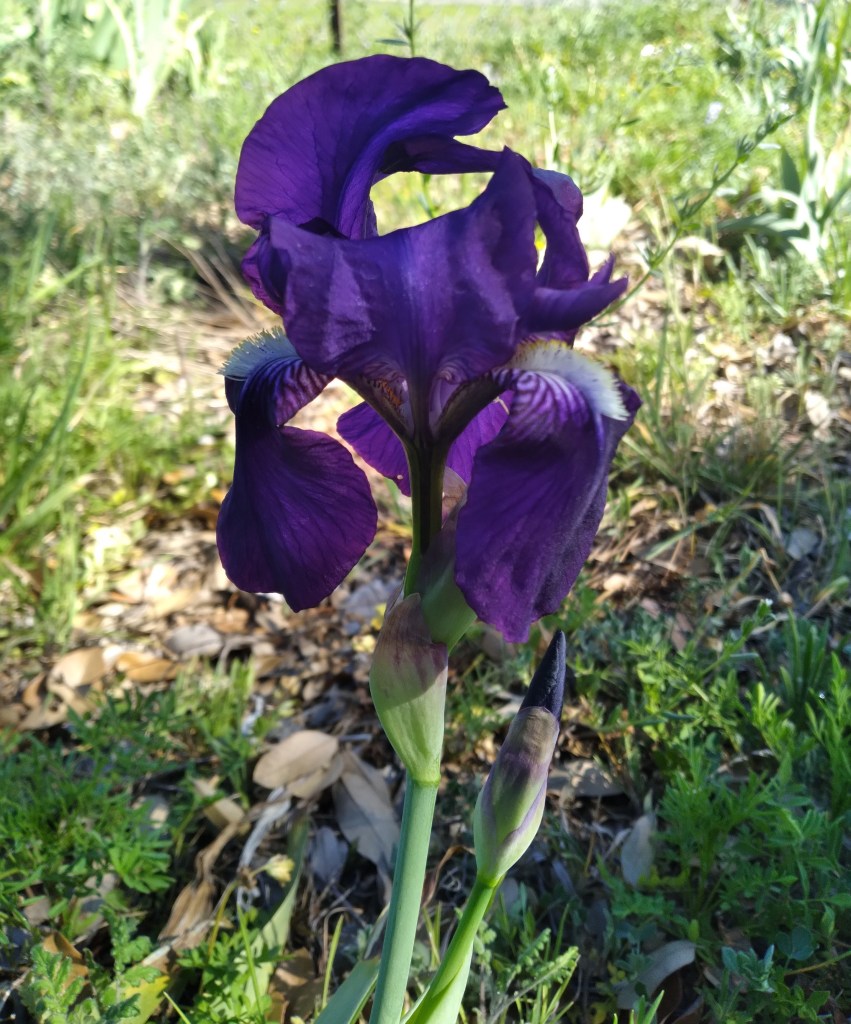
Some of my favorite purple Iris (not yet in bloom) came to Texas from England in the 1880’s. Few cherished items were allowed on the long journey overseas. Mrs. Franklin chose a corset, a few homemaking necessities and a purple Iris. Their Texas homestead was extremely rough terrain, drastically different from the gardens of England. In fact, the last Comanche Indian raid in Texas was not far from their homestead. My dear friend, the Great-Granddaughter of the Franklins (of the Franklin ranch) gave me a few Iris from the original Franklin ranch house. It is mind boggling to imagine all that the little Iris survived through….droughts, floods, Indian raids, World Wars and The Great Depression. Somehow, surviving it all. The Franklin Iris are bold annd strappy, multiplying readily. These Iris are the “alpha” of my collection, eating small plants and other pests that get in their way.
I have beautiful yellow, blue and magenta Iris gifted to me from flower friends, some who I’ve never even met. My daughters and their friends began to also have a love affair with Iris, trading my flowers for their own Iris collection. My daughter Hollie once received an Apricot -shaded Iris that she stuck in my garden with rocks around it, keeping *her Iris* segregated from the rest of the rabble that I grew. Over the years, I’ve enjoyed old-fashioned flower swaps with these true “pass-along” flowers. Many Iris come from house tear-downs that I chronicled through the years on my original website blog, which unfortunately is having some technical issues. Hopefully, the stories of these great old gardens will someday be readable again. Until then, I close my eyes and still see the century old beauty. Treasured gardens of Miss Margaret and Eugenia are now long gone, existing only in my mind and in all their flower bulbs that were salvaged.
I am always happy to share these old flowers with you. The best part of preserving heirloom bulbs is getting these old gals into the hands of gardeners who will love them. Sharing and trading flowers is such a joy, keeping the spirit of Old-Fashioned gardening with Pass-Along plants close to the heart. It’s exactly what Miss Margaret and Eugenia would’ve done. Happy Gardening, my friends! Love, Keenan at Heirloombulbgirl
They say it takes thirteen years to establish a garden. Yes, you read that correct…..thirteen years. Establishing a garden isn’t just the fun purchase of your favorite new flower. To establish something is purposeful, hoping for permanence. The established garden is not a man-made forced moment of flower-perfection, but a beautiful habitat for all natural things, blooming for generations to come. These old gardens are givers. The heirloom plants are in it for the long haul. Many of the Heirloom bulbs I salvage are from homesteads that date back to the mid 1800’s. Can you imagine tearing down and ripping out those old gardens?! Tasha Tudor’s gardens are beautiful examples of an established garden. I long to see a day when my young little fledgling-of-a-garden begins to take off and fly on its own. I love to visit old homesteads that are preserved, and I marvel at the old rose varieties and the heirloom beauty that keeps on giving.
Established plants within those old gardens behave differently than modern store-bought varieties. Take, for instance, the “Queen’s Wreath” Coral Vine, an old Southern favorite. Many gardeners (including my Mother-in-Law) have tried to get this beautiful vine to establish, with little to no success. This particular vine comes to mind because I recently relocated a very old clump that I salvaged years ago. The vine was easily 50 years old. While I dug, I discovered bulbs attached to the roots. I had no idea that Coral Vine was a bulb! After researching, I discovered that in order for a Coral Vine to establish, a bulb is necessary for the vine to survive. The bulb becomes the life line to the old vine….a giver. I find this extremely fascinating. Unfortunately, many old varieties of plants, including Queen’s Wreath, are lost with the modern “progress” of house tear-downs. *Side-note*……I’m curious to know if the vine can be split with multiple bulbs, but I’m not brave enough to try. If any of you know the answer, please let me know. 🙂
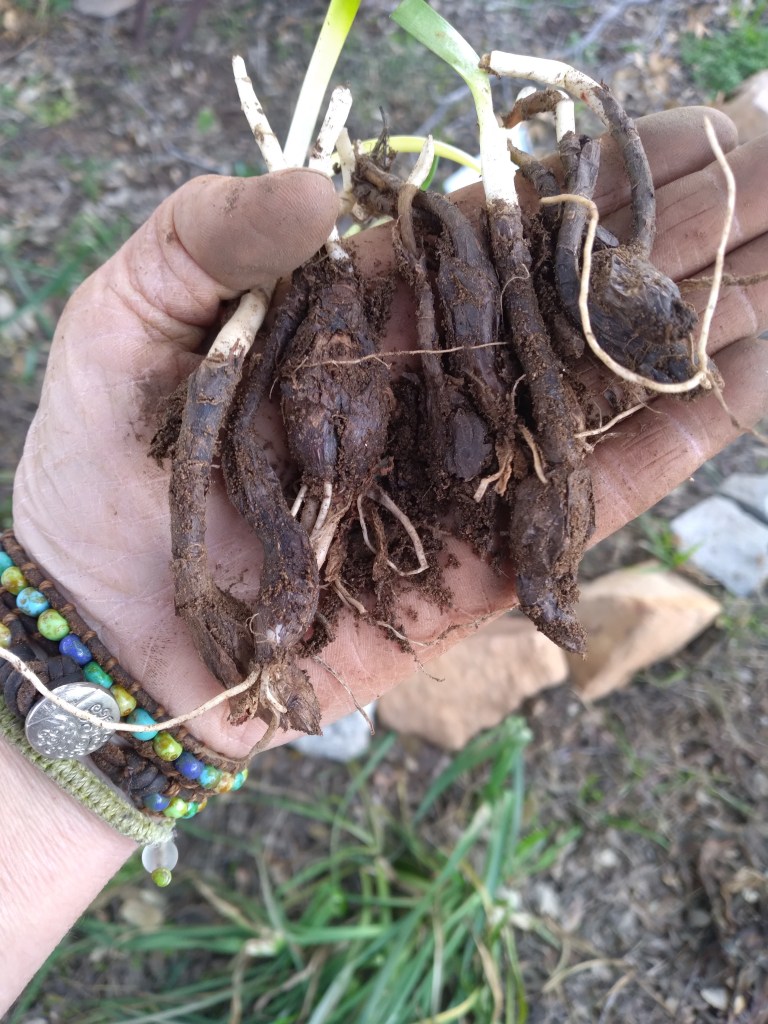
As I dug the Coral Vine, I stumbled upon a little clump of bulbs near the Coral Vine. When bulbs are damaged during a house teardown, I stick them in any open spot in the garden, and simply hope for the best. If an Oxblood Lily is damaged, the bulb will actually revive itself through creating baby bulbs in it’s place. The parent bulb becomes “a giver” to preserve the bulb’s heritage. In this case, 15 tiny little baby Oxbloods. I love it. I love the fact that even plants take care of their own. I love the fact that old heritage bulbs will outlive you and I, and the beauty of the established flower garden keeps on giving. I love the fact that the preservation of these heirloom beauties is never in vain. When I’m long gone, these flower bulbs will remain, blooming happily for generations to come. Deep down, I think that most gardeners are givers, just like the Oxblood Lily, pouring themselves into the next generation of flower lovers. What a great legacy you are leaving. Keep on giving and sowing seeds of beauty. Happy Gardening, my friends.
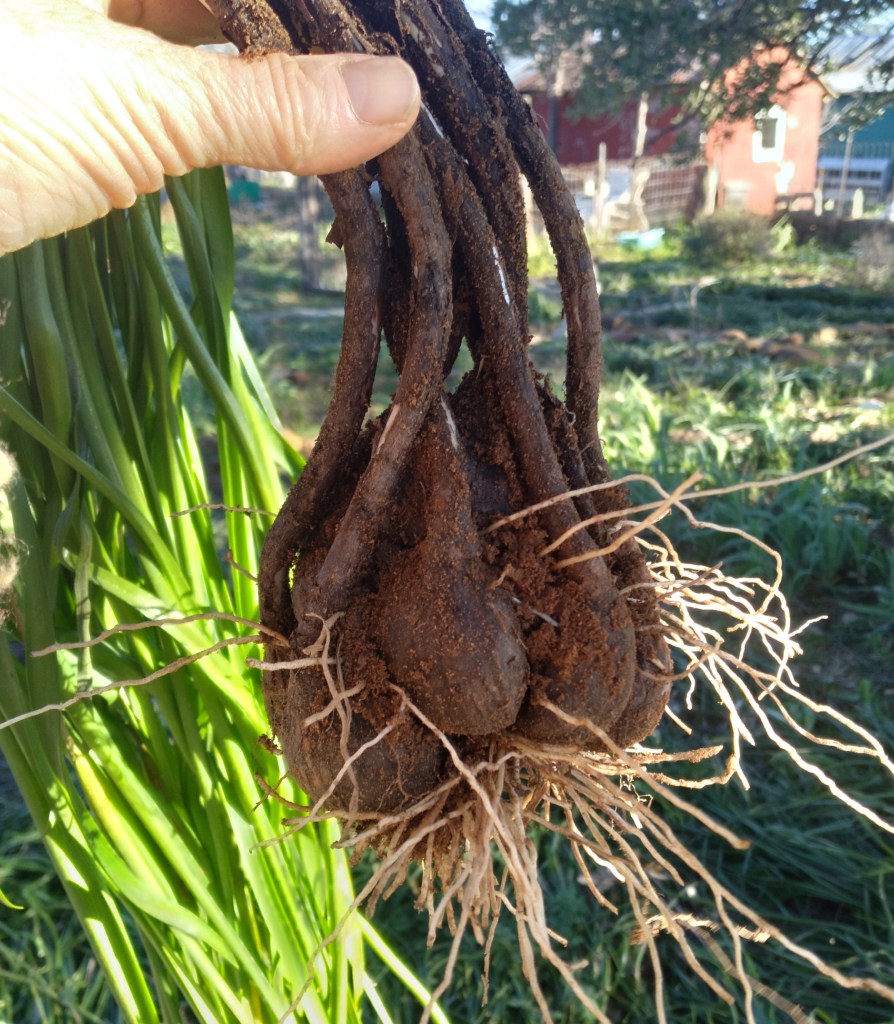
I spent the last few days moving Oxblood Lilies. Typically when I salvage bulbs from a tear-down, I stick them anywhere I can find an open spot in the garden. Later, I might go back to “decorate” the garden landscape with the bulbs in their “forever homes” (or at least, their home until I get bored). Each clump of Oxbloods is unique due to the age of the bulb or the growing conditions. One particular clump of Oxbloods caught my eye. The original parent bulb was in the middle, warmly surrounded by a beautiful family of healthy bulbs….nine offshoot bulbs, to be exact. Some clumps look like the bulbs are being suffocated….but not this clump. It looked perfectly happy to share its life with the offshoots, and all 10 bulbs were happy and healthy.
The sheer vigor and fortitude of the Heiloom Oxblood Lily is truly untouchable by other lily bulbs. Scott Ogden once said that the Oxblood is the hardiest of all Southern Bulbs, and I absolutely agree with him. I’ve seen Oxbloods grow through cement rubble of house tear-downs, compacted earth from bulldozer tracks, drought-stricken land, and the list goes on and on. Oxblood Lilies are survivors. Let’s face it….we all need survivors in our life. Over the years, I’ve learned a lot from the Oxblood Lily. Through seasons of drought, gardeners throughout the South are reminded of the redemptive beauty found after the first rain of Fall.
Oxblood Lilies originally traveled to the United States by way of their German immigrants. These lilies can still be found growing alongside old homesteads throughout the South. It is simply incredible to see a flower bulb survive throughout the 1900’s. Old gardens become a direct link to the past…to the days of pass-along plants and quiet cups of tea shared among garden friends.
This lovely Oxblood was one of the bulbs rescued from Miss Margaret’s former home in Rockdale, Texas. Years ago, I wrote an article about the house in Heirloom Gardener Magazine entitled Saving the Gardens for Miss Margaret. If I knew how to link the article, I would….but Sorry, folks. This is about as tech-savvy as I get. Needless to say, Miss Margaret’s lovely gardens are now a parking lot for the police station. The beautiful historic three story house was torn down to make way for the police station. The original stained-glass filled house was built in the 1800’s. After Miss Margaret passed, the house deteriorated beyond repair. Before the tear down, I dug countless times. I was able to preserve thousands of her treasured Heirloom Bulbs. It makes me almost physically ill to watch century old flowers like this end their beauty, trapped under cement lots. Unfortunately, that happens frequently through the modern progress of rural development. I’ve been determined to save as many Heirloom Bulbs from old homestead tear-downs as I can.
Each Heirloom Oxblood gives redemption to the garden. If you would like to have an Oxblood Lily from Miss Margaret’s garden, please let me know. I’m happy to share with you. Or you can order flower bulbs from Heirloombulbgirl on Etsy. All proceeds go directly back into the gardens. Happy Gardening, my friends! Love, Keenan at Heirloombulbgirl
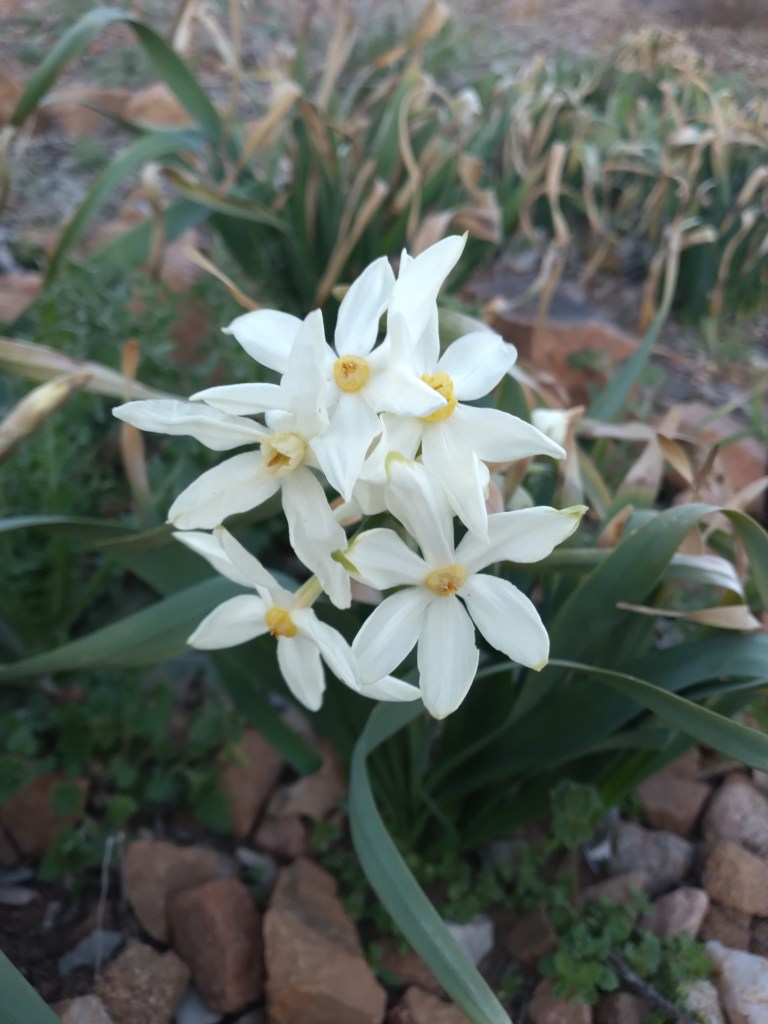
Another hard freeze came our way…just in time to wipe out all the Paperwhites that are in bloom. Nature is funny that way. If I had a dollar for every time a flower bulb was *just about to bloom* but nature stepped in and wiped it all out, I’d be rich. It’s hard to watch precious flower bulbs have set backs. It’s hard to watch people have set backs too. I suppose we all have moments in our lives when life’s uncontrollable events hinder our instinct to bloom. I read once that people are like stained glass. It is easy to be beautiful when the sun is out and everything is shining. It’s hard to actually shine in the darkness.
For the last three years, Winter has delivered hard freezes at the exact same time my Paperwhites bloom. If I didn’t know better, I’d say that nature is trying to teach me something. This year, I got wise and covered many of the blooming bulbs with large plastic flower pots. Two days ago, I removed the covering pots to find the bulbs were happy and snuggly….blooms perfectly healthy. What I didn’t realize was that another hard freeze was scheduled that night. The freeze proceeded to wipe all the bulbs out. Nature is funny. Although the heirloom bulbs won’t die from a freeze, I lose the beautiful bloom that happens only once a year. What exactly is the moral of this story? Dig up the Paperwhites and throw them in the compost heap? Give up? Be like dingy stained glass, refusing to bloom in the freezing darkness?
I don’t think gardeners plant flowers for the moments of perfection. I think most of us like to watch things grow. We learn about ourselves through nurturing our gardens. Our hearts delight in watching a prized cabbage rose bloom for the first time after a long battle with thrips, and our hearts break in the loss of a cherished heirloom bulb, eaten by gophers. Gardeners stay the course, for better or for worse and against all odds, simply to bring natural beauty to dark, technology-driven world. Gardeners are stained glass folks who *choose* to bloom in the darkness. Maybe that’s why I grow flower bulbs….I need to be reminded each and every day to bloom in spite of my circumstances.
”The steadfast love of the Lord never ceases. His mercies never come to an end. They are new every morning. Great is Thy faithfulness, oh Lord.”
This morning, the weather is in the teens. All Paperwhites have frozen back, but my heart is not defeated. My thoughts are already planning to rearrange the areas with Paperwhites, to make the covering-process more accessible. I am also gearing up for the Spring Bloom, hoping to order some more daffodils from Southern Bulb Company, and some heirloom dahlias from Old House Gardens. Life continues on and next year, I won’t be caught off guard for the surprise freeze.
Happy Gardening. my friends! Keenan at Heirloombulbgirl
“I guess I shouldn’t have picked this little tree…I guess I don’t know what Christmas is all about Isn’t there anyone who knows what Christmas is all about?”
”Sure, Charlie Brown. I can tell you what Christmas is all about.
And there were in the same country shepherds abiding in the fields keeping watch over their flocks by night.
And lo, the angel of the Lord came upon them, and the glory of the Lord shone round about them, and they were sore afraid.
And the angel said unto them, Fear not: for behold, I bring you good tidings of great joy, which shall be to all people. For unto you is born this day in the city of David a Savior which is Christ he Lord.
And this shall be a sign unto you; Ye shall find the Babe wrapped in swaddling clothes, lying in a manger.
And suddenly there was with the angel a multitude of the heavenly host praising God , and saying,
Glory to God in the highest, and on earth peace, goodwill towards men.
That’s what Christmas is all about, Charlie Brown.”
May you and yours find real joy of this Christmas Season. Happy Gardening, my friends. Merry Christmas! Love, Keenan at Heirloombulbgirl
Feast or Famine. That’s what life is like in a Texas garden. One day, it can be 115 degrees with every plant in the garden sadly drooping, on the verge of death. The very next day, a delightful rain replenishes the parched earth and fills the garden with hope. Gardeners in Texas need to be tough, and so do their gardens. I can’t tell you how many times I threaten to throw in the shovel, and then….just like that, the weather changes (so does my attitude).
Seasons in Texas are minimal….we have Summer. Light Summer, Heavy Summer and every other variety of Summer you can possibly imagine. Occasionally, we have a quick change of seasons, but if you blink, you might miss the change. Instead of moaning and groaning over the lack of seasonal change, I began associating seasons with the blooms of Heirloom Bulbs. My Texas Seasons have become Oxblood Lily Season, Crinum Season, Rain Lily Season, Paperwhite Season….well, you get the drift.
Flower Bulbs are truly a gift to the Texas Gardener. Bulbs rest quietly under the earth, sleeping peacefully through extreme weather conditions. I’m always surprised by the Fall showing of Oxbloods and Spider Lilies after a brutal summer. I honestly don’t even know how the bulbs survive, but somehow they do. I tend to be a garden “naturalist”, so I like to invest in Native Plants and Heirloom Bulbs that are proven winners. Over the years, I’ve wasted way too much money on forcing flowers to grow in wrong zones, just because of garden nostalgia. As much as I love Dutch Tulips, they simply won’t come back in Texas. Lucky for you, Lady Tulips will naturalize in our area so if you are desperate to plant Tulips, there ya go!
Seasons change….not so much in Southern Gardens like Texas. Invest your time and energy into plants and flower bulbs that will bring a smile to your face and joy to your gardening heart. Seasons don’t have to be minimal and boring. Just ask any bulb enthusiast. 🙂
Happy Gardening, my friends! Love, Keenan at Heirloombulbgirl
I spent my Thanksgiving weekend digging up Crinum. That wasn’t my original plan, but digging is typically a common pastime when I am at my in-laws’ farm. There are a lot of run down, falling down and flattened homes in the area. Many of the homes, I have been given free rein to dig….a few I have not. I have had to jump over “no trespassing” signs, rip jeans on barb-wire fences and get into poison ivy, just to rescue a few heirloom bulbs. There are many gardeners in the area that know the secret locations of these abandoned sites, and have all taken matters into their own hands. We have no shame or apologies for our bad behavior. When a bulb lover sees a bulldozer, it’s time to hop the fence and dig.
On this particular digging day, my family and I were simply out on a walk, minding our own business. We came to the property where a dilapidated, old hunting cabin had been hidden within the brush. I had dug at this location before, and I was shocked to find the cabin completely gone and the house grounds bulldozed and flattened. Gardeners in the area had been salvaging bulbs for years. The sheer amount of Milk and Wine and Alba Crinum is hard to put into words. The old bulbs were the size of small watermelons. I’ve broken many shovels trying to retrieve those old gals. It was sad to see the cabin and all the Crinum completely gone. I noticed a few remnants remained, so my daughter and I decided to stay behind to dig. It actually was my weed-complaining Father-in-Law who offered to bring shovels and bags. I can’t believe my dear ol Dad-in-Law offered to be an accomplice to such a gardening crime, but miracles do happen.
My daughter, Hollie, and I dug for hours. My husband stood guard as he sat in the mule and just scrolled through golf videos. We dug every square inch of what used to be the Crinum patch. Some bulbs were chewed up and spit out by the bulldozer. Some bulbs were so deep beneath the ground, I couldn’t retrieve them. As I crawled around on my hands and knees, locating bulb remnants, my daughter laughed at me and yelled “Hunt ‘em up!” Hollie was mocking me with her Dad’s hunting voice. “Hunt ‘em up” is a command to bird dogs to sniff out birds. In the brush. We spent a lot of time that day laughing as we dug. Hollie even made me pull out bulbs shoved into a brush pile under trees. She was surprised that I am not afraid of man-handling bulbs out a bunch of brush, yet I refuse to walk on wet grass with bare feet. I didn’t even have to mind-wrestle a rattlesnake, which actually happened the last time I dug at the old cabin.
This Crinum dig will go down in the history of the world’s greatest Crinum bulb dig., for no other reason than my entire sweet family participated in saving the bulldozed remnants of century old Heirloom Bulbs. My heart is full.
Happy Gardening, my friends! Love, Keenan at Heirloombulbgirl
There are few flowers that have such an emotional attachment to them as the Oxblood Lily. These flowers bloom after the long, drought-stricken summer. Oxbloods are a beautiful symbol for the promise of cooler weather. Total redemption in the garden happens in a few short weeks after the first rainfall in early Fall. The gardens turn from a crisp brown to a luxurious crimson red. It’s incredible! But, after the flowers fade, the gardener is left with long, scrappy green foliage that seems to sprawl over everything trying to grow. Lily foliage can commonly look unkept and weed-like. My Father-in-Law says it best….. “When are you gonna pull those weeds?!”
I’ve realized that the common eye cannot appreciate the beautiful growth of the dark green foliage. The foliage is the energy for the next years’s flower. Never ever cut it back, no matter how times your Father-in-Law says so. I have begun to arrange my lilies purposefully throughout the garden. There can be little mistake that the lilies are part of the whole garden plan.
Yesterday, I stole a few moments of quiet in the gardens before traveling to my In-Laws’ farm for Thanksgiving. I spent my time weeding and moving Oxbloods. Last year, I had decided to line all the garden paths with Oxblood Lilies. The intentional placement of the lilies really showcases the foliage. I’ve been told that I move flower bulbs like other people move furniture. Boredom sets in, and I grab a shovel. There are a lot of bulbs to line a lot of pathway, so I’m never bored for long.
I think that lilies look best in clumps. Lilies are like people, they need each other to thrive. I keep my lilies in groups of about 5-10 bulbs. I give the bulbs in each clump room to grow. Oxblood Lilies grow in all kinds of conditions, but they really enjoy water during their growing season (aka…the green, strappy foliage). Let the foliage grow wild and carefree, but contained in the overall landscape plan. Remember, the foliage is the energy for next year’s flower. Foliage actually is the most important part of the bulb cycle. The flower is simply a gift to the gardener…a bulb’s way of saying “thank-you” for all the nutrients and love provided the past year.
There is a very high probability that I will be digging today at the farm. The family Thanksgiving dinner will happen around 3 pm, so I have plenty of time to get my hands in the dirt.
Happy Gardening, my friends! Love, Keenan at Heirloombulbgirl