Tag: plants

  • Gopher Baskets for the Roses

    A fairly unknown fact is that I once had a rose garden that was featured in a 3 page article in the Dallas Morning News Garden Section. True story! I absolutely adore Antique Roses. My Dallas garden was home to over 43 beloved Antique Rose Bushes, intermingled with fabulous Heirloom Bulbs. It was my joy. My little neighborhood watched the garden transformation through all three of my pregnancies. My husband was often questioned by neighbors if I really should be jumping on a shovel at 9 months pregnant in the heat of August. Those were good rose-growing times! Fresh flower bouquets of big and fluffy cabbage-style rose blooms. Children learning about the different varieties of Antique Roses, and my husband losing all control over his front yard grass.

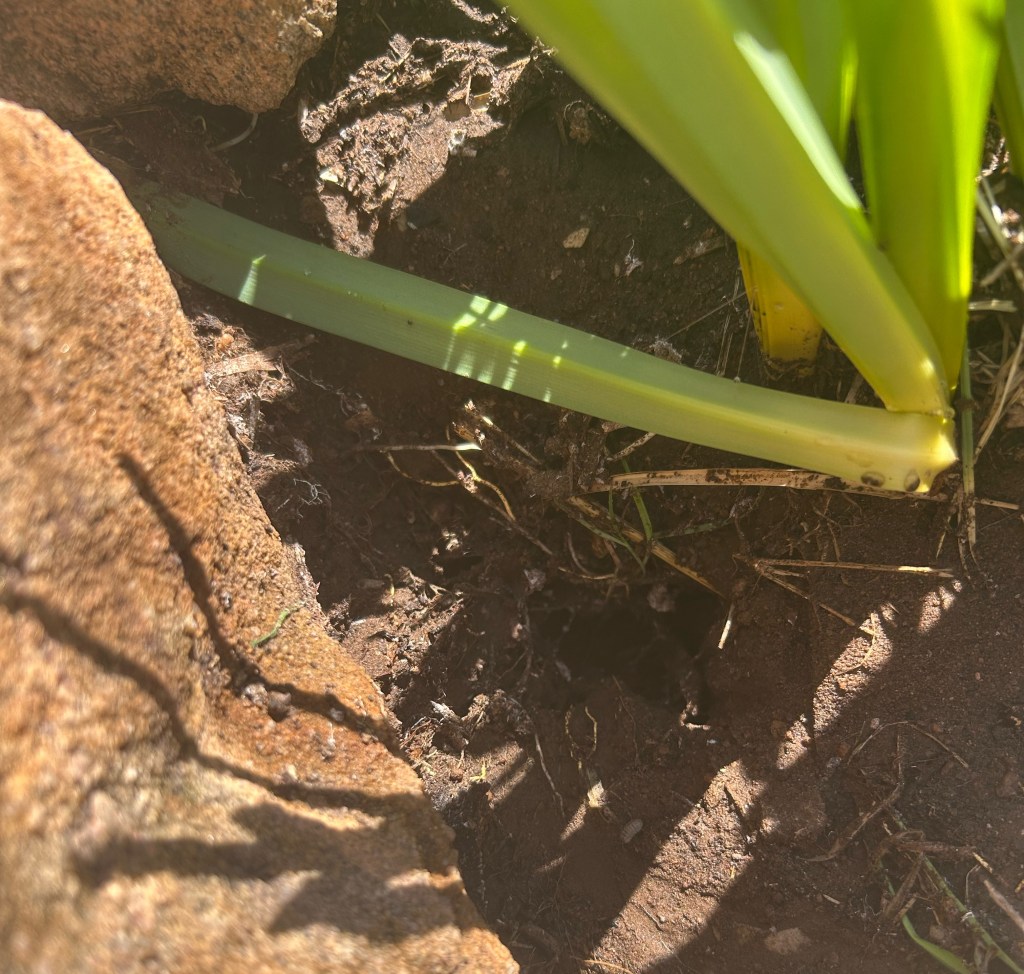
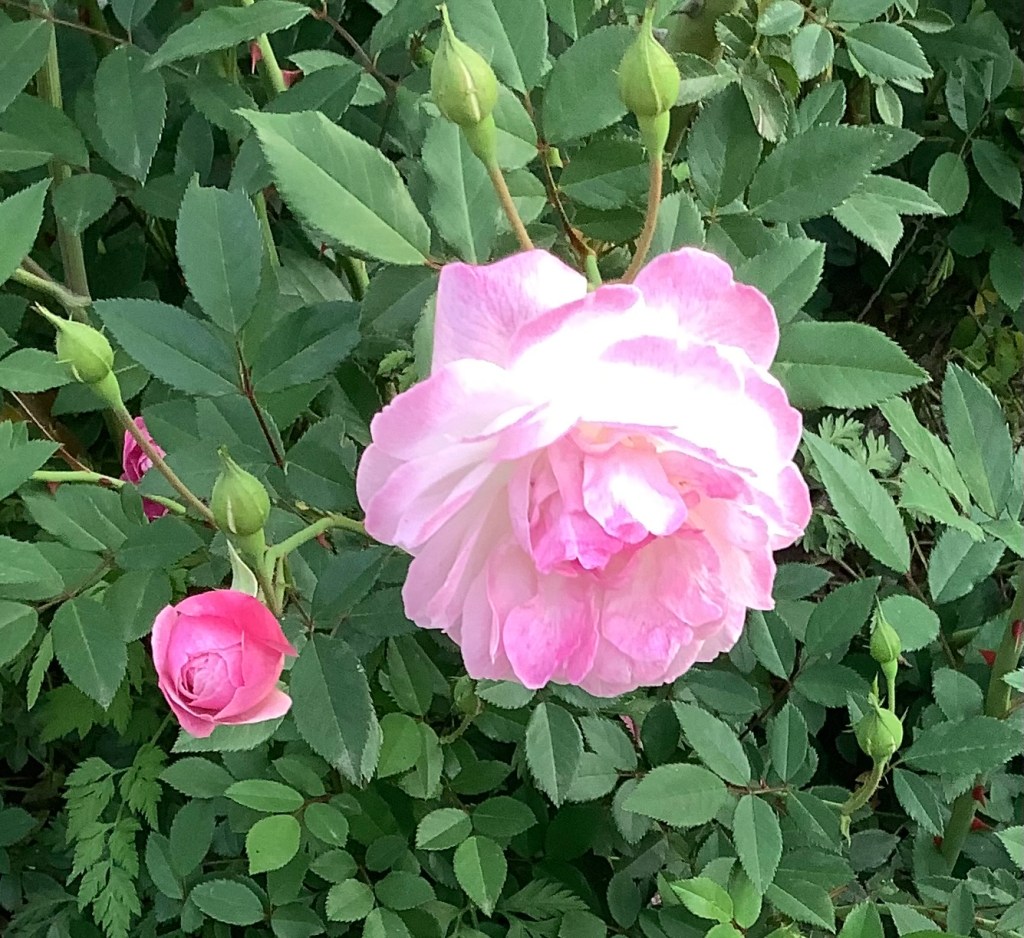
    I now live in the Texas Hill Country (enough said). Over the last decade, I have tried to grow over 40 bushes in the gopher-infested land. All I did was create a gopher buffet. It’s not *if* they will eat my roses, but when. The gophers have wiped out every single rose bush I have planted…except one. Not great odds are in my favor. I’ve tried everything, and I mean everything. I even have a useless barn cat.

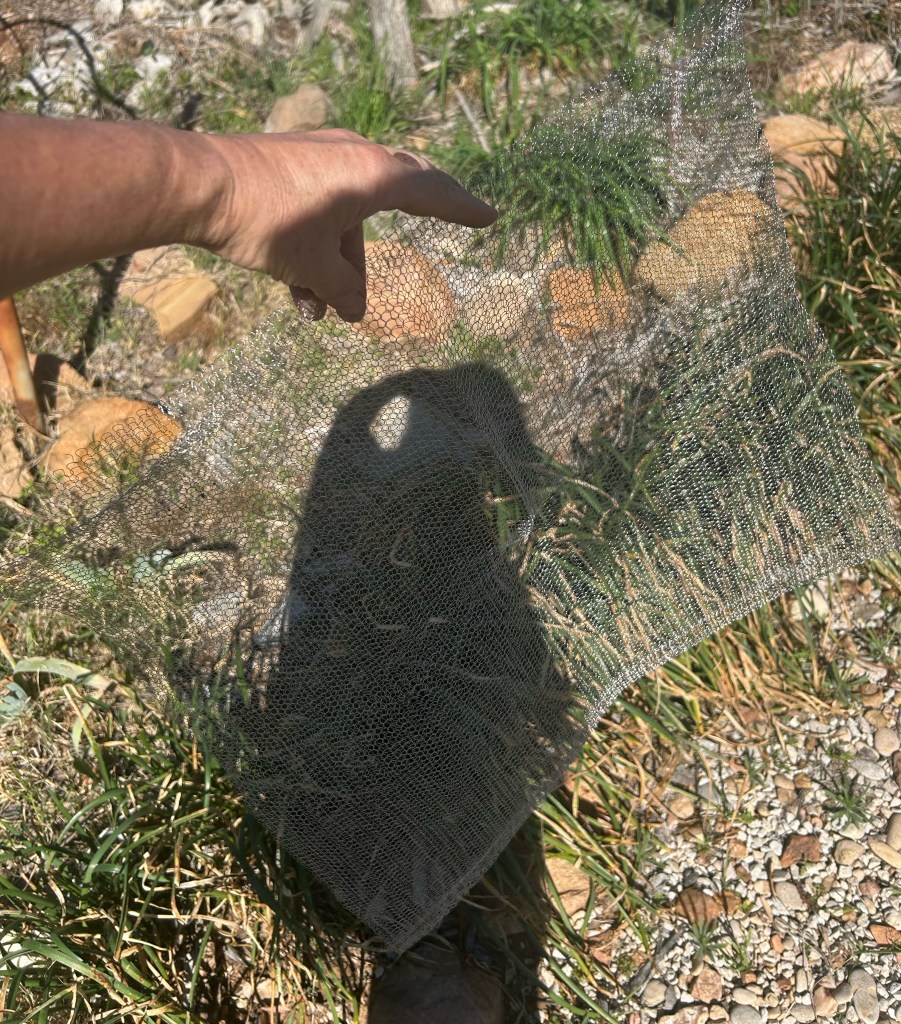
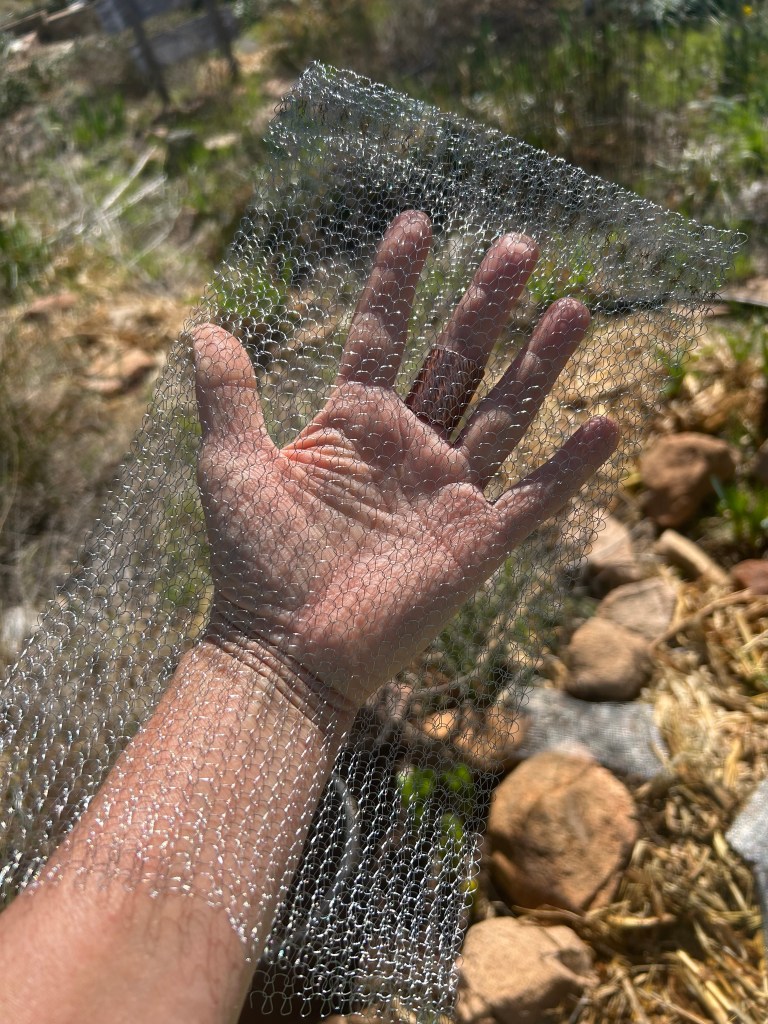
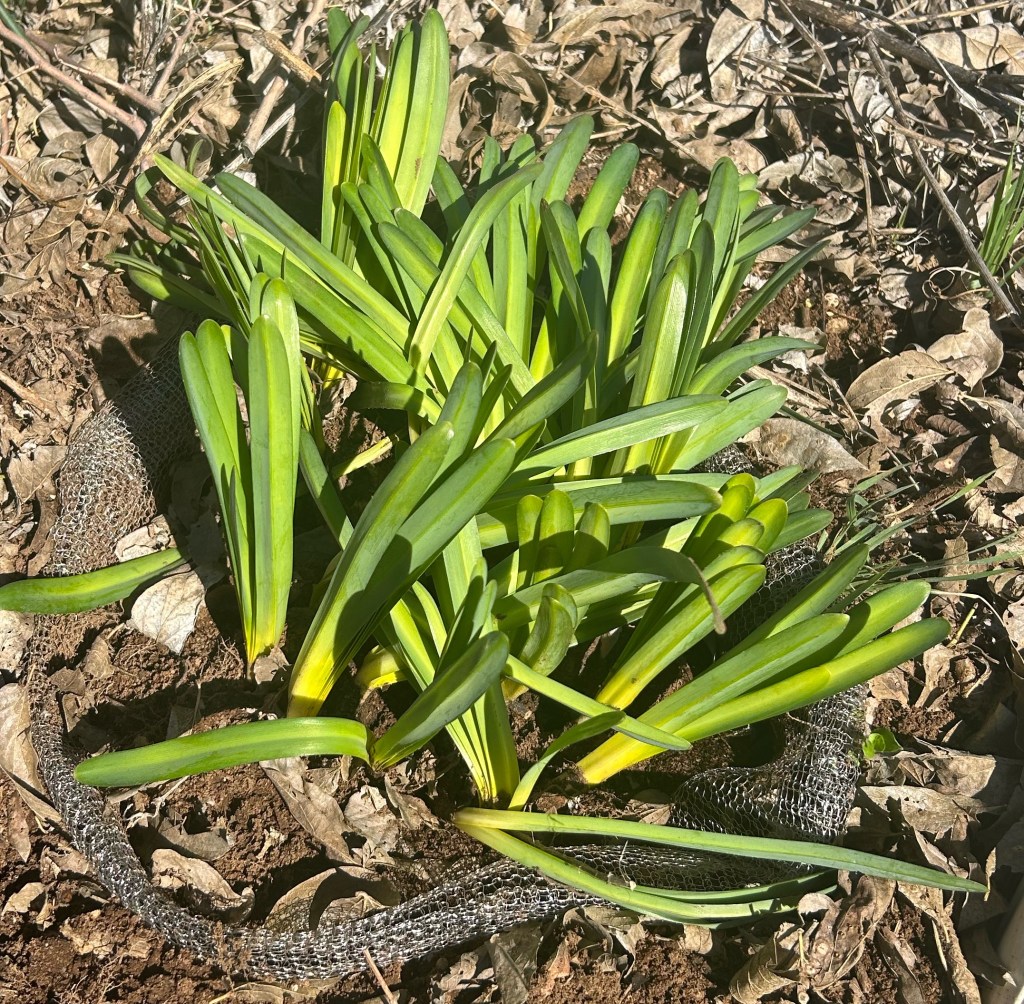
    This last week, I have stepped up my gopher-game. With a little click on Amazon, I ordered a nice supply of wire mesh gopher baskets. I had no idea gopher baskets were even a thing. Why didn’t someone tell me I didn’t have to make my own out of cut chicken wire?!! I’m quickly learning that Amazon is like Christmas every morning. The baskets arrived yesterday and I’m SO EXCITED! I have 5 bushes, saved in the nick of time, currently resting and regrowing roots in terracotta pots.
    Before Spring hits, I plan to basket up all the roses and the nice, young specimen plants I’ve recently planted. I will have to re-dig and re-plant.
    Typical.

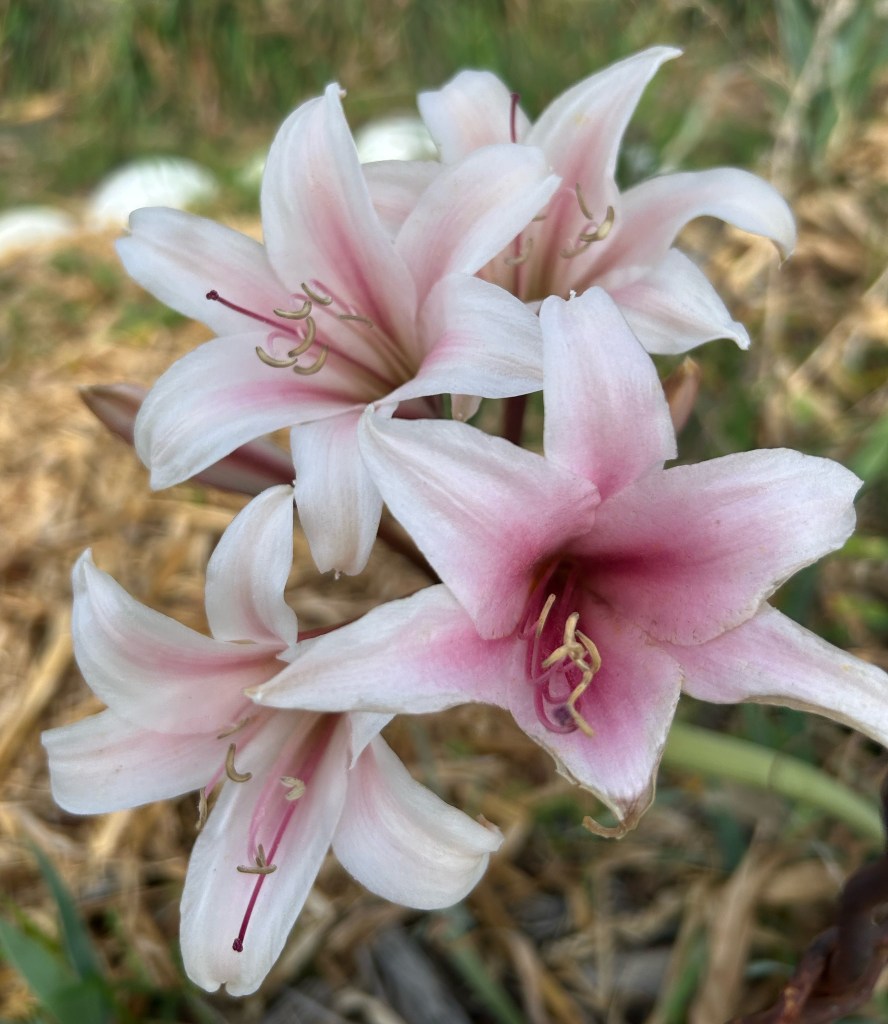
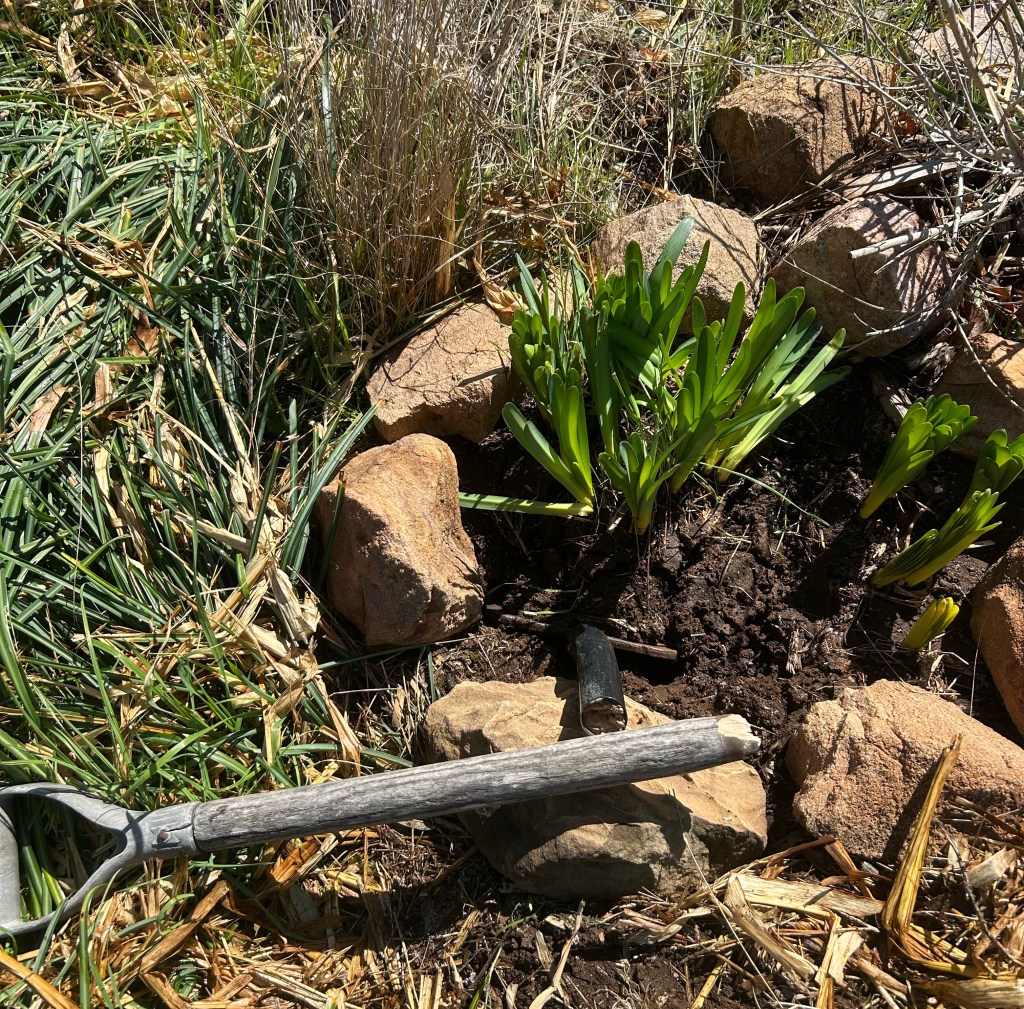
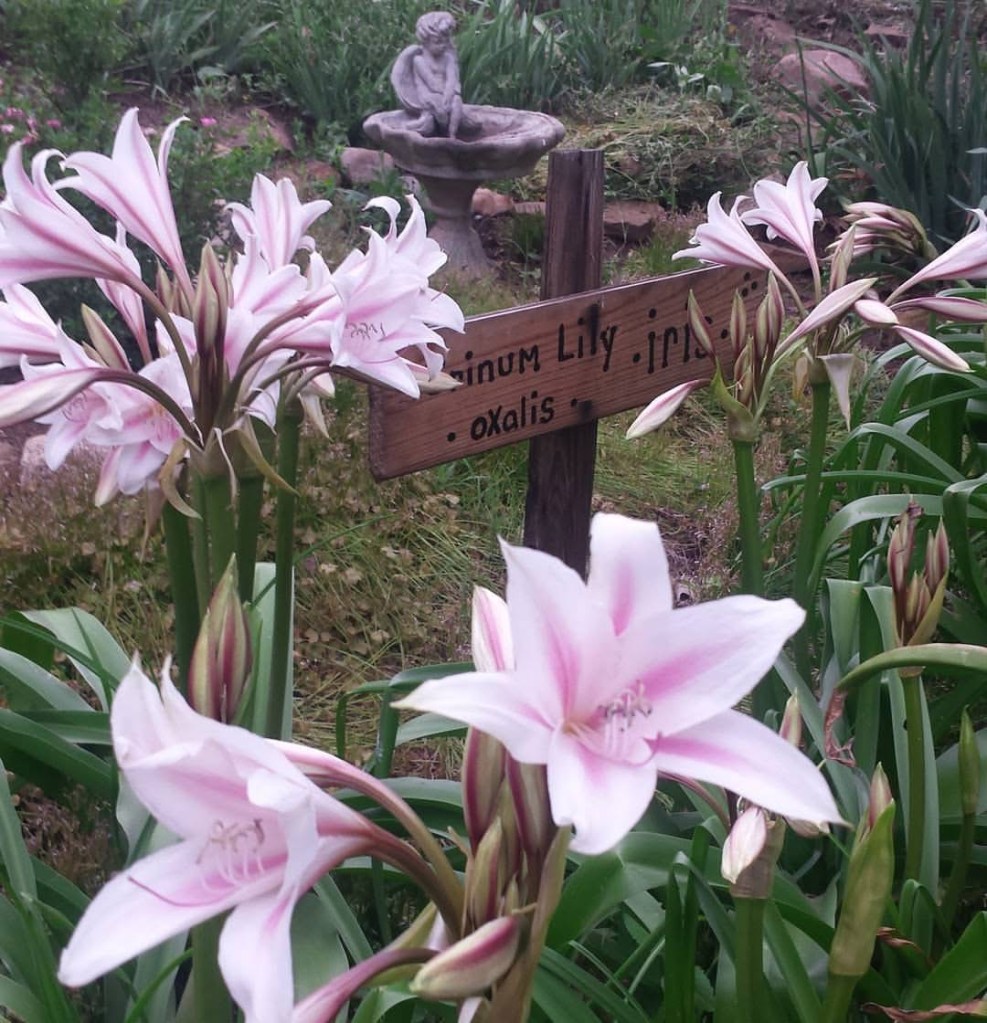
    I also plan to basket up many of my bulbs. Gophers enjoy eating the roots of Spider Lilies, but will leave the Oxbloods alone. (Oxbloods are supposed to be toxic).

    With the water well and the gopher baskets, it will be SO enjoyable to watch the gardens finally take root. I often tell folks that gardening is like learning music, it is a journey not a race. But it’s also nice to see a completed garden project. A job well done is quite satisfying.

    I wonder if I will ever experience the thrill of a finished project? Take a look at my gardens and you will quickly find out the answer! 🙂

    Happy Gardening, my friends!

  • A Southern-Style Blanket of Ice (even ice storms are bigger in Texas)

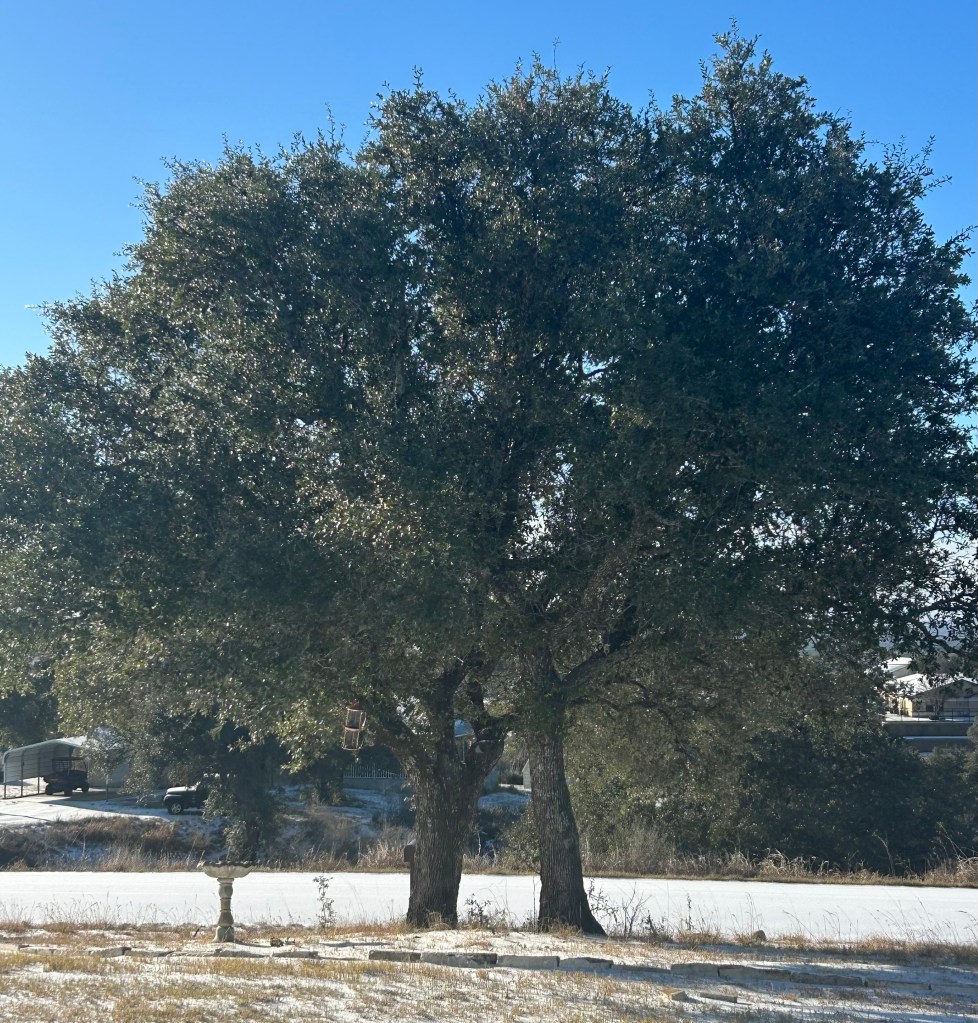
    When I looked out the window, I would’ve thought I was back in Montana. Everything was a blanket of white. The neighborhood kids had their sleds and parents stood by in their warm fluffy coats. I even noticed my husband within the gang of sledders. I stayed inside, happily sipping on hot cocoa, nestled under a cozy blanket with my pup.
    Texas winters have a few deep freezes, which are commonly described as “chill-to-the-bone” Arctic blasts. I don’t quite understand how frigid these storms really do feel. I could snow ski in shorts in Montana, and yet unable to walk outside for fear of frost bite in a Texas freeze. But alas, here we are….another Texas freeze in the books. Most of Texas was covered in ice, and we were all stuck inside for days. Schools were cancelled, shops were closed, fires in fireplaces roared and it felt like Christmas all over again.

    For years, I debated about whether or not to cover my plants and bulbs. I grow Heirloom Bulbs after all, and they are tough old gals! Quite honestly, it’s a lot of work to cover everything, and I’m lazy. Over the last few years, I’ve changed my tune. I realized that even though most bulbs will not be killed in a freeze, the foliage is hit hard. Foliage is the energy for the next year’s flower, and I’ve decided I am through with waiting an entire year for my beloved blooms…so I got to work. I spent about three hours covering bulbs and favorite perennials with flower pots.

    When I ran out of pots, I piled straw on top of the bulbs to completely cover the foliage, creating a natural trough for the local deer. That wasn’t one of my finer moments in the garden. In fact, the first day back after the freeze, I arrived at the studio to find a fattened young buck hanging out in my Crinum bed. He looked at me as if I had just interrupted something. Eventually, the deer realized that this was MY house and garden, and left the same way he came in…effortlessly hoping my fence. The young buck left some nice piles of poo-pellets in my pathway as a flex to show me who is really in control. Next Spring, he will definitely have the last laugh as I am pulling up all the weeds he left in my pathway.

    I’ve spent the last few days taking the pots off the plants and giving the plants fresh air. Everyone in the garden did well, except the store bought chives. I left one plant uncovered as a test run of hardiness, which was the only chive that looked remotely happy after the freeze. Plants are weird…..

    This weekend, my goal is to remove all the straw and toss it in the natural butterfly and bird wildflower habitat I am trying to create. Maybe the deer will get the clear understanding that they are not welcome back in the gardens for dinner.

    I hope your gardens fared well throughout the freeze. I’m definitely ordering freeze cloth for the next go around. 🙂

    Happy Gardening, my friends!

  • The Texas Pomegranate

    Some of you know, but most of you don’t, the disgusting soil I have to work with at the studio. Even the word “soil” to describe the studio grounds is being grossly negligent as a writer. Perhaps I should describe my land in politically correct terms…the land is “soil-deprived”, or an “enriched-deficient” plot of horror. Most gardeners would run and hide from the catastrophic elements that are continually at war against gardening. Whether it be moles and gophers, rock and rubble, thermal hot spots in drought conditions or just a plain thorny sticker crop. I simply can’t catch a break. Except in the rare moments when I get to look upon a job well done. Inspiration overrides all seasons of exhaustion and frustration, and I simply get to hold the fruit of my labor. And oh, how sweet it is!

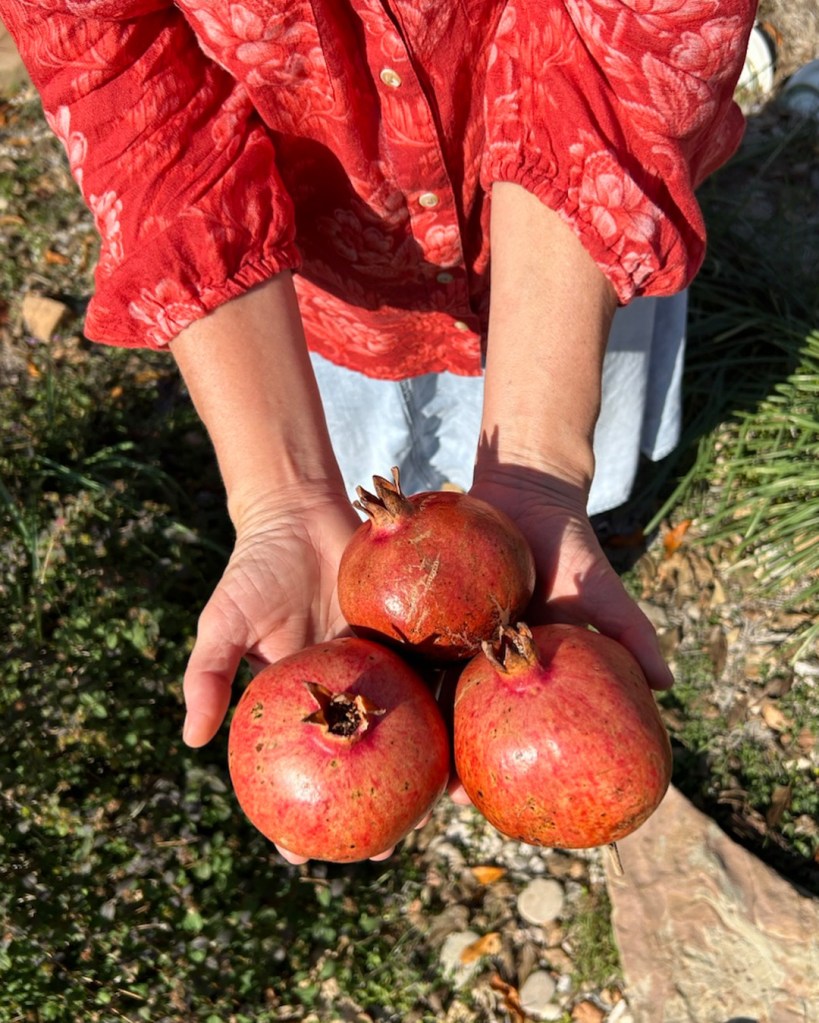
    The Texas Pomegranate is truly something to behold. I call it the Texas Pomegranate because I honestly don’t know what variety this beautiful tree is. I received the tree as a gift when I first bought the music studio. Apple John, a dear friend and mandolin extraordinaire, has an Apple Orchard deep in the Texas Hill Country. John also cultivates Pomegranate Trees. This tree was one of the first plants that found a home at the studio. The Pomegranate became a landmark in the garden, planting all shrubs, flowers and Heirloom Bulbs around it. When cherished plants died in times of drought, the pomegranate grew only stronger.

    ”Is that all you got?!”

    The Texas Pomegranate is also unscathed by destructive critters that lurk underground. For a few years, I had a beautiful antique rose that nestled herself up to the pomegranate tree. Then one day her roots were completely chewed up. Once again, the Pomegranate grew only stronger. It honestly doesn’t make sense how the palate of a gopher can be so refined as to distinguish between the roots of a salvia or rose!

    I’m not a gardening expert on much, but I do take notice the drought-hardy plants that thrive in lousy soil. The Texas Pomegranate is one of those jewels. For great native plants, I shop at Greensleeves Nursery in Pflugerville, Friendly Natives in Fredericksburg, Backbone Nursery in Marble Falls, or The Natural Gardener and Barton Springs Nursery, both in Austin. I love each of these shops for different reasons. The mainstay is to shop a local plant nursery that focuses on native plants for your area. DO NOT SHOP BIG BOX STORES FOR YOUR TEXAS POMEGRANATE TREE OR ANYTHING FOR THAT MATTER. (Notice all caps? I’m a bit passionate about supporting small garden shops!)

    Happy Gardening, my friends!

  • Redemption for Matilda’s Garden

    So many thoughts…
    My mind is full but my words are empty.

    I can only see the sweet face of Matilda, the young 10 year old child of the recent attacks on Jews in Australia. I decided to write this little blog in Matilda’s honor. A garden of redemption for this beautiful child. Perhaps it will ignite a fire for redemption in your garden.

    Redemption happens when we become aware, keenly aware, of an environment that has become hostile to anything that is good and pure. The world tells us that “good and pure” is objective, but killing an innocent child is not. There is no explanation for that horrific, disgusting act of brutality. What kind of god (notice the lower case g) would call the action of that? Not the Lord of Heaven. It’s time to redeem. It is time to stand up against what is wrong and protect what is good.

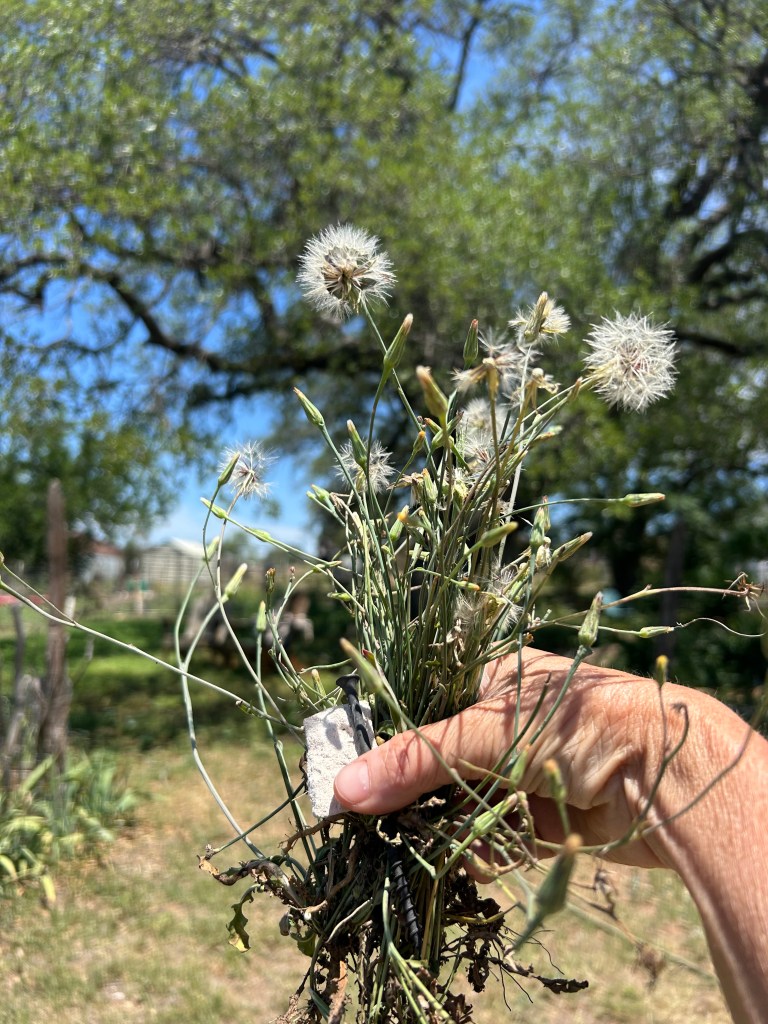
    I have spent many years redeeming my little “garden of Eden” at the studio. I have spent endless hours pulling out trash, rock, rubbish, thorns and stickers out of the earth. My “weed bouquet” in the picture above is a daily thing! Why? To protect the native plants. To bring beauty and hope to a lost world. To pull out the aggressive plants that choke out the flowers. I, the gardener, have chosen to redeem the land and not to take a blind eye to the weed aggressors. It is hard work. Every single day. I can’t just choose to “not see” the weeds, nor am I going to defend the weed and its’ growth.
    The gardener knows the heart of the plant by its fruit. Overtaking cherished flowers is simply not good fruit, no matter how you try to explain it away. Weeds are bullies and invaders of a peaceful garden. I work to redeem the land at all cost. I stand up for my flowers, in pursuit of an oasis where all the bees, butterflies, bulb, flowers and children can live in harmony.

    For too long, our world has called what is bad, good. And what is good, bad. The most aggressive of the weeds that I pull look lovely to behold….until they are full of stickers and thorns. They pretend to play nice until they overcome everything in their sight. Many volunteer weeds and native plants are perfectly fine. I love a garden of variety. I simply intentionally protect the lovely, the pure, the good fruit and the innocent.

    The recent acts of antisemitism reminds me of the small growth of weeds that take over a lovely space. It’s toxic and needs to be uprooted.
    There is never a reason for violence against children like Matilda.
    There is never a reason for antisemitism.

  • The Second Flush of Oxblood Lilies

    A few weeks ago, the first of the Oxblood Lilies appeared. This is always a glorious time for the Southern gardener, and a beautiful way to welcome in the Fall. The first flush of Oxbloods is a sigh of relief. Summer is finally over! I imagine the first few blooms are likened to that of a reconnaissance crew, just checking out the weather and overall surroundings to make sure it is, in fact, Fall. The first flush is nice, but the second flush is the real deal…

    The homemade fudge sauce on an ice cream sundae.
    The quiet, gentle snowfall on Christmas Eve.
    The green piece of sea glass on a beach in Cornall, England.

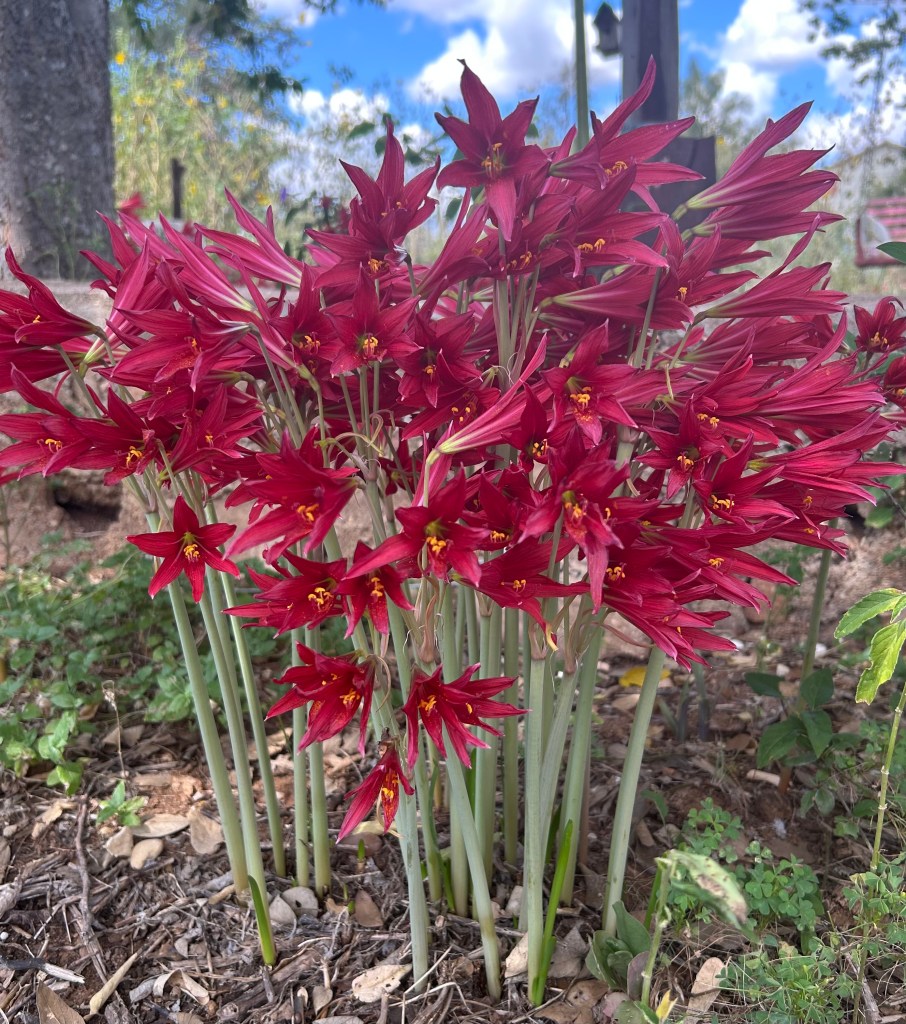
    The second flush of Oxblood Lilies is nothing short of magical. The rich, intoxicating shades of dark, crimson red are exactly what one would imagine an Oxblood Lily should look like. During the second flush, the weather has also cooled down a bit (supposedly), and the flowers last much longer. The growing conditions become much more favorable of having viable seed-producing pods. I’m not sure if all Oxbloods have the “second flush” growing habits. An Oxblood clump has to become established to provide numerous blooms. Given enough time, your Oxbloods will be a multigenerational family of bulbs.

    The attitudes of Heirloom Oxblood Lilies that are 100 year old stock (and beyond) are quite different than other young whipper-snappers in the garden. These old gals have been through a lot…the Great Depression, World Wars, the Beatles, the technology age of garden neglect and homestead teardowns. That’s a lot for an old bulb to take in and process. If the weather isn’t quite right, the main flush will simply hold off.
    Patience is indeed a virtue. In my garden, the first flush typically contains only a few scattered blooms out of each clump. Yes, they are lovely to behold and yes, I do enjoy the first flush as much as I love a single chocolate cookie right out of the oven. But the second flush…Omygoodness. The second flush is the entire plate full of warm, gooey, right-out-of-the-oven chocolate chip cookies. It’s simply incredible.

    Please reach out and let me know how your Oxbloods are doing. I do have Oxbloods available if any of you are without. It’s never good to have a garden with bulbs.
    email Heirloombulbgirl@gmail.com for more information.

    Until then, enjoy this wonderful season of Oxbloods!
    Happy Gardening, my friends!

  • The Love of Heirloom Bulbs

    This.

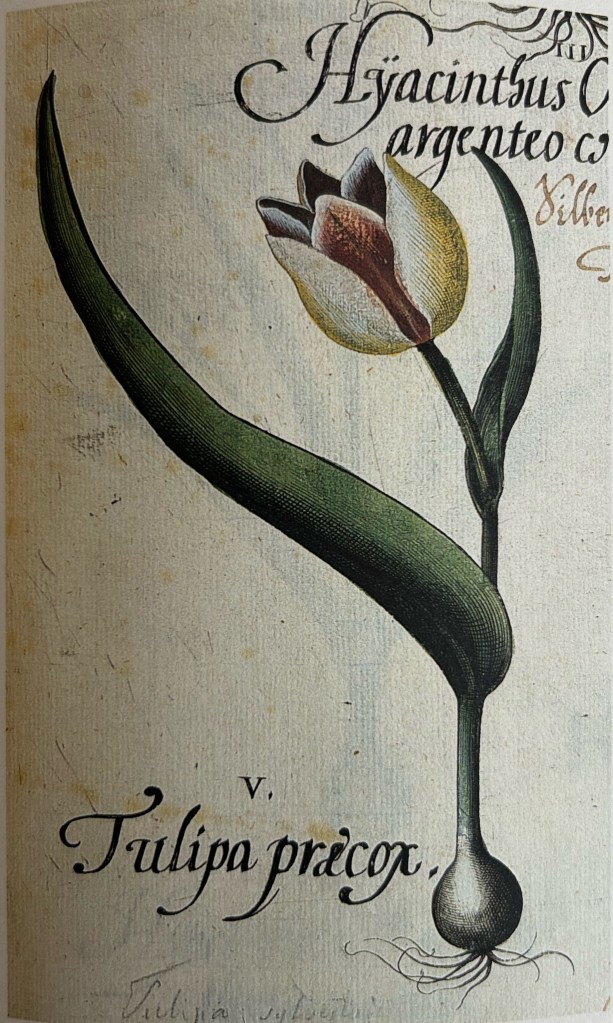
    The old paper.

    The old-style calligraphy.

    The old Latin text.

    The old botanical art.

    I love it all. I’ve always been drawn to antiquity, whether it is a flower, an old black and white photo, historic buildings or a page of music that my violin teacher’s teacher wrote upon in the early 1900’s. My love towards preserving the unseen or the forgotten has been a passion for as long as I can remember. Love can be manifested in many different ways. The love and preservation of the Heirloom Flower Bulb has been a deep-rooted passion since for as long as I can remember.

    My first taste of an Heirloom Bulb came literally in the form of a beautiful pink cabbage-petaled Peony. Peonies smelled intoxicatingly delicious, and well, yes… I licked the sap off those gorgeous flowers. Licking sap off the Peony is not recommended as peonies are poisonous. Children, like myself, are not meant to play “Bumblebee” with poisonous plants. In fact, I often tested my boundaries with the wild things by way of eating wild mushrooms, the neighbor’s raspberries, random flowers and lilacs. I loved all flowers, even the ones I ate, but I grew very fond of the old Peonies. It fascinated me that flower bulbs came back year after year, no matter what. As a child, this was nothing less than magical.

    Neighbors down the street noticed my love for flowers and poured their knowledge into me. Rabbi And Mrs. Horowitz greeted me at their front door with scissors and a vase. I suppose they knew that I would hack at their Heirloom Roses inappropriately if they didn’t teach me properly. I have such fond memories of their gentle ways, the beautiful rose garden in their backyard with heirloom rose cuttings that came from their own family members. Mrs. Horowitz took time sharing the stories of her roses and taught me, a young child, how to love and respect old plants. (I have tried to create a rose garden in their honor, but unfortunately the gophers have other plans). :/

    After the Peonies and the Horowitz Heirloom Rose Garden of my childhood, I became an Heirloom Iris addict. It wasn’t long after my family relocated to Colorado Springs that I found an abandoned Iris garden in the empty lot next to our house. My Dad and I spent hours unearthing the old fountain and Iris rhizomes that had been covered up after decades of neglect. A neighbor had told us that at the turn of the century, the gardens on West Cheyenne Mountain Road were eye-stoppers. The neighbor actually showed us an old black and white photo from the 1940’s of cars lined up to simply drive by the gardens. Rare black Iris were in abundance. We lived in that house just one year, but it was one of my favorite houses that I ever lived in. Years after we moved, I took my own little family by the old Cheyenne Mountain house in hopes of retrieving some historic Black Iris. Unfortunately, much to my great sadness, the gardens were bulldozed and the lovely lot became a common McMansion. I will always treasure those timeless moments of sitting on the ground with a hand shovel, gently unearthing the garden alongside my Dad.

    Fast forward to my early twenties. I was now in central Texas during Fall. Need I say more? It rained, and what seemed like overnight, Oxblood Lilies popped up all over town. I’ve never been the same since. Oxblood lilies seemed to grow wild where my in-laws lived, and I began to ask around about the red lilies growing everywhere.


    “Those are just weeds”

    “Well, can I dig up your weeds then?”

    “Help yourself”

    Thus started the first bulb dig 32 years ago this Fall. I’ve been digging ever since. I’ve salvaged a lot of old bulbs from homesteads and historic home teardowns. I’ve jumped barbed wire fences, been face-to-face with rattlesnakes, dug in the rain in front of bulldozers, broken more shovels than I care to admit and all the while…the Lord keeps whispering “Just Keep Digging”

    Honestly, I don’t even know why. My hands hurt, my body aches and I have countless thorns in my fingers on any given day….and I love every minute of it. 🙂

    We’ve all read “ To plant a garden is to believe in tomorrow.” Heirloom Bulbs live that quote. They are worthy of every single “blood, sweat and tears” (and broken shovels) of bulb rescues.. Heirloom Bulbs will outlive your grandchildren’s grandchildren. This weekend, the Rockwall Master Gardeners are doing a very special class featuring Heirloom Bulbs. Chris Weisinger, from Southern Bulb Company, will be giving a presentation. You can purchase Heirloom Bulbs from them. A fantastic way to start your weekend!

    Happy Gardening, my friends!


  • The Heirloom Garden

    When I started gardening, I never intended to become an “heirloom gardener”. It just somehow happened. I became drawn to the history. The story behind the flower. My early years were spent in Rabi and Mrs. Horowitz’s rose garden. The rose arbor in the tiny backyard was magical, and each rose had a special story attached to it. I was hooked. I’m not sure whether it was the inherent beauty of timeless flowers, the uniqueness of each flower story, or the simple fact that my mind could wander and question endlessly about the past. Feeling “rooted” to past traditions is important and vital, especially in our quick, throw-away society. Heirloom gardens preserve the past for the future of tomorrow’s gardeners.

    Heirloom, by definition, is “something of special value handed down from one generation to another.” In plant talk, an heirloom is “a variety of plant that has originated under cultivation and has survived for several generations usually due to efforts of private individuals.” Mike Bollinger, executive director for Seed Savers Exchange (a non-profit focusing on stewardship and education around heirlooms) had a great explanation for what Heirlooms truly were in Cooks Magazine. “Heirlooms tell stories from the past that may have been lost if it were not for their existence.” Heirloom plants are in “contrast to modern cultivators used in large-scale agriculture”. You might say that heirloom farmers are dedicated in maintaining a lifestyle their Grandparents or even Great-Grandparents had. I find the idea of growing a flower bulb that was deeply loved by someone who lived at the turn of the 20th century utterly fascinating. There is simply no substitute. So how does one go about creating an heirloom garden? For me, it’s all about preserving the gardener’s story.

    Here are a few very practical ways to start an heirloom garden…

    *Join an old-fashioned garden society or garden club. You will learn a lot of gardening wisdom from older generations of gardeners. You will also be able to drink tea and listen to some fantastic stories. A lot of garden clubs host plant or seed swaps. This is a wonderful way to hear about “Mema’s Yellow Iris” or “Aunt Thelma’s Daffodil”.

    *Visit the older part of your town and become friends with the folks with beautiful gardens. Gardeners love to talk about their flowers. Don’t be afraid to compliment a stranger with beautiful Daylilies or gorgeous old roses….he might just spontaneously dig a special flower up just for you.

    *Invest in some flower bulbs or antique roses from notable sources who invest their time in preserving heirloom plants. A few of my favorites are Old House Gardens, Southern Bulb Company, Seed Saver Exchange and the Antique Rose Emporium. Great folks with amazing selections of charming old-fashioned flowers.


    Heirloom gardens aren’t flashy, nor do they keep up with the last trends in garden culture. Heirlooms feature the past and quiet ways of a lifestyle long gone. Unrushed and simple. Moment to moment savored by the stillness of the garden. I walk through my gardens each day, with gentle remembrances all around….my husband’s Grandmother’s Iris, Danish bulbs passed along, gardening friends’ Snowflakes, Byzantine Gladiolus, Daffodils and Iris, my in-laws’ original “William Allen land grant Iris”, my Franklin Iris that traveled from England in the mid 1800s that settled on a Texas ranch that shared the land with Native Americans, and tear-downs saved like the beloved Oxblood Lilies, Spider Lilies and Crinum of Miss Margaret and Eugenia. The cherished list of heirloom flowers in my beloved gardens with a story attached goes on and on. I only wish I had a cutting of Rabi and Mrs. Horowitz’s rose garden, but their memory is rooted in every Antique Rose I have.

    There are two types of flowers…quick color that lasts a season and heirlooms that will out-live your Grandchildren’s Grandchildren. I pick the latter.

    Every.

    Single.

    Time.

    Happy Heirloom Gardening, my friends!

  • Gardening Super Truth

    There’s truth, and then there’s super truth. I prefer gardening super truths. Take, for instance, the super truth of the invasive Bermuda Grass, which contain root systems that grow straight down to hell. Or perhaps the super truth of trying to plant a peony in the full, blazing-hot summer heat during a Texas drought. Not gonna happen….Super truth. No arguing around the truth….it is what it is. It’s kinda like getting attacked by the “flower bulb bug” in your early 20’s and never recovering. There has never been a truer statement uttered out of my mouth, except for maybe “I do” spoken at the church 30 years ago. These super truths are ever present in my garden, but squishing in more flower bulbs into an already packed space is definitely a habitual ritual that borderlines a mental illness. Seeing garden space when there is none, and then thinking to yourself “If I only had a _________ and more_________, then the gardens would finally look perfect!” There’s no arguing with the ridiculous notice that “just one bulb” is needed to fulfill the space, because tomorrow another beautiful bulb will come along that I just *have to* have.

    This morning, after posting this funny meme about bulbs, I received a lovely email from a gardening friend who had been recently diagnosed with stage 4 cancer. Last year, her family surprised her with 450 bulbs from the “Bulb to Bloom” bulb sale to help create a legacy garden. My friend knows that Heirloom Bulbs are in it for the long haul, and that in itself is another gardening super truth. Long after the gardener says goodbye to their gardens, Heirloom Bulbs remain beautiful reminders of what was “once upon a time”. My friend has poured herself into the garden, squishing in as many bulbs as the garden can handle. The idea of “No garden can have enough flower bulbs” resonated with her as she continues to plant and spread inspiration to everyone around her. The truth is that she has created quite an incredible garden story for others to enjoy. Life isn’t easy, but it’s nice to keep our mind focused on the beauty of tomorrow instead of the hardships of today. Her bulb gardens exemplify hope in action. I even have some of her Heirloom Bulbs that I purchased at the bulb sale. If I was smarter, I would’ve put 2+2 together and realized that she was the same flower friend through email, but I’m not that smart (super truth) so I missed my chance to meet her in person. I plan to go to the bulb sale again next year just so I can meet such a beautiful gardening soul….and buy more flower bulbs. There’s always room for just one more bulb.

    If you have never been to the Smith County Master Gardeners Bulb to Bloom sale, it is definitely worth the drive to Tyler, Texas. The sale is typically in October. My family and I went 20 years ago for the very first time, when old gardeners still raced each other and literally RAN to get the bulbs. Something out of a gardening Twilight Zone. Definitely a blog for another day! They now have an on-line sale the week prior so no one’s pride gets hurt. There *might* even have a few items left after I buy every bulb in sight. Ha! 🙂 The sale is for a worthy cause and a great way to splurge for your garden’s sake. Remember to splurge….it’s the only way.

    Happy Gardening, my friends!

  • Hollie’s Crinum Baby Bulbs

    A few months ago, I collected a bunch of Crinum seed pods at my daughter Hollie’s graduation from Texas A&M. When I say “a bunch”, what I really mean is that my cup runneth over and flooded the potting shed. I honestly didn’t know just how many I had until it was time to start the growing process. This weekend, I finally got most of them planted. I’ve had a few gardeners reach out lately regarding the blog post with free Crinum seed pods, and wanted to give you a quick update.

    As you might know, growing bulbs from seed is not for the faint of heart. Remember the fruits of the Spirit you learned about in Sunday School way back when? “Patience”, “Hope” and “Longsuffering”? Yep….Those fruits are put to the test when starting those little seedpods. Here is a small glimpse into the process of growing Crinum from seed pod (the average gardener’s way)….

    First, you must pick the right amount of soil, light and water. Then wait.
    And wait.
    And wait.
    And then wait some more.

    Finally, after you accidentally forget about the seed pods, they decide to sprout. You get mad at yourself because some of the cute little pods dried up and died. You do a quick scientific analysis of the problem. Probably too much water, but actually not enough water. Along with too much sunlight and not enough sunlight at the same time. You feel much better knowing that you still maintain the “average gardener” status, and didn’t sink down into the level of “killing-everything-in-sight gardener” (that status is reserved for your houseplants, which are on a day by day life expectancy).
    You quickly give the surviving seedpods a blast of water and then go about your week until you accidentally forget about them again.

    Please tell me I’m not the only absent-minded gardener.

    Anyhow, this dead-almost-dead drudgery carried on throughout the summer. Luckily, Heirloom Bulbs (even as seedpod babies) are way smarter than I am. Heirloom Bulbs are survivors, so about 400 plus little Crinum babies survived my ineptness. I am happy to report that I have planted about 25% of the bulbs in pots. Then I got impatient and planted the rest in an empty veggie garden raised bed. I still have about 25-50 little bulbs left if anyone out there wants some. The good news for you is that I’ve already mentally muscled through the hard part of seedpod planting, so all you need to do is stick them in the soil. 🙂

    The greenery will freeze in the Winter and bulbs in the pots will freeze too. Keep your infants inside and keep them growing. The bulbs grow quickly and in a few years, they might even get to be of blooming size. Remember, Heirloom Bulbs will survive your Grandchildren’s Grandchildren. These bulbs are in it for the long haul. To me, it is glorious to have these old gals take root and share their blooms year after year. Email heirloombulbgirl@gmail.com if you’d like your own little Crinum.

    Happy Gardening, my friends!

  • Finding the Balance

    There is a fine line between “going natural” with native plants, and the complete and utter gardening chaos that consumes everything in its path (including cool garden art and small children). My gardens usually tip-toe close to the line of chaos, but this particular year, the balance had to be reestablished. The local natives were abundantly fruitful with all the beautiful rain. The studio grounds have been lost in a sea of Tie Vine and Widow’s Tears. Although the bees were pleased in the overwhelming native landscape, I had to find some sense of balance in the garden. Too much of a good thing becomes borderline toxic….so I set out with my dull scissors and bucket to thin out the natives.

    Balance is a word used a lot in our society. “Find the Balance” can be heard in every realm of life. Balance between work and play, healthy eating habits and a delicious three-layered coconut cake, good parenting and self-focused alone time, screen time and naturally unplugged time….you get my drift. The need for balance is in every aspect of life. Our modern society is not just walking the fine line between balance and chaos, it is grossly out of balance. It’s easy to feel like a little Crinum bulb that has been engulfed and suffocated by the overrun vines. How do we find a healthy balance when everything around us is trying to choke out the beauty we are trying to create?

    The first thing to remember is that too much of a good thing is not a good thing. If you have a plant, person, place or thing that has consumed every area of your life or garden, it needs some space. The problem with a lot of natives is that they are designed by nature to thrive, whether by seed production, tap roots or natural vigor, natives thrive against all odds. Native plants are great, until you can’t see your garden any longer. My secret weapon in the garden is a pair of gardening scissors. I am basically a female version of Edward-Scissorhands, cutting natives and invasive vines off at ground level. The Texas Tie Vine, for instance, is a charming vine with pink flowers and heart-shaped leaves that cannot be simply pulled up….the taproot is somewhere three block as away. Pulling the vine up sends plant hormones to reproduce TWICE the vine….No joke! Where’s the balance in that?? If left unchecked, the cute little vine will consume your entire block, children, husband and pets included! Balance is being able to enjoy the lovely pink flower in random spots without allowing the vine to ruin your entire life. I continually look for places being overrun and I continue to cut throughout the season. I also *try* to keep the space around specimen plants or bulbs sacred. Native ground covers and plants like Widow’s Tear can steal nutrients from your prized plants and drop a lot of seeds. A good healthy haircut, I mean plant-cut, is good for everything in the garden.

    Another way to create a healthy balance in the garden is to recognize native plants as healthy or toxic. There are beautIful things in life that can actually be harmful to our personal health or our garden. Take, for instance, the dreaded Poison Ivy Vine. The berries are so cute! The growth habits of the vine are delightful, until it’s not. Getting rid of Poison Ivy is also interesting, but that is an entirely different blog. Red wasps are another toxic garden pest. Organic gardeners try to find the positives in all species. I tried to coincide peacefully with the wasp until they ran off the bees from my old bee tree. Not cool. I eradicated the wasp population (I have no apologies either) and my bees happily returned! Protecting the good species from overwhelming troublesome species is much like sheltering a child from the darkness of the world. Yes, it exists, but our energy needs to be put towards raising up goodness, both in ourselves and in our gardens. Even well-meaning pollinators like the Cow Pen Daisy need to be kept in check, before the 3,978,645 seeds each plant drops overruns your delightful Rain Lily bed.

    Finding balance isn’t a “One and Done” activity. Balance is something to seek out daily. Politicians, Social Media and Bermuda Grass will never be completely eradicated from life, so it is best to create healthy space and balance. Don’t get overwhelmed with a job that is never fully completed. Every day is a new and glorious day. Choose the space that you are in, the people you are around, and the plants you have in your garden that bring you the most joy. Don’t get overwhelmed by invasive vines. Simply cut them off at the pass before they get out of control. Keep toxic plants (and people) at bay, and nurture the good things that are all around you in this fabulous garden called life. Balance yourself, and the beautiful things that the Lord has in store for you can grow and begin to be noticed. And next time you gaze upon the garden patch that you just weeded, enjoy that fleeting moment of perfect gardening balance fully….but always keep a pair of scissors in your back pocket just in case. 🙂

    “Take My yoke upon you. My burden is light.” -Matthew 11:30

    Happy Gardening, my friends!
    Love, Keenan @heirloombulbgirl