Tag: organic gardening

  • The Texas Pomegranate

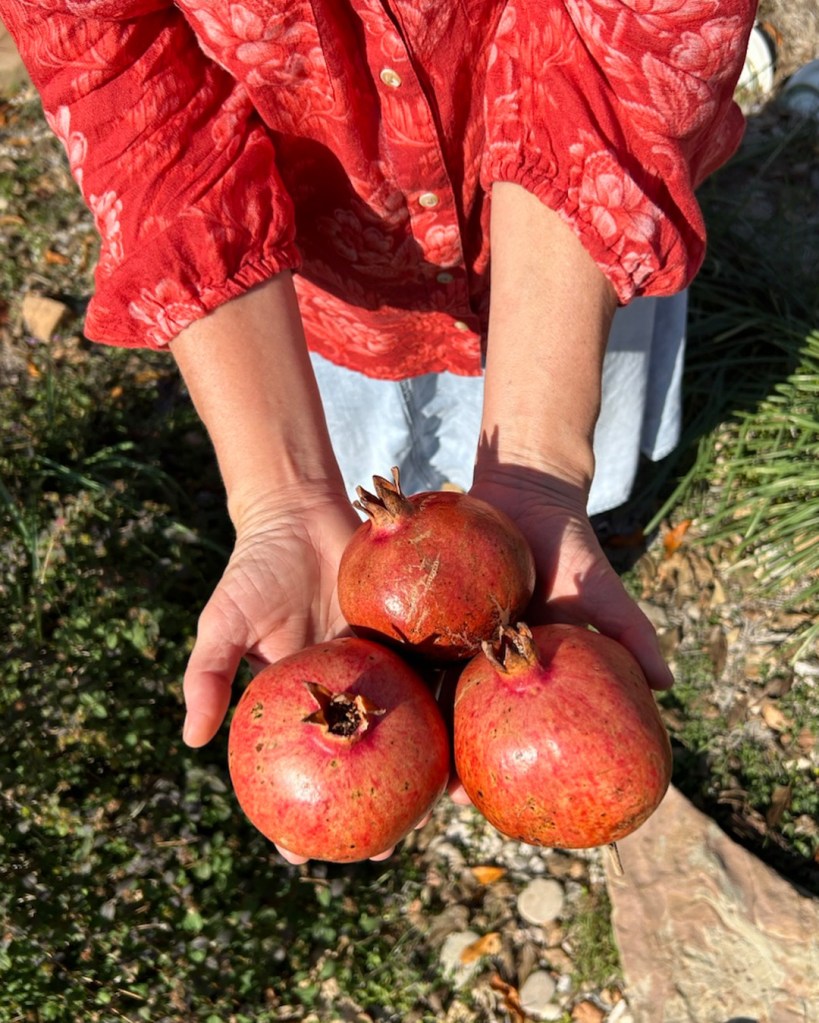
    Some of you know, but most of you don’t, the disgusting soil I have to work with at the studio. Even the word “soil” to describe the studio grounds is being grossly negligent as a writer. Perhaps I should describe my land in politically correct terms…the land is “soil-deprived”, or an “enriched-deficient” plot of horror. Most gardeners would run and hide from the catastrophic elements that are continually at war against gardening. Whether it be moles and gophers, rock and rubble, thermal hot spots in drought conditions or just a plain thorny sticker crop. I simply can’t catch a break. Except in the rare moments when I get to look upon a job well done. Inspiration overrides all seasons of exhaustion and frustration, and I simply get to hold the fruit of my labor. And oh, how sweet it is!

    The Texas Pomegranate is truly something to behold. I call it the Texas Pomegranate because I honestly don’t know what variety this beautiful tree is. I received the tree as a gift when I first bought the music studio. Apple John, a dear friend and mandolin extraordinaire, has an Apple Orchard deep in the Texas Hill Country. John also cultivates Pomegranate Trees. This tree was one of the first plants that found a home at the studio. The Pomegranate became a landmark in the garden, planting all shrubs, flowers and Heirloom Bulbs around it. When cherished plants died in times of drought, the pomegranate grew only stronger.

    ”Is that all you got?!”

    The Texas Pomegranate is also unscathed by destructive critters that lurk underground. For a few years, I had a beautiful antique rose that nestled herself up to the pomegranate tree. Then one day her roots were completely chewed up. Once again, the Pomegranate grew only stronger. It honestly doesn’t make sense how the palate of a gopher can be so refined as to distinguish between the roots of a salvia or rose!

    I’m not a gardening expert on much, but I do take notice the drought-hardy plants that thrive in lousy soil. The Texas Pomegranate is one of those jewels. For great native plants, I shop at Greensleeves Nursery in Pflugerville, Friendly Natives in Fredericksburg, Backbone Nursery in Marble Falls, or The Natural Gardener and Barton Springs Nursery, both in Austin. I love each of these shops for different reasons. The mainstay is to shop a local plant nursery that focuses on native plants for your area. DO NOT SHOP BIG BOX STORES FOR YOUR TEXAS POMEGRANATE TREE OR ANYTHING FOR THAT MATTER. (Notice all caps? I’m a bit passionate about supporting small garden shops!)

    Happy Gardening, my friends!
  • The Love of Heirloom Bulbs

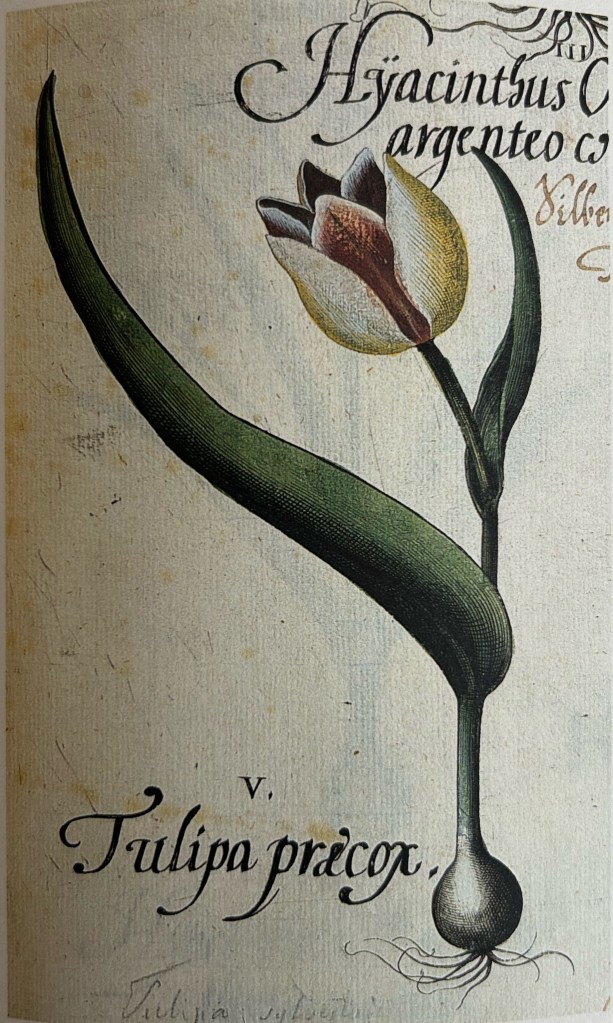
    This.

    The old paper.

    The old-style calligraphy.

    The old Latin text.

    The old botanical art.

    I love it all. I’ve always been drawn to antiquity, whether it is a flower, an old black and white photo, historic buildings or a page of music that my violin teacher’s teacher wrote upon in the early 1900’s. My love towards preserving the unseen or the forgotten has been a passion for as long as I can remember. Love can be manifested in many different ways. The love and preservation of the Heirloom Flower Bulb has been a deep-rooted passion since for as long as I can remember.

    My first taste of an Heirloom Bulb came literally in the form of a beautiful pink cabbage-petaled Peony. Peonies smelled intoxicatingly delicious, and well, yes… I licked the sap off those gorgeous flowers. Licking sap off the Peony is not recommended as peonies are poisonous. Children, like myself, are not meant to play “Bumblebee” with poisonous plants. In fact, I often tested my boundaries with the wild things by way of eating wild mushrooms, the neighbor’s raspberries, random flowers and lilacs. I loved all flowers, even the ones I ate, but I grew very fond of the old Peonies. It fascinated me that flower bulbs came back year after year, no matter what. As a child, this was nothing less than magical.

    Neighbors down the street noticed my love for flowers and poured their knowledge into me. Rabbi And Mrs. Horowitz greeted me at their front door with scissors and a vase. I suppose they knew that I would hack at their Heirloom Roses inappropriately if they didn’t teach me properly. I have such fond memories of their gentle ways, the beautiful rose garden in their backyard with heirloom rose cuttings that came from their own family members. Mrs. Horowitz took time sharing the stories of her roses and taught me, a young child, how to love and respect old plants. (I have tried to create a rose garden in their honor, but unfortunately the gophers have other plans). :/

    After the Peonies and the Horowitz Heirloom Rose Garden of my childhood, I became an Heirloom Iris addict. It wasn’t long after my family relocated to Colorado Springs that I found an abandoned Iris garden in the empty lot next to our house. My Dad and I spent hours unearthing the old fountain and Iris rhizomes that had been covered up after decades of neglect. A neighbor had told us that at the turn of the century, the gardens on West Cheyenne Mountain Road were eye-stoppers. The neighbor actually showed us an old black and white photo from the 1940’s of cars lined up to simply drive by the gardens. Rare black Iris were in abundance. We lived in that house just one year, but it was one of my favorite houses that I ever lived in. Years after we moved, I took my own little family by the old Cheyenne Mountain house in hopes of retrieving some historic Black Iris. Unfortunately, much to my great sadness, the gardens were bulldozed and the lovely lot became a common McMansion. I will always treasure those timeless moments of sitting on the ground with a hand shovel, gently unearthing the garden alongside my Dad.

    Fast forward to my early twenties. I was now in central Texas during Fall. Need I say more? It rained, and what seemed like overnight, Oxblood Lilies popped up all over town. I’ve never been the same since. Oxblood lilies seemed to grow wild where my in-laws lived, and I began to ask around about the red lilies growing everywhere.


    “Those are just weeds”

    “Well, can I dig up your weeds then?”

    “Help yourself”

    Thus started the first bulb dig 32 years ago this Fall. I’ve been digging ever since. I’ve salvaged a lot of old bulbs from homesteads and historic home teardowns. I’ve jumped barbed wire fences, been face-to-face with rattlesnakes, dug in the rain in front of bulldozers, broken more shovels than I care to admit and all the while…the Lord keeps whispering “Just Keep Digging”

    Honestly, I don’t even know why. My hands hurt, my body aches and I have countless thorns in my fingers on any given day….and I love every minute of it. 🙂

    We’ve all read “ To plant a garden is to believe in tomorrow.” Heirloom Bulbs live that quote. They are worthy of every single “blood, sweat and tears” (and broken shovels) of bulb rescues.. Heirloom Bulbs will outlive your grandchildren’s grandchildren. This weekend, the Rockwall Master Gardeners are doing a very special class featuring Heirloom Bulbs. Chris Weisinger, from Southern Bulb Company, will be giving a presentation. You can purchase Heirloom Bulbs from them. A fantastic way to start your weekend!

    Happy Gardening, my friends!


  • Spiders in the Garden (part two)

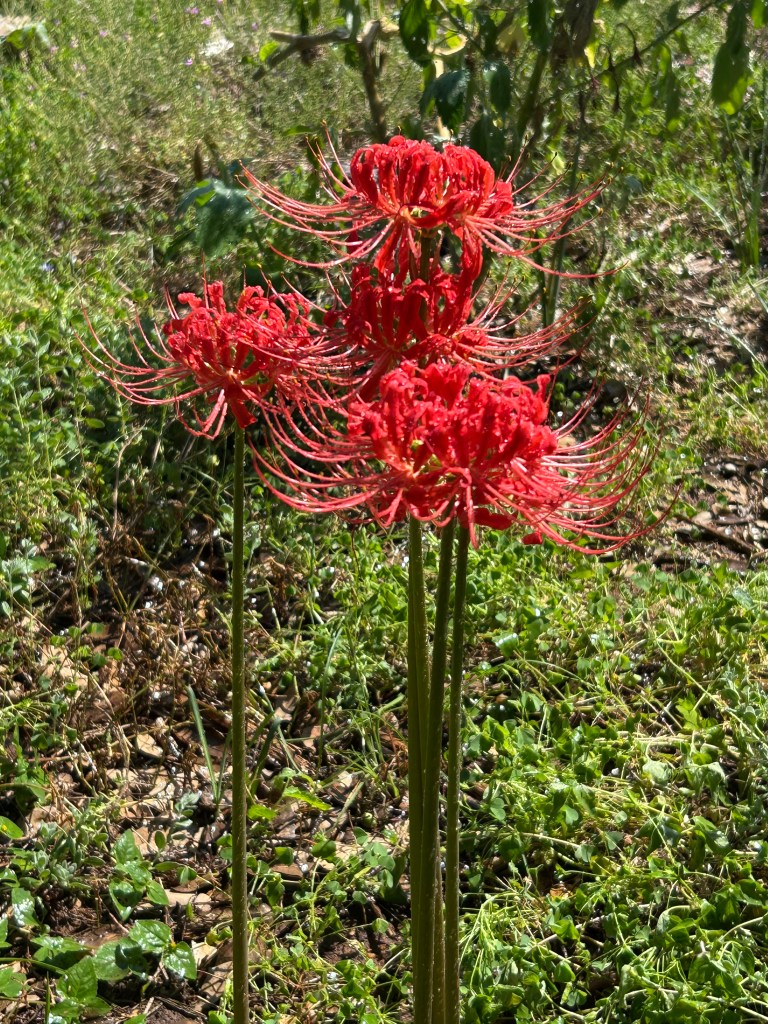
    Fall in Texas is not defined simply by weather patterns. Fall in Texas is defined by the exquisite red blooms of the Oxblood Lily and the red Spider Lily. Few flower bulbs are as bold and vivacious as these flower bulbs are. These lilies are tough, surviving years of neglect, and provide a happy reminder of good times to come in the Southern garden.

    My first Spider Lily was found at our little home in Dallas. The lily grew in a crammed flower bed next to our sidewalk. I tried multiple times to retrieve the bulb, but I’d pull out only chunks of the bulb…only to have more Spiders in the garden the following year. The house was a 1950’s cottage style house of 1,100 square feet. People were a lot more content with simplicity back then, and cherished their flowers. The folks that lived in the house after the original owners let the garden beds go. The Spider Lilies were the only flowers that remained. I fell completely in love.

    Normally I am not drawn to “fancy”, but Spider Lilies are different. Their fanciness comes from a place of the heart. The bold flower is so vivid, it can be spotted from anywhere in the garden. One single Spider can rise tall and demand attention from onlookers, but humble enough to allow other flowers to bloom beautifully the rest of the year. Spiders aren’t like Bougainville, which take over the conversation. Spider Lilies are content to shine for a few weeks, then let others do the same. Spiders compliment other plants without stealing the joy.

    A single Spider is noteworthy, but I have found that flower bulbs do enjoy being a part of a family of bulbs. I always plant my flower bulbs together in groups of 5 or more, spaced loosely, but close enough for roots to touch. Spiders thrive planted in families. Spider lilies also enjoy afternoon shade, knowing that a Texas Summer is brutally hot. Protect your flower bulbs from the extreme elements. Planting native ground covers or gentle perennials are also helpful. More of under-planting and over-planting in subsequent blogs. For now, if you can get your hands on some Spiders, they are a great addition to any garden. Try Southern Bulb Company, Old House Gardens or the Tyler or Rockwall Master Gardener Bulb Sales. All great choices 🙂

    Happy Gardening, my friends!