Tag: nature

  • Growing Oxblood Lilies by Seed

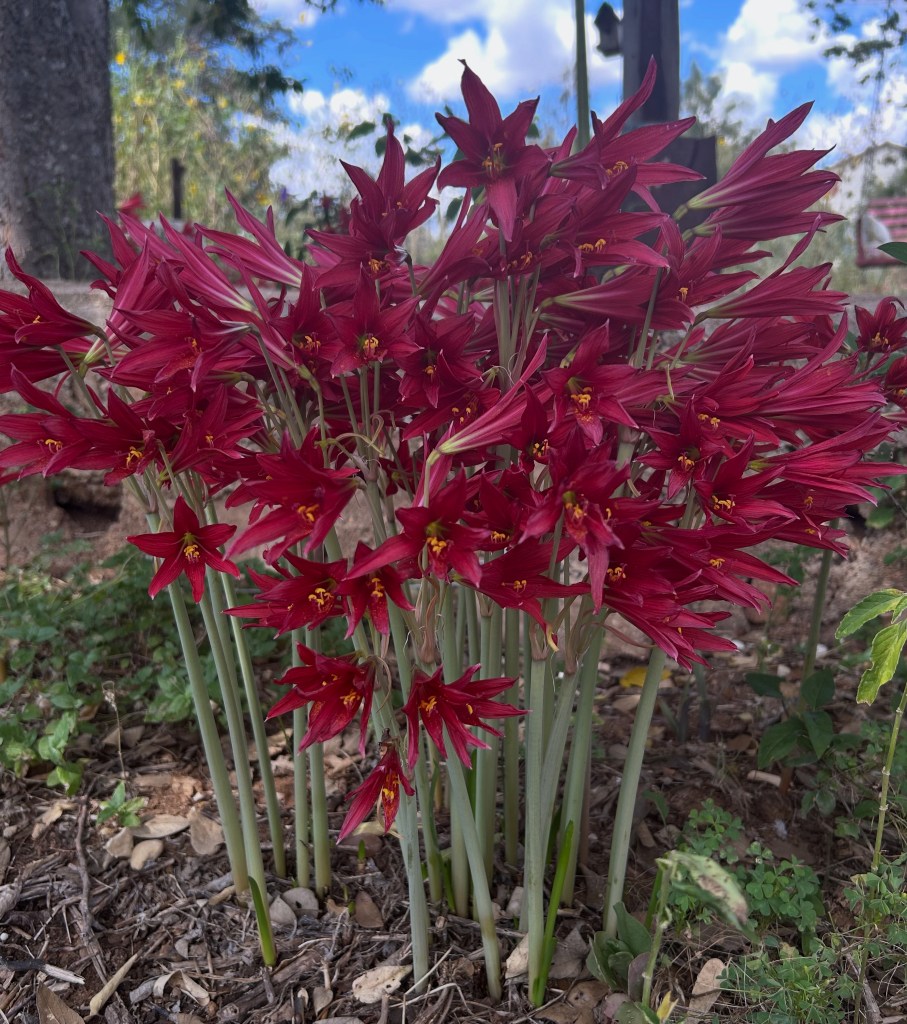
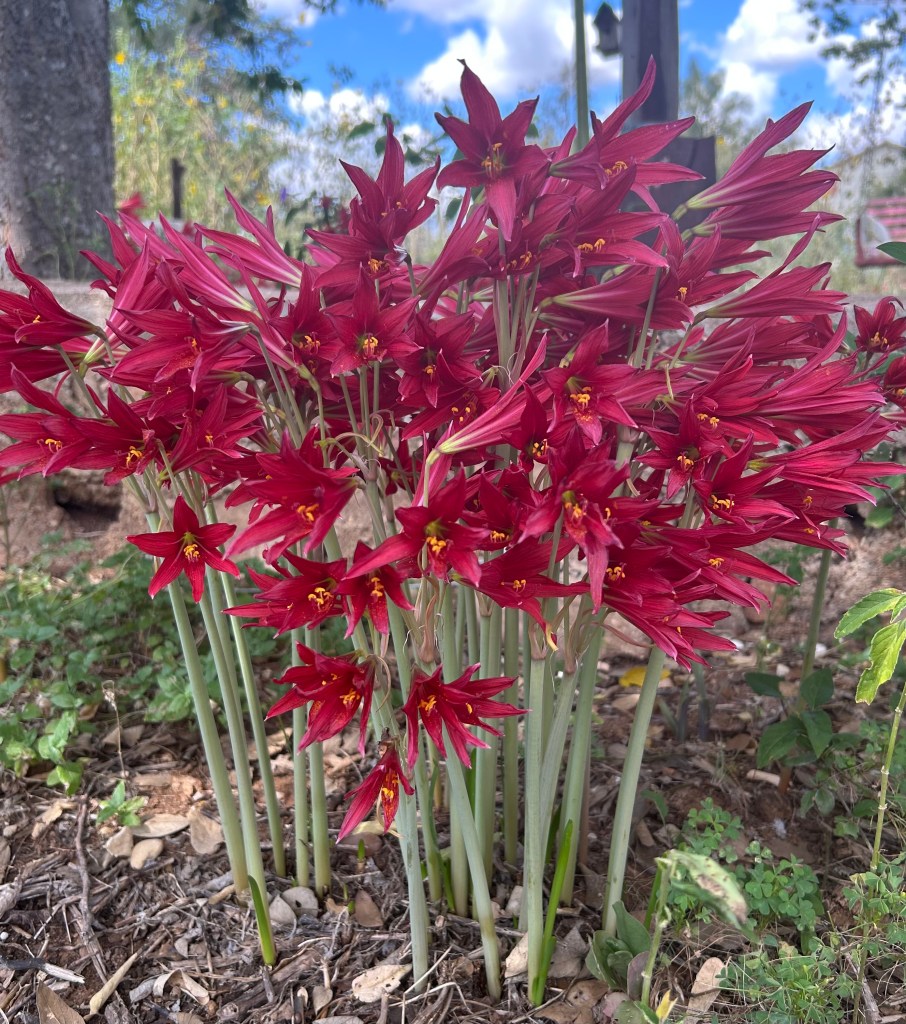
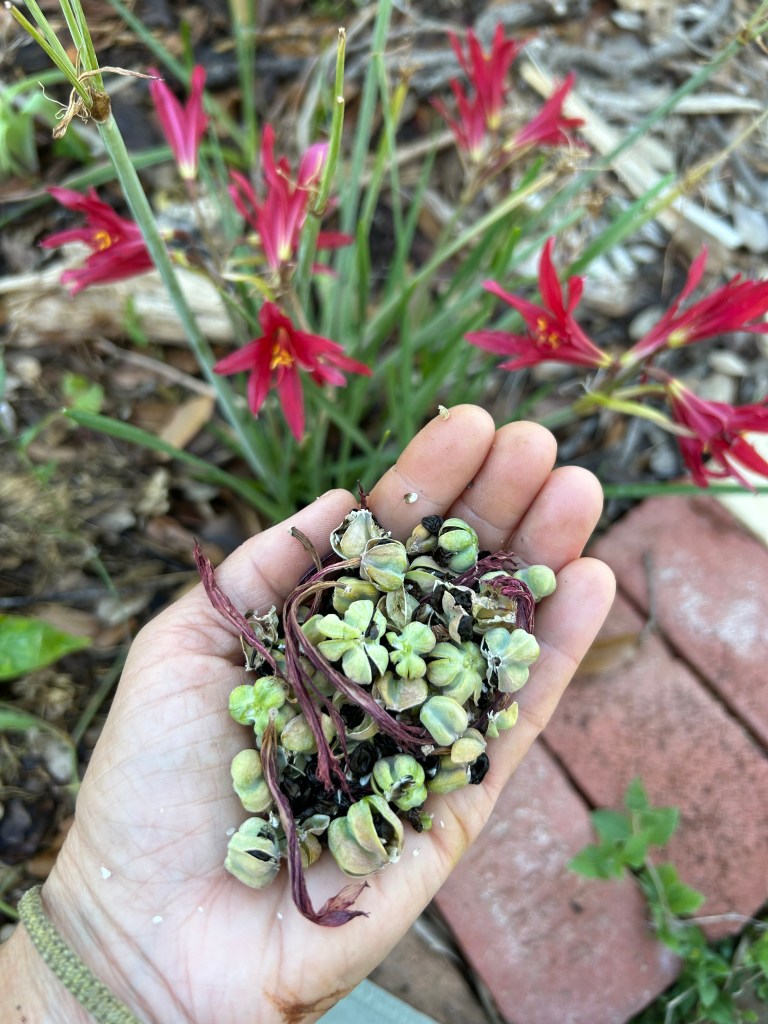
    Isn’t this the coolest? I am obsessed! Some Oxblood Lilies are still in bloom, while others are in different of the seed process. Some Oxbloods don’t produce viable seeds at all. For some odd reason, I find this utterly fascinating. I have chronicled the last few weeks of Oxblood Lily seedpod development on my Instagram/FB accounts, which has brought me ridiculous amounts of fun. I have managed to figure how to put music to reels (huge step into this techno-century). Even my daughter laughed at my latest dorky song choice….I laughed too. I’m still laughing. The absurdity of gardeners who love their plants is immense, and yes….borderline psychotic, but in a joyfully good way. I think we all need good diversions in life that bring us joy. For me, it is watching my lilies go to seed.

    If you Google “do Oxblood Lilies go to seed?” most sights will say no. About 15 years ago, I had a hunch that mine did. I spotted way too many rogue Oxbloods throughout the yard. The relocation of lilies by Squirrels and small children were a distinct possibility, I decided to do a little science project. I did the whole “seed in paper moist paper towels” thing, and much to my joy, they sprouted. I did plant them as they grew and quickly lost track of my seed babies. Now I’m more savvy. I’m not knee-deep in violin concerts alongside peanut butter and honey child-rearing. My littles have all grown up, I have a somewhat of an empty nest and a lot of Oxblood Lily seeds to cultivate. The last 15 years, I have allowed nature do what it wants to do with the lily seeds. This year, I’m more intentional. I’m collecting the seeds and germinating them.

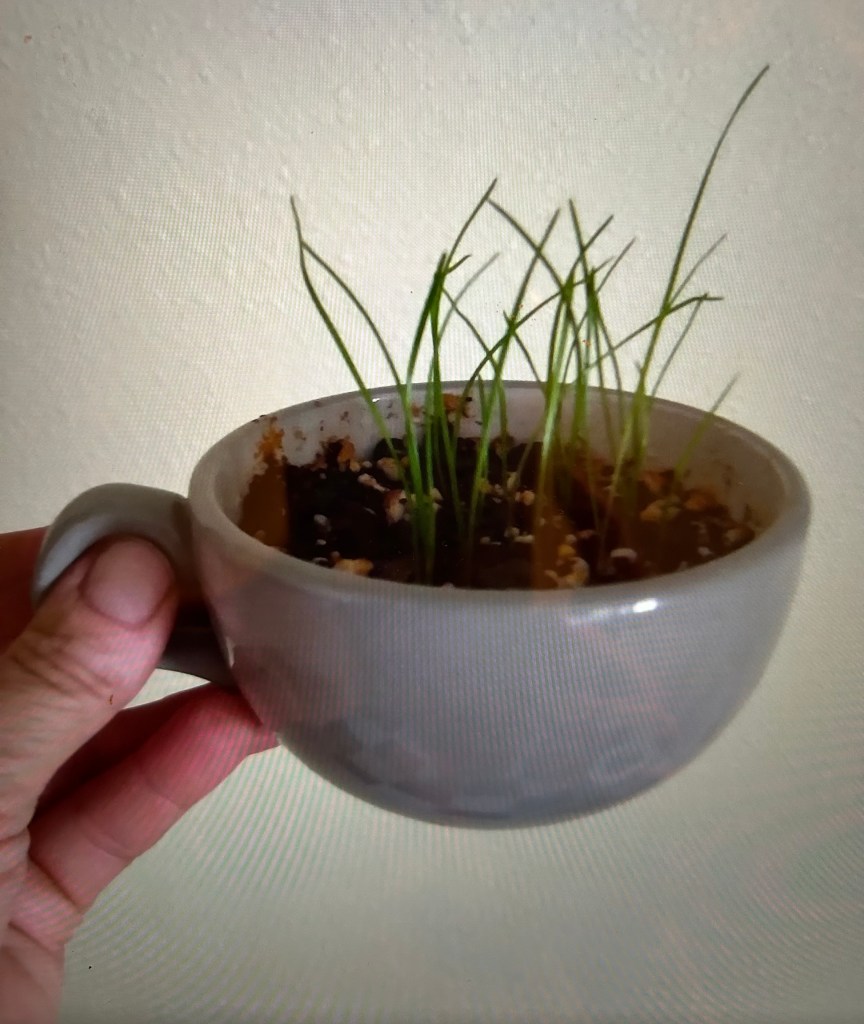
    Lily seeds enjoy a moist environment. I have half of my seeds in the moist paper method, and half my seeds in tea cups placed all around my music studio. No, I don’t have a greenhouse so I have to take a chance that my young violinists won’t throw the cups at each other while my back is turned. So far, so good. It’s been a few days, so I happily wait for green little sprouts. Patience is a virtue in which I apparently need. That’s the only real explanation on why this process is so thrilling for me. I have offered up free seedpods to folks to try their luck at growing Oxblood Lilies by seed. I’ve never sent Lily seeds via mail before, so if you have any suggestions, I’d love to hear them. 🙂 Remember, I’m not a botanist, I just play one on Web MD.

    Happy Gardening my friends!

  • Finding the Balance

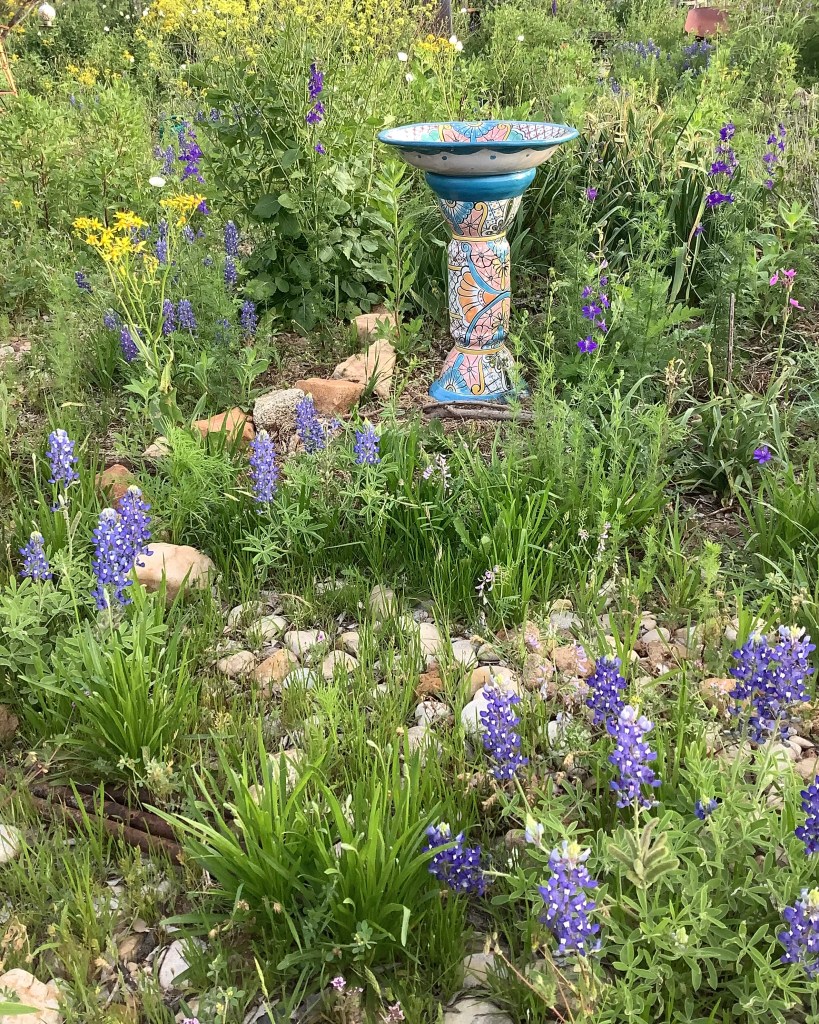
    There is a fine line between “going natural” with native plants, and the complete and utter gardening chaos that consumes everything in its path (including cool garden art and small children). My gardens usually tip-toe close to the line of chaos, but this particular year, the balance had to be reestablished. The local natives were abundantly fruitful with all the beautiful rain. The studio grounds have been lost in a sea of Tie Vine and Widow’s Tears. Although the bees were pleased in the overwhelming native landscape, I had to find some sense of balance in the garden. Too much of a good thing becomes borderline toxic….so I set out with my dull scissors and bucket to thin out the natives.

    Balance is a word used a lot in our society. “Find the Balance” can be heard in every realm of life. Balance between work and play, healthy eating habits and a delicious three-layered coconut cake, good parenting and self-focused alone time, screen time and naturally unplugged time….you get my drift. The need for balance is in every aspect of life. Our modern society is not just walking the fine line between balance and chaos, it is grossly out of balance. It’s easy to feel like a little Crinum bulb that has been engulfed and suffocated by the overrun vines. How do we find a healthy balance when everything around us is trying to choke out the beauty we are trying to create?

    The first thing to remember is that too much of a good thing is not a good thing. If you have a plant, person, place or thing that has consumed every area of your life or garden, it needs some space. The problem with a lot of natives is that they are designed by nature to thrive, whether by seed production, tap roots or natural vigor, natives thrive against all odds. Native plants are great, until you can’t see your garden any longer. My secret weapon in the garden is a pair of gardening scissors. I am basically a female version of Edward-Scissorhands, cutting natives and invasive vines off at ground level. The Texas Tie Vine, for instance, is a charming vine with pink flowers and heart-shaped leaves that cannot be simply pulled up….the taproot is somewhere three block as away. Pulling the vine up sends plant hormones to reproduce TWICE the vine….No joke! Where’s the balance in that?? If left unchecked, the cute little vine will consume your entire block, children, husband and pets included! Balance is being able to enjoy the lovely pink flower in random spots without allowing the vine to ruin your entire life. I continually look for places being overrun and I continue to cut throughout the season. I also *try* to keep the space around specimen plants or bulbs sacred. Native ground covers and plants like Widow’s Tear can steal nutrients from your prized plants and drop a lot of seeds. A good healthy haircut, I mean plant-cut, is good for everything in the garden.

    Another way to create a healthy balance in the garden is to recognize native plants as healthy or toxic. There are beautIful things in life that can actually be harmful to our personal health or our garden. Take, for instance, the dreaded Poison Ivy Vine. The berries are so cute! The growth habits of the vine are delightful, until it’s not. Getting rid of Poison Ivy is also interesting, but that is an entirely different blog. Red wasps are another toxic garden pest. Organic gardeners try to find the positives in all species. I tried to coincide peacefully with the wasp until they ran off the bees from my old bee tree. Not cool. I eradicated the wasp population (I have no apologies either) and my bees happily returned! Protecting the good species from overwhelming troublesome species is much like sheltering a child from the darkness of the world. Yes, it exists, but our energy needs to be put towards raising up goodness, both in ourselves and in our gardens. Even well-meaning pollinators like the Cow Pen Daisy need to be kept in check, before the 3,978,645 seeds each plant drops overruns your delightful Rain Lily bed.

    Finding balance isn’t a “One and Done” activity. Balance is something to seek out daily. Politicians, Social Media and Bermuda Grass will never be completely eradicated from life, so it is best to create healthy space and balance. Don’t get overwhelmed with a job that is never fully completed. Every day is a new and glorious day. Choose the space that you are in, the people you are around, and the plants you have in your garden that bring you the most joy. Don’t get overwhelmed by invasive vines. Simply cut them off at the pass before they get out of control. Keep toxic plants (and people) at bay, and nurture the good things that are all around you in this fabulous garden called life. Balance yourself, and the beautiful things that the Lord has in store for you can grow and begin to be noticed. And next time you gaze upon the garden patch that you just weeded, enjoy that fleeting moment of perfect gardening balance fully….but always keep a pair of scissors in your back pocket just in case. 🙂

    “Take My yoke upon you. My burden is light.” -Matthew 11:30

    Happy Gardening, my friends!
    Love, Keenan @heirloombulbgirl

  • 50 Shades of Iris

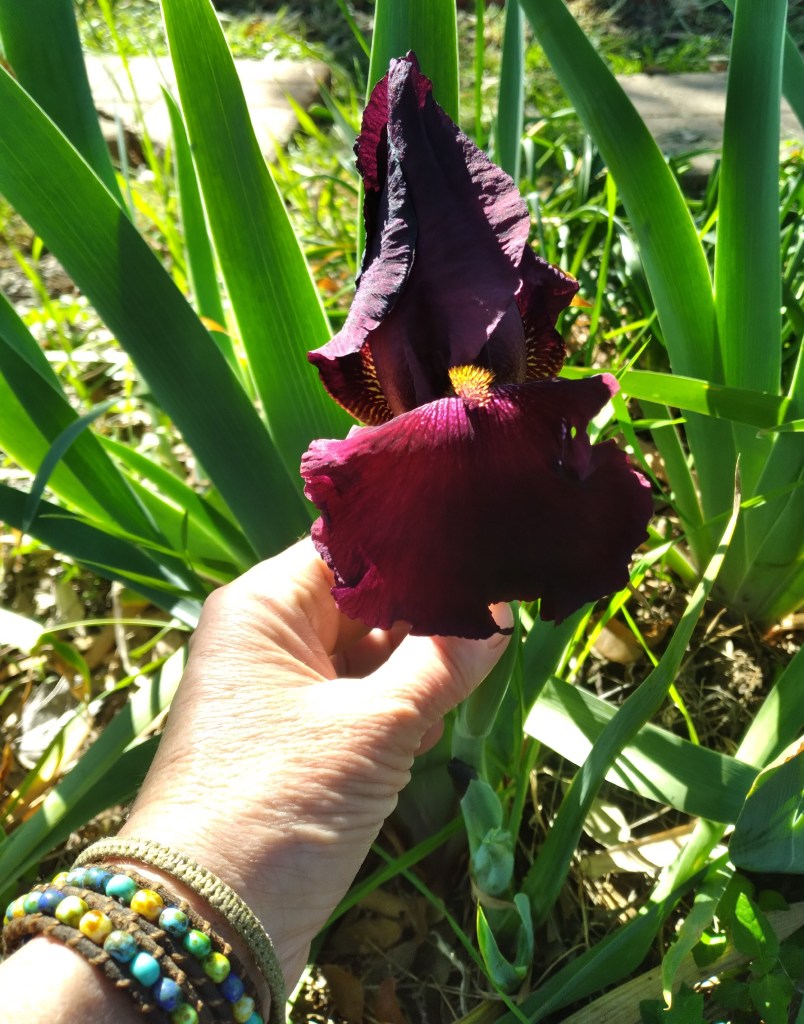
    Few words are needed to describe the sheer enthusiasm Iris brings to the garden. Iris stands tall, announcing loudly to all the world (or at least the rest of the block) that Spring has sprung. Iris come in every color of the rainbow, except gray. Naturally, I am particularly fond of pale or muted shades of Heirloom varieties. My husband’s Grandmother had a beautiful two-toned pale yellows Iris that blooms later in the Spring. I absolutely adore those lovely Iris.

    Iris are extremely tough old gals, surviving natural disasters and neglectful gardeners. I once dug up some Iris, got distracted, and after a few seasons of harsh weather, the Iris bloomed the following year….still in the dug-up clump where I left it. Oops. I’m glad my flowers outlive my stupidity. Maybe that’s why Iris are also known as Cemetery Iris or “Flags” (as the non-Iris collecting commoners call them). True Cemetary Iris are typically white or purple, and can still be found growing in cemeteries throughout the South. All Iris seem to have stories to tell, and many have traveled far and wide to land humbly in my gardens.

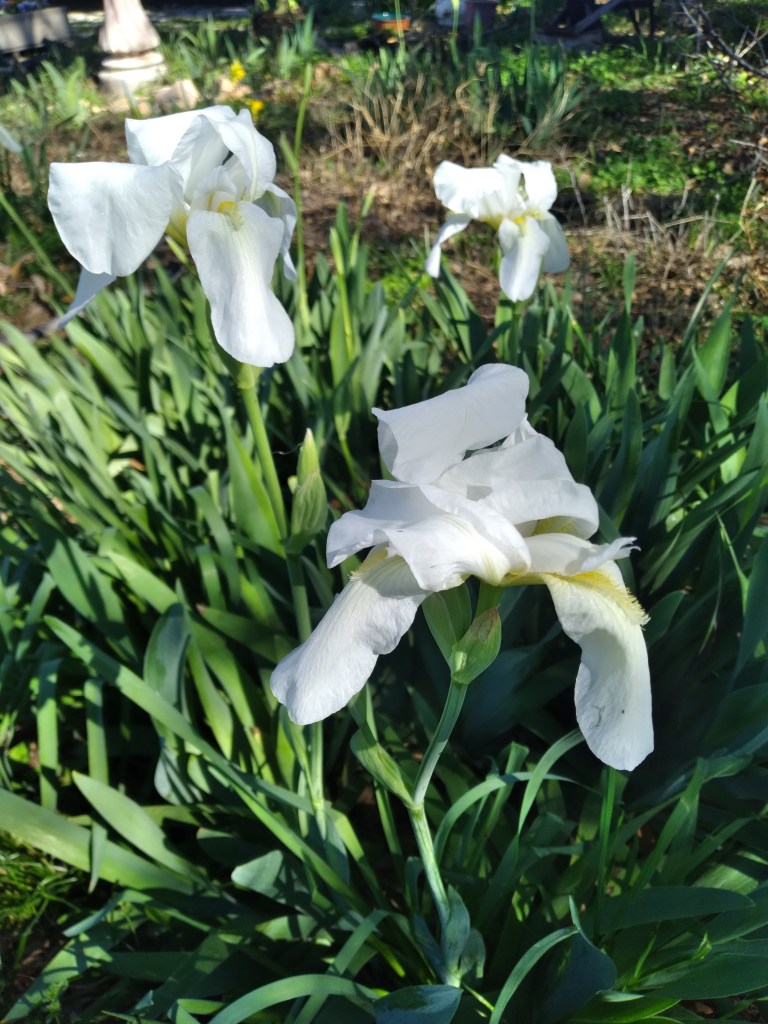
    Many of my white Iris are from my In-Law’s farm in East Texas. The Iris are remnants of the German homesteaders that originally lived on the land in the early 1900’s. The only evidence of the old German house is the Iris border in the middle of a horse pasture. Once I discovered the house location, I went on a digging frenzy, locating countless pieces of cool old pieces of china to make mosaics. The beautiful Iris receive no care or attention, except from passing horses or cows. The Iris have bloomed faithfully for over 150 years. White Iris are extremely common, but the stories behind the Iris are unique and dear to my heart….making each plain white Iris a special addition to the garden. I think that every garden should tell a story.

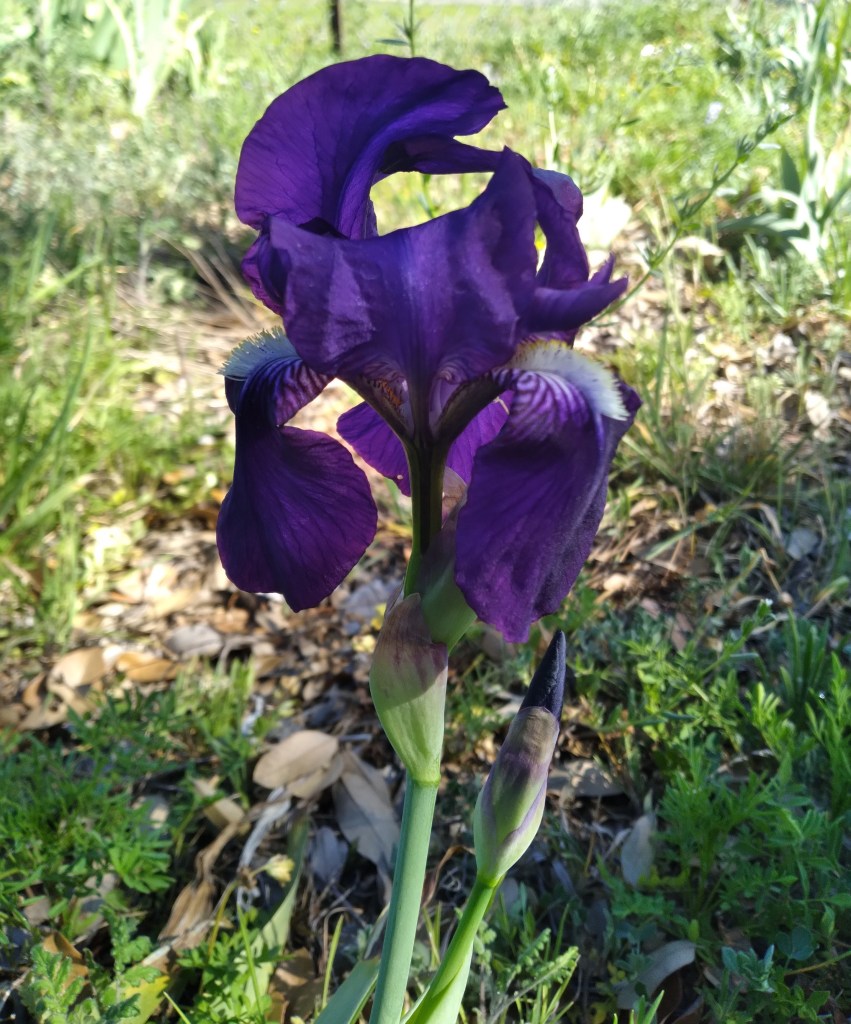
    Some of my favorite purple Iris (not yet in bloom) came to Texas from England in the 1880’s. Few cherished items were allowed on the long journey overseas. Mrs. Franklin chose a corset, a few homemaking necessities and a purple Iris. Their Texas homestead was extremely rough terrain, drastically different from the gardens of England. In fact, the last Comanche Indian raid in Texas was not far from their homestead. My dear friend, the Great-Granddaughter of the Franklins (of the Franklin ranch) gave me a few Iris from the original Franklin ranch house. It is mind boggling to imagine all that the little Iris survived through….droughts, floods, Indian raids, World Wars and The Great Depression. Somehow, surviving it all. The Franklin Iris are bold annd strappy, multiplying readily. These Iris are the “alpha” of my collection, eating small plants and other pests that get in their way.

    I have beautiful yellow, blue and magenta Iris gifted to me from flower friends, some who I’ve never even met. My daughters and their friends began to also have a love affair with Iris, trading my flowers for their own Iris collection. My daughter Hollie once received an Apricot -shaded Iris that she stuck in my garden with rocks around it, keeping *her Iris* segregated from the rest of the rabble that I grew. Over the years, I’ve enjoyed old-fashioned flower swaps with these true “pass-along” flowers. Many Iris come from house tear-downs that I chronicled through the years on my original website blog, which unfortunately is having some technical issues. Hopefully, the stories of these great old gardens will someday be readable again. Until then, I close my eyes and still see the century old beauty. Treasured gardens of Miss Margaret and Eugenia are now long gone, existing only in my mind and in all their flower bulbs that were salvaged.

    I am always happy to share these old flowers with you. The best part of preserving heirloom bulbs is getting these old gals into the hands of gardeners who will love them. Sharing and trading flowers is such a joy, keeping the spirit of Old-Fashioned gardening with Pass-Along plants close to the heart. It’s exactly what Miss Margaret and Eugenia would’ve done. Happy Gardening, my friends!
    Love, Keenan at Heirloombulbgirl

  • The Garden of Givers

    They say it takes thirteen years to establish a garden. Yes, you read that correct…..thirteen years. Establishing a garden isn’t just the fun purchase of your favorite new flower. To establish something is purposeful, hoping for permanence. The established garden is not a man-made forced moment of flower-perfection, but a beautiful habitat for all natural things, blooming for generations to come. These old gardens are givers. The heirloom plants are in it for the long haul. Many of the Heirloom bulbs I salvage are from homesteads that date back to the mid 1800’s. Can you imagine tearing down and ripping out those old gardens?!
    Tasha Tudor’s gardens are beautiful examples of an established garden. I long to see a day when my young little fledgling-of-a-garden begins to take off and fly on its own. I love to visit old homesteads that are preserved, and I marvel at the old rose varieties and the heirloom beauty that keeps on giving.


    Established plants within those old gardens behave differently than modern store-bought varieties. Take, for instance, the “Queen’s Wreath” Coral Vine, an old Southern favorite. Many gardeners (including my Mother-in-Law) have tried to get this beautiful vine to establish, with little to no success. This particular vine comes to mind because I recently relocated a very old clump that I salvaged years ago. The vine was easily 50 years old. While I dug, I discovered bulbs attached to the roots. I had no idea that Coral Vine was a bulb! After researching, I discovered that in order for a Coral Vine to establish, a bulb is necessary for the vine to survive. The bulb becomes the life line to the old vine….a giver. I find this extremely fascinating. Unfortunately, many old varieties of plants, including Queen’s Wreath, are lost with the modern “progress” of house tear-downs.
    *Side-note*……I’m curious to know if the vine can be split with multiple bulbs, but I’m not brave enough to try. If any of you know the answer, please let me know. 🙂

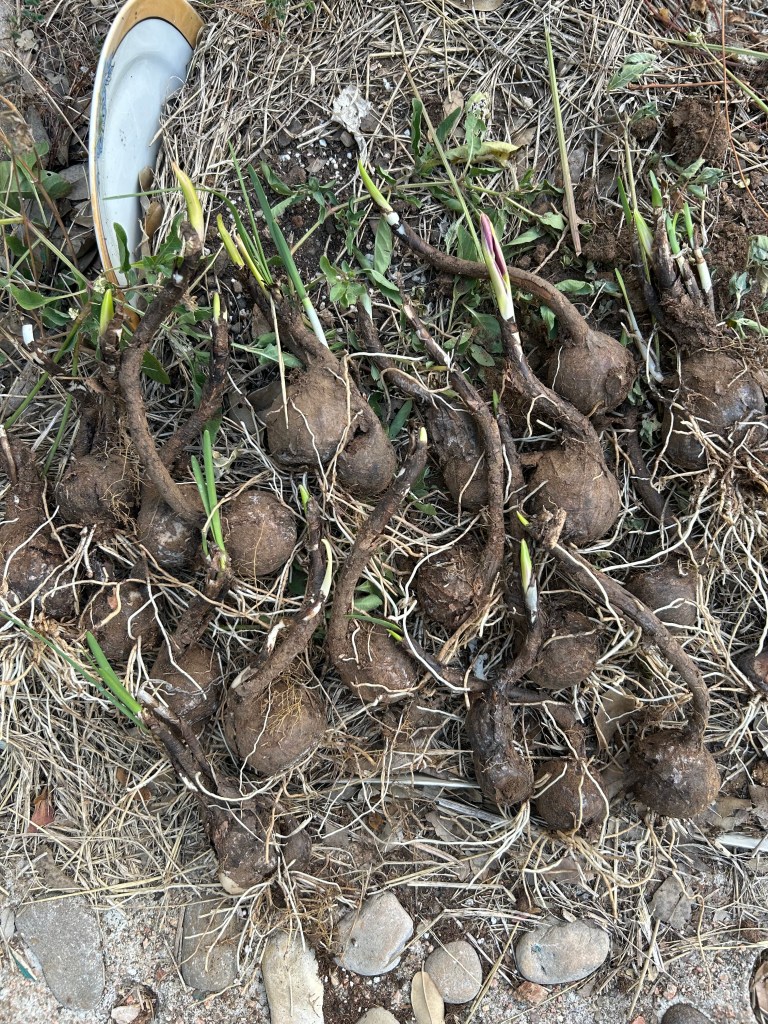
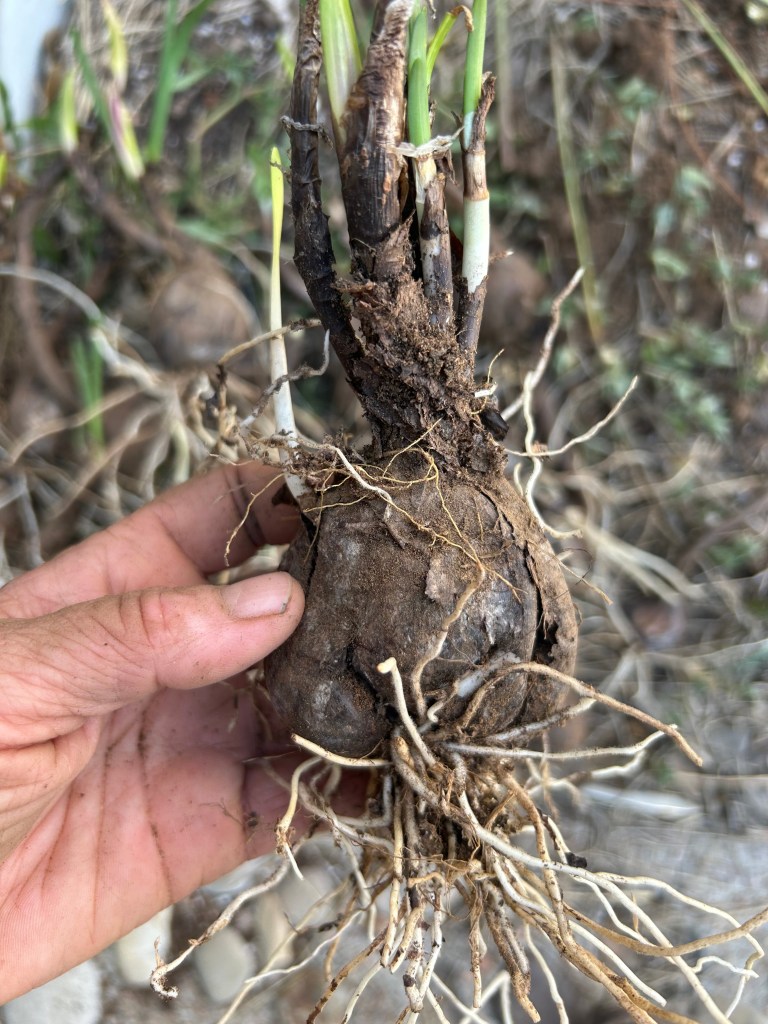
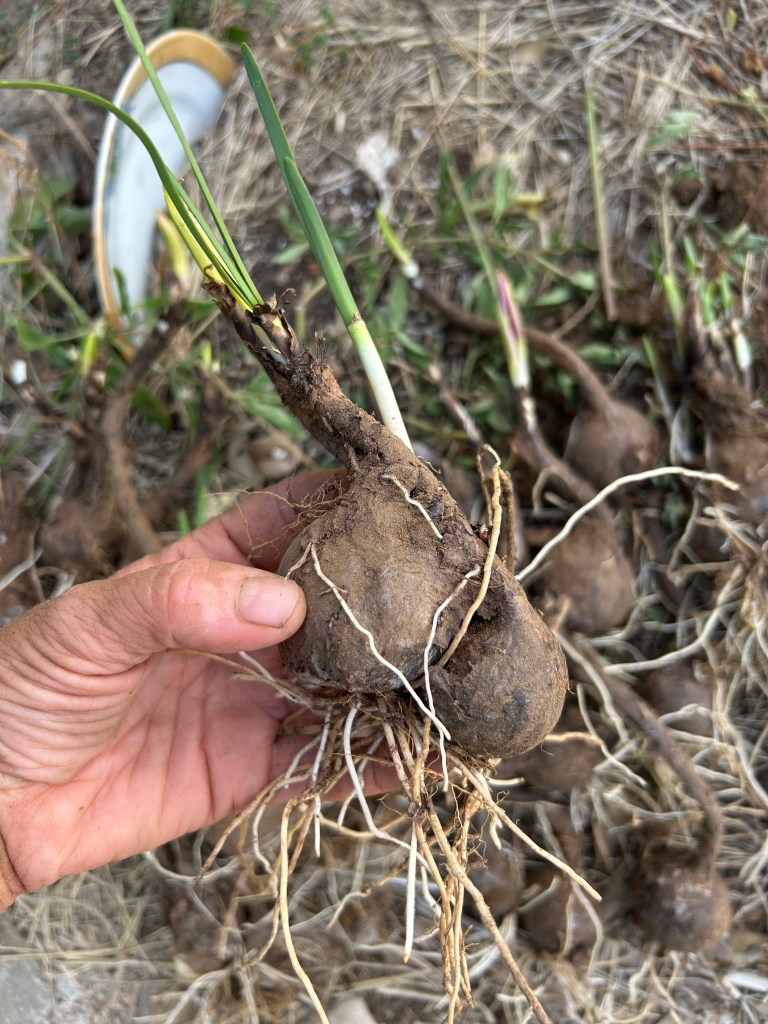
    As I dug the Coral Vine, I stumbled upon a little clump of bulbs near the Coral Vine. When bulbs are damaged during a house teardown, I stick them in any open spot in the garden, and simply hope for the best. If an Oxblood Lily is damaged, the bulb will actually revive itself through creating baby bulbs in it’s place. The parent bulb becomes “a giver” to preserve the bulb’s heritage. In this case, 15 tiny little baby Oxbloods. I love it. I love the fact that even plants take care of their own. I love the fact that old heritage bulbs will outlive you and I, and the beauty of the established flower garden keeps on giving. I love the fact that the preservation of these heirloom beauties is never in vain. When I’m long gone, these flower bulbs will remain, blooming happily for generations to come.
    Deep down, I think that most gardeners are givers, just like the Oxblood Lily, pouring themselves into the next generation of flower lovers. What a great legacy you are leaving. Keep on giving and sowing seeds of beauty.
    Happy Gardening, my friends.

    Love, Keenan at Heirloombulbgirl

  • The First Daffodil of Spring

    New life.
    New beginnings.

    I love Spring.

    Last year, Spring was engulfed by hard, late freezes that froze everything back, plunging the gardens into triple digit temperatures. The plants and bulbs had little time to recover from the stress of the freeze, and immediately were taxed by the extreme early heat of summer. The heat was enough to do the gardens in, but then came the drought. I think I complained daily…..just ask my husband.
    Every Single Day… “Why do we have to live in a desert where nothing grows?!” (Human nature is to play a blame game the minute life gets hard, and boy did I play it! Why is it so easy to forget about the wonderfully beautiful moments in life when we are in a drought?)

    But, as always, the rain did finally come, and the Oxblood Lilies bloomed. The promise of the cooler temperatures of Fall makes every gardener ecstatic….kind of like way we all feel when Spring finally arrives.

    I don’t know about you, but every day I’m out on my hands and knees looking for new life. Yesterday I spotted blooms of Golden Crocus, Grape Hyacinth, Oxalis and the first purple bloom of Spiderwort. Foliage of countless bulbs are hinting that this Spring will be spectacular. Three years is a long time to wait for anything, let alone Spring blooms!

    A wonderful part of this year’s Spring is the undergrowth of weeds. I know that sounds bizarre, and it probably is, but stay with me. Non-seeding weeds are actually a benefit to your soil. Pull them up and simply create piles of rotting goodness where the weeds used to be. The nutrient-rich piles will deter future weeds from taking over, while the rotting process will encourage microorganisms to find a nice habitat to live in. Worms in the soil will enjoy the incredible benefits of the entire process, while your soil is kept insulated and protected from the elements. Last year, there was no undergrowth due to the drought. My gardens started off the drought with bare soil. I was scraping together any organic material I could find to pile on the earth….Live Oak branches from neighbors’ brush piles, hay, newspaper and cardboard and leaves from empty lots. I even went as far as taking my little lawn mower to an open field with Live Oaks, and mowing to collect the fallen leaf debris. Like I’ve said many times, the soil at my studio is AWFUL….but this Spring, I have hope in all new beginnings. I have found earthworms for the first time in some places, and the mere fact that I have an undergrowth of healthy, non-thorny stickers is a huge step into the land of a healthy garden.
    They say it takes 13 years to establish a garden. In some parts of my garden, I am on year two. But then, combine that with the lack of good soil and mathematically, I am x=13-2ps+kw(5th). That is, 13 years-2 years, subtract the years of poor soil, but adding Keenan’s work to the 5th power. In other words, I have a lot to do.

    Spring.
    New Beginnings. New blooms. Every single new beautiful day is worthy of rejoicing.
    Happy Gardening, my garden friends!

    Love, Keenan at Heirloombulbgirl