Tag: Gardening blog

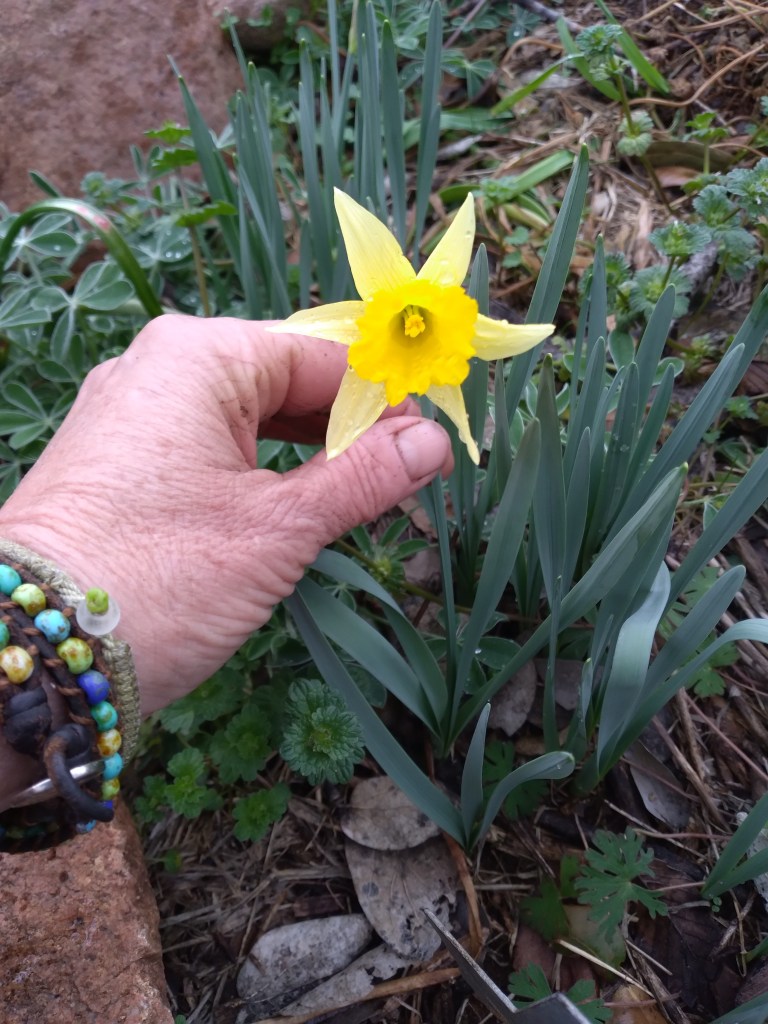
  • The First Daffodil of Spring

    New life.
    New beginnings.

    I love Spring.

    Last year, Spring was engulfed by hard, late freezes that froze everything back, plunging the gardens into triple digit temperatures. The plants and bulbs had little time to recover from the stress of the freeze, and immediately were taxed by the extreme early heat of summer. The heat was enough to do the gardens in, but then came the drought. I think I complained daily…..just ask my husband.
    Every Single Day… “Why do we have to live in a desert where nothing grows?!” (Human nature is to play a blame game the minute life gets hard, and boy did I play it! Why is it so easy to forget about the wonderfully beautiful moments in life when we are in a drought?)

    But, as always, the rain did finally come, and the Oxblood Lilies bloomed. The promise of the cooler temperatures of Fall makes every gardener ecstatic….kind of like way we all feel when Spring finally arrives.

    I don’t know about you, but every day I’m out on my hands and knees looking for new life. Yesterday I spotted blooms of Golden Crocus, Grape Hyacinth, Oxalis and the first purple bloom of Spiderwort. Foliage of countless bulbs are hinting that this Spring will be spectacular. Three years is a long time to wait for anything, let alone Spring blooms!

    A wonderful part of this year’s Spring is the undergrowth of weeds. I know that sounds bizarre, and it probably is, but stay with me. Non-seeding weeds are actually a benefit to your soil. Pull them up and simply create piles of rotting goodness where the weeds used to be. The nutrient-rich piles will deter future weeds from taking over, while the rotting process will encourage microorganisms to find a nice habitat to live in. Worms in the soil will enjoy the incredible benefits of the entire process, while your soil is kept insulated and protected from the elements. Last year, there was no undergrowth due to the drought. My gardens started off the drought with bare soil. I was scraping together any organic material I could find to pile on the earth….Live Oak branches from neighbors’ brush piles, hay, newspaper and cardboard and leaves from empty lots. I even went as far as taking my little lawn mower to an open field with Live Oaks, and mowing to collect the fallen leaf debris. Like I’ve said many times, the soil at my studio is AWFUL….but this Spring, I have hope in all new beginnings. I have found earthworms for the first time in some places, and the mere fact that I have an undergrowth of healthy, non-thorny stickers is a huge step into the land of a healthy garden.
    They say it takes 13 years to establish a garden. In some parts of my garden, I am on year two. But then, combine that with the lack of good soil and mathematically, I am x=13-2ps+kw(5th). That is, 13 years-2 years, subtract the years of poor soil, but adding Keenan’s work to the 5th power. In other words, I have a lot to do.

    Spring.
    New Beginnings. New blooms. Every single new beautiful day is worthy of rejoicing.
    Happy Gardening, my garden friends!

    Love, Keenan at Heirloombulbgirl
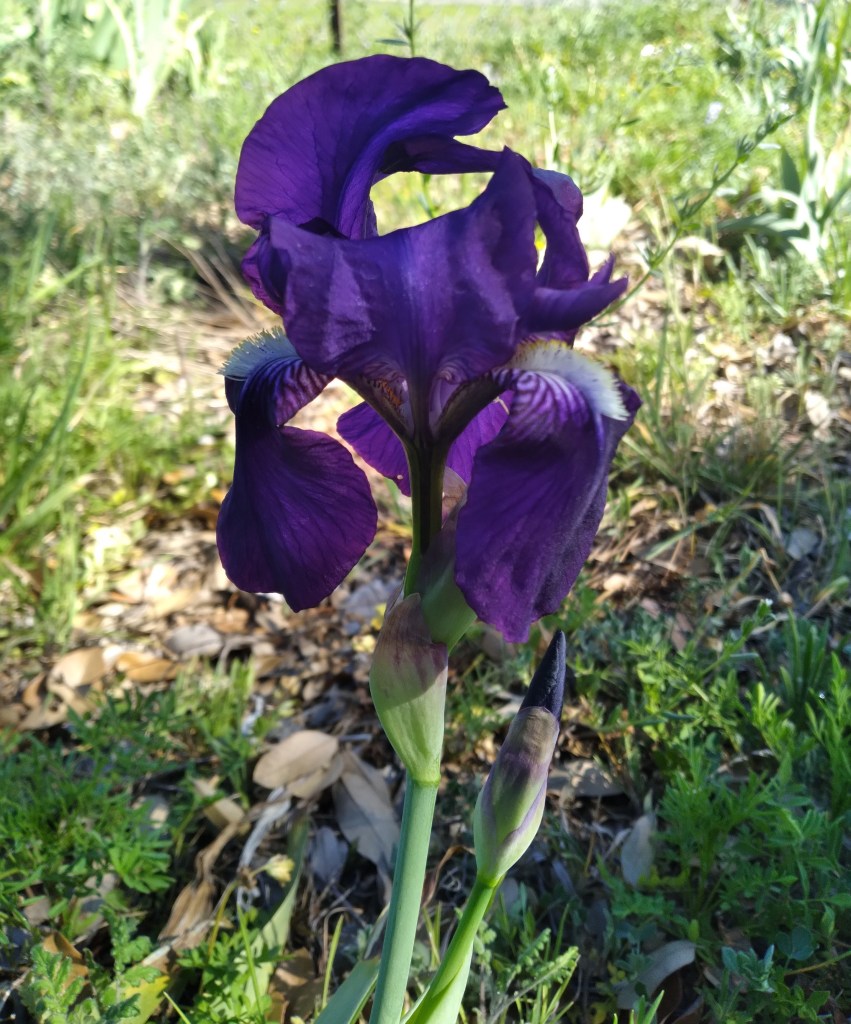
  • An Oxblood Lily from Miss Margaret’s Garden

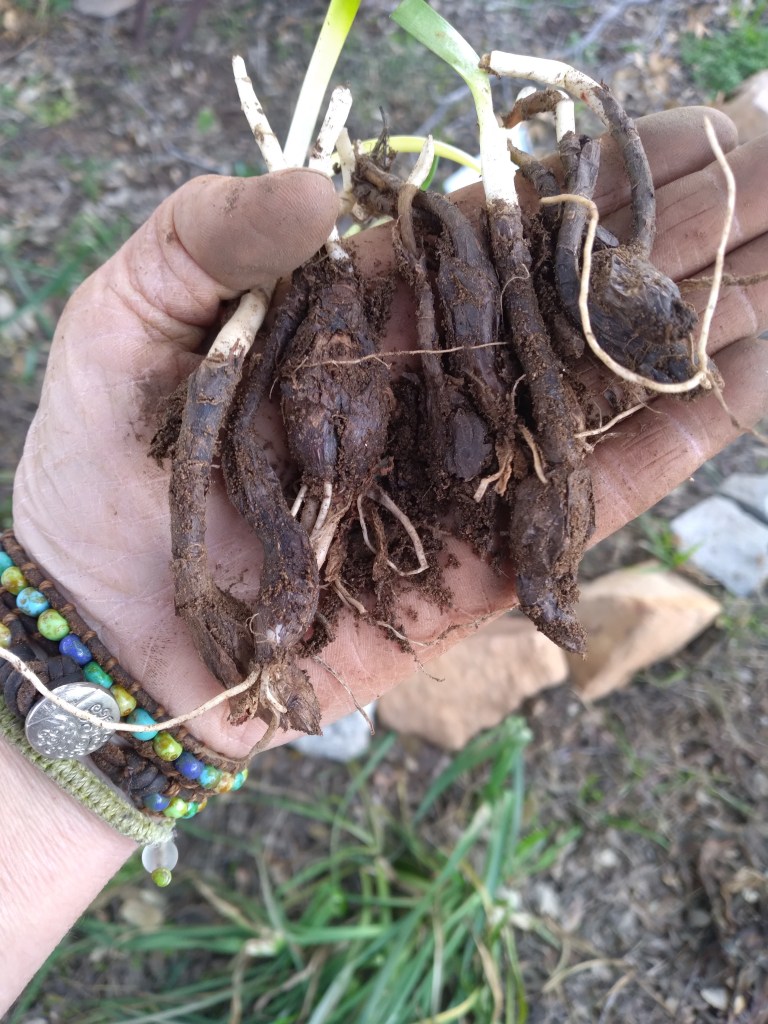
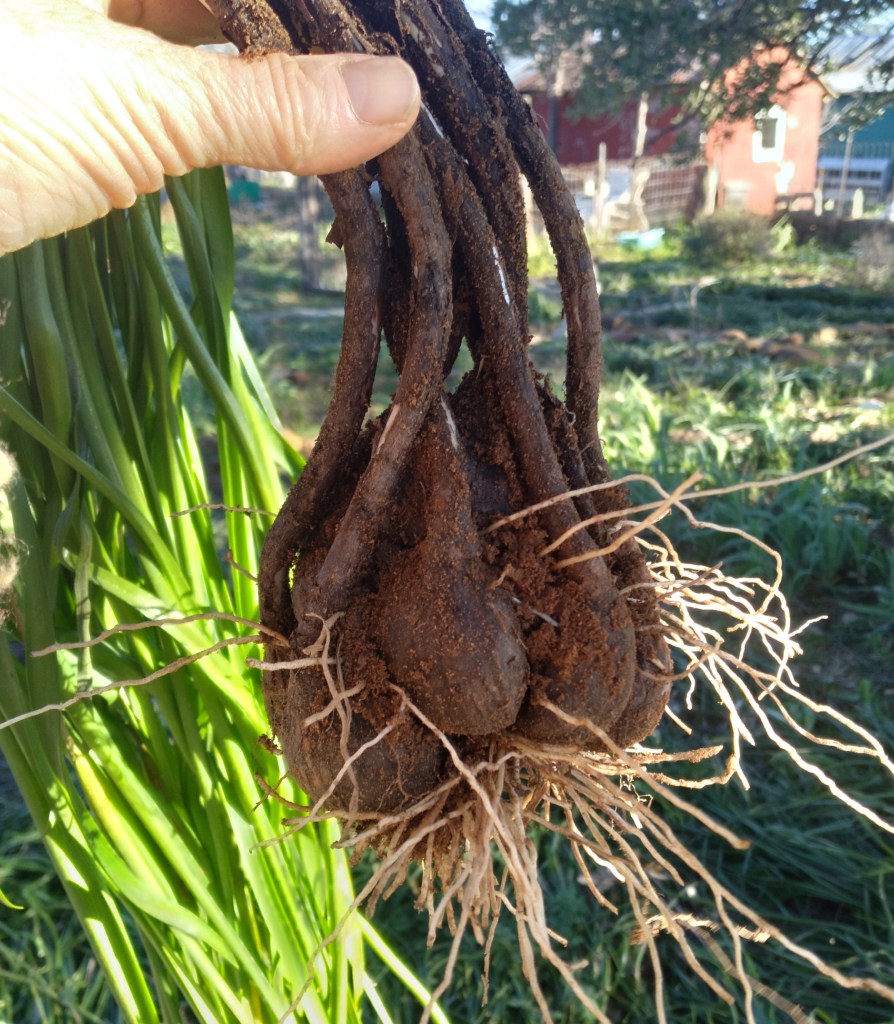
    I spent the last few days moving Oxblood Lilies. Typically when I salvage bulbs from a tear-down, I stick them anywhere I can find an open spot in the garden. Later, I might go back to “decorate” the garden landscape with the bulbs in their “forever homes” (or at least, their home until I get bored). Each clump of Oxbloods is unique due to the age of the bulb or the growing conditions. One particular clump of Oxbloods caught my eye. The original parent bulb was in the middle, warmly surrounded by a beautiful family of healthy bulbs….nine offshoot bulbs, to be exact. Some clumps look like the bulbs are being suffocated….but not this clump. It looked perfectly happy to share its life with the offshoots, and all 10 bulbs were happy and healthy.

    The sheer vigor and fortitude of the Heiloom Oxblood Lily is truly untouchable by other lily bulbs. Scott Ogden once said that the Oxblood is the hardiest of all Southern Bulbs, and I absolutely agree with him. I’ve seen Oxbloods grow through cement rubble of house tear-downs, compacted earth from bulldozer tracks, drought-stricken land, and the list goes on and on. Oxblood Lilies are survivors. Let’s face it….we all need survivors in our life. Over the years, I’ve learned a lot from the Oxblood Lily. Through seasons of drought, gardeners throughout the South are reminded of the redemptive beauty found after the first rain of Fall.

    Oxblood Lilies originally traveled to the United States by way of their German immigrants. These lilies can still be found growing alongside old homesteads throughout the South.
    It is simply incredible to see a flower bulb survive throughout the 1900’s. Old gardens become a direct link to the past…to the days of pass-along plants and quiet cups of tea shared among garden friends.

    This lovely Oxblood was one of the bulbs rescued from Miss Margaret’s former home in Rockdale, Texas. Years ago, I wrote an article about the house in Heirloom Gardener Magazine entitled Saving the Gardens for Miss Margaret. If I knew how to link the article, I would….but Sorry, folks. This is about as tech-savvy as I get. Needless to say, Miss Margaret’s lovely gardens are now a parking lot for the police station. The beautiful historic three story house was torn down to make way for the police station. The original stained-glass filled house was built in the 1800’s. After Miss Margaret passed, the house deteriorated beyond repair. Before the tear down, I dug countless times. I was able to preserve thousands of her treasured Heirloom Bulbs. It makes me almost physically ill to watch century old flowers like this end their beauty, trapped under cement lots. Unfortunately, that happens frequently through the modern progress of rural development. I’ve been determined to save as many Heirloom Bulbs from old homestead tear-downs as I can.

    Each Heirloom Oxblood gives redemption to the garden. If you would like to have an Oxblood Lily from Miss Margaret’s garden, please let me know. I’m happy to share with you. Or you can order flower bulbs from Heirloombulbgirl on Etsy. All proceeds go directly back into the gardens. 
    Happy Gardening, my friends!
    Love, Keenan at Heirloombulbgirl
  • To Pull or Not To Pull….That is the Question

    I’ve gone back and forth for years, trying every new and hip way to deal with spent plants and weeds. Do I pull? Do I trim? Do I cut? Do I yank? Do I compost? Do I throw it down?
    Do I pull or not pull…..That is the question.

    All these nonsensical time-sucking thoughts about weeds have brought me back, full circle, to the heart of the matter….Soil. Different garden conditions require different gardening techniques. There is not a “one size fits all” concept in gardening. English Cottage Gardens grow and behave differently than the Desert Native Gardens of the Southwest. I didn’t want to accept this truth for a long time. I grew up in Montana with lush, rich soil and Peonies.Now I’m in the Texas Hill Country….gardening in 112 degree granite gravel, sand and rock. The idea that my flower bulbs were forced to live in nutrient-depleted rocky soil was a horrible reality that I didn’t want to accept. Even the previous owner of the studio property told me truth. “Gardens? Here?” (He laughed) “You won’t be able to grow anything here. The soil is TERRIBLE!”
    I felt that the soil comment was a direct challenge to my gardening pride. Now I *had* to grow things at the studio. After the 2018 flood, all the flower bulbs had to relocate to the studio grounds and I was *forced* to put my money where my mouth was….plant gardens in terrible soil.

    So how does soil relate to whether or not to pull, cut, compost or ignore the weeds in your garden? Because my friends, soil is life. Anything that grows in the ground becomes potential nutrients for your flowers. Some soils are rich enough that it’s ok to pull up a weed or spent plant, and toss it in the compost. But other soils need as much help as they can get. Some soils, like mine, are desperate for the rotting process, allowing the earthworms and other microorganisms to do their job…bring life back to the soil.
    Over the past few years, I’ve shifted my focus from forcing gardens to grow, to growing beautiful soil. The change in my garden speaks for itself…..although I still have rocky soil, I now have earthworms. A beautiful first step into a land flowing with milk and honey (and flower bulbs). Here are a few natural techniques that have helped improve my soil. 

    First, I have started to cut the spent annuals and wildflowers down to the ground and leave the root ball to rot under the earth. I read that the number one problem with modern American gardens (besides the obsession with Miracle Gro) is the lack of decay that is allowed in the garden. Decay is a natural process, and as far as I’m concerned, nature does it way better than I could ever dream of. The cool part about letting the root-ball rot is that it prohibits other weeds to take over the area. The roots can’t compete with what is already there, even if it’s rotting under ground. I started this technique during the hard summer droughts, and so far, I really like the result.

    Second, seed-free weeds are pulled and simply thrown down into the garden using a piling method. Piling weeds and other debris creates mulch for the garden and a natural composting habitat around your plants. The garden debris also inhibits other weeds from popping up in that location. Disclaimer… I don’t not pile during the summer. The clippings dry out too fast, and the overall process creates too much heat, which is not good for your soil or plants. The idea of piling is to protect the soil from the elements, not create an oven environment, hot enough to fry an egg.

    Third, I cut the seeds and either collect, or throw them in the trash. There is misinformation out there that the seeds won’t germinate in compost….False. I’m not a composting expert, but when I get lazy and throw seeds into the compost, they ALWAYS germinate. Now,I simply walk around with a bucket and a pair of scissors.
    A lot of these techniques can be found in the gardening classic Lasagna Gardening by Patricia Lanza. This book changed my life. Lately, I’ve been reading Grow your Soil by Diane Miessler. I love her philosophy about nurturing the soil. My flower bulbs seem to really appreciate the benefits.

    To cut or not to cut…..That is the question. I hope you find your own techniques that help your gardens flourish. Remember, one size doesn’t fit all. There’s no right and wrong if your soil and plants are reaping the benefits of your labor.
    Happy Gardening, my friends! Keenan at Heirloombulbgirl


  • To Nurture a Garden


    There are two types of gardeners in this world……organized, neat and tidy, everything-in-symmetry kind of gardeners, and then there’s everyone else. If you know me, you already know which camp of gardeners I fall into. Let me just pull back the curtain of Oz a little bit more. I have no fewer than 25 unfinished gardening projects going on at any given time. The word “frazzled” is my middle name in Greek, and it fits like a ripped up, dirt-stained glove. I am the complete opposite of any type of “garden influencer” you might read about. In fact, there’s probably a psychological study that could be done on my gardening style, but that’s beside the point. Let’s just say that I am extremely fortunate to have these beautiful Heirloom Flower Bulbs that make my gardens worthy enough to talk about. If it weren’t for the flowers, I’m afraid I’d be forced to be the world’s worst golfer. Thank goodness for the gardens!!

    In honor of the New Year, I decided to toast to the fact that I most likely will not finish my gardening “to-do” list, or any of the unfinished projects that I enjoy muddling around with. But instead, my new gardening resolution is simply to nurture what I have already accomplished.


    Nurturing is a gardening concept that is rarely allowed in the mind of a busy gardener. There are so many garden chores to do that nurturing a single flower seems like a complete waste of time. Gardeners tend to focus on “important” tasks such as flipping the compost pile or spreading cardboard upon a weed-infested area. Garden tasks give us a sense of purpose, a feeling of success and a cool “badge of honor” among our gardening friends. Our society is driven by work, and that drive to work is carried over into the garden. To nurture something feels…well, less adequate. What does “naturing” even mean?

    Nurturing becomes the quiet, still moment of committing yourself to the growth of something beyond yourself. Ralph Waldo Emerson describes success as “Leaving the world a bit better, whether by a healthy child, a garden patch or a redeemed social condition.” True success is the ability to nurture life, and to be able to look at oneself and to see that you are connected with all of nature, including humankind.
    Nurturing a garden looks a bit different to each gardener, but the end goal is the same….to leave a little piece of the earth better than when we found it. Some gardeners focus on growing plants by nurturing seeds, while others focus on creating and nurturing a habitat for wildlife, such as Butterfly Sanctuaries. To nurture is to see beyond the hurried moment, and take the time to instill love and goodness into something with complete selflessness.

    Over the years, I have learned a lot about nurturing through rescuing flower bulbs from tear-downs. I have pulled bulbs to freedom out of rubble, and have enjoyed the redemptive process in watching each unique bulb grow strong enough to bloom. I have found chewed up remnants of bulbs, completely destroyed by their unfortunate events, redeem themselves to full beautiful glory. In fact, my favorite group of bulbs, my “survivor bulbs”, managed to grow out of the compacted ground of bulldozed flood debris. I lovingly dug out each remaining bulb from the hard earth, not for any other reason than the bulbs’ sheer will to live.

    This year, I decided to step off the hurried, frazzle-bus, and commit time each day to simply nurturing my flower bulbs. I am being intentional about where to plant flowers. Bulbs need to be visible and present while blooming, but non-invasive to the gardens when growing. That’s a lot to expect for any flower, but bulbs are worth it. Foliage can be a continued bother to many non bulb-loving folks. Lining garden paths, house foundations, driveways or creating specified areas within the garden will help bring an organized look within the carefree growing garden. Some bulbs, like Paperwhites, need a lot of water and sunlight while growing. Other bulbs, like the Oxblood Lily can flourish in any environment. Heirloom Bulbs are tough, but each variety of bulb has a different personality with different growing needs.

    Happy Gardening, my friends! May you find a beautiful balance in your garden between the moments of hard work, and the quiet, still moments to truly nurture what you love.

  • If You Give a Gardener a Flower

    If you give a Gardener a flower, she’s going to need a shovel to go with it.

    While looking for her favorite shovel, the Gardener walked right over the garden hose, and she remembered that she left the sprinkler on.

    After moving the sprinkler, the Gardener saw the beautiful Heirloom Lilac that she re-rooted last year. Seeing the Heirloom Lilac, the Gardener thought about moving the Lilacs to make room for her new flower.


    While digging up the Lilacs, the Gardener remembered the large rose bush that died in the drought. What a perfect time to move the dead rose bush and relocate the Lilacs!


    While digging up the rose bush, the Gardener got a thorn in her finger.
    While the Gardener tried to get the thorn out, she remembered the thorn she got after moving her lovely Martha Gonzales Antique Rose Bush.
    The Gardener decided to dig up the Martha Gonzales rose to plant something, although she wasn’t quite sure what.


    While digging up the Martha Gonzales Rose, the Gardener decided to move the entire bed of Ellen Bosenquat Crinum and Oxblood Lilies, which would naturally be the perfect spot for the beautiful Antique Rose Bush.


    While digging up the Heirloom Bulbs, the Gardener accidentally dug into the heavy oil cloth that had been used for the pond that didn’t work out.
    The Gardener stopped everything she was doing and started digging out the heavy oil cloth, in order to use the cloth to cover the compost to save moisture during the summer.


    While digging out the oil cloth, the Gardener got tired and put her shovel down…right next to the pretty little flower that she was given to plant.
    The Gardener reached down, picked up the flower and gave it a drink.


    If you give a Gardener a flower, she’s going to need a shovel to go with it. 
    So the Gardener picked up her shovel and walked through the garden, looking for the perfect spot to plant the flower. (True story….can you relate?!)

    Happy Gardening, my friends!
    Love, Keenan at Heirloombulbgirl
  • Take a Walk on the Wild Side

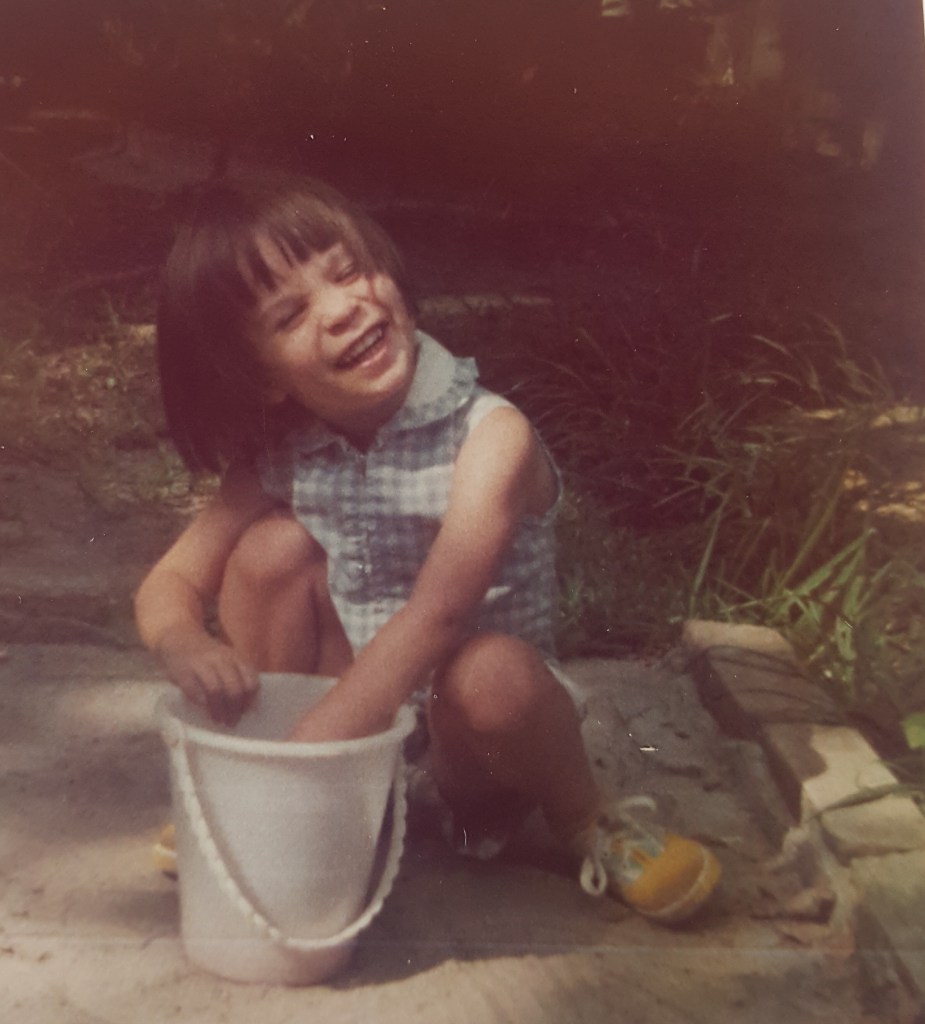
    Yes….that’s me.
    A small, little version of “Scout” from To Kill a Mockingbird.

    My parents recognized my early desire to be in the dirt, and never squelched my imagination. I was given my own little garden to tend in our backyard. I spent hours dreaming, planting, eating lilacs and wild mushrooms, or simply digging to China. My Dad once told me that the day I stopped gardening with him on Saturday mornings was the day he lost his little girl. Childhood is fleeting. Children do grow up and the time to walk among the wild things becomes more limited. Realism takes over, and imagination becomes squelched. As children become adults, many see less wonder in a butterfly or the random bloom of a field lily, and more necessity in the competitive rush to keep up. A walk among the wild things is like a reboot for the human condition, young and old.

    Studies show the importance of nature, and how it affects the overall well-being of a child. Mental health issues like the “nature deficit syndrome” are rising at alarming rates. Too much time plugged in can radically affect your mood. There are now schools that provide children with simple outdoor play, which used to be a childhood norm. One of my favorite books, “Last Child in the Woods” by Richard Louv, gives a startling look at the issues children face with too much screen time. Mr. Louv also gives simple, realistic ideas to provide children unrushed time in nature. In an ever-anxious, fast-paced society, finding time in the garden becomes more important than ever.

    Another great book is “Sunflower Houses” by Sharon Lovejoy. In fact, all of Ms. Lovejoy’s books are wonderful resources to help children fall in love with gardening. Her books are full of old-fashioned projects to do with children. There were many years I grew Poppies just so my girls could make Poppyhead Dolls. I honestly can’t remember a time when I didn’t have a garden, but I also can’t remember ever having that one moment of pintrist-perfection within the garden either. Gardens are messy and so are children. Our goals need to shift from a momentary gardening photo shoot to a lifetime of digging. Instill a life-long love of being among the wild things.

    Happy Gardening, my friends. Enjoy your precious, unplugged moments with your children. Dig a garden plot just for them. Set free the imagination to explore the incredible wonders of nature.
    Love, Keenan at Heirloombulbgirl
  • Spiderwort on the Move

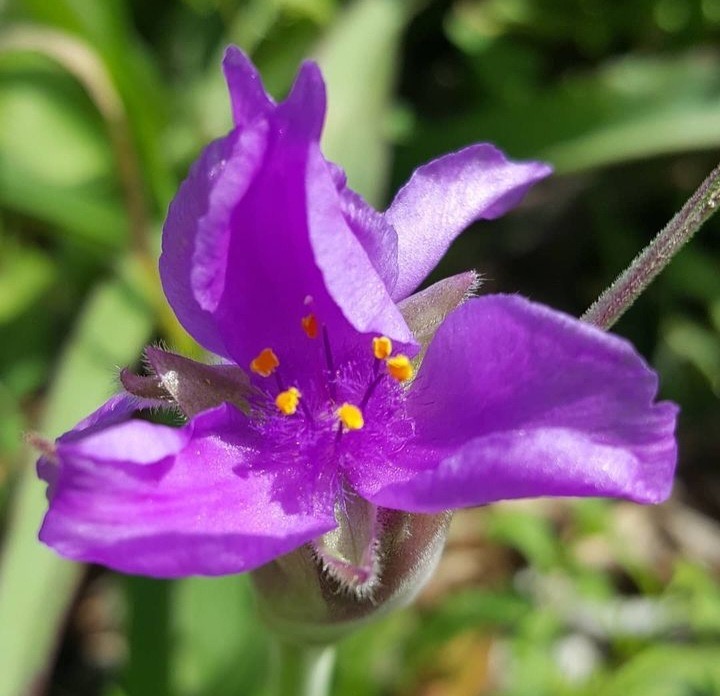
    Spiderwort. Perhaps, the ugliest name in all the garden. I love to hear people pronounce it for the first time….

    “Spider-what? Spider-WART??”

    For such an incredibly beautiful flower, the name truly leaves something to be desired.

    Spiderwort is a member of the Dayflower family. The flowers bloom in the morning and diminish in the afternoon. The plant can actually produce new flowers up to 8 weeks. I typically cut the stalks with spent flowers down, to encourage new flower growth. Spiderwort has fleshy roots that resemble that of a Day Lily. When the stalks are cut, a web-like sap is secreted…hence the name Spiderwort.

    Spiderwort are one of the earliest of flowers to bloom in the Spring, mimicking a bulb. In fact, it’s one of my favorite non-bulb bulbs. Spiderwort is not a bulb, but behaves just like a bulb so I give it an honorary mention in my garden.
    Spiderwort come in all sizes, with colors of pastel Easter Eggs. I’ve been collecting Spiderwort for years from various fields. One particular field where Spiderwort grew wild was behind our old house. I collected just about every color in the rainbow.

    Yesterday, I started relocating these lovely clumps to the barren landscapes of yuk. The greatest part of Spiderwort is that they grow anywhere and everywhere. I’ve seen them grow in asphalt and cracks of cement. Spiderwort will go dormant in the heat of the summer, to give way for flowering annuals like Zinnia or Cosmos. The foliage just started to appear a few weeks ago, and I’m moving a bunch around a young Mesquite Tree that my violin student gave me.

    Division of Spiderwort is unnecessary, unless you just more things to do in the garden. Simply pull the roots apart. Bingo….A new plant. But be advised that Spiderwort drops many seeds and you will have unwanted lovely flowers all through your garden. Simply dig and give away to friends. Every garden needs a plant with a name that children laugh at. I have some to share if you are interested.

    Happy Gardening, my friends.

    Love, Keenan at Heirloombulbgirl

  • Surveying the Garden

    Last night I went to the studio to “survey” the gardens. Surveying is a normal gardening activity in my world. My husband came up with the term many moons ago…

    ”Where’s Mom?”
    “She’s surveying her plants.”

    “Surveying the gardens” also became a good excuse for all the things I *should* be doing, but I’m not…

    Diner dishes? I think I need to go survey. Packing for a vacation tomorrow? I definitely need to go survey. Grocery shopping? Survey….

    You get the drift. Surveying became my out. My time to be in the calm of nature. My rest. To survey is the walk slowly, intentionally looking at each flower or treasured bulb, in order to see what the gardens’ needs are. When one surveys, it is not time to work. It is simply a time to *see*. Seeing beyond the average hurried walk-through, and deeply studying each and every little plant on your path. Sometimes I have hours to survey, and other times, just a few moments. I feel connected and grounded. Surveying is good for the soul.

    One of my favorite parts about surveying is the calm. My garden can be full of weeds that literally grew overnight, and I just quietly make a mental note to myself to pull them later. Human nature is to get in the middle of a mess and frantically start trying to fix whatever is wrong. “Surveying the gardens” is synonymous with listening to someone speak, without butting in with your own thought or opinion. I think that we have lost the ability to simply be quiet and listen, whether it is a restful survey in the garden, or listening to a dear friend express their thoughts.

    So, back to last night’s survey.

    I walked through the little garden gate and took a few steps and my left foot sank into a hole. Not just any hole, a 4 foot deep hole. The level of being totally freaked out with my imagination was at an all time high. Was the badger back? Was it a secret cavern that my entire studio would sink into? Is it an underground sink hole full of snakes, spiders and who knows what else? I put some large sticks to mark the hole so I wouldn’t fall in, and continued my survey.

    Peaceful Survey? Nope. Not a chance.
    Freaked out? You bet.

    I got home and told my husband all about the enormous hole that almost swallowed me alive. He just laughed.
    “It’s just an old septic tank”

    How disappointing. secretly I was hoping for a secret cave with buried treasure, like the lost San Saba gold, or more heirloom bulbs. Now, the work begins to fill the darn thing up. But why do today what I can do tomorrow? It’s a beautiful day to survey!

    Happy Gardening, my friends!
    Love, Keenan at Heirloombulbgirl