Tag: garden

  • Gopher Baskets for the Roses

    A fairly unknown fact is that I once had a rose garden that was featured in a 3 page article in the Dallas Morning News Garden Section. True story! I absolutely adore Antique Roses. My Dallas garden was home to over 43 beloved Antique Rose Bushes, intermingled with fabulous Heirloom Bulbs. It was my joy. My little neighborhood watched the garden transformation through all three of my pregnancies. My husband was often questioned by neighbors if I really should be jumping on a shovel at 9 months pregnant in the heat of August. Those were good rose-growing times! Fresh flower bouquets of big and fluffy cabbage-style rose blooms. Children learning about the different varieties of Antique Roses, and my husband losing all control over his front yard grass.

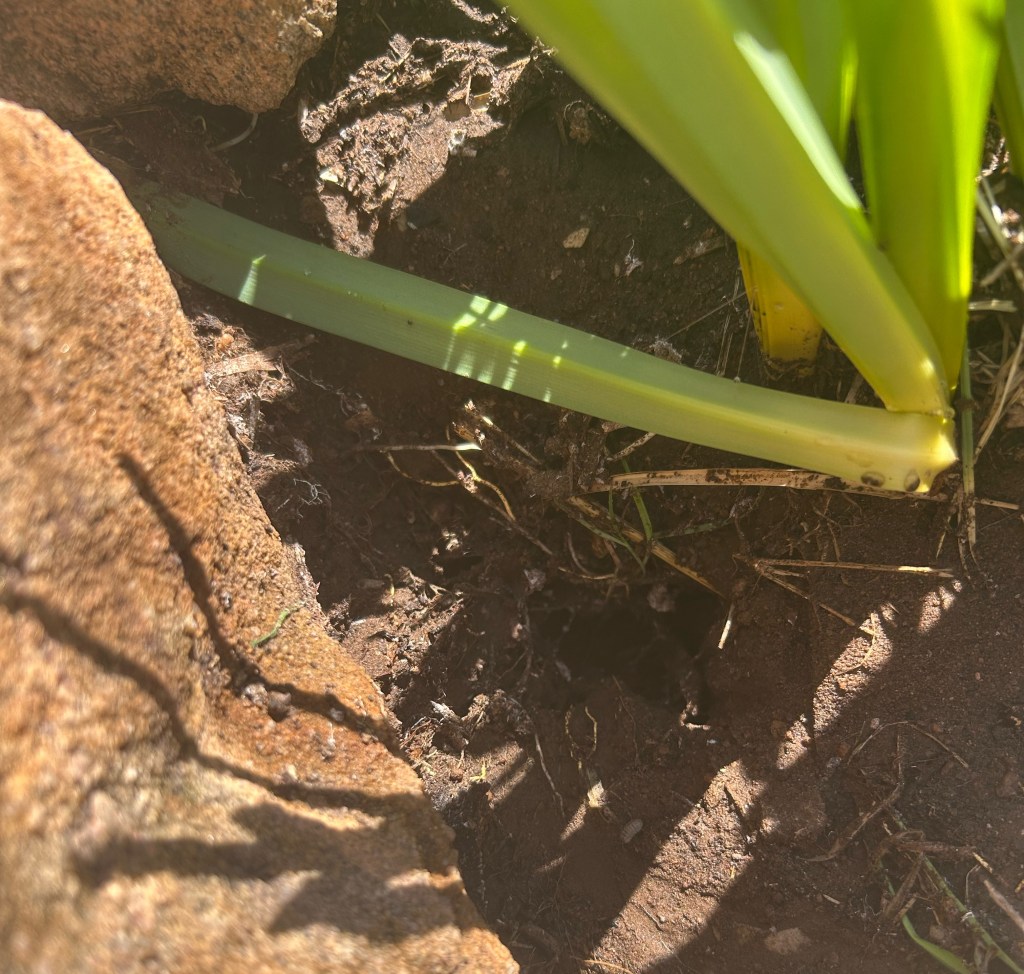
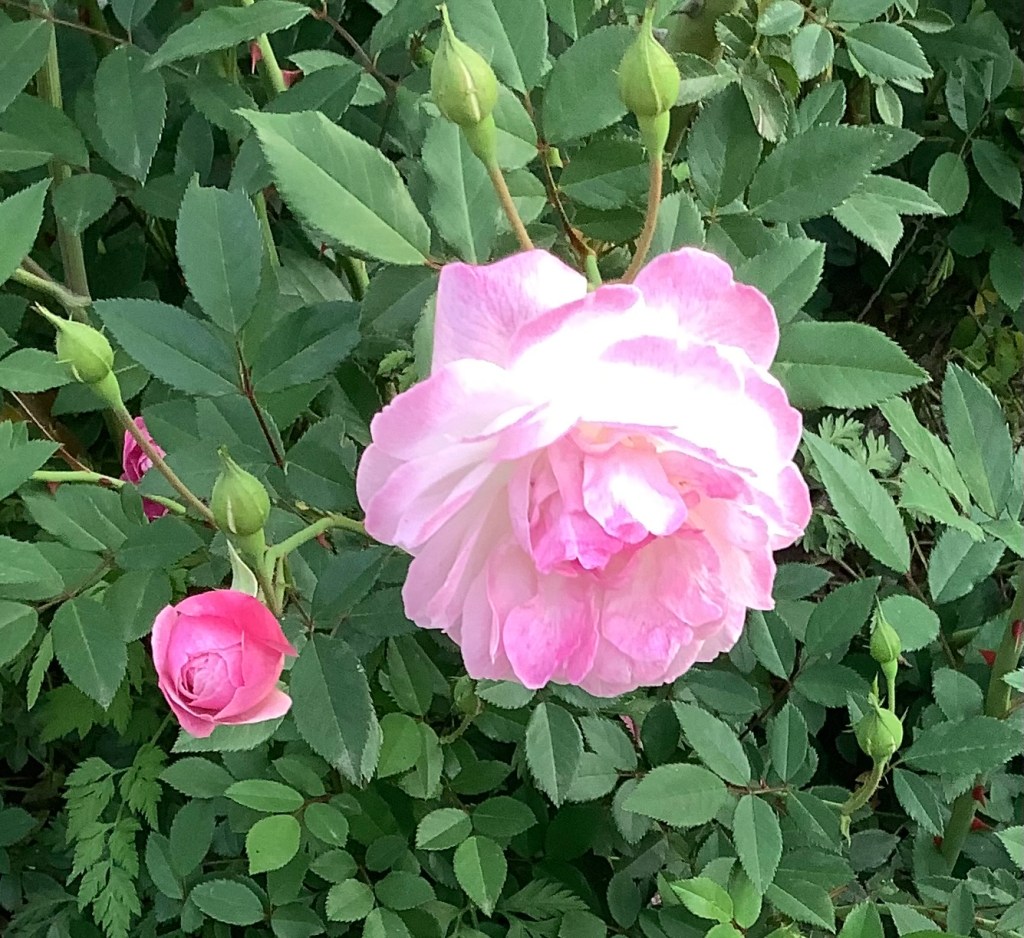
    I now live in the Texas Hill Country (enough said). Over the last decade, I have tried to grow over 40 bushes in the gopher-infested land. All I did was create a gopher buffet. It’s not *if* they will eat my roses, but when. The gophers have wiped out every single rose bush I have planted…except one. Not great odds are in my favor. I’ve tried everything, and I mean everything. I even have a useless barn cat.

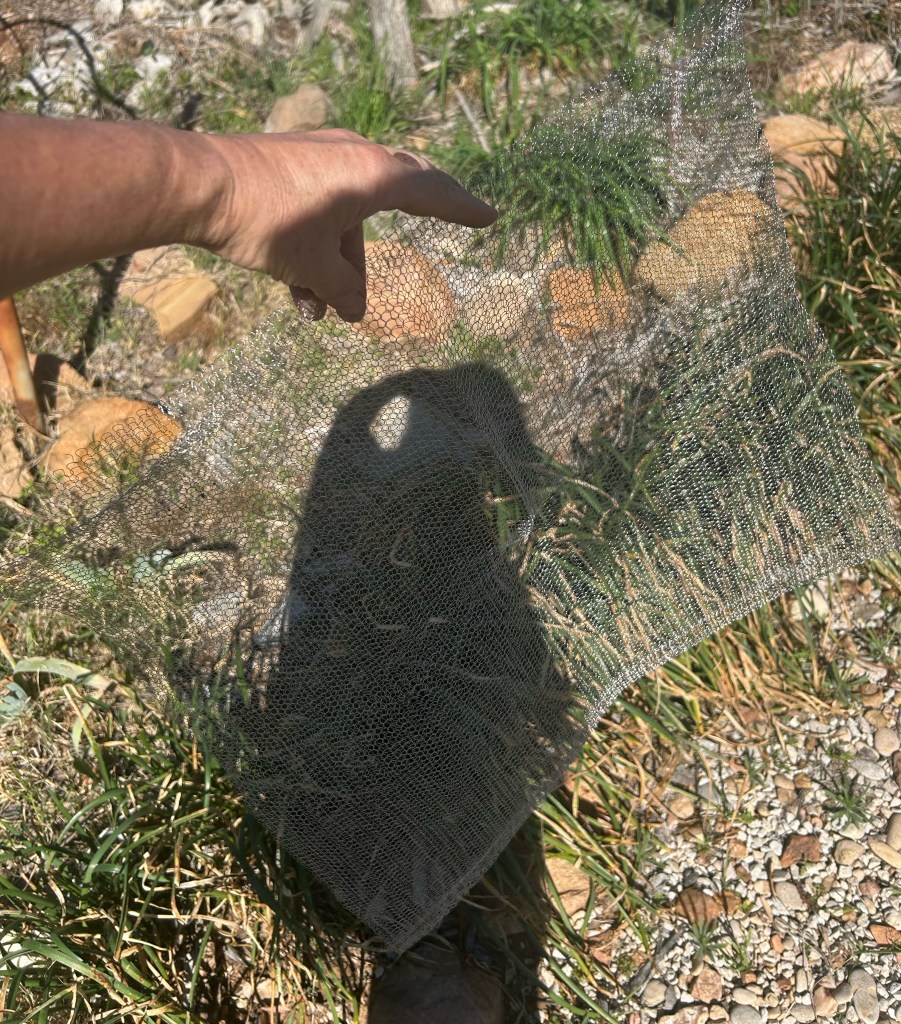
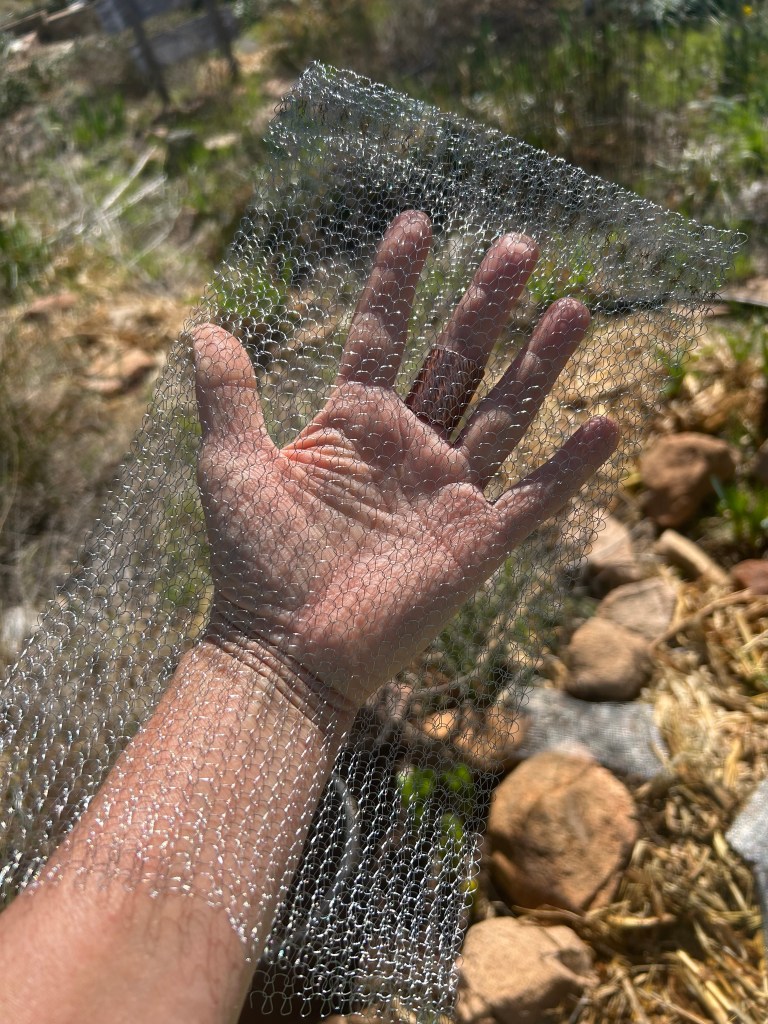
    This last week, I have stepped up my gopher-game. With a little click on Amazon, I ordered a nice supply of wire mesh gopher baskets. I had no idea gopher baskets were even a thing. Why didn’t someone tell me I didn’t have to make my own out of cut chicken wire?!! I’m quickly learning that Amazon is like Christmas every morning. The baskets arrived yesterday and I’m SO EXCITED! I have 5 bushes, saved in the nick of time, currently resting and regrowing roots in terracotta pots.
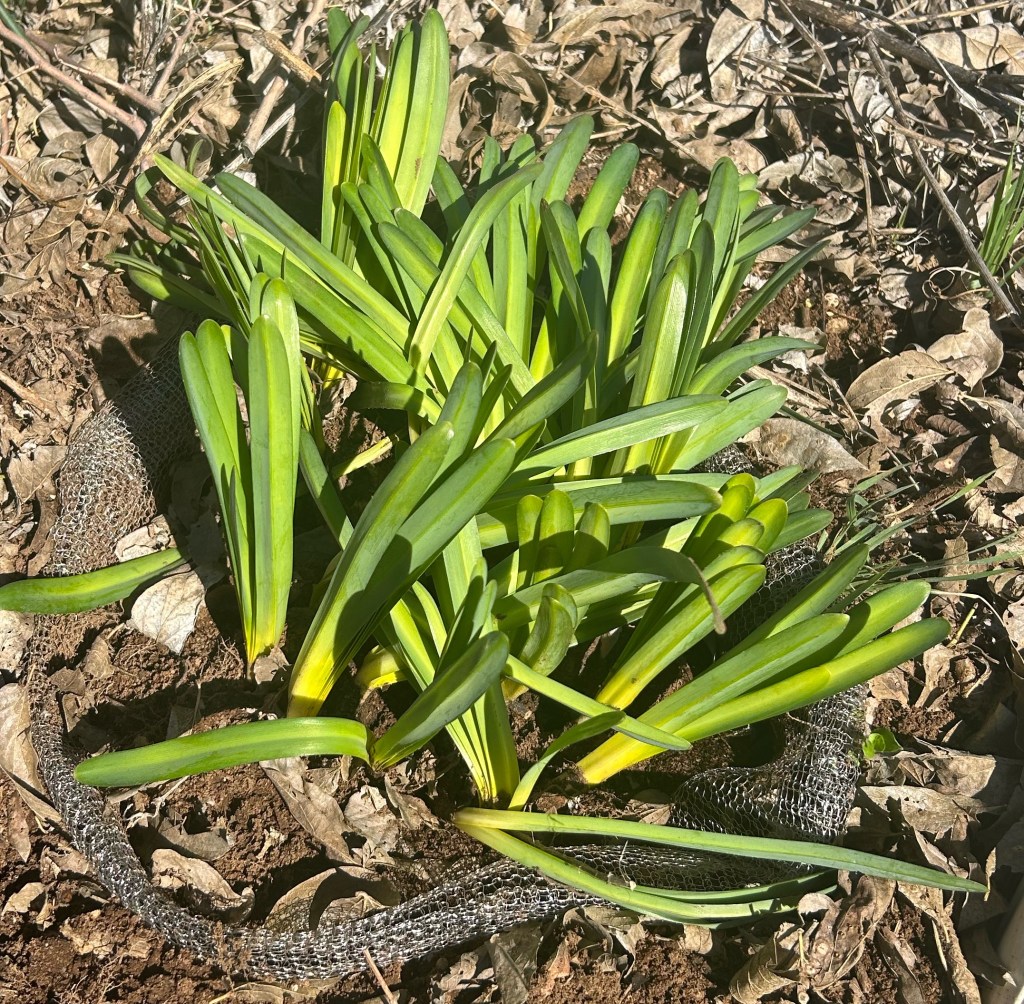
    Before Spring hits, I plan to basket up all the roses and the nice, young specimen plants I’ve recently planted. I will have to re-dig and re-plant.
    Typical.

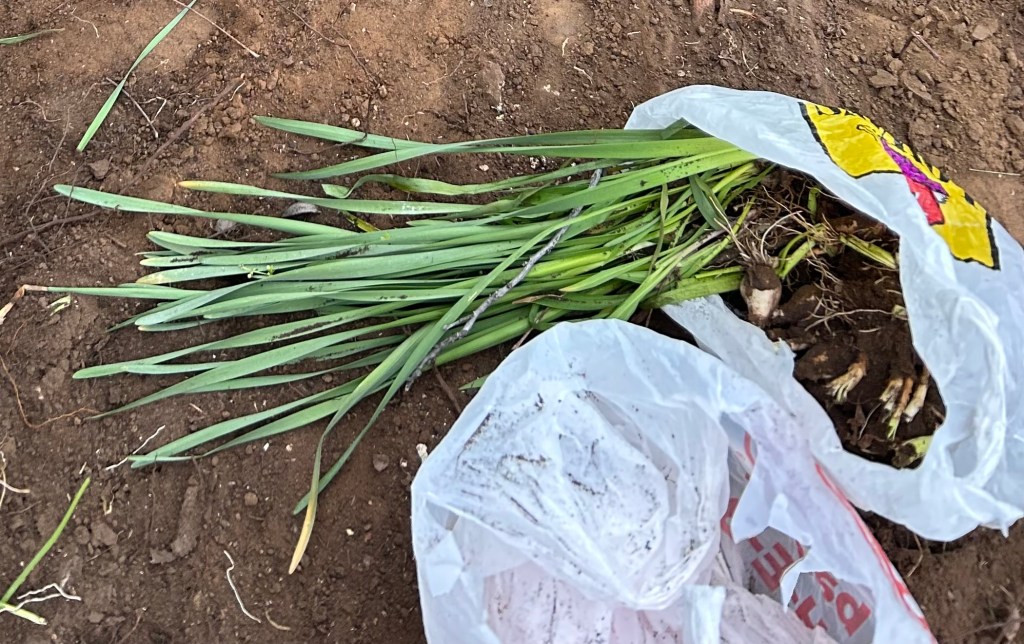
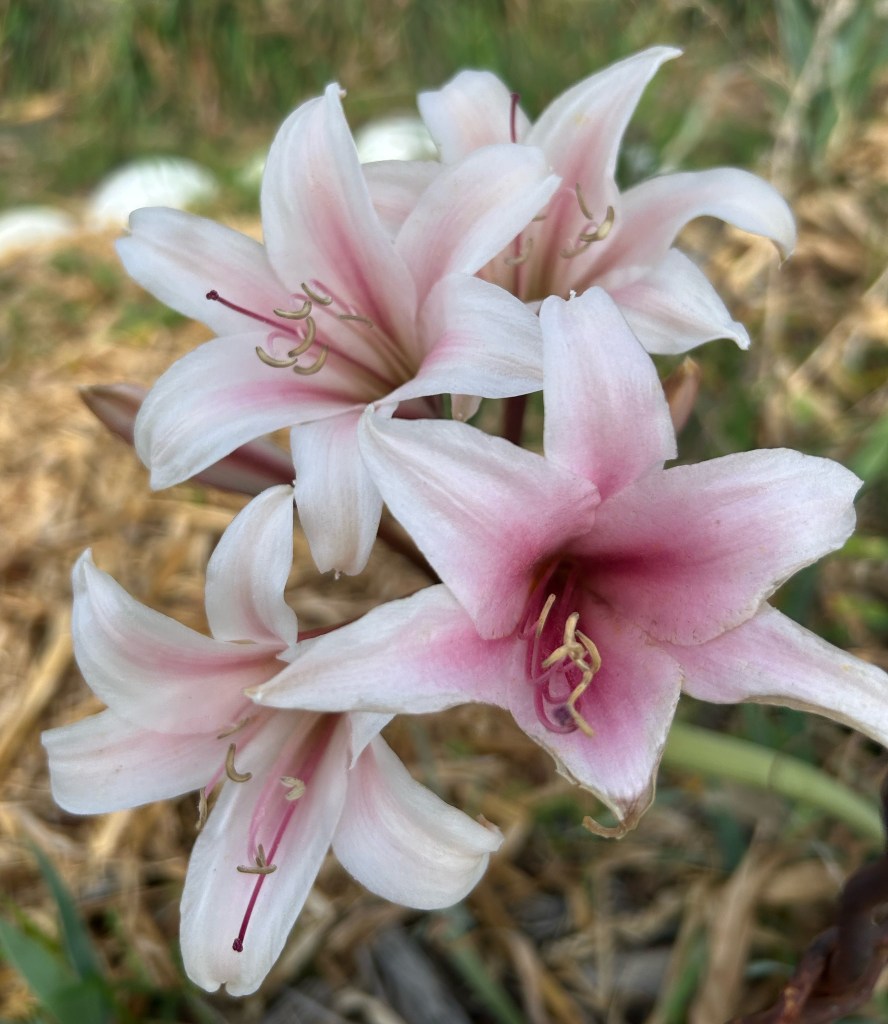
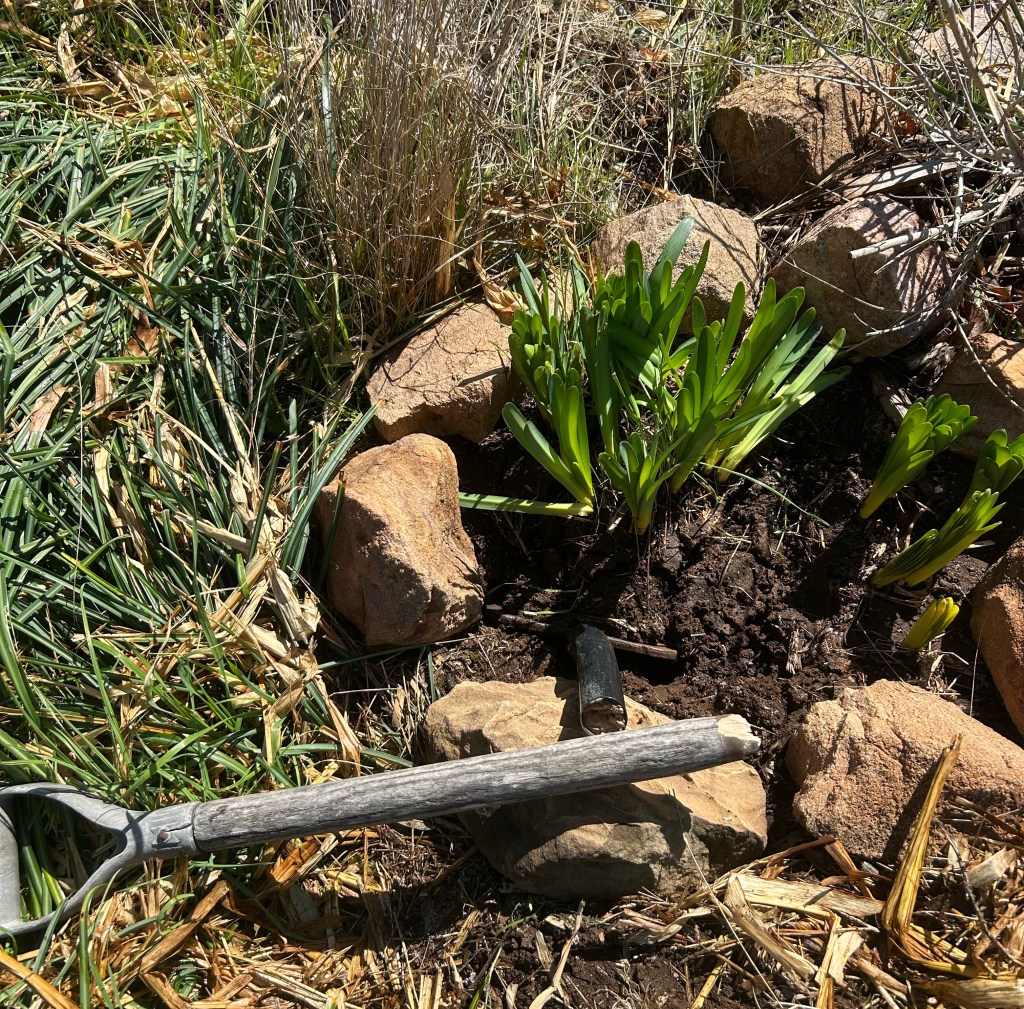
    I also plan to basket up many of my bulbs. Gophers enjoy eating the roots of Spider Lilies, but will leave the Oxbloods alone. (Oxbloods are supposed to be toxic).

    With the water well and the gopher baskets, it will be SO enjoyable to watch the gardens finally take root. I often tell folks that gardening is like learning music, it is a journey not a race. But it’s also nice to see a completed garden project. A job well done is quite satisfying.

    I wonder if I will ever experience the thrill of a finished project? Take a look at my gardens and you will quickly find out the answer! 🙂

    Happy Gardening, my friends!

  • The Backwards Garden

    “Mr. Privilege, It’s a Laramie… No, that’s not right.”

    ”You’re upside down, Sir.”

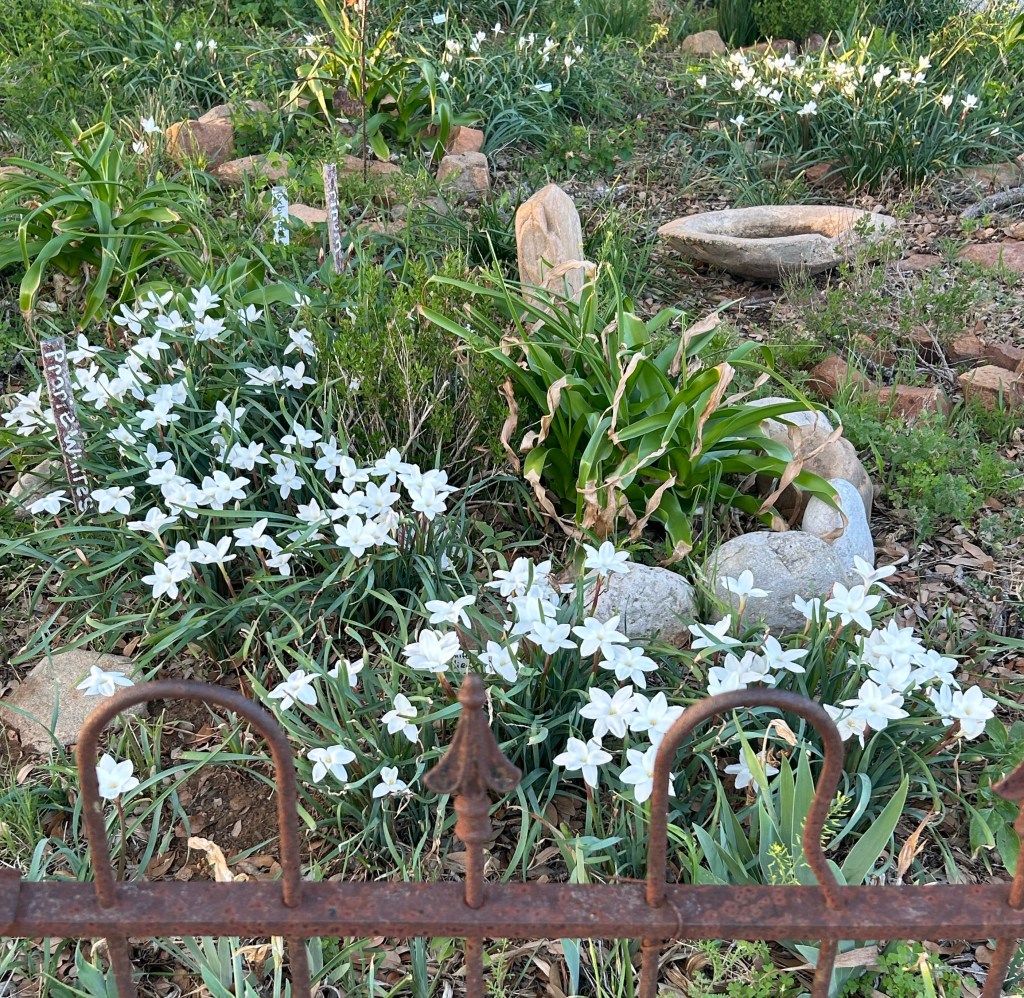
    The iconic scene in the 1970’s movie ‘What’s Up Doc’ is a perfect way to describe the gardens at the Agape Haus Music Studio. I am the first to admit that I did everything backwards. It is now the 8th Winter after the flood, and I am *still* finding, moving and discovering plants and bulbs that were hurriedly dumped at the music studio. Call it a continuous Easter Egg hunt for adult gardeners. I also like to move plants around like other people move their furniture, so no plant is safe from my shovel.

    I garden backwards…

    I’m upside down.

    I am the upside down gardener who creates nothing out of something, and I like it. I like the challenge of being completely unorganized and nonsensical. I like having a garden full of only foliage, questioning my own sanity at any given moment. Basically, I just really like my sweet little backwards garden. 🙂

    If you are up for the challenge, here are a few illogical steps to create your very own backwards garden. Trust me, it’s fun.

    1. Get some flower bulbs (the more the better) and plant them anywhere in your yard.
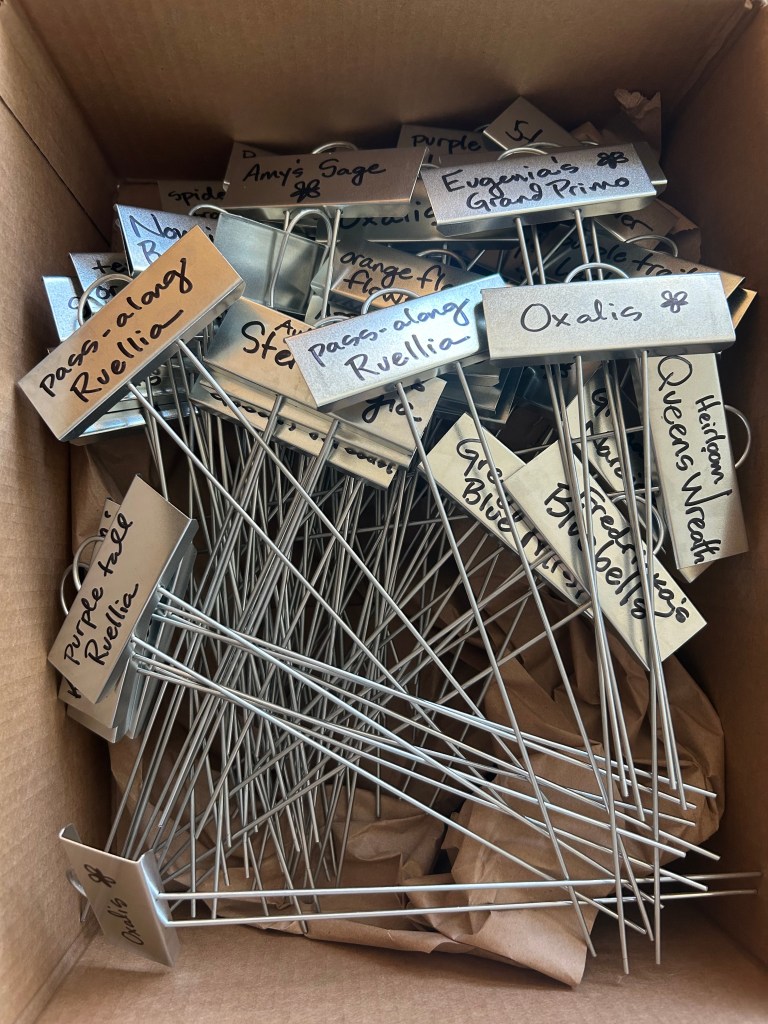
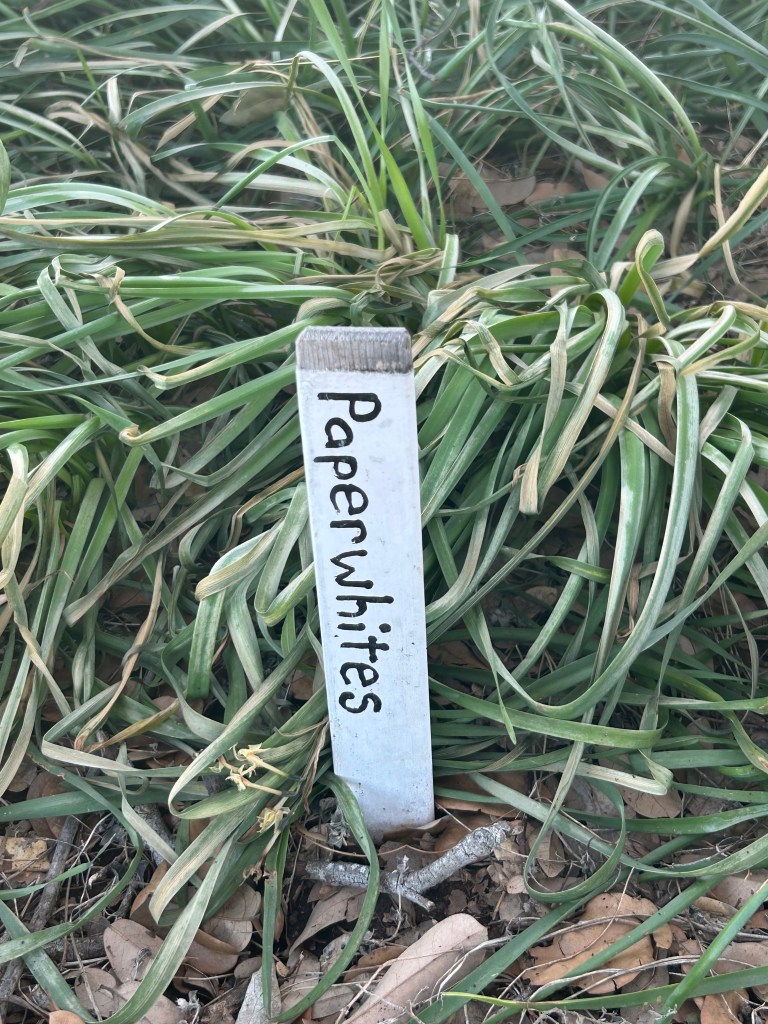
    2. Don’t mark your flower bulbs because that would be too logical. If you do happen to mark the random clumps of bulbs, make sure to use labels will either come off or get rubbed off. If your markers *do* last an entire season, invite the gophers to chew up your wooden markers (the ones that you hand painted). Spouses with weed-eaters work well too.
    3. Once you fill up your yard with randomly planted bulbs, the bulb foliage will go dormant. This is when the fun really begins! Make sure to forget where the bulb clumps have been planted. Now, you are able to dig in your yard and completely disturb your flower bulbs every single time you put your shovel into the earth.
    4. As you dig, debating about the specimen plants that should’ve been planted FIRST in your garden, you will accidentally hit some random bulbs that you forgot about. That’s normal when you’re upside down. Now you will have to wait an entire year until the bulbs come up. Thus, another year goes by without specimen plants. (You remind yourself that you should’ve marked those darn bulbs with appropriate markers, but you will do it next year with more useless markers).
    5. Always hand paint artistic gardening signs on surfaces that will peel. This is huge. Signs are best when you can’t read them.
    6. Most of your flower bulbs will be happy in their new home, but always second guess nature. Spend your time moving your bulbs here and there (randomly ofcourse), giving sun-loving bulbs plenty of shade and visa-versa.
    7. Enjoy every single moment spent in your much loved, backwards garden. 🙂

    Happy Gardening, my friends! I’m off to go dig!

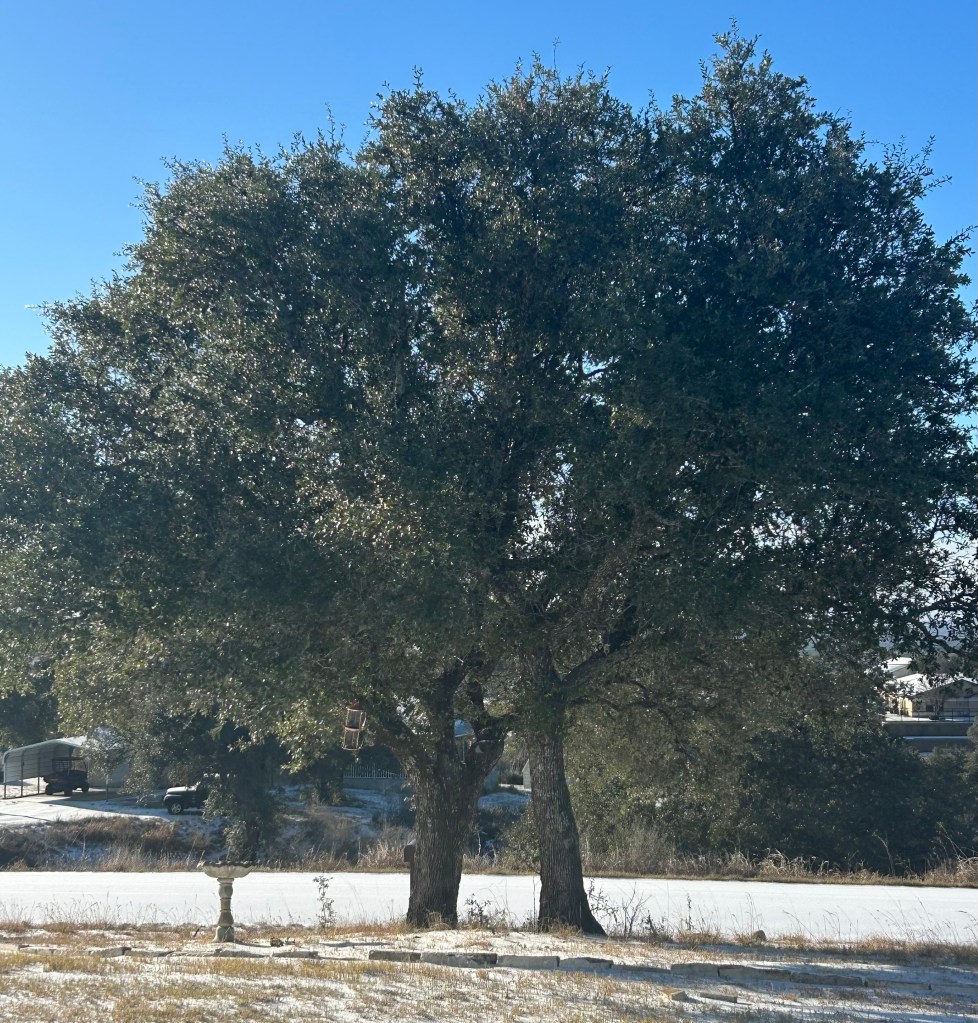
  • A Southern-Style Blanket of Ice (even ice storms are bigger in Texas)

    When I looked out the window, I would’ve thought I was back in Montana. Everything was a blanket of white. The neighborhood kids had their sleds and parents stood by in their warm fluffy coats. I even noticed my husband within the gang of sledders. I stayed inside, happily sipping on hot cocoa, nestled under a cozy blanket with my pup.
    Texas winters have a few deep freezes, which are commonly described as “chill-to-the-bone” Arctic blasts. I don’t quite understand how frigid these storms really do feel. I could snow ski in shorts in Montana, and yet unable to walk outside for fear of frost bite in a Texas freeze. But alas, here we are….another Texas freeze in the books. Most of Texas was covered in ice, and we were all stuck inside for days. Schools were cancelled, shops were closed, fires in fireplaces roared and it felt like Christmas all over again.

    For years, I debated about whether or not to cover my plants and bulbs. I grow Heirloom Bulbs after all, and they are tough old gals! Quite honestly, it’s a lot of work to cover everything, and I’m lazy. Over the last few years, I’ve changed my tune. I realized that even though most bulbs will not be killed in a freeze, the foliage is hit hard. Foliage is the energy for the next year’s flower, and I’ve decided I am through with waiting an entire year for my beloved blooms…so I got to work. I spent about three hours covering bulbs and favorite perennials with flower pots.

    When I ran out of pots, I piled straw on top of the bulbs to completely cover the foliage, creating a natural trough for the local deer. That wasn’t one of my finer moments in the garden. In fact, the first day back after the freeze, I arrived at the studio to find a fattened young buck hanging out in my Crinum bed. He looked at me as if I had just interrupted something. Eventually, the deer realized that this was MY house and garden, and left the same way he came in…effortlessly hoping my fence. The young buck left some nice piles of poo-pellets in my pathway as a flex to show me who is really in control. Next Spring, he will definitely have the last laugh as I am pulling up all the weeds he left in my pathway.

    I’ve spent the last few days taking the pots off the plants and giving the plants fresh air. Everyone in the garden did well, except the store bought chives. I left one plant uncovered as a test run of hardiness, which was the only chive that looked remotely happy after the freeze. Plants are weird…..

    This weekend, my goal is to remove all the straw and toss it in the natural butterfly and bird wildflower habitat I am trying to create. Maybe the deer will get the clear understanding that they are not welcome back in the gardens for dinner.

    I hope your gardens fared well throughout the freeze. I’m definitely ordering freeze cloth for the next go around. 🙂

    Happy Gardening, my friends!

  • The Texas Pomegranate

    Some of you know, but most of you don’t, the disgusting soil I have to work with at the studio. Even the word “soil” to describe the studio grounds is being grossly negligent as a writer. Perhaps I should describe my land in politically correct terms…the land is “soil-deprived”, or an “enriched-deficient” plot of horror. Most gardeners would run and hide from the catastrophic elements that are continually at war against gardening. Whether it be moles and gophers, rock and rubble, thermal hot spots in drought conditions or just a plain thorny sticker crop. I simply can’t catch a break. Except in the rare moments when I get to look upon a job well done. Inspiration overrides all seasons of exhaustion and frustration, and I simply get to hold the fruit of my labor. And oh, how sweet it is!

    The Texas Pomegranate is truly something to behold. I call it the Texas Pomegranate because I honestly don’t know what variety this beautiful tree is. I received the tree as a gift when I first bought the music studio. Apple John, a dear friend and mandolin extraordinaire, has an Apple Orchard deep in the Texas Hill Country. John also cultivates Pomegranate Trees. This tree was one of the first plants that found a home at the studio. The Pomegranate became a landmark in the garden, planting all shrubs, flowers and Heirloom Bulbs around it. When cherished plants died in times of drought, the pomegranate grew only stronger.

    ”Is that all you got?!”

    The Texas Pomegranate is also unscathed by destructive critters that lurk underground. For a few years, I had a beautiful antique rose that nestled herself up to the pomegranate tree. Then one day her roots were completely chewed up. Once again, the Pomegranate grew only stronger. It honestly doesn’t make sense how the palate of a gopher can be so refined as to distinguish between the roots of a salvia or rose!

    I’m not a gardening expert on much, but I do take notice the drought-hardy plants that thrive in lousy soil. The Texas Pomegranate is one of those jewels. For great native plants, I shop at Greensleeves Nursery in Pflugerville, Friendly Natives in Fredericksburg, Backbone Nursery in Marble Falls, or The Natural Gardener and Barton Springs Nursery, both in Austin. I love each of these shops for different reasons. The mainstay is to shop a local plant nursery that focuses on native plants for your area. DO NOT SHOP BIG BOX STORES FOR YOUR TEXAS POMEGRANATE TREE OR ANYTHING FOR THAT MATTER. (Notice all caps? I’m a bit passionate about supporting small garden shops!)

    Happy Gardening, my friends!

  • Redemption for Matilda’s Garden

    So many thoughts…
    My mind is full but my words are empty.

    I can only see the sweet face of Matilda, the young 10 year old child of the recent attacks on Jews in Australia. I decided to write this little blog in Matilda’s honor. A garden of redemption for this beautiful child. Perhaps it will ignite a fire for redemption in your garden.

    Redemption happens when we become aware, keenly aware, of an environment that has become hostile to anything that is good and pure. The world tells us that “good and pure” is objective, but killing an innocent child is not. There is no explanation for that horrific, disgusting act of brutality. What kind of god (notice the lower case g) would call the action of that? Not the Lord of Heaven. It’s time to redeem. It is time to stand up against what is wrong and protect what is good.

    I have spent many years redeeming my little “garden of Eden” at the studio. I have spent endless hours pulling out trash, rock, rubbish, thorns and stickers out of the earth. My “weed bouquet” in the picture above is a daily thing! Why? To protect the native plants. To bring beauty and hope to a lost world. To pull out the aggressive plants that choke out the flowers. I, the gardener, have chosen to redeem the land and not to take a blind eye to the weed aggressors. It is hard work. Every single day. I can’t just choose to “not see” the weeds, nor am I going to defend the weed and its’ growth.
    The gardener knows the heart of the plant by its fruit. Overtaking cherished flowers is simply not good fruit, no matter how you try to explain it away. Weeds are bullies and invaders of a peaceful garden. I work to redeem the land at all cost. I stand up for my flowers, in pursuit of an oasis where all the bees, butterflies, bulb, flowers and children can live in harmony.

    For too long, our world has called what is bad, good. And what is good, bad. The most aggressive of the weeds that I pull look lovely to behold….until they are full of stickers and thorns. They pretend to play nice until they overcome everything in their sight. Many volunteer weeds and native plants are perfectly fine. I love a garden of variety. I simply intentionally protect the lovely, the pure, the good fruit and the innocent.

    The recent acts of antisemitism reminds me of the small growth of weeds that take over a lovely space. It’s toxic and needs to be uprooted.
    There is never a reason for violence against children like Matilda.
    There is never a reason for antisemitism.

  • Saving the Gardens for Miss Margaret (part 3)

    There are a lot of meaningful endeavors in life, but saving Miss Margaret’s gardens is definitely one of my favorites. I’m honestly not sure why I’m so passionate about old flower bulbs, but the only way to explain it is that it’s in my blood. My Dad loved old architecture and old photos. As a child, my Dad instilled a profound understanding of preservation. A deep desire to save something that will be lost. When I see bulb foliage, there’s a sudden urgency to hop barbed wired fences with a shovel. My son even bought me a mini shovel to carry around in my car. I must admit, my little digging passion is just weird. I can’t explain it. I’m just compelled to hop that fence. I feel like an addict, desperately seeking my next fix of old rotting houses and “No Trespassing” signs. If I had a dollar for every time my family told me “We aren’t bailing you out of jail” I’d be rich. There are countless reasons why I shouldn’t do what I do, and only one reason why I should….the beautiful 100 year old Oxblood Lily bulb that I’m holding in my hand.

    She survived the Great Depression.

    She survived World War 1 and World War 2.

    She survived floods.

    She survived drought.

    She survived decades of love and care.

    She survived decades of neglect.

    She is a worthy preservation project indeed! It is hard to imagine the changing landscape that little bulb experienced over her last 100 plus years. Even if, for no other reason than antiquity, that flower bulb deserved to be saved.

    Just look at Miss Margaret’s lovely Oxbloods! Happy, healthy and preserved for generations to come.

    What became of Miss Margaret’s gardens? Well, that is a sad story for another day. Most of the bulbs were salvaged, the historic house was demolished, and the land became a cemented parking lot. I can still see the stained glass and the curled wooden staircase in my mind.
    If you are able to come to the Agape Haus Studio open house on Dec 20th, rumor has it that Santa left Oxblood Lilies for gifts for everyone! 🙂

    Happy Gardening, my friends!

  • The Annual Oxblood Lily Seed Collecting Has Begun!

    Honestly, is there anything cuter than baby lilies? Well, maybe baby puppies or baby nieces. Complete cuteness overload!

    I, for some odd reason, feel a deep maternal love towards baby lilies. The art of seed collecting is a long, mundane process; but then again, so are diaper changes. We don’t throw the baby out with the bath water, so lily seed collecting can be a worthy endeavor. I have been collecting, germinating and growing baby lilies for years. I’ve had more failures than wins along the way, but I find that growing lilies from seed is a nice exercise in patience. If you so choose to take the challenge, here are a few simple steps to get started.

    First, you need some Oxblood Lilies that reseed. Not all my lilies reseed, and quite honestly, I’m not sure what the perfect conditions are. A lot has to do with the amount of water the bulbs receive during bloom time, and the weather conditions after the bloom. If temperatures get too hot too soon, the seed pods will dry up. Last year, the seed pods went into over-drive and I ended up with way too many baby bulbs. I mailed many packs of germinated seeds out to gardeners from all over who wanted to try this lovely seed-germinating process out. This season, the pods appeared overnight, and then we left for Colorado for our son’s wedding.

    For a brief moment, I thought about hiring a baby-sitter for the baby lilies. I realized that this sentiment was a bit too much…..So I decided to stay home from the wedding.

    Just kidding.

    Step two….Allow the seed pods to get nice and fat like the ones pictured above. The seeds on the inside will be thin and black, very similar to other rain lily seeds. Most rain lily seeds are ready to sprout almost immediately with water…hence the name “Rain Lily”.

    Step three….Place the seeds in either a wet paper towel or little teacups. I go back and forth between which method I prefer. Since I am in Colorado, and my seed babies are in tea cups in Texas, I prefer the paper towel method. At the moment, I’m concerned everything will dry out and all lily babes will be dead. I can’t be worried about baby lilies though….It’s my son’s wedding after all.
    Priorities.

    Step four..Keep the babies fed. Whether you use the paper towel method or little tea cups, don’t let the seeds dry out. The seeds in a paper towel will get transferred to tea cups or pots within a few weeks. The tap roots for these little baby bulbs is longer than expected. They drink a lot of water. Keep the babies in dappled shade or inside in bright light. Again, don’t let them completely dry out. I’ve made this mistake and lost many, many baby bulbs this way. Always a sad time to lost something you’ve worked hard at.

    Step five….The fine art of patience.


    Wait. And wait. And wait. And wait. And waaaaaaaaaaaaaait…

    Voila! Oxblood Lilies are worth every moment of patience.

    if you would like some Oxblood Lilies, please let me know. I’m always happy to share. If you are a garden center, I’m happy to help you out with lilies as well. Come on by to the Agape Haus Studio & Garden! I love to grow things, but I’m not interested in selling. Not even a little bit. A little donation to keep the gardens composted is enough for me. I just want to share these heirloom bulbs with fellow gardeners.
    Email heirloombulbgirl@gmail.com for more info.

    Happy Gardening, my friends!

  • The Multigenerational Family of Bulbs

    Just look at that! What a sweet family photo!
    Scott Ogden, in his book Garden Bulbs for the South, describes the growth of Oxblood Lilies perfectly…
    “No other Southern bulb can match the fierce vigor, tenacity, and adaptability of the Oxblood Lily.”
    After 30 years of rescuing, growing and preserving Heirloom Oxblood Lilies from old German homesteads, I have to agree. There is an incredible family unit that is found in each clump of bulbs that has been lifted.

    Scott Ogden came for a visit after our house was destroyed in the flood in 2018. I was in the process of moving all the gardens and bulbs to Agape Haus Studio & Garden. Scott had heard that I had lost my cherished copy of his book, so he and a gardening friend came and brought me a signed copy! We walked through the gardens, and I showed them my restoration goals for the scrappy, rock-infested land. I also showed them the beautiful old Live Oak trees with sandy loam conditions that were PERFECT for bulbs. They both looked at me like I was crazy.

    “That’s a lot of work”

    After all, I was a full-time working musician with a family to tend to.

    “Well, I *did* tear down an old ratty house next door, in between violin lessons, just to save that tree. Crazy is as crazy does.” 🙂

    I grabbed a shovel and dug up an enormous clump of old Oxbloods. This multigenerational family of Oxbloods had been featured in an article “Saving the Gardens for Miss Margaret”. Scott and Greg couldn’t believe how huge the clump was, and how many hundreds of bulbs were in that bulb family clump! They also couldn’t believe that I was “just giving” them these beloved bulbs. Yes, Oxbloods have a pretty high street value for fellow gardeners. In my mind, no one really “owns” their flowers…they are meant to be shared and enjoyed. We are all just care takers for the Lord’s creative beauty through nature and gardens.

    As Oxblood Lilies grow, the old bulbs get older and larger, babies bulbs grow and swirl around the parent bulb until they finally grow big enough to be on their own. These offshoots then split off and start their own little families. The baby bulbs grow into parent bulbs…hence, the multigenerational aspect of the Oxblood Lily.
    Yesterday I dug up a nice clump for donation. As I divided the bulbs, I counted 22 very large old Grandparent bulbs, not including the all the parent and littles.
    Old bulbs grow and multiply faster than smaller bulbs, but don’t worry, we all become our Grandparents’ someday! We just need to keep nurturing and watering during growing season.

    if you’d like to have some beautiful Oxblood Lilies added to your garden, simply email me, check out Etsy (it’s usually sold out tho) or come see me at the studio 1st and 3rd Fridays, by appointment.

    Happy Gardening, my friends!

  • The Second Flush of Oxblood Lilies

    A few weeks ago, the first of the Oxblood Lilies appeared. This is always a glorious time for the Southern gardener, and a beautiful way to welcome in the Fall. The first flush of Oxbloods is a sigh of relief. Summer is finally over! I imagine the first few blooms are likened to that of a reconnaissance crew, just checking out the weather and overall surroundings to make sure it is, in fact, Fall. The first flush is nice, but the second flush is the real deal…

    The homemade fudge sauce on an ice cream sundae.
    The quiet, gentle snowfall on Christmas Eve.
    The green piece of sea glass on a beach in Cornall, England.

    The second flush of Oxblood Lilies is nothing short of magical. The rich, intoxicating shades of dark, crimson red are exactly what one would imagine an Oxblood Lily should look like. During the second flush, the weather has also cooled down a bit (supposedly), and the flowers last much longer. The growing conditions become much more favorable of having viable seed-producing pods. I’m not sure if all Oxbloods have the “second flush” growing habits. An Oxblood clump has to become established to provide numerous blooms. Given enough time, your Oxbloods will be a multigenerational family of bulbs.

    The attitudes of Heirloom Oxblood Lilies that are 100 year old stock (and beyond) are quite different than other young whipper-snappers in the garden. These old gals have been through a lot…the Great Depression, World Wars, the Beatles, the technology age of garden neglect and homestead teardowns. That’s a lot for an old bulb to take in and process. If the weather isn’t quite right, the main flush will simply hold off.
    Patience is indeed a virtue. In my garden, the first flush typically contains only a few scattered blooms out of each clump. Yes, they are lovely to behold and yes, I do enjoy the first flush as much as I love a single chocolate cookie right out of the oven. But the second flush…Omygoodness. The second flush is the entire plate full of warm, gooey, right-out-of-the-oven chocolate chip cookies. It’s simply incredible.

    Please reach out and let me know how your Oxbloods are doing. I do have Oxbloods available if any of you are without. It’s never good to have a garden with bulbs.
    email Heirloombulbgirl@gmail.com for more information.

    Until then, enjoy this wonderful season of Oxbloods!
    Happy Gardening, my friends!

  • We’ve Broken Up…..

    “Not to brag, but I once had a compost pile that rivaled even the sexiest man alive. Sorry, Ladies. This compost was mine.”

    A few seasons ago, in the cool of the morning, I posted this sentiment on social media. On that wonderful Spring morning, I truly was in love with my compost pile. I had the world’s greatest compost pile, pulling out a whopping wheelbarrow of compost each week for my gardens.

    But not now.
    Not this pile.

    Not in the Texas Hill Country where it’s a dry, dusty, buggy, snake-filled, scorpion and hornet infused landscape of rock. This compost pile was a different relationship altogether. I have come to realize the unhealthy love for something refusing to give back needed to be let go.

    Let’s all face it….Gardening in the Hill Country is nothing short of miraculous. A girl has to wear big boots in our area to stomp out all nature’s garden-haters that naturally exist in and around the yard. Heck, I can’t even get a gopher to quit eating my roses Let alone all the other natural elements. So yesterday, I took a moment, in the 100 degree heat, and looked deep into the soul of my compost. I realized then and there that our relationship was one sided and I was through.

    Done.

    I broke up.

    No more pouring into the compost pile when I was getting nothing out.

    No more hours spent on nurturing something that remained dry and brittle.

    No more wasted time spent on reviving a relationship that was doomed from the beginning. Honestly, I don’t even think it tried.

    Sometimes it is good to see where your emotional energy goes. Is this relationship even reciprocal? Does the Compost even want to try to work things out? I think not. I have flipped and flipped, only to find a dusty end to my endeavor. There was no heart present. No sweet aroma of what once was….So I broke up.

    There will be many of you compost-lovers out there who will try to talk me back into my relationship. I know, I know. I’ve broken up with my compost piles in the past only to desperately try to work things out again.

    Not this time. I’m done. I’m going to go “cut and drop”, and work on disassembling the relationship.
    I feel good. I feel free. And I’m finally happy without my deadbeat compost pile.

    Happy Gardening, my friends!