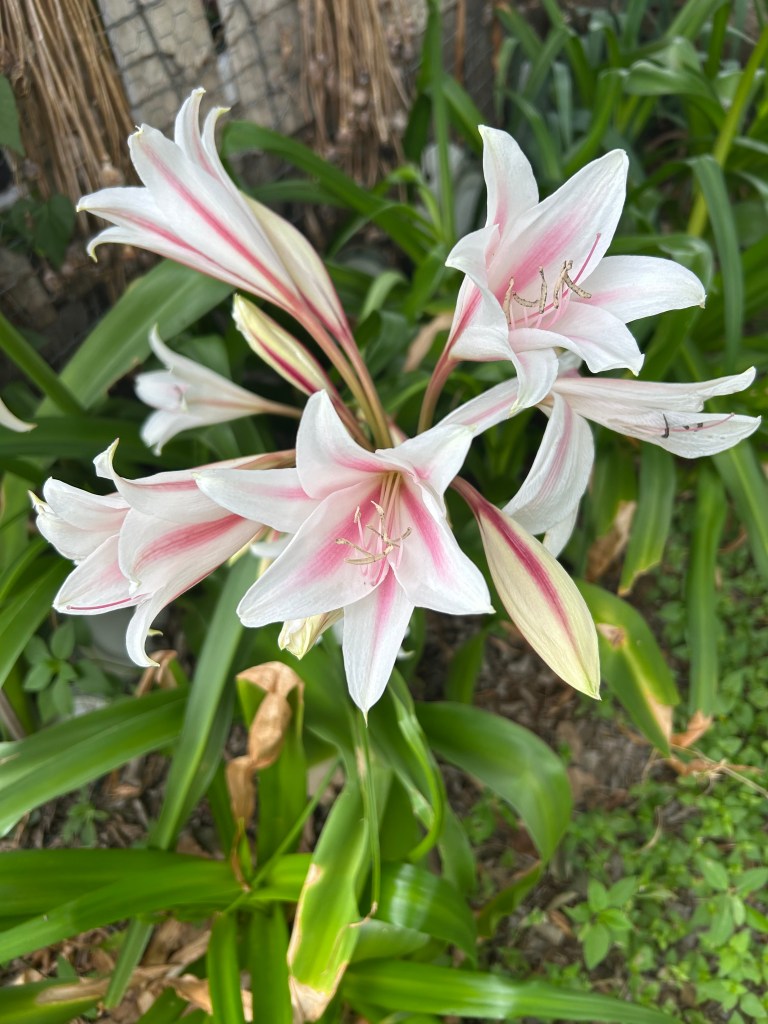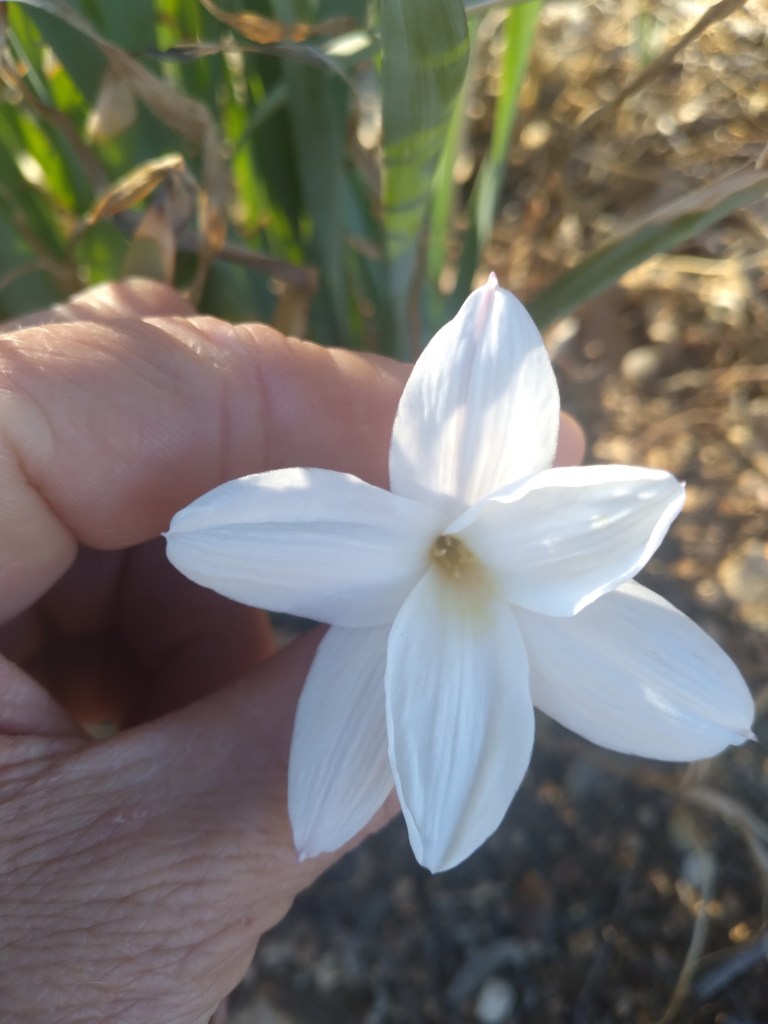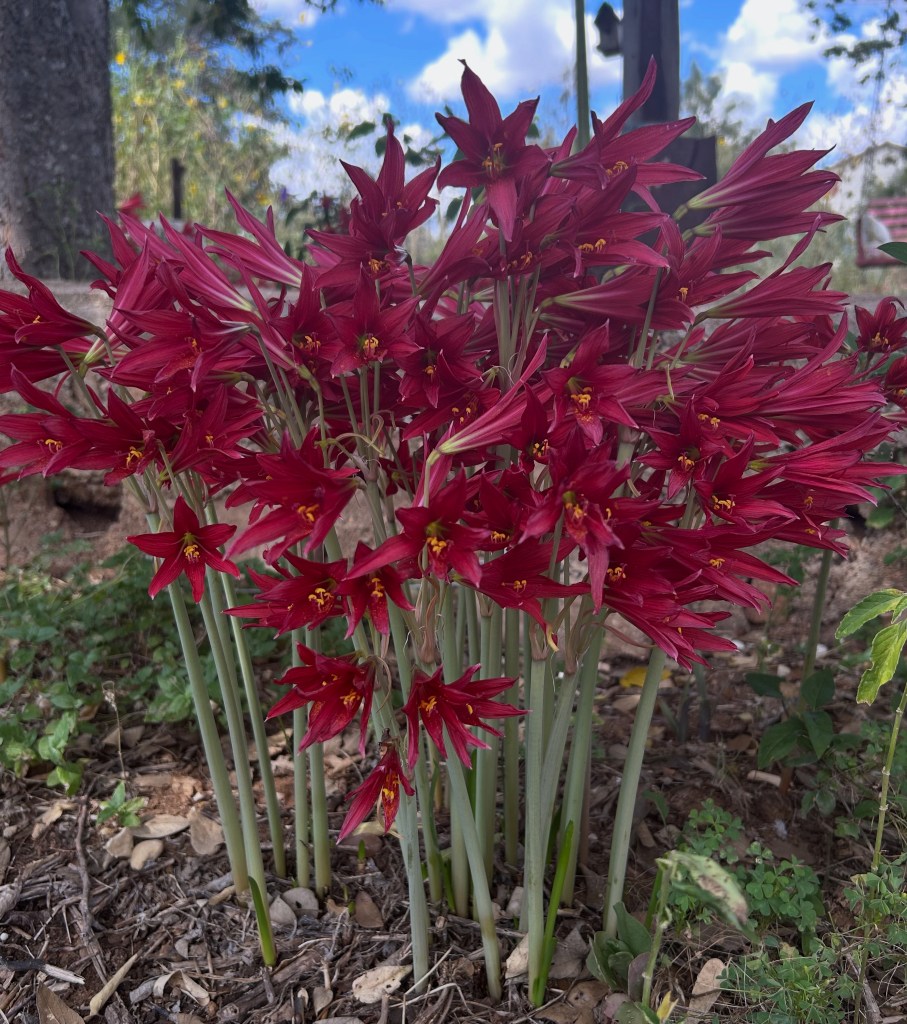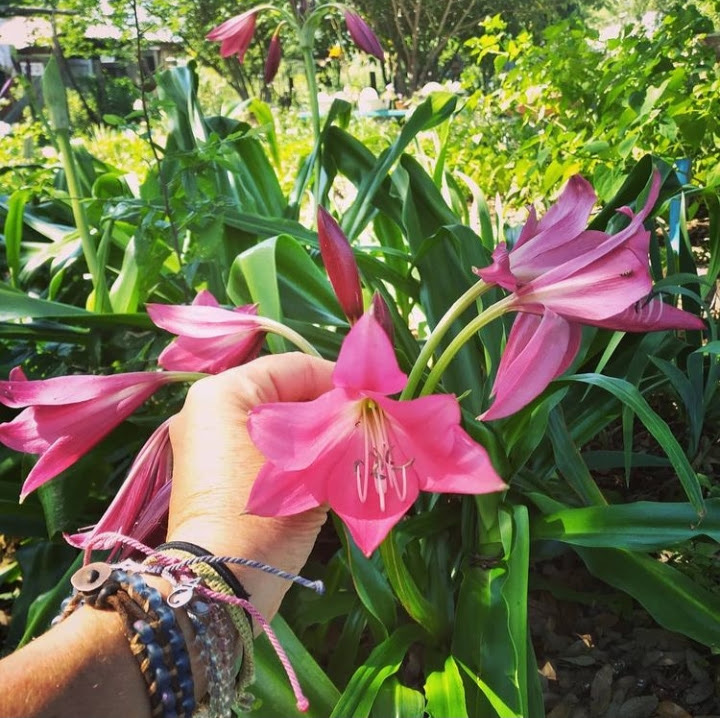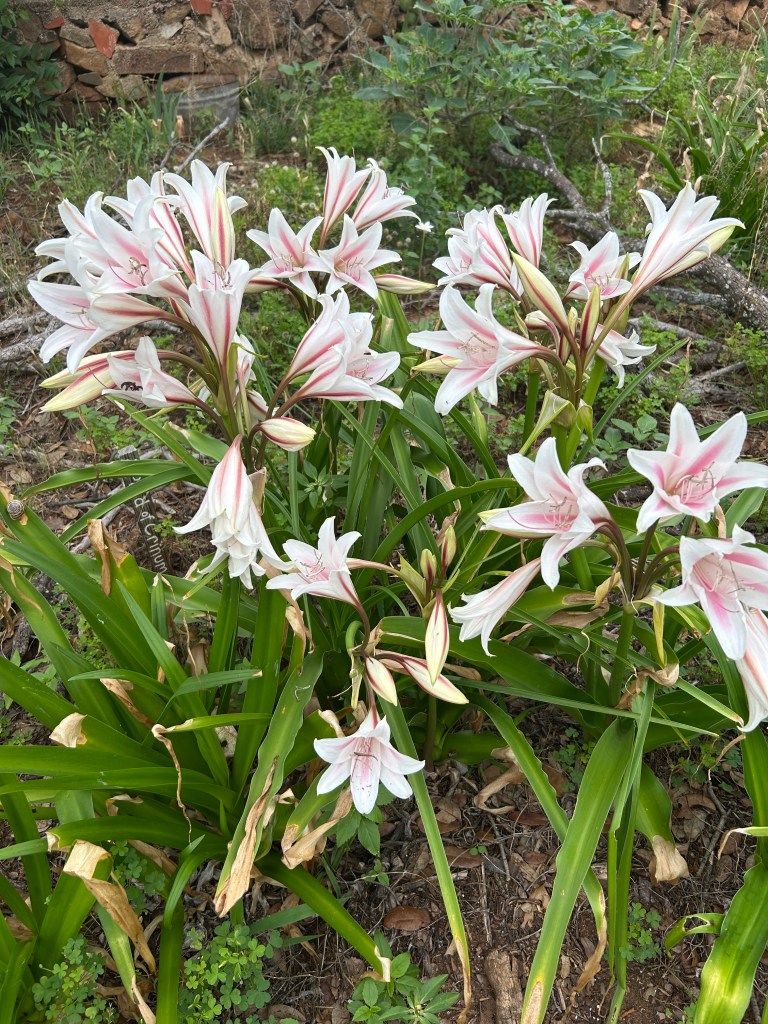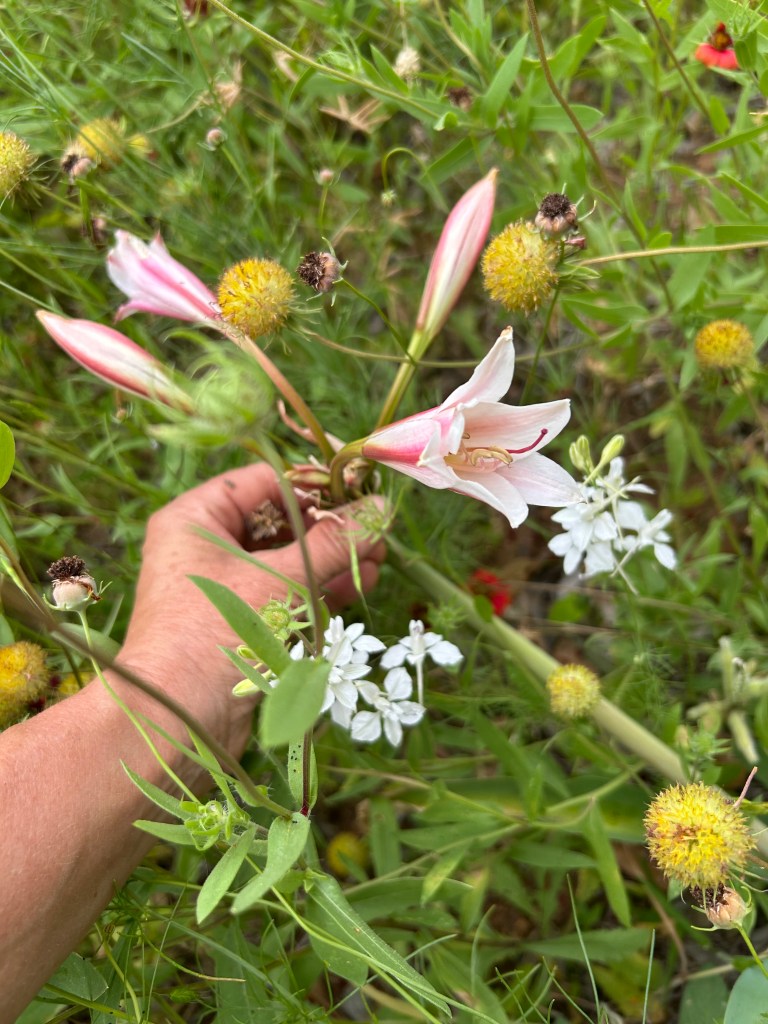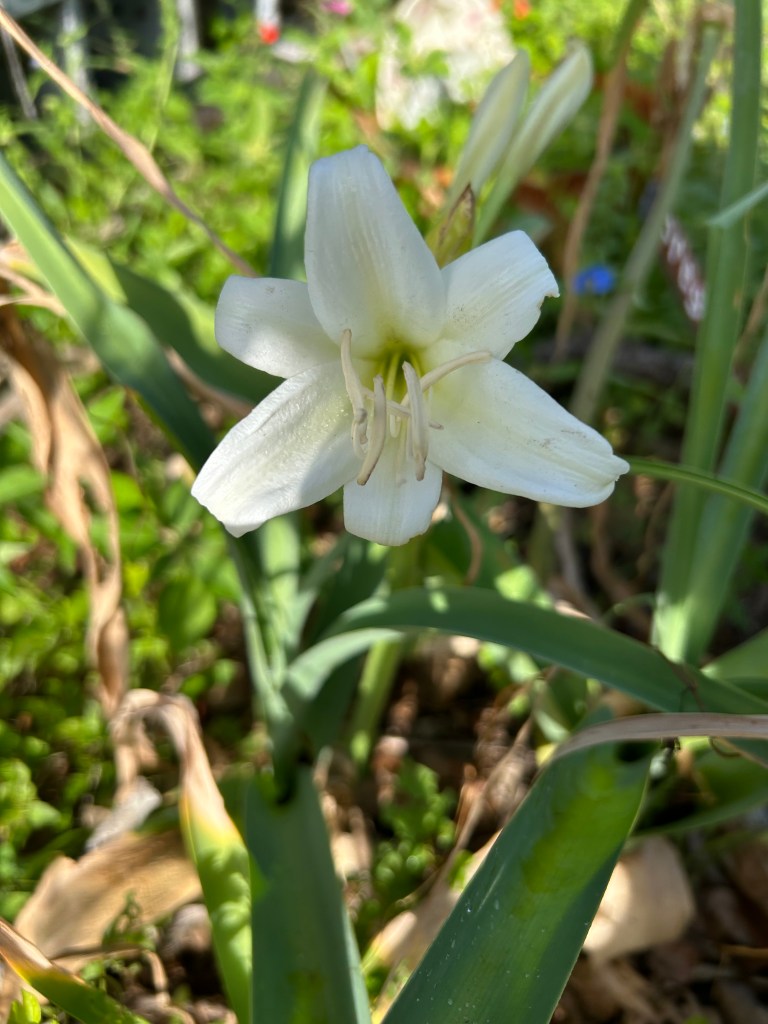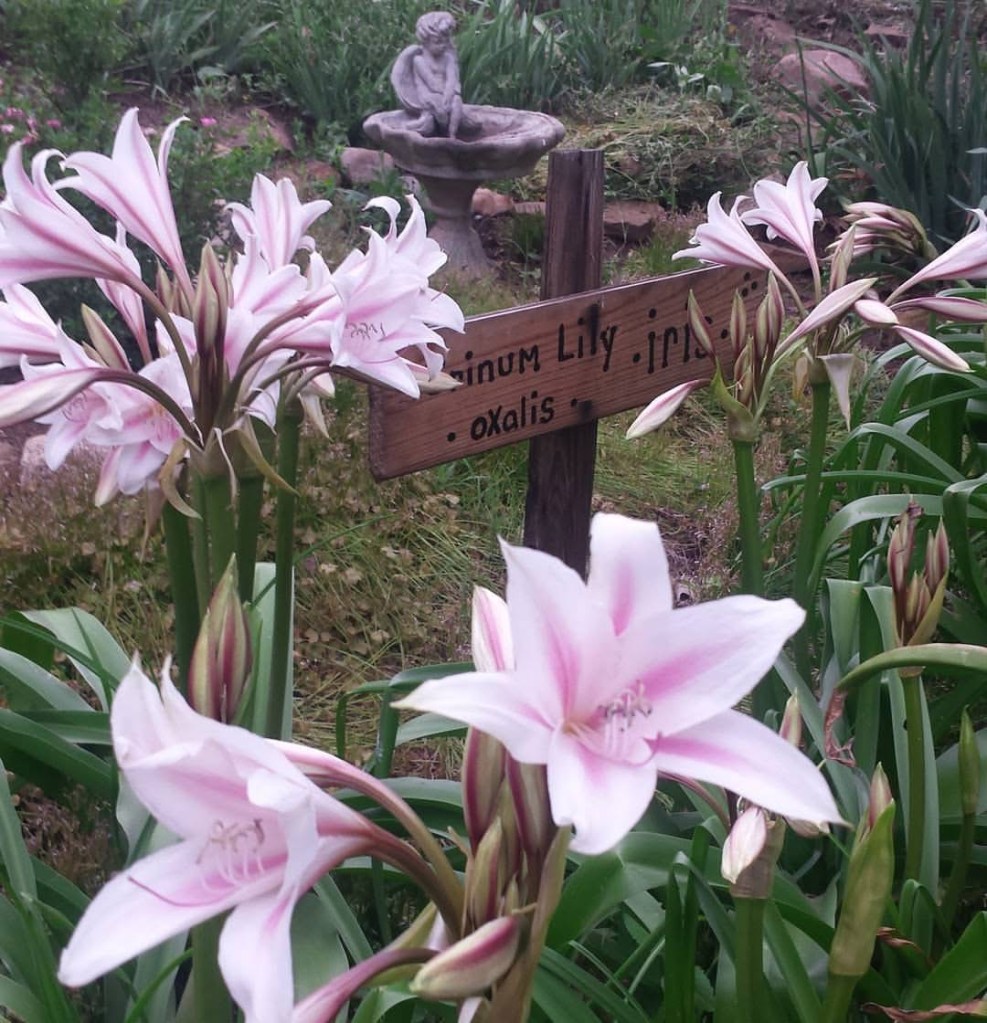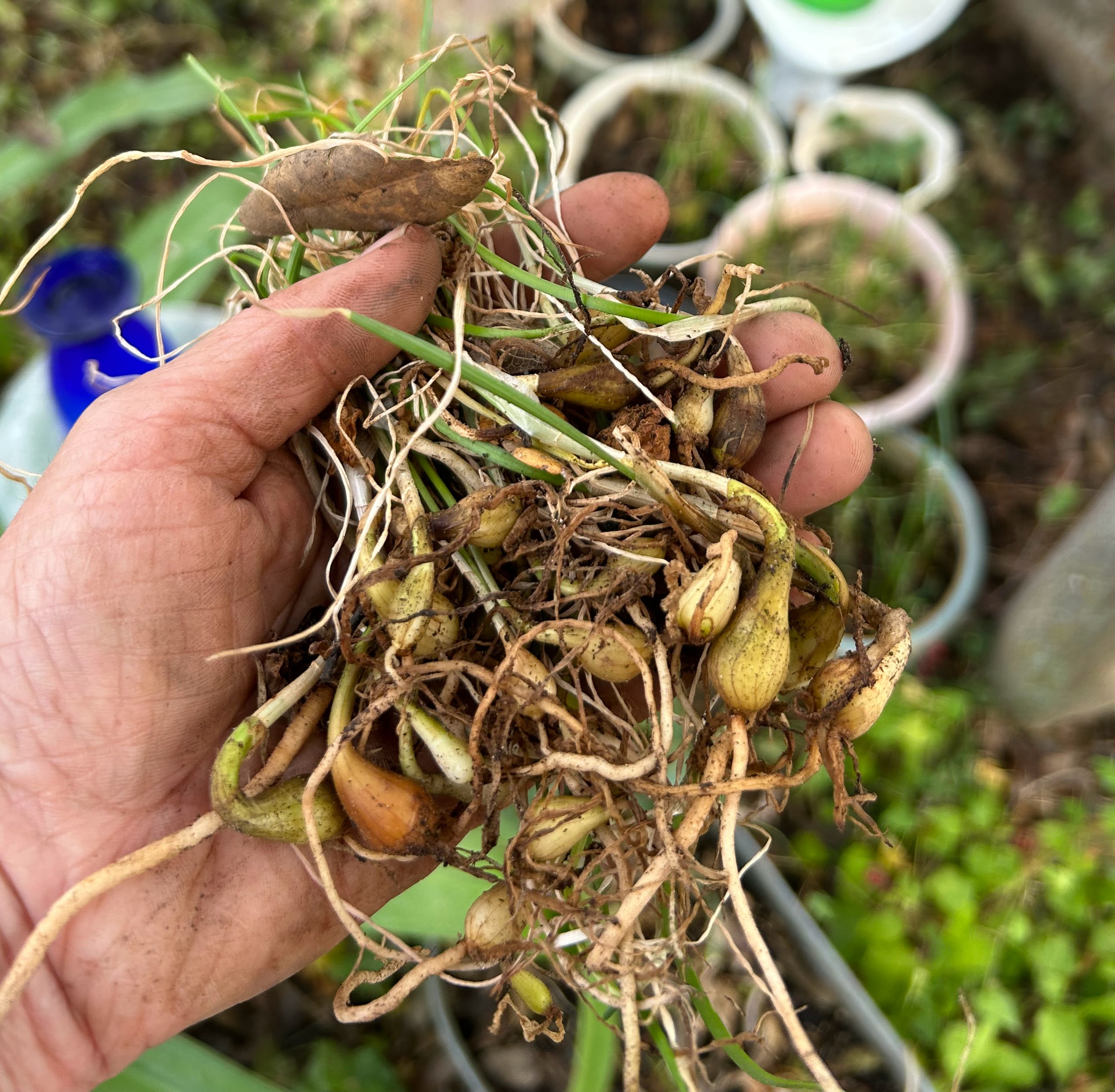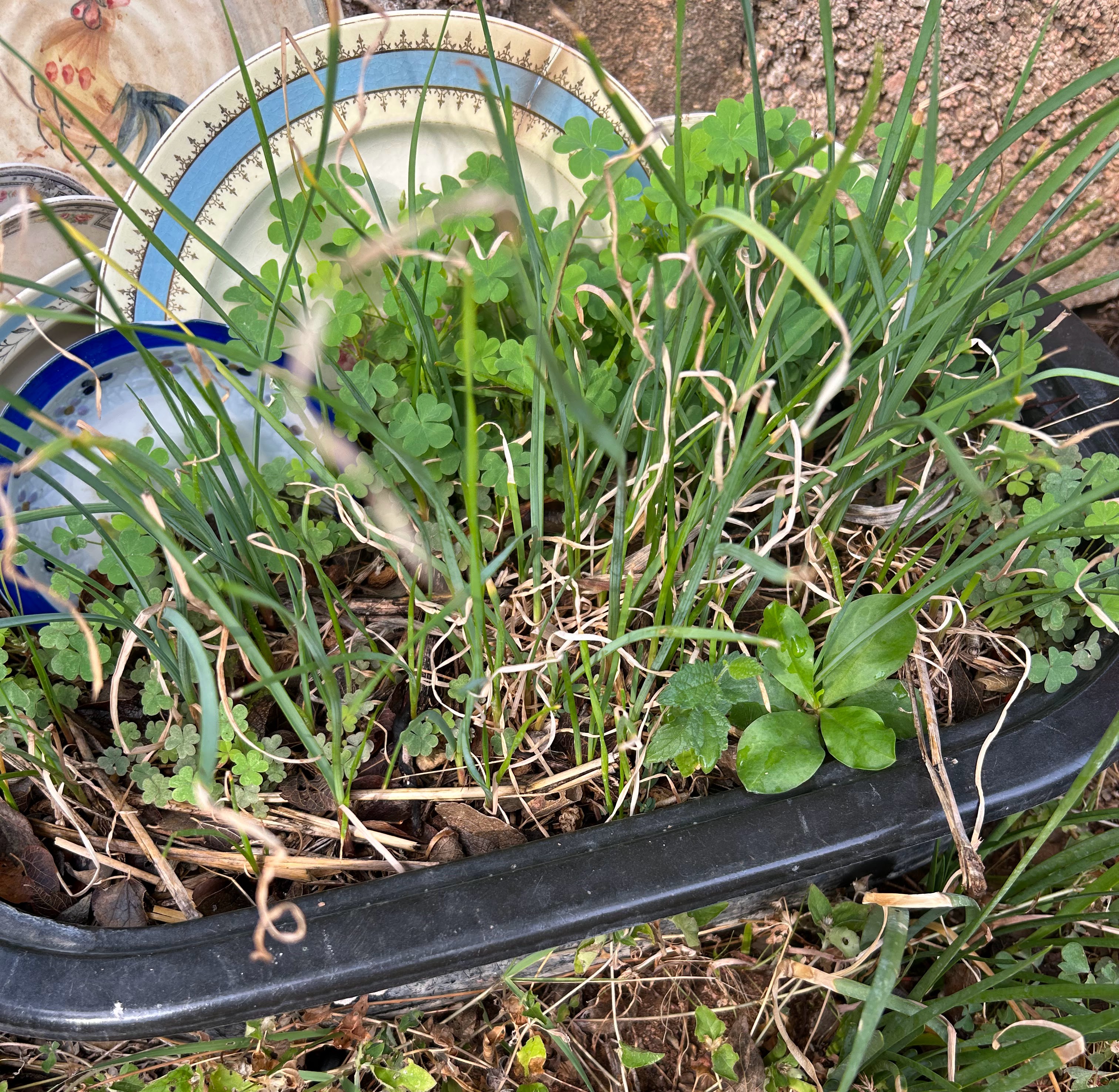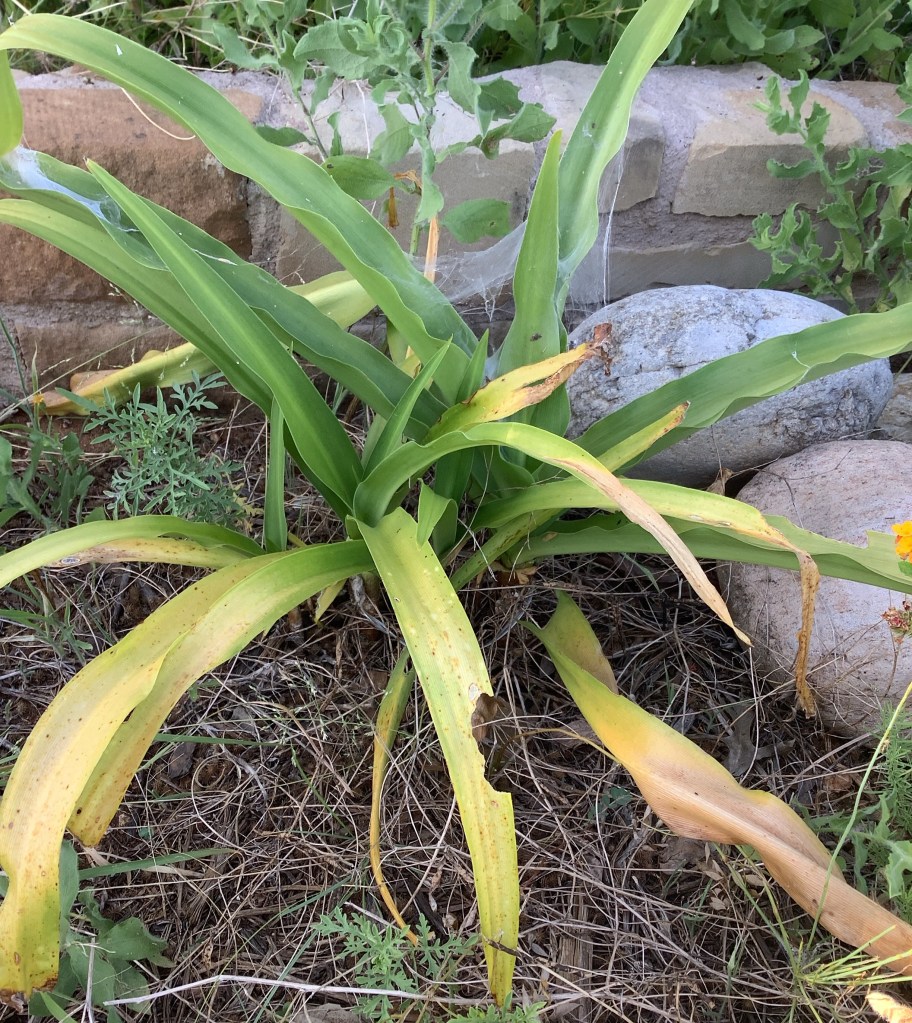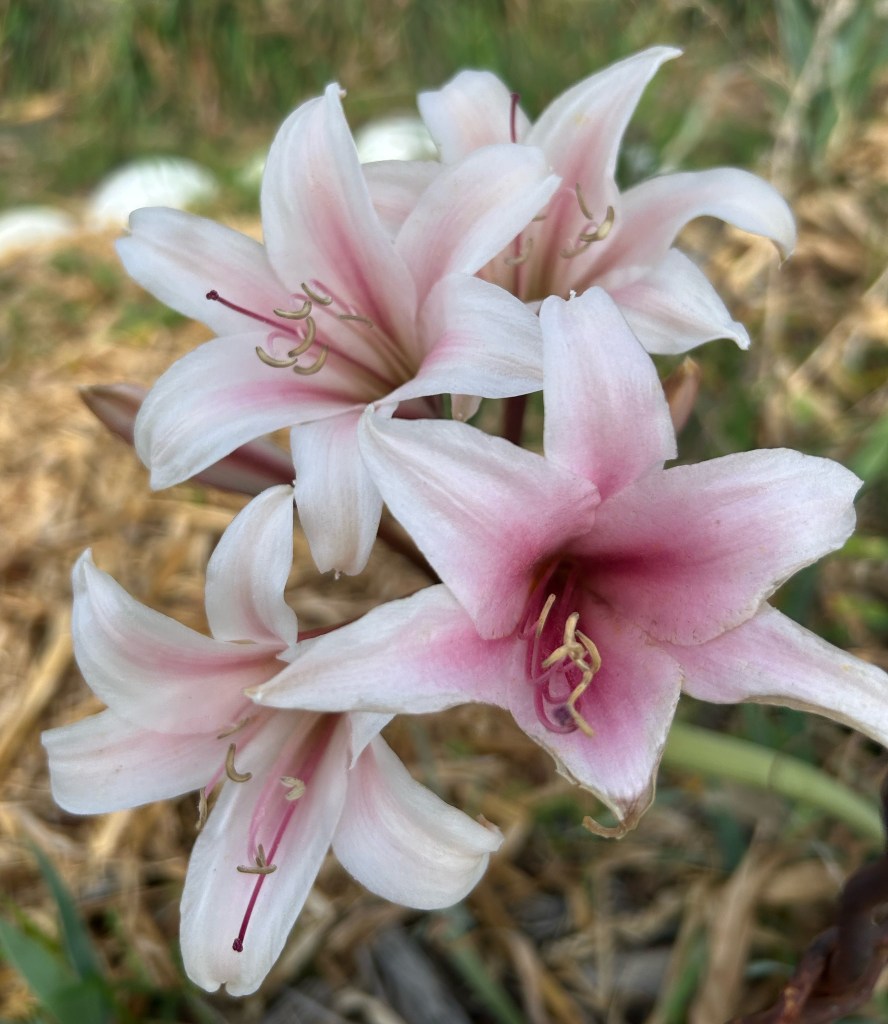
The first Saturday in October is the Llano Master Gardeners Native Plant Sale. I will be hanging out alongside the Llano Master Gardeners with four varieties of Heirloom Bulbs. If you’ve never been to the Native Plant Sale, this is the year to do it! The sale is 8-12 am, although all plants sell out quick.
Heirloom Bulbs available are Oxblood Lilies, Ellen Bosenquat Crinum, Milk and Wine Crinum and the large Prarie White Rain Lily. All bulbs have been collected by yours truly from old homesteads that were being torn down. All bulbs are drought hardy, tough southern bulbs that are an asset to any garden. Hope to see you at the Llano Plant Sale!
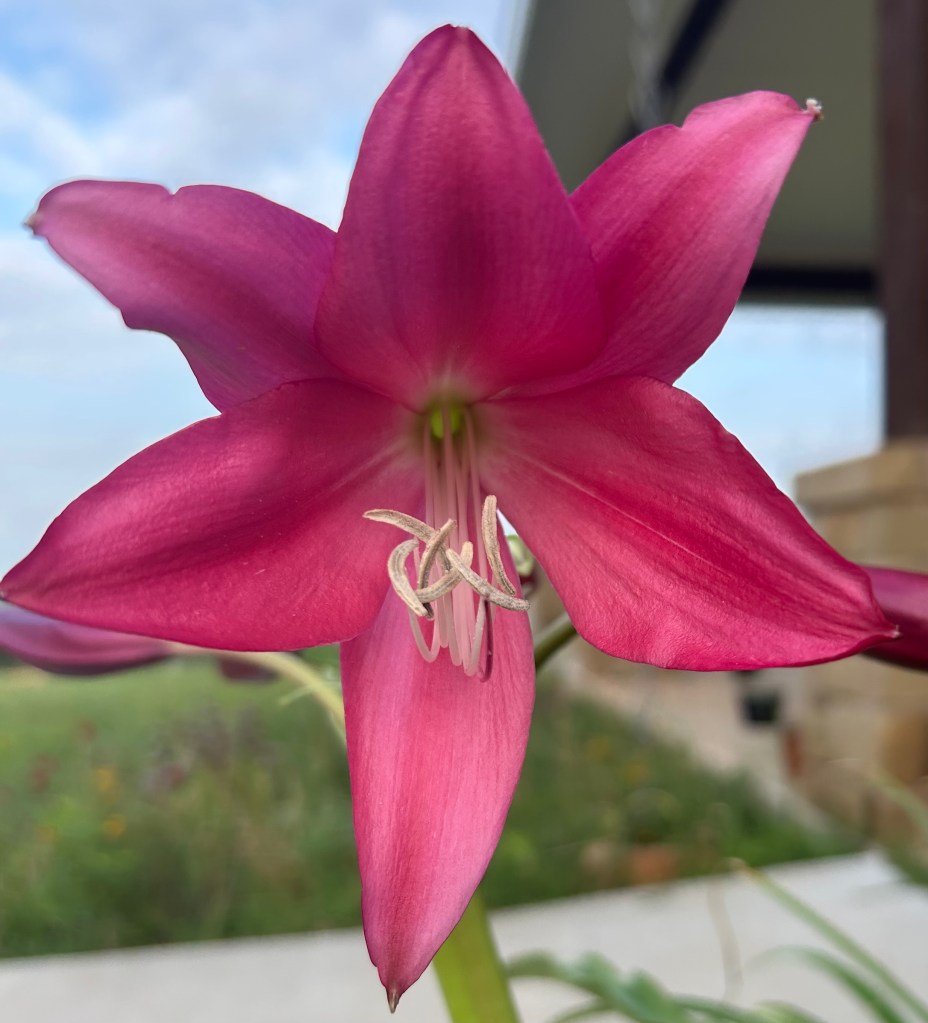
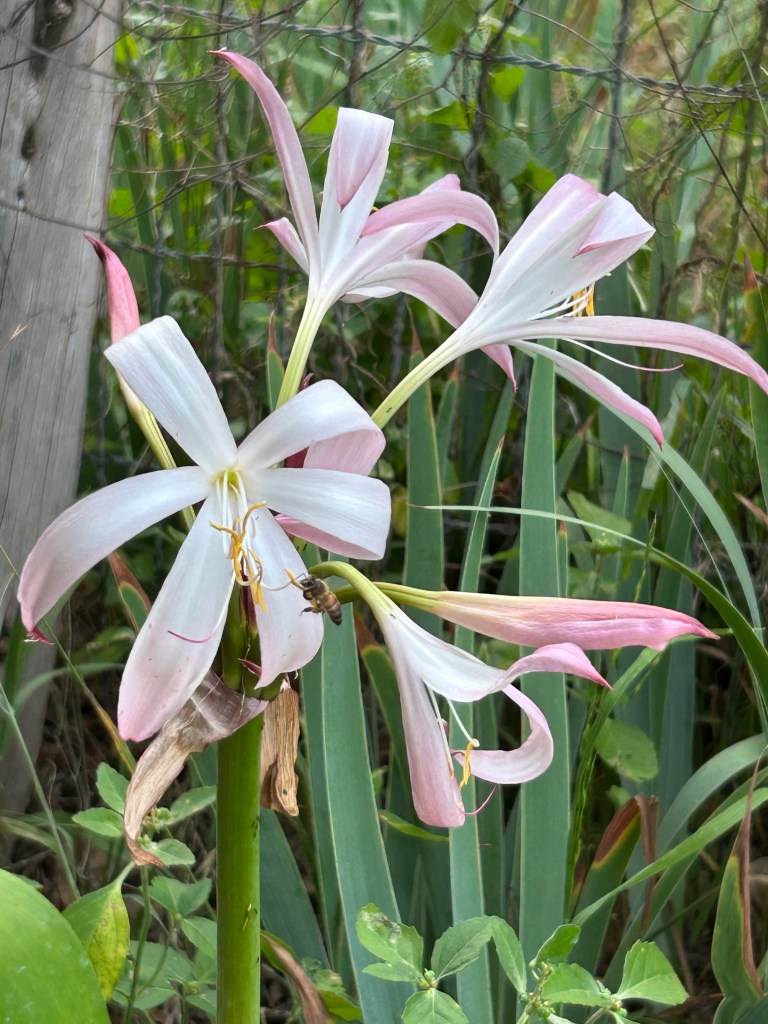
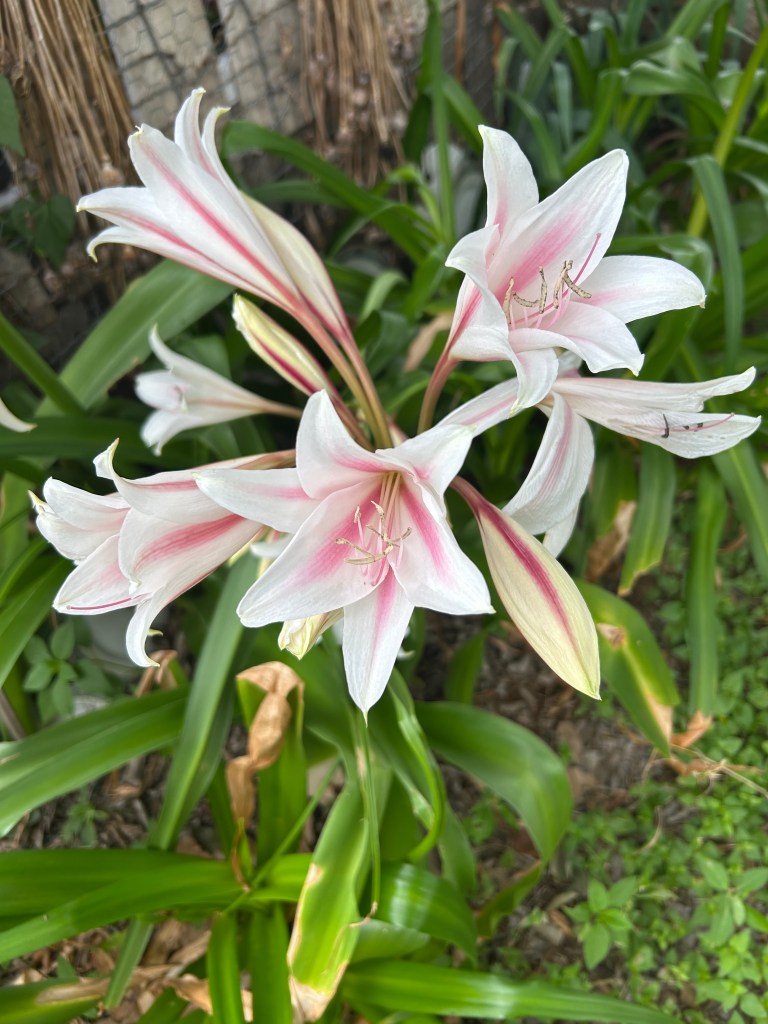
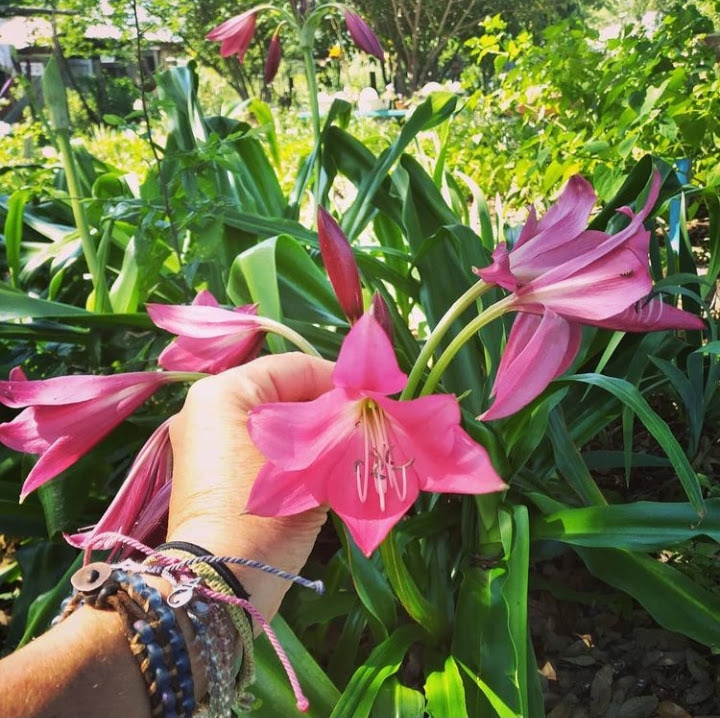
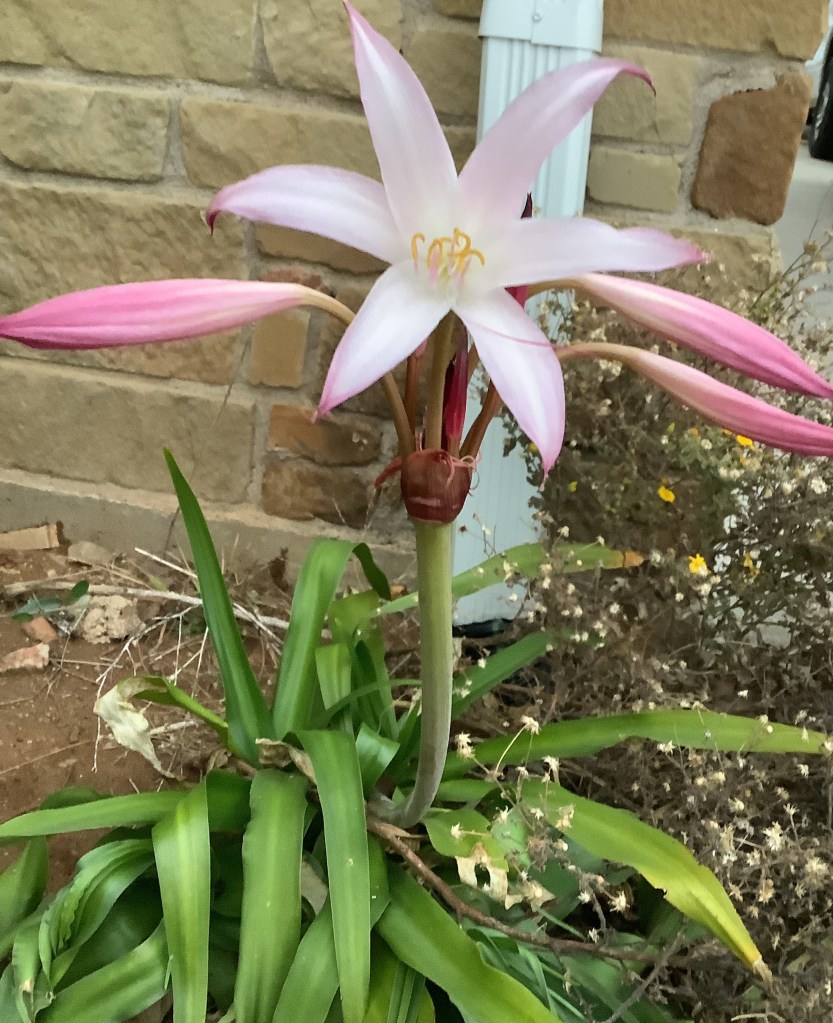
Ah, Miss Ellen Bosenquat. What a lovely name for an even lovelier flower bulb. When all the other summer flowers are laying limp on the garden floor, Ellen rises up after a little rain and stately declares “All eyes on me!” Ellen steals the show every time. She is a bright, striking shade of dark pink and is definitely a Crinum worthy of catching. This month I’ve decided to showcase each wonderful Crinum. Ellen screamed pink the loudest, so she is featured first.
Ellen Bosenquat Crinum, as with all Crinum, are extremely low maintenance, and easy flower bulbs to grow. These old-time flowers will flourish in your summer garden long beyond your years in the garden. My favorite fun fact about Heirloom Bulbs is that they will outgrow your children’s Grandchildren. In fact, I lay awake at night wondering what I’m going to do with all these beloved bulbs. Heirloom Bulbs just keep growing, growing and growing…..multiplying like rabbits, while I keep growing older, achier and tired! Bulb gardening with large bulbs like Ellen Bosenquat is like having a cute little petting zoo with elephants. If I’m not careful, Crinum will soon eat the studio for an afternoon snack.
Ellen is a hearty bloomer and is currently showing her stuff in Southern gardens everywhere. I enjoy planting my Crinum in places near Paperwhites, which are dormant in the summer. I also whimsical wildflowers to grow near the larger bulbs for a nice texture, as well as Frog Fruit, and other native ground covers to spread out around the bulbs. Another wonderful attribute of Crinum is the shade they supply to the ground where spring bulbs can be co-planted, just remember where you plant your bulbs so they won’t get lost in a sea of Crinum.
It’s June. A beautiful time of year for Ellen. May your gardens scream pink as loud as Ellen does. There are plans in the works for a monthly “pop-up” shop at the Agape Haus Studio and Garden. Heirloom Bulbs, natives, wildflower seeds, vintage china and flower pots will all be available. The first “pop up” sale will be over Labor Day Weekend. Limited large blooming Crinum will also be sold….including Ellen. Details to come. 🙂 Happy Gardening, my friends!
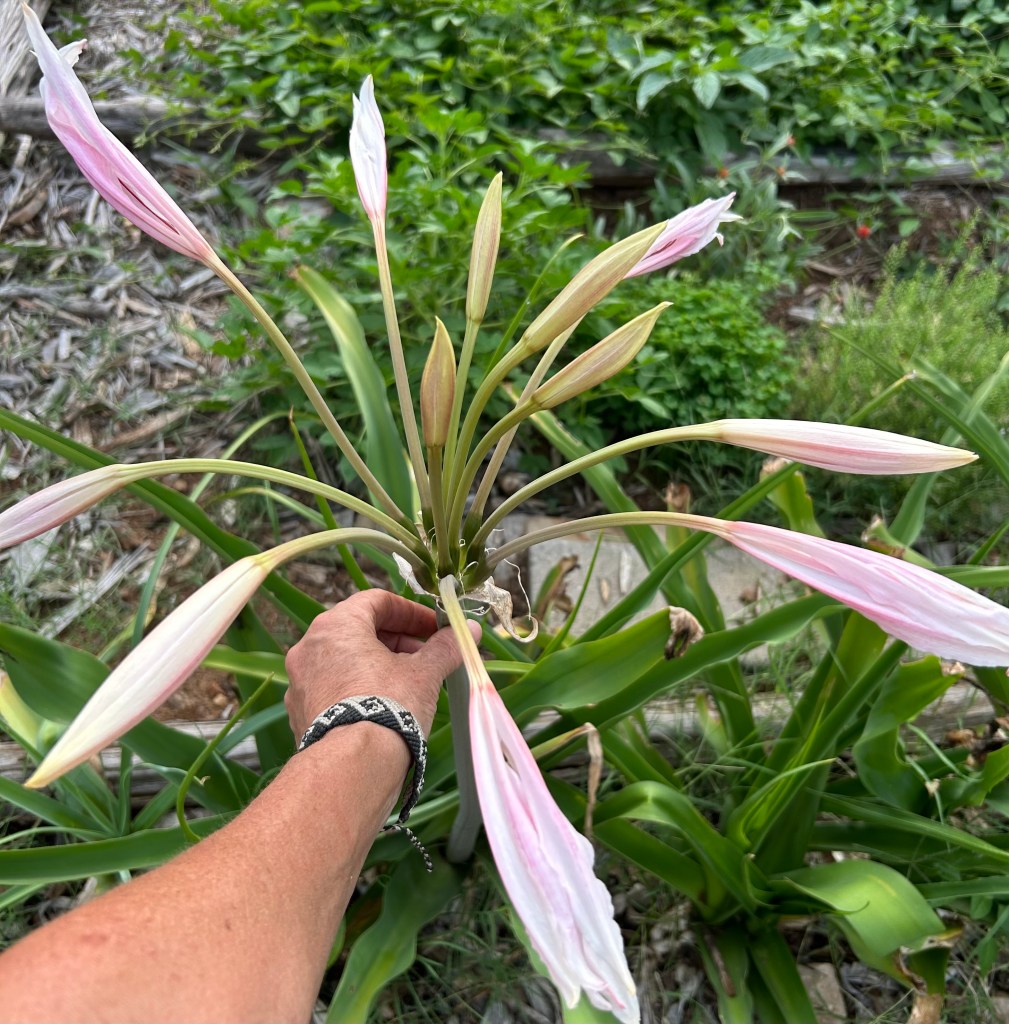
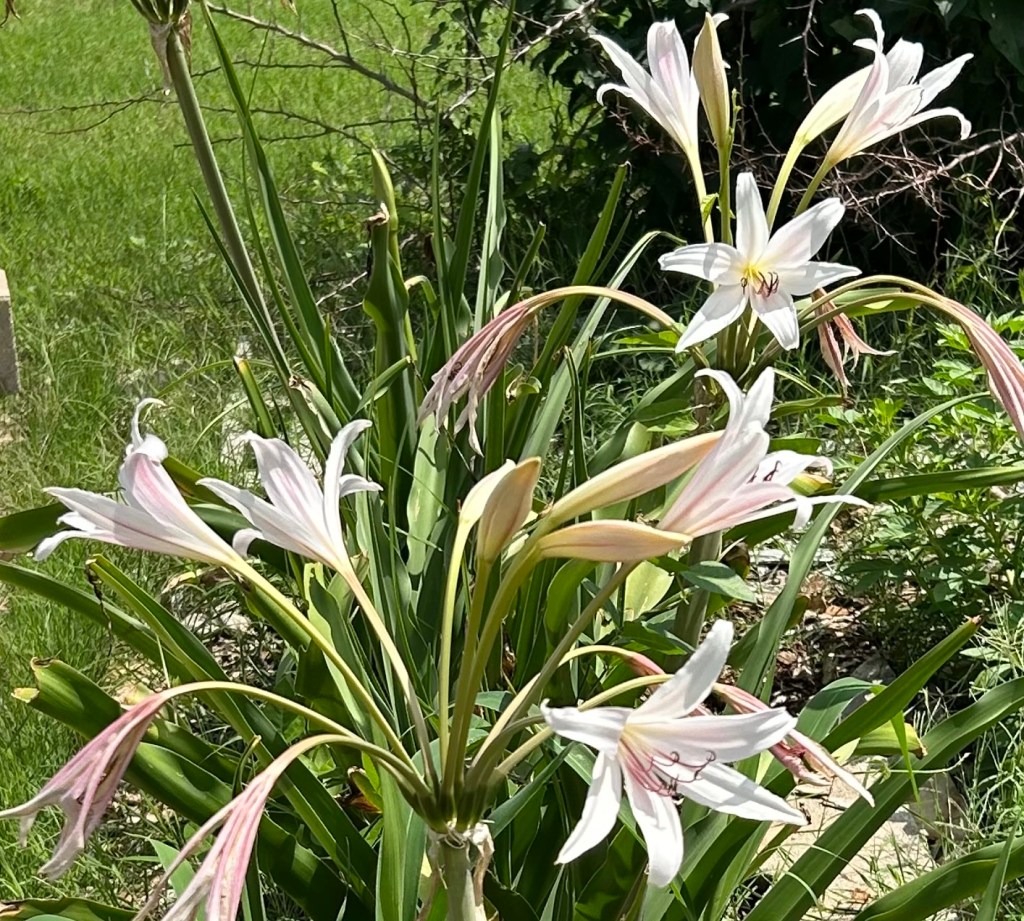
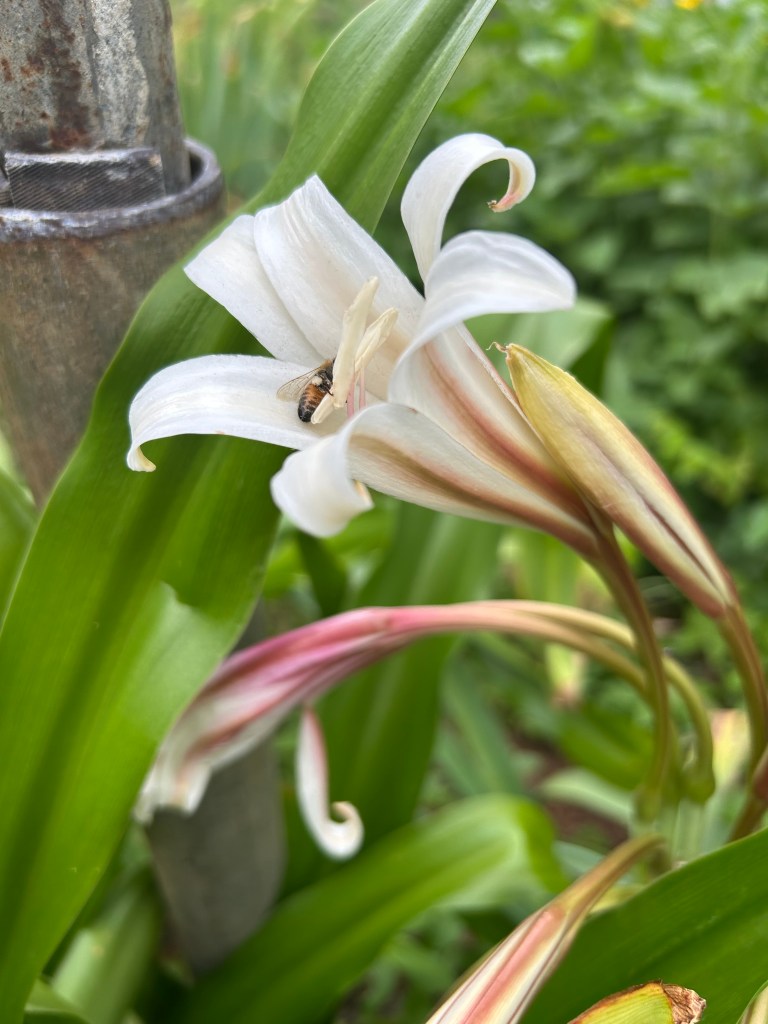
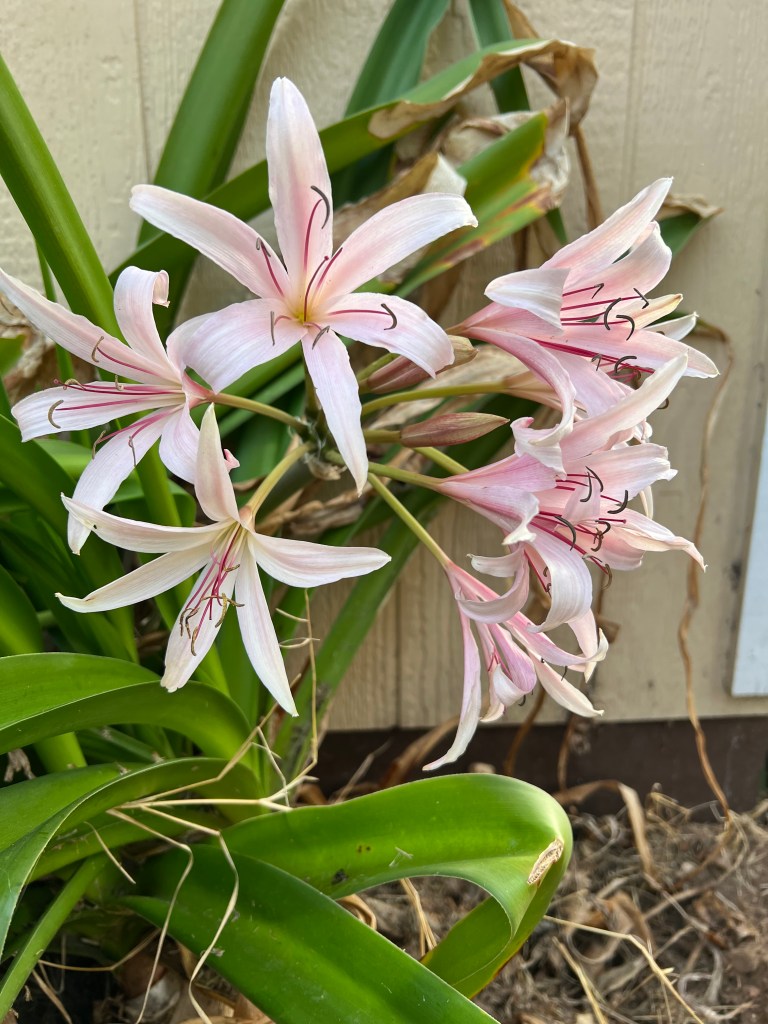
Few flower bulbs stop a person in their tracks quite like a Crinum. These flowers are bold, passionate, unique, showy and intoxicating. I find myself unable to even write due to the sheer amount of time I’ve spent in the garden Crinum-gazing (and weeding!). There are simply no words to convey the true beauty of an Crinum, so I’ve decided to use this little blog as a picturesque look at the Southern garden in early summer. Crinum bloom joyfully throughout the summer after a nice rainfall. Some Crinum even produce hearty seed pods to collect and share with fellow gardeners and friends. There are hundreds upon hundreds of different varieties of Crinum. I mainly grow old “found” Crinum, rescued or salvaged from teardowns, so the pictures I’ve chosen to showcase are all collected or gifted to me by fellow gardeners. Enjoy your photo-walk through my garden with the Queen of the South…Heirloom Crinum.
Happy Gardening, my friends!
for more information on Crinum, please email me at heirloombulbgirl@gmail.com 🙂
When I started gardening, I never intended to become an “heirloom gardener”. It just somehow happened. I became drawn to the history. The story behind the flower. My early years were spent in Rabi and Mrs. Horowitz’s rose garden. The rose arbor in the tiny backyard was magical, and each rose had a special story attached to it. I was hooked. I’m not sure whether it was the inherent beauty of timeless flowers, the uniqueness of each flower story, or the simple fact that my mind could wander and question endlessly about the past. Feeling “rooted” to past traditions is important and vital, especially in our quick, throw-away society. Heirloom gardens preserve the past for the future of tomorrow’s gardeners.
Heirloom, by definition, is “something of special value handed down from one generation to another.” In plant talk, an heirloom is “a variety of plant that has originated under cultivation and has survived for several generations usually due to efforts of private individuals.” Mike Bollinger, executive director for Seed Savers Exchange (a non-profit focusing on stewardship and education around heirlooms) had a great explanation for what Heirlooms truly were in Cooks Magazine. “Heirlooms tell stories from the past that may have been lost if it were not for their existence.” Heirloom plants are in “contrast to modern cultivators used in large-scale agriculture”. You might say that heirloom farmers are dedicated in maintaining a lifestyle their Grandparents or even Great-Grandparents had. I find the idea of growing a flower bulb that was deeply loved by someone who lived at the turn of the 20th century utterly fascinating. There is simply no substitute. So how does one go about creating an heirloom garden? For me, it’s all about preserving the gardener’s story.
Here are a few very practical ways to start an heirloom garden…
*Join an old-fashioned garden society or garden club. You will learn a lot of gardening wisdom from older generations of gardeners. You will also be able to drink tea and listen to some fantastic stories. A lot of garden clubs host plant or seed swaps. This is a wonderful way to hear about “Mema’s Yellow Iris” or “Aunt Thelma’s Daffodil”.
*Visit the older part of your town and become friends with the folks with beautiful gardens. Gardeners love to talk about their flowers. Don’t be afraid to compliment a stranger with beautiful Daylilies or gorgeous old roses….he might just spontaneously dig a special flower up just for you.
*Invest in some flower bulbs or antique roses from notable sources who invest their time in preserving heirloom plants. A few of my favorites are Old House Gardens, Southern Bulb Company, Seed Saver Exchange and the Antique Rose Emporium. Great folks with amazing selections of charming old-fashioned flowers.
Heirloom gardens aren’t flashy, nor do they keep up with the last trends in garden culture. Heirlooms feature the past and quiet ways of a lifestyle long gone. Unrushed and simple. Moment to moment savored by the stillness of the garden. I walk through my gardens each day, with gentle remembrances all around….my husband’s Grandmother’s Iris, Danish bulbs passed along, gardening friends’ Snowflakes, Byzantine Gladiolus, Daffodils and Iris, my in-laws’ original “William Allen land grant Iris”, my Franklin Iris that traveled from England in the mid 1800s that settled on a Texas ranch that shared the land with Native Americans, and tear-downs saved like the beloved Oxblood Lilies, Spider Lilies and Crinum of Miss Margaret and Eugenia. The cherished list of heirloom flowers in my beloved gardens with a story attached goes on and on. I only wish I had a cutting of Rabi and Mrs. Horowitz’s rose garden, but their memory is rooted in every Antique Rose I have.
There are two types of flowers…quick color that lasts a season and heirlooms that will out-live your Grandchildren’s Grandchildren. I pick the latter.
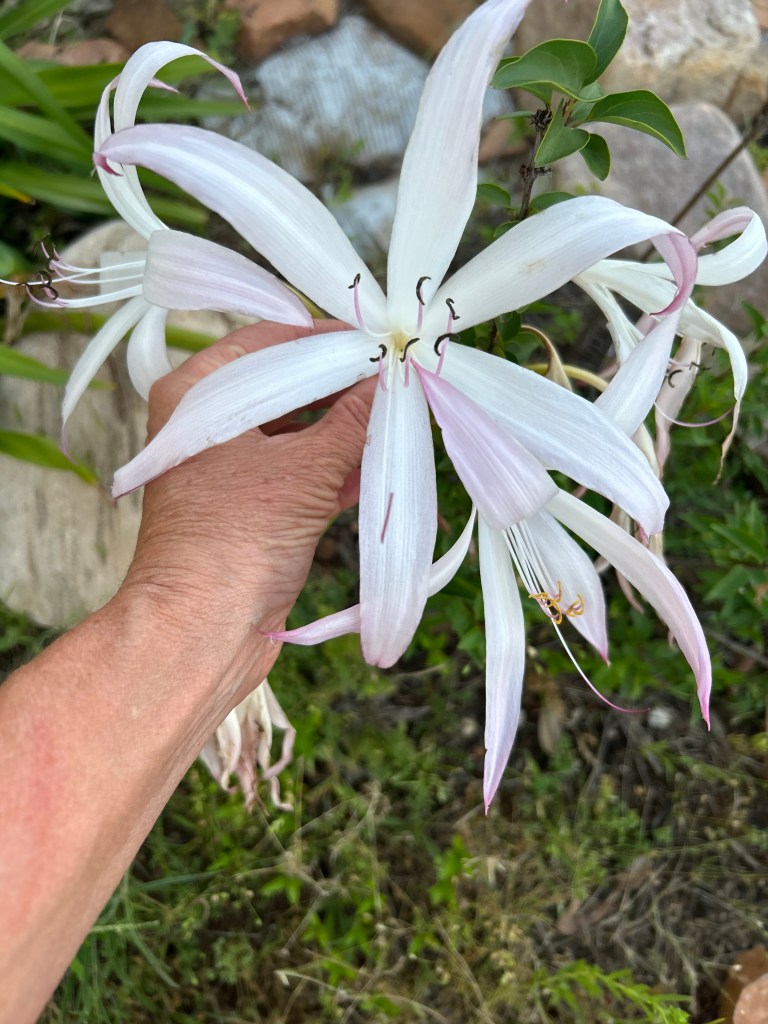
I’ve had my eye on this lovely little lady for the past few weeks, obnoxiously posting photos and video of this slow growing gal getting ready to bloom. It’s not surprising that Crinum bloom on their own time after a good, hearty rain. What *is* surprising is the timing of her extravagant entrance….Christmas Day, 3 weeks after a freeze. I’ve never heard of such a thing! In fact, I don’t even know what variety of Heirloom Crinum this is, I just know she’s old and apparently a Christmas lover, much like myself! I have searched the internet in a quest to find her proper name besides Christmas Crinum. I have even “reverse Google-searched” with her photo (didn’t even know that was a thing) but all I could come up with was Jubilee. I like the name, but she doesn’t quite match the description or photos. Swamp Lily also came up, but that’s too ugly of a name for her. If any of you Crinum lovers out there have a hunch of her true identity, please let me know. There’s a Crinum collector in Florida who I hope to connect with over the Holidays. Maybe he will know. For now, her name shall remain my Christmas Crinum.
I have heartedly enjoyed watching the bloom cycle of the Christmas Crinum. It feels like the entire month has been consumed with thoughts about what she’d look like and when she’d actually bloom. I went outside more times than I care to admit, just to see if any progress had been made. I counted the actual bloom stems, pulled them gently apart to see if they made it to 12 blooms per stem (12 Apostles) but 10 seems to be the number she will sport. Another little fun fact about the Christmas Crinum is that she’s blooming in the ugliest part of the whole garden. I have upwards of a thousand Crinum (all at different stages of growth) at the Agape Haus Studio and Garden, but nothing is blooming. But yet, in the poorest rocky soil, in the grossest part of a neglected patch near the garage, the Christmas Crinum blooms. So lowly a place for such a beautiful reminder of endurance and hope during the first Christmas without my Dad.
This beautiful Christmas Crinum has reminded me about the Christ Child, and the moment the Lord reached down to all humanity, providing the gift of Salvation in a lowly manger. A manger that held redemption in human form, which became the greatest and most beautiful gift of all.
“For God so loved the world that He gave His only begotten Son. That whoever believes in Him shall not perish but have eternal life.” John 3:16
I’ve dug Crinum many times over the years, and there is always a dead shovel involved. This particular dig involved Heirloom Bulbs that had been on my In-Law’s farm since the original German homesteaders in the mid 1800’s. The bulbs are hardy, healthy and stout. The flower bulbs growing in an open field were the only remnants of the early homestead. My Mother-in-Law researched the history of the farm and has a wonderful file full of backstories of Milam County. I love the history of old garden treasures….if only the bulbs could speak! Ah, the stories they would tell! A few weeks ago I was asked to help move the old patch of Crinum over Thanksgiving, and of course my answer was an over-enthusiastic “YES!” I knew full well that the Crinum bulbs would be hauled off to my studio, which meant that my husband had to be on board. He typically likes to keep our car dirt-free, but unfortunately he married a female Pig-Pen. Surprisingly, he loaded two very large tubs into the back of our car.
”You can take home whatever you can squish into these tubs”
That’s going to be a lot of squishing….
Saturday morning, in the 30 degree weather, 4 Fletcher men and myself began to dig. Within 5 minutes, the first shovel was already broken digging up the Cemetery Iris. “One shovel down!” I couldn’t believe we were already breaking shovels, and hadn’t even started on the big boys. I worked on getting the first Crinum to “pop”, which is a sound commonly heard when digging Crinum. The “pop” is the release of the bulb from around the clump, signifying that it is safe to start pulling, yanking, heaving or what have you. Most shovels break before the “pop”. Pulling the bulb too early will result in a nice backache, while the bulb rests comfortably beneath the warm ground. Digging too hastily will result in a lack of root system, which most of us have done. It’s never fun to work really hard on digging up a bulb, only to pull it out without roots.
By the end of the morning, Thanksgiving guests were arriving while we were still covered in dirt but the job was completed….3 broken shovels, a mountain of Cemetery White Iris, Heirloom Daylilies, Oxalis, and massive Crinum bulbs all stuffed into 2 large tubs. The Iris tub was filled 2 feet higher than the tub itself. The Crinum bulbs stood upright, as to not hurt the foliage, and all 50 or so big boy bulbs fit nice and snug. I also pulled out some Ellen Bosenquat Crinum that my Mother-in-Law’s garden friend gave her. It was a great Thanksgiving day!
If you would like a Cemetery White Iris dating back to the 1800’s, please email me. I have plenty to share. The old Crinum should settle in, and offshoots will be available next year. I’m also going to do a “Win the Crinum” contest, but haven’t decided what type of contest it will be. Stay tuned for more details to come. 🙂
”The Lord shall guide you continually, and satisfy your soul in drought, and strengthen your bones. You shall be like a watered garden, and like a spring of water, whose waters never fail. Those from among you shall build the old places, you shall raise up the foundations of many generations; And you shall be called the Repairer of the Breach, The Restorer of Streets to Dwell In.” -Isaiah 58:11-12
The Repairer of the Breach…
There are few phrases that stop me in my tracks and cause me to take notice more than this one. Not only are the words so poetic and lovely, but the beautiful imagery is exactly what I desire. What’s not to love about continual guidance by the Lord, spring fed gardens, waters that never fail, and promises of calm and safe streets to dwell in. The mere fact that we are called to become part of this beautiful verse overwhelms me deep in my soul. I love the fact that I, a little music-playing, flower-loving girl can be used for such a mighty calling as a “Repairer of the Breach”. It is said that the Lord takes the ordinary and enables them to do extraordinary things. Mighty indeed. In fact, the call to action before the poetic images seems almost insignificant compared to the blessings He will bestow upon us.
“If you extend your soul to the hungry, And satisfy the afflicted soul, then your light shall dawn in the darkness, and your darkness shall be as the noonday.” -Isaiah 58:10
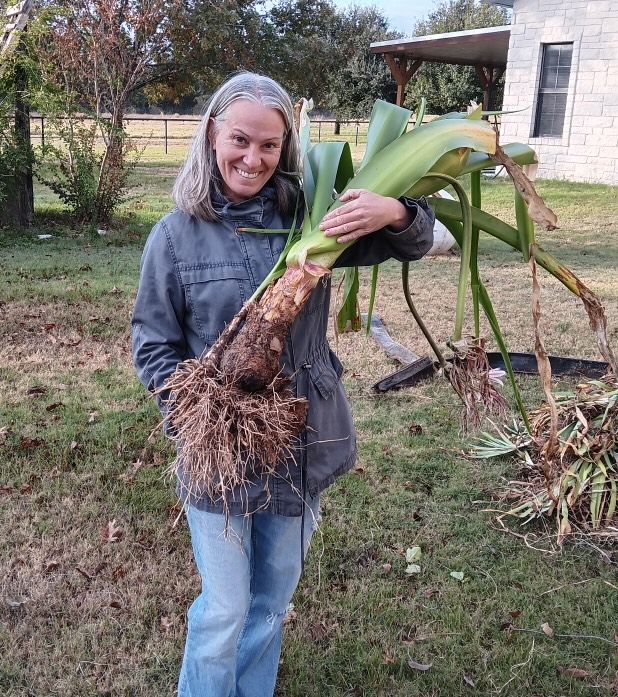
Simple words with a huge impact….Extending ourselves to those in need. Seems pretty basic to me, but yet the need is overwhelming. Where to even begin? How do we repair the huge divide between people, and heal the brokenness? Not just the physical brokenness, like the Heirloom Crinum I was holding in the photo, but the emotional brokenness among people. To repair is to mend something, consciously and collectively, whether it be a broken relationship, a garden plot or even an Heirloom Crinum that had been run over by a bulldozer. In most cases, it is easy to sit back and let others do the repairing. It is hard and messy to get in the middle of a breach to begin restoration. I have to admit, buying a new Crinum might be easier than breaking shovels trying to salvage the old ones, but I really like watching the process of restoration. I love the idea of being a “repairer”. Sometimes the breach is too big, but repairing something that is broken is always worth the effort. Here are a few simple ways to be a Repairer of the Breach….
*Draw closer to the Lord….“There is a God who created man, and there is man who created their own gods through power, money and strength.” It’s good to know the difference.
*Affirm others’ dignity….“Love the Lord your God with all your heart, soul, mind and strength. And Love your neighbor as yourself.”
*Speak words of encouragement….“Let no corrupt communication proceed out of your mouth, but that which is good to the use of edifying, that it may minister grace to the hearers.”
*Sacrifice selfish tendencies and place others’ needs in front of your own wants….Ouch. What a contrary statement to what our “me first” society preaches. Change starts with me. Michael Jackson’s song Man in the Mirror says it best. “If you want to make the world a better place, take a look at yourself and make a change.”
The Repairer of the Breach. Lots of breaches out there to repair, especially during this Election Day. Remember, just like one salvaged Crinum will bring years of beauty, the repaired breaches can put real change in motion. Happy Gardening, my friends. Be that change agent.
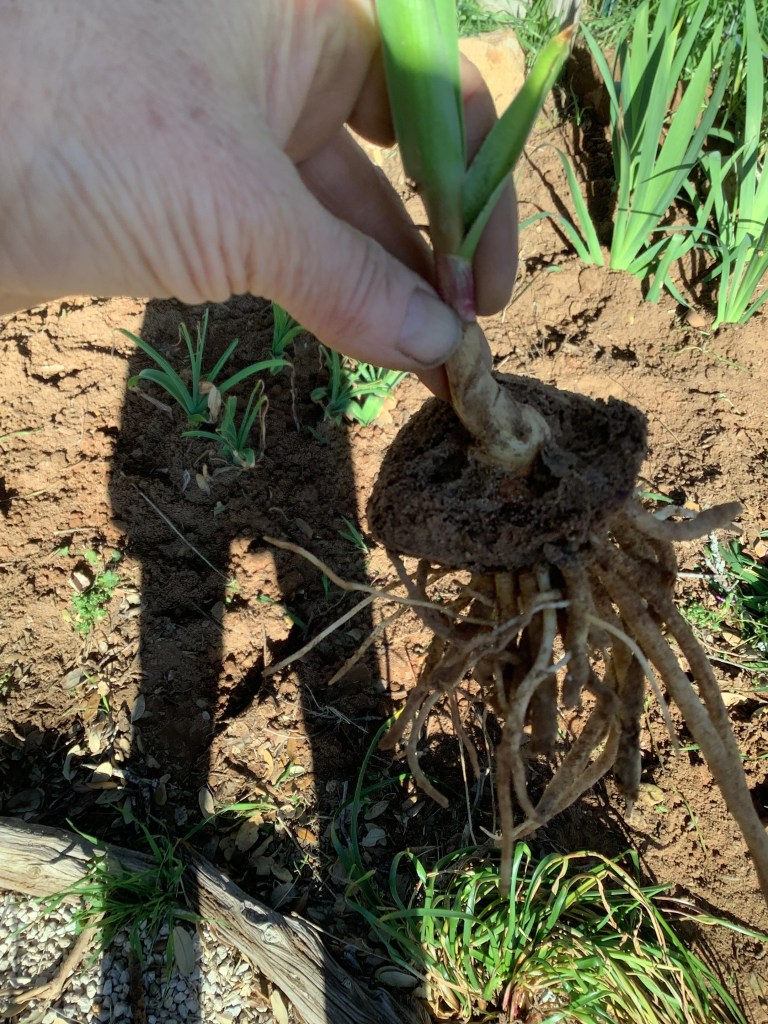
A few months ago, I collected a bunch of Crinum seed pods at my daughter Hollie’s graduation from Texas A&M. When I say “a bunch”, what I really mean is that my cup runneth over and flooded the potting shed. I honestly didn’t know just how many I had until it was time to start the growing process. This weekend, I finally got most of them planted. I’ve had a few gardeners reach out lately regarding the blog post with free Crinum seed pods, and wanted to give you a quick update.
As you might know, growing bulbs from seed is not for the faint of heart. Remember the fruits of the Spirit you learned about in Sunday School way back when? “Patience”, “Hope” and “Longsuffering”? Yep….Those fruits are put to the test when starting those little seedpods. Here is a small glimpse into the process of growing Crinum from seed pod (the average gardener’s way)….
First, you must pick the right amount of soil, light and water. Then wait. And wait. And wait. And then wait some more.
Finally, after you accidentally forget about the seed pods, they decide to sprout. You get mad at yourself because some of the cute little pods dried up and died. You do a quick scientific analysis of the problem. Probably too much water, but actually not enough water. Along with too much sunlight and not enough sunlight at the same time. You feel much better knowing that you still maintain the “average gardener” status, and didn’t sink down into the level of “killing-everything-in-sight gardener” (that status is reserved for your houseplants, which are on a day by day life expectancy). You quickly give the surviving seedpods a blast of water and then go about your week until you accidentally forget about them again.
Please tell me I’m not the only absent-minded gardener.
Anyhow, this dead-almost-dead drudgery carried on throughout the summer. Luckily, Heirloom Bulbs (even as seedpod babies) are way smarter than I am. Heirloom Bulbs are survivors, so about 400 plus little Crinum babies survived my ineptness. I am happy to report that I have planted about 25% of the bulbs in pots. Then I got impatient and planted the rest in an empty veggie garden raised bed. I still have about 25-50 little bulbs left if anyone out there wants some. The good news for you is that I’ve already mentally muscled through the hard part of seedpod planting, so all you need to do is stick them in the soil. 🙂
The greenery will freeze in the Winter and bulbs in the pots will freeze too. Keep your infants inside and keep them growing. The bulbs grow quickly and in a few years, they might even get to be of blooming size. Remember, Heirloom Bulbs will survive your Grandchildren’s Grandchildren. These bulbs are in it for the long haul. To me, it is glorious to have these old gals take root and share their blooms year after year. Email heirloombulbgirl@gmail.com if you’d like your own little Crinum.
Here we are, sweating hot and grumbling in 105 degree summer heat, and the Crinum be like “Nope. Not havin’ it. I’m going back to sleep.” I want to have that superpower….the ability to simply remove myself from heated situations or troublesome times. I want to magically take myself out of a hot environment, cool off and simply wait for some rain to bloom beyond anything else in the garden. What an incredible superpower to have!
Crinum are indeed a special bulb. Most of the hot summer, they sway back and forth between a green clump with a gorgeous lily, and a haggard-looking pile of death. Last summer, during the drought, the Crinum looked like they were all at death’s door, merely stubs of crispy brown remnants of foliage. Ah, but they weren’t dead at all. Not even close. The Crinum were just saving their strength and resting in the cool of their little sanctuary below the ground. Dodging death with an incredible ability to remove themselves from the heat and just wait for their perfect opportunity to re-emerge with a boom.
There are many bulbs that sleep quietly and hide out underground during their dormant seasons. I find this attribute utterly fascinating. For instance, how does a bulb determine it’s specific season to grow and bloom? How does an Oxblood Lily or Spider Lily not get fooled by the summer rain, only to wait quietly and bloom like no other in the first downpour of the Fall? The mere fact that flower bulbs have unwavering fortitude to wait in the hard seasons, blooming beautifully when the rain comes is nothing short of the description of faith….the ability to believe in things that are not seen, hoping for things beyond their circumstances.
Crinum are my summer reminders of faith. Crinum give me hope through the heated struggle of gardening in a Texas summer, when everything appears to die before my eyes. When times are tough, Crinum simply retreat to their quiet place….a sanctuary. They are restored, renewed and recharged. Crinum don’t fight their circumstances with yelling, screaming, debating or grumbling. Crinum simply find their quiet place, believing beyond the 105 degree weather that “this too shall pass.” The weather *will* cool off, the rain *will* come and the beautiful Crinum *will* share its bloom again….believing in things not yet seen, hoping for things beyond their circumstances. I need flower bulbs like Crinum to remind me where my true source of power is….not in myself, or a perfect environment, with perfect people in a perfect world. On the contrary, my superpower is my faith in Him, Who created it all….seasons of great beauty and seasons of wait. I rest in the quiet of the sanctuary of the Lord, fully knowing that He is the true power source of all…even the little Crinum.
”O God.
You are my God;
Early will I seek You;
My soul thirsts for You;
My flesh longs for You in a dry and thirsty land where there is no water.
So I have looked for You in the sanctuary;
To see Your power and Your glory.” -Psalms 63:1-2
It is another hot summer afternoon. The garden is showing off it’s many shades of crispy brown foliage, but the Crinum are all in wait…..their season is coming. Remember, your Heirloom Bulbs aren’t dead….they are simply cooling off below the earth, dodging death by dormancy. 🙂
There is a fine line between “going natural” with native plants, and the complete and utter gardening chaos that consumes everything in its path (including cool garden art and small children). My gardens usually tip-toe close to the line of chaos, but this particular year, the balance had to be reestablished. The local natives were abundantly fruitful with all the beautiful rain. The studio grounds have been lost in a sea of Tie Vine and Widow’s Tears. Although the bees were pleased in the overwhelming native landscape, I had to find some sense of balance in the garden. Too much of a good thing becomes borderline toxic….so I set out with my dull scissors and bucket to thin out the natives.
Balance is a word used a lot in our society. “Find the Balance” can be heard in every realm of life. Balance between work and play, healthy eating habits and a delicious three-layered coconut cake, good parenting and self-focused alone time, screen time and naturally unplugged time….you get my drift. The need for balance is in every aspect of life. Our modern society is not just walking the fine line between balance and chaos, it is grossly out of balance. It’s easy to feel like a little Crinum bulb that has been engulfed and suffocated by the overrun vines. How do we find a healthy balance when everything around us is trying to choke out the beauty we are trying to create?
The first thing to remember is that too much of a good thing is not a good thing. If you have a plant, person, place or thing that has consumed every area of your life or garden, it needs some space. The problem with a lot of natives is that they are designed by nature to thrive, whether by seed production, tap roots or natural vigor, natives thrive against all odds. Native plants are great, until you can’t see your garden any longer. My secret weapon in the garden is a pair of gardening scissors. I am basically a female version of Edward-Scissorhands, cutting natives and invasive vines off at ground level. The Texas Tie Vine, for instance, is a charming vine with pink flowers and heart-shaped leaves that cannot be simply pulled up….the taproot is somewhere three block as away. Pulling the vine up sends plant hormones to reproduce TWICE the vine….No joke! Where’s the balance in that?? If left unchecked, the cute little vine will consume your entire block, children, husband and pets included! Balance is being able to enjoy the lovely pink flower in random spots without allowing the vine to ruin your entire life. I continually look for places being overrun and I continue to cut throughout the season. I also *try* to keep the space around specimen plants or bulbs sacred. Native ground covers and plants like Widow’s Tear can steal nutrients from your prized plants and drop a lot of seeds. A good healthy haircut, I mean plant-cut, is good for everything in the garden.
Another way to create a healthy balance in the garden is to recognize native plants as healthy or toxic. There are beautIful things in life that can actually be harmful to our personal health or our garden. Take, for instance, the dreaded Poison Ivy Vine. The berries are so cute! The growth habits of the vine are delightful, until it’s not. Getting rid of Poison Ivy is also interesting, but that is an entirely different blog. Red wasps are another toxic garden pest. Organic gardeners try to find the positives in all species. I tried to coincide peacefully with the wasp until they ran off the bees from my old bee tree. Not cool. I eradicated the wasp population (I have no apologies either) and my bees happily returned! Protecting the good species from overwhelming troublesome species is much like sheltering a child from the darkness of the world. Yes, it exists, but our energy needs to be put towards raising up goodness, both in ourselves and in our gardens. Even well-meaning pollinators like the Cow Pen Daisy need to be kept in check, before the 3,978,645 seeds each plant drops overruns your delightful Rain Lily bed.
Finding balance isn’t a “One and Done” activity. Balance is something to seek out daily. Politicians, Social Media and Bermuda Grass will never be completely eradicated from life, so it is best to create healthy space and balance. Don’t get overwhelmed with a job that is never fully completed. Every day is a new and glorious day. Choose the space that you are in, the people you are around, and the plants you have in your garden that bring you the most joy. Don’t get overwhelmed by invasive vines. Simply cut them off at the pass before they get out of control. Keep toxic plants (and people) at bay, and nurture the good things that are all around you in this fabulous garden called life. Balance yourself, and the beautiful things that the Lord has in store for you can grow and begin to be noticed. And next time you gaze upon the garden patch that you just weeded, enjoy that fleeting moment of perfect gardening balance fully….but always keep a pair of scissors in your back pocket just in case. 🙂
“Take My yoke upon you. My burden is light.” -Matthew 11:30